


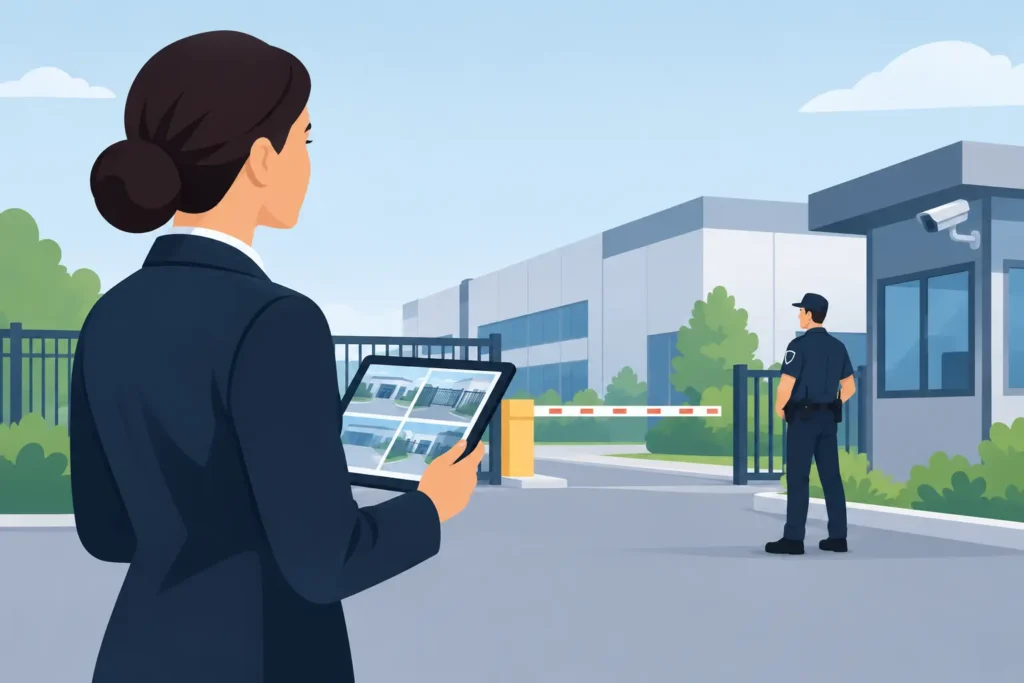
A guard standing at a post is not proof that a property is protected. The real test is what happens when access procedures are ignored, a gate is left unsecured, a tenant reports a concern, or an officer needs immediate direction. Guard supervision standards define how a security team performs under those conditions. For property managers and operations leaders, they separate basic staffing from accountable protection.
At a commercial building, construction site, logistics yard, residential community, or special event, supervision keeps post orders active rather than theoretical. It verifies that officers are present, alert, properly equipped, and following the site-specific procedures designed to reduce risk. It also gives clients a clear chain of accountability when conditions change.
What Guard Supervision Standards Should Cover
Effective supervision is not limited to a manager checking in by phone. It is an operating system for field performance. The standard should establish who supervises officers, how often supervisors inspect sites, what gets documented, and how deficiencies are corrected.
The right level of supervision depends on the assignment. A high-traffic event entrance, an active construction project, or a facility with repeated trespassing issues may need frequent in-person oversight. A stable office property with controlled access and an experienced dedicated officer may require a different schedule. In both cases, the client should know what supervisory coverage is included and what triggers additional support.
Strong guard supervision standards generally address four operational areas: officer readiness, post-order compliance, incident escalation, and reporting quality. If one of these is weak, the security program can appear staffed while still leaving critical exposure unaddressed.
Officer readiness and appearance
Supervisors should verify that officers arrive on time, in the correct uniform, with required identification, communication equipment, and the tools needed for the post. A professional appearance matters because visible security is part of deterrence. More importantly, readiness affects response. An officer without a working radio, flashlight, access credentials, or current site instructions cannot perform at the expected level.
Readiness also includes understanding the assignment. A guard assigned to a vehicle gate needs to know approved visitor procedures, delivery hours, emergency vehicle access, and what to do when a driver refuses instructions. An officer at a residential property needs a different working knowledge of guest access, patrol zones, resident privacy, and nuisance activity procedures. Supervision confirms that these details are understood before an issue becomes an incident.
Compliance with post orders
Post orders are the working instructions for a specific property. They should identify patrol routes, access-control procedures, restricted areas, required logs, emergency contacts, reporting expectations, and client-specific rules. They are not a one-time handout.
A supervisor should review post orders with new officers, reinforce them when site conditions change, and inspect whether they are being followed. This matters because routine creates shortcuts. A gate may be propped open for convenience. A patrol route may be shortened. A visitor log may be completed after the fact instead of at the point of entry. These small failures can create major liability after theft, trespassing, vandalism, or an injury.
Inspections should be purposeful. Rather than simply confirming that an officer is on-site, a supervisor should observe access control, review activity logs, test knowledge of escalation procedures, and check known vulnerability points. At a warehouse, that may mean examining perimeter gates and trailer areas. At an event, it may mean observing bag-check procedures, queue management, and coordination with event staff.
Incident escalation and command support
An officer should never have to improvise alone when a situation exceeds routine post duties. Supervision standards need a clear escalation path for suspicious activity, medical emergencies, fire watch findings, access disputes, threats, property damage, and incidents requiring law enforcement or fire department response.
The goal is not for a supervisor to take over every decision. Officers must be capable of handling ordinary duties independently. The goal is to ensure that urgent, unusual, or high-risk situations receive timely direction and that the client receives accurate information without delay.
For example, an officer who finds a forced door at an after-hours facility should know how to secure the area, preserve the scene, notify the appropriate contacts, request additional support when needed, and document the event. A field supervisor can help evaluate whether the response met post orders, whether patrol coverage must be adjusted, and whether the property has an ongoing vulnerability that needs correction.
Why Field Supervision Protects Business Continuity
Security failures rarely stay confined to the security team. An unattended entrance can disrupt operations. A poorly handled confrontation can affect employees and customers. Missing documentation can complicate an insurance claim or investigation. Consistent supervision reduces these risks by catching performance gaps early and maintaining control when an incident occurs.
For clients, the practical value is accountability. A reliable provider can explain who inspected the site, what was observed, what corrective action was taken, and whether the issue was resolved. That information allows a facility director or property manager to make decisions based on facts rather than assumptions.
This is particularly important for locations with changing risk conditions. Construction phases, tenant turnover, seasonal crowds, late-night deliveries, public events, and vacant units can all change a property’s exposure. A static security plan may not keep pace. Supervisory visits create an opportunity to identify those changes and adjust patrol priorities, staffing positions, or access procedures before a predictable problem occurs.
Reporting Is a Supervisory Requirement
Reliable reporting is often treated as an administrative task. It is actually one of the clearest measures of supervision. Daily activity reports, patrol logs, incident reports, visitor records, and supervisor inspection reports create a record of what occurred on-site and how the security team responded.
Reports should be timely, specific, and useful. A vague note stating “all clear” does not help a client understand whether officers checked the loading dock, responded to an alarm, addressed a parking issue, or identified a damaged fence line. Clear documentation records time, location, observed conditions, actions taken, notifications made, and any recommended follow-up.
Supervisors should review reports for completeness and accuracy instead of allowing weak documentation to become routine. They should also look for patterns. Multiple reports of unsecured doors, recurring loitering, blocked fire lanes, or unauthorized parking may indicate that the issue requires a change in the security plan, not another isolated response.
Questions to Ask a Guard Provider
When evaluating contract security, clients should ask direct questions about supervision rather than assuming it is included at a meaningful level. Ask how often field supervisors visit, whether visits occur across all shifts, how post-order compliance is checked, and how service deficiencies are corrected.
It is also reasonable to ask who is available after hours, how supervisors respond to an officer absence, and what documentation the client receives after an inspection or significant incident. A provider should be able to describe its process clearly. General promises of oversight are not the same as a defined supervisory structure.
The answers should match the risk level of the property. A low-activity administrative office may not need the same supervisory intensity as a distribution facility with overnight operations. However, every assignment needs a responsible point of contact, usable post orders, documented checks, and a process for escalation.
Setting the Standard at Your Property
Guard supervision works best when the client and provider establish expectations before coverage begins. The security plan should reflect the property’s operating hours, access points, traffic patterns, tenant or employee needs, known hazards, and emergency procedures. Supervisors can then measure field performance against conditions that actually exist at the site.
Broadway Security Services approaches supervision as part of the protection assignment, not an optional add-on after guards are placed. Licensed and trained officers need clear direction, responsive management support, and disciplined reporting to maintain a professional presence at the locations they protect.
A security program should give you more than a name on a schedule. It should give you confidence that someone is verifying the work, correcting problems, and maintaining control when your property is most vulnerable.