


A single four-hour lapse in your fire protection system is all it takes for the Fire Marshal to shutter your operations and impose catastrophic fines. You likely recognize that in a state with increasingly strict safety mandates, the difference between continuity and a forced closure is a matter of professional oversight. Implementing compliant fire watch services California requires more than just a physical presence; it demands a disciplined strategy rooted in the 2022 California Fire Code and Title 19 regulations.
This guide provides the authoritative roadmap you need to navigate the complexities of Section 901.7 and the evolving 2026 standards for Wildland-Urban Interface zones. You’ll learn how to deploy an audit-ready patrol strategy that satisfies the Fire Marshal and protects your insurance standing. It’s essential to master the specific triggers for a mandatory watch, the rigorous documentation protocols required for “hot work,” and the tactical steps necessary to ensure your facility remains under the care of a vigilant and unyielding force.
Key Takeaways
- Identify the legal triggers within the California Fire Code that mandate professional fire watch services California to prevent immediate site closure.
- Implement a rigorous patrol cadence designed to detect environmental hazards and technical failures before they escalate into liability events.
- Eliminate the legal and operational risks of using untrained internal staff by adhering to the specialized performance standards of NFPA 601.
- Secure your facility against Fire Marshal scrutiny with a methodical documentation system that provides a defensible record of every safety patrol.
- Learn how a disciplined oversight strategy ensures operational continuity and protects your insurance standing during critical fire protection system downtime.
The Legal Mandate for Fire Watch Services in California
Compliance in California isn’t a suggestion; it’s a legal requirement enforced with absolute precision by the Fire Marshal. Under the California Fire Code (CFC) Section 901.7, the responsibility for maintaining safety during system impairments falls squarely on the building owner or manager. When a fire protection system fails, you don’t have the luxury of hesitation. The code dictates that you must either evacuate the building or implement an approved fire watch. This regulatory framework functions as a disciplined shield, ensuring that human vigilance replaces automated systems until full functionality is restored. As we navigate the 2026 safety landscape, the Fire Marshal’s expectations have shifted. It’s no longer enough to have a physical presence; you must provide a documented, audit-ready strategy that demonstrates unwavering oversight.
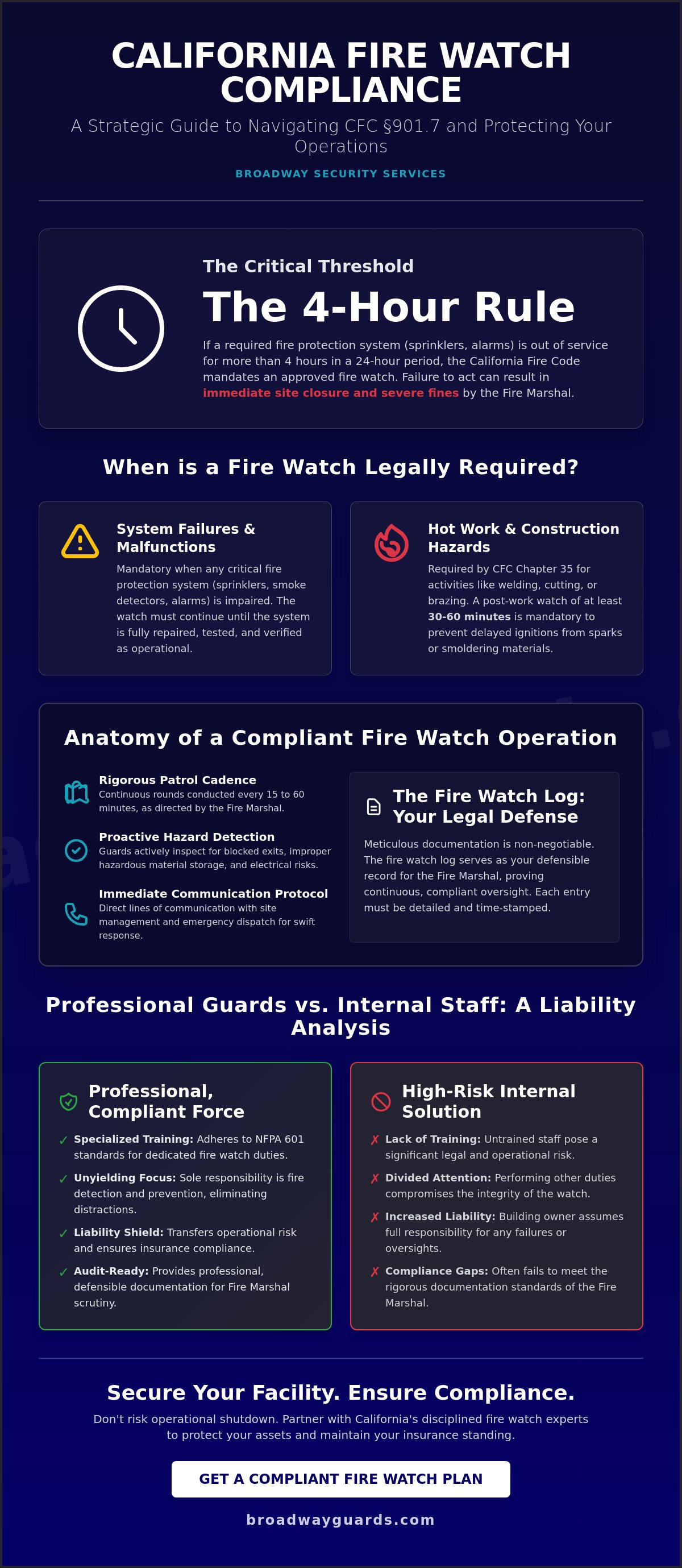
The “Four-Hour Rule” serves as the primary threshold for mandatory action. If a required fire protection system, such as a sprinkler array or a central alarm, is out of service for more than four hours within a 24-hour period, the implementation of professional fire watch services California becomes a legal necessity. You’re required to notify the Authority Having Jurisdiction (AHJ) immediately. Failure to initiate a professional watch during this window creates a massive liability gap. It isn’t just about avoiding fines. It’s about maintaining operational continuity. Without a disciplined patrol in place, the Fire Marshal has the authority to issue an immediate “cease and desist” order, effectively shutting down your site until the hazard is mitigated.
System Failures and Malfunctions
When technical defenses like smoke detectors or suppression systems malfunction, the transition to human oversight must be seamless. The 2022 CFC mandates that fire watch personnel remain on duty throughout the entire duration of the impairment. You can only legally terminate the watch once the system is fully repaired, tested, and verified as operational by a qualified technician. During this period, the guard’s sole responsibility is the detection of fire and the notification of occupants and the California Fire Department. They aren’t permitted to perform maintenance or other security tasks. This singular focus ensures that your assets remain under the care of a vigilant and unyielding force.
Hot Work and Construction Site Hazards
Construction environments present a different set of high-stakes risks, governed primarily by CFC Chapter 35. Activities like welding, cutting, and brazing introduce immediate ignition sources into potentially volatile settings. According to the Fire Watch Definition and Purpose, a dedicated watch is required to monitor these “hot work” zones for sparks or smoldering materials. While state law requires a 30-minute post-work watch, local ordinances often demand more. In high-density construction zones like the San Fernando Valley, or for roof work in San Francisco, that requirement often extends to a full hour. This rigorous standard prevents delayed ignitions and ensures that every spark is accounted for before the site is cleared. In the 2026 regulatory environment, your documentation of these patrols is as vital as the vigilance of the guard itself.
Anatomy of a Compliant Fire Watch Operation
A compliant fire watch operation functions with the precision of a military patrol. It transforms passive observation into an active, disciplined shield for your property. When utilizing professional fire watch services California, the patrol rhythm is dictated by the specific risk profile of your facility. Standard protocols typically require rounds every 15 to 60 minutes, depending on the Fire Marshal’s directives. These aren’t casual walks. A disciplined guard examines the facility for blocked fire exits, improperly stored flammable materials, and compromised electrical systems. They maintain direct communication lines with site management and local emergency dispatchers to ensure immediate intervention if a hazard is detected.
This methodical approach aligns with OSHA Fire Watch Requirements, which emphasize the need for personnel to be solely dedicated to monitoring fire hazards. They’re trained to detect the subtle signs of a smoldering fire long before a traditional alarm would sound. This proactive stance is the only way to ensure safety when automated defenses are offline. By prioritizing accountability and visible presence, you ensure that your assets are under the care of a vigilant and unyielding force.
The Fire Watch Log: Your Legal Defense
The fire watch log is a legal document, not a simple checklist. In 2026, the Fire Marshal expects more than handwritten notes. A compliant logbook must include the exact time of each patrol, the specific areas inspected, and the signature of the guard on duty. Digital timestamps and GPS-verified patrols are now the industry standard because they provide irrefutable proof of presence. Common errors, such as “pre-filling” logs or missing entries, lead to immediate citations and can void your insurance coverage during a claim. Maintaining a defensible safety record is a core component of professional oversight.
Equipment and Tactical Readiness
Tactical readiness starts with the right equipment. Guards must be equipped with high-visibility attire, specialized communication devices, and detailed site maps highlighting all manual pull stations and fire extinguishers. While these professionals are experts in detection and evacuation, they aren’t firefighters. Their role is to sound the alarm, initiate a structured evacuation, and provide a clear report to the arriving fire department. In large venues or residential complexes, this includes coordinating crowd management to prevent panic and ensure every occupant reaches a safe zone. This level of preparation ensures that your site remains orderly even during high-stakes emergencies. The same disciplined crowd management principles that apply here are also critical for professional event security Los Angeles operations, where poor crowd dynamics represent one of the most significant operational risks.
Professional Guards vs. Internal Staff: A Liability Analysis
Assigning internal staff to fire watch duties is a high-stakes gamble with your company’s future. While it may seem cost-effective initially, the “DIY” approach introduces systemic weaknesses that a Fire Marshal will not tolerate. Professional fire watch services California provide a level of objectivity and discipline that internal employees simply cannot match. Employees diverted from their primary roles often suffer from fatigue and distraction, compromising the vigilant oversight required to detect early-stage hazards. A warehouse manager or maintenance technician cannot be expected to maintain the same level of tactical awareness as a trained protector whose sole duty is the prevention of disaster.
Training gaps represent the most significant liability. Professional guards adhere to NFPA 601 standards, which define the rigorous performance requirements for security and fire watch personnel. Internal staff lack this specialized training and the mental conditioning required for high-stakes monitoring. In the event of a fire, using an untrained employee can lead to “negligent oversight” claims. This vicarious liability puts your entire organization at risk of massive legal penalties and the total denial of insurance claims. When the stakes are this high, the presence of a disciplined, third-party expert acts as a vital safeguard against legal and financial ruin.
Insurance Requirements and Compliance
Major property insurers in California often mandate the use of certified third-party guards during system outages. Using professional fire watch services California demonstrates a commitment to rigorous safety standards that internal staff cannot verify. You must verify if your policy includes clauses regarding “negligent oversight,” which can be triggered if an untrained employee fails to detect a hazard. Professional certification provides a defensible shield during post-incident investigations, ensuring that your insurance standing remains intact and your claims are not summarily denied due to non-compliance with NFPA standards.
Operational Continuity
Operational continuity depends on the clear separation of duties. Allowing your core team to focus on their primary responsibilities while experts handle safety protocols prevents operational bottlenecks. Managing 24/7 internal rotations for long-term system outages is a logistical nightmare that leads to employee burnout and missed patrols. A professional guard provides a consistent, methodical rhythm of oversight that reassures tenants and stakeholders. This visible commitment to duty ensures that your property remains under the care of a vigilant and unyielding force, regardless of the time of day. It’s the only way to maintain a professional environment during a critical system failure.
Preparing for a Fire Marshal Audit in California
Surprise inspections by the Authority Having Jurisdiction (AHJ) are a standard enforcement tool. When the Fire Marshal arrives at your facility, they expect immediate access to a disciplined record of oversight. This isn’t the time for administrative delays or missing signatures. Utilizing professional fire watch services California ensures that your site remains in a state of constant audit-readiness. The Marshal will evaluate the physical presence of the guard, their tactical knowledge of the facility, and the integrity of the documentation. A disorganized response suggests a lapse in safety, which can lead to immediate penalties or the suspension of your occupancy permit. You must demonstrate that your assets are under the care of a vigilant and unyielding force.
Accountability is the cornerstone of a successful audit. Organizing your documentation for immediate review requires a methodical approach that links professional discipline directly to the outcome of protection. The Marshal isn’t just looking for a stack of papers; they’re looking for a categorical history of vigilance. Every entry must be legible, chronological, and verified. By maintaining an organized command post for safety records, you signal to the AHJ that your operation takes its legal obligations with the utmost gravity. This level of preparation prevents the friction that often leads to deeper regulatory scrutiny.
The Fire Marshal’s Checklist
The AHJ focuses on three critical pillars: frequency, action, and knowledge. They will verify that patrols occurred at the mandated 30 to 60-minute intervals without exception. Beyond simple timestamps, the Marshal looks for a hazard abatement log. This document proves the guard proactively identified and corrected risks, such as clearing a blocked exit or securing a flammable container. The inspector may also test the guard’s knowledge of your site’s Fire Safety and Evacuation Plan. A professional protector must be able to identify every manual pull station and describe the exact notification chain for emergency services. To secure your facility against these high-stakes reviews, deploy an audit-ready fire watch strategy today.
Restoring the System
Ending a fire watch mandate is a formal legal process. Under NFPA 25 standards, you must certify that the fire protection system is fully restored and functional before the watch can be terminated. This requires coordinating with the Fire Marshal and providing a formal restoration notice to the local fire department or AHJ. Once the mandate is lifted, your work isn’t finished. You must archive all fire watch logs and reports for long-term regulatory and insurance compliance. These records serve as your primary defense in the event of a future audit or insurance inquiry. Maintaining a categorical archive ensures that your commitment to safety is documented and defensible for years to come.
Broadway Security Services: California’s Disciplined Fire Watch Experts
Broadway Security Services operates with an unwavering commitment to the safety of California’s most critical assets. Our “Disciplined Shield” philosophy isn’t just a slogan; it’s a rigorous operational standard that informs every patrol. When you engage fire watch services California through Broadway Security Services, you aren’t just hiring a guard. You’re deploying a highly trained protector who functions within a strict hierarchy of accountability. Our training protocols exceed state-mandated requirements, focusing on the intersection of field performance and regulatory documentation. This ensures that every shift is backed by a transparent, audit-ready record that satisfies the most demanding Fire Marshal. We prioritize safety, trust, and peace of mind by maintaining a stoic and professional presence at all times.
Reliability is forged through repetition and structure. We prioritize visible results and methodical oversight to give our clients peace of mind. Every protector on our team understands that their presence is the final line of defense when automated systems fail. This commitment to duty is reflected in our reporting, which utilizes industry-specific terminology and precise data to demonstrate a categorical history of vigilance. We take our responsibilities with the utmost gravity, ensuring your property remains a secure and compliant environment. By choosing a partner that values rules and protocols, you’re investing in a disciplined shield that protects your assets from legal and financial risk.
Regional Expertise: Serving Southern California
Serving Southern California requires a deep understanding of varied municipal codes. Our teams possess extensive familiarity with local Fire Department protocols across Los Angeles and Ventura Counties. We maintain rapid deployment capabilities for emergency outages in Canoga Park and the surrounding San Fernando Valley. This regional focus allows us to conduct customized risk assessments for diverse properties, including hospitals, retail centers, and residential complexes. We don’t believe in a one-size-fits-all approach. Instead, we adapt our disciplined oversight to the specific hazards of your site. This localized knowledge ensures that your fire watch strategy is perfectly aligned with the expectations of your specific Authority Having Jurisdiction. The same regional expertise that powers our fire watch operations also drives our event security Los Angeles services, where familiarity with LA County venues and municipal protocols is equally essential.
The Broadway Standard of Excellence
Precision is the hallmark of our service. We execute patrols with military-like order, ensuring that every square foot of your facility is inspected according to the established cadence. Our guards act as a reassuring presence for tenants and stakeholders, maintaining an observant and prepared posture. We value protocols and visible results above all else. This unwavering focus on duty is why Broadway Security Services remains the gold standard for businesses requiring a vigilant and unyielding force. Secure your site with Broadway Security Services’ professional fire watch services today and experience the difference that disciplined protection makes for your operational continuity.
Securing Your Operational Continuity and Compliance
Navigating the strict safety landscape of 2026 requires more than a temporary fix; it demands a permanent commitment to professional oversight. This guide has detailed how the integration of legal compliance and operational rigor creates a defensible safety strategy. By choosing a partner that prioritizes methodical documentation and disciplined patrols, you eliminate the threat of sudden site shutdowns and insurance denials. Professional fire watch services California act as the necessary bridge between a technical failure and the restoration of your facility’s automated defenses, ensuring your business remains functional under pressure.
Broadway Security Services provides the authoritative presence required to maintain this high standard of safety. Our California-certified security personnel deliver audit-ready logbook documentation that withstands the most rigorous Fire Marshal inspections. We’ve served Canoga Park and the Southern California region since our inception, acting as a disciplined shield for property owners and managers alike. Request an Emergency Fire Watch Quote from Broadway Security Services to ensure your assets remain under the care of a vigilant and unyielding force. Take the final step toward total operational security today.
Frequently Asked Questions
How much do fire watch services cost per hour in California?
Hourly rates are primarily influenced by the urgency of the request and the specific risk profile of the property. Emergency deployments for immediate system failures typically command a higher rate than scheduled coverage for planned maintenance. Factors such as the number of guards required and the total duration of the impairment will also impact the final cost structure for your facility.
Is fire watch required if only part of my sprinkler system is down?
Yes, a fire watch is mandatory whenever any portion of a required fire protection system is compromised. California Fire Code Section 901.7 applies to partial impairments because a failure in one zone creates a high-stakes vulnerability for the entire structure. You must maintain a disciplined patrol until the specific zone is repaired and the system is fully operational.
What specific training do California fire watch guards need to have?
Guards must be proficient in the use of manual fire-suppression equipment and have a categorical understanding of the facility’s evacuation routes. They’re trained to recognize environmental hazards that automated sensors might miss, such as chemical leaks or blocked fire doors. This expertise ensures they can act as a vigilant and unyielding force when technical defenses are offline.
Can I use my own security guards for fire watch duties?
You can only use internal staff if they are assigned exclusively to fire watch duties and perform no other tasks. Most standard security roles involve access control or retail monitoring, which the Fire Marshal considers a conflict of interest. Utilizing professional fire watch services California eliminates this risk by providing personnel dedicated solely to fire detection and prevention.
How quickly can Broadway Security Services deploy fire watch guards in Los Angeles?
Broadway Security Services maintains a rapid-response protocol for emergency outages throughout Los Angeles and the San Fernando Valley. Our dispatch center prioritizes immediate placement to ensure your facility remains compliant and avoids a forced shutdown by the AHJ. You should contact our team directly to verify current tactical availability for your specific location.
What happens if a fire watch guard discovers a fire on my property?
The guard will immediately notify the local fire department and initiate the building’s formal notification chain for occupants. Their primary responsibility is to coordinate an orderly evacuation and provide arriving fire crews with a precise report on the fire’s location and nature. They remain on-site to assist emergency responders and maintain the integrity of the safety perimeter.
How do I notify the Fire Marshal that I have started a fire watch?
You must use the local fire department’s designated reporting portal or their non-emergency administrative line to document the impairment. You’ll need to provide the address, the specific systems affected, and the name of the professional agency providing the watch. This notification is a legal requirement that demonstrates your commitment to rigorous operational standards.
What is the difference between a fire watch and a standard security patrol?
A fire watch is a specialized safety mandate focused entirely on ignition detection and evacuation, while standard security involves asset protection and loss prevention. Fire watch personnel are restricted from performing any other duties, such as checking IDs or monitoring cameras. This singular focus is what makes them a disciplined shield during critical system downtime.