


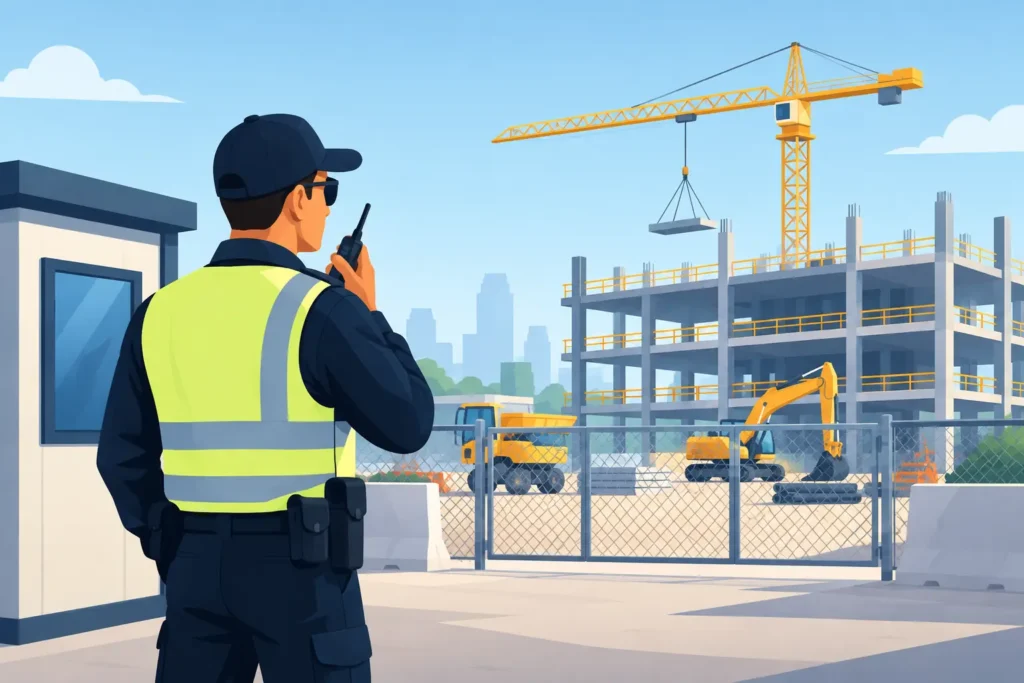
A missing skid steer, unauthorized delivery, or overnight trespasser can set a construction project back before the next crew arrives. Construction site security guards provide the visible, disciplined presence needed to protect materials, equipment, workers, and access points when a jobsite is most exposed.
For Los Angeles construction managers and property owners, security is not simply a response to theft. It is a site-control function. Properly deployed guards help maintain order around changing work zones, document incidents, monitor safety concerns, and enforce the rules that keep a project moving.
Why Construction Sites Need Controlled Security
Construction sites are difficult environments to secure because they change constantly. Fencing moves, new subcontractors arrive, equipment is relocated, deliveries occur at irregular hours, and portions of the site may remain open while other areas are secured. A plan that worked during grading may no longer fit once structural work, interior buildout, or tenant improvements begin.
The most common exposures are well known: theft of tools and copper, fuel loss, vandalism, unauthorized entry, illegal dumping, fire hazards, and damage to parked equipment. Yet the operational impact often goes beyond the value of a stolen item. A missing generator can delay a concrete pour. Damaged fencing can create a liability concern. Unauthorized persons entering an active work area can put workers, the public, and the project owner at risk.
A guard presence creates a direct deterrent while providing a trained person who can observe conditions, challenge unauthorized activity professionally, and escalate issues according to clear post orders. Cameras, alarms, and lighting have value, but they do not replace an officer who can assess an unusual situation in real time, control access, and call for support when needed.
What Construction Site Security Guards Do
The responsibilities of construction site security guards should be defined around the site rather than copied from a generic guard checklist. A high-rise project, a vacant redevelopment parcel, and a warehouse renovation each require different patrol routes, access procedures, and reporting standards.
At most sites, guards manage entry and exit activity by checking identification, verifying authorized vendors, logging deliveries, and directing visitors to the appropriate contact. This controlled access monitoring helps prevent unknown individuals from walking onto an active jobsite or removing property without authorization.
Guards also conduct scheduled and random patrols. These patrols may cover perimeter fencing, gates, storage containers, material laydown areas, parking areas, equipment staging zones, temporary offices, and fire watch locations. Patrol activity should be documented, not assumed. Time-stamped reports give site management a record of observed conditions, access issues, damaged barriers, and incidents requiring follow-up.
After hours, the officer’s role often centers on deterrence and early detection. They can identify an open gate, a cut fence, suspicious vehicles, water leaks, fire risks, unsecured equipment, or activity near high-value materials before the issue becomes a larger loss. When an incident occurs, the guard should preserve the scene when safe, notify designated contacts, coordinate with emergency responders as necessary, and prepare a factual report.
The Right Coverage Depends on the Project Phase
Security coverage should change as the project changes. Early-stage sites with open perimeters may benefit from mobile patrols, gate checks, and irregular inspection times. Once expensive equipment, copper, appliances, fixtures, or finished materials are on site, a dedicated overnight officer may be justified.
Daytime coverage can be equally valuable on busy projects. A professional guard at the entrance can manage contractor sign-in procedures, verify deliveries, reduce gate congestion, and keep unauthorized solicitors or visitors away from crews. This is particularly useful where projects share space with occupied buildings, retail operations, schools, hospitals, or residential communities.
The choice between armed and unarmed coverage requires a realistic assessment of the location and threat level. Unarmed guards are appropriate for many construction sites where access control, patrol discipline, and visible deterrence are the primary needs. Armed coverage may be considered for sites with repeated criminal activity, high-value assets, isolated conditions, or credible threats. It should never be selected as a substitute for sound access procedures, lighting, fencing, communication, and responsive supervision.
Coverage hours also require careful review. A site that is empty from 6 p.m. to 6 a.m. has a different exposure than one with night work, early material deliveries, or weekend activity. In some cases, marked vehicle patrols provide effective periodic visibility. In others, continuous on-site staffing is necessary because response time, equipment value, or neighborhood conditions leave little room for gaps.
Build Post Orders Around Real Jobsite Risks
Clear post orders separate accountable security service from a guard who has merely been assigned to stand at a gate. Written instructions should identify the guard’s duties, patrol locations, authorized contacts, emergency procedures, access rules, delivery protocols, and documentation requirements.
For example, a guard should know who may approve an after-hours vendor, how to respond when a gate alarm activates, where fire extinguishers and shutoffs are located, and which site areas are restricted. They should understand when to notify the superintendent, when to contact law enforcement, and when conditions require emergency services.
Post orders should also address practical issues that are easy to overlook. Are subcontractors required to display badges? Can vehicles enter without a delivery appointment? Where should drivers wait? Who has authority to release stored materials? Are there noise restrictions near neighboring residences? These details reduce confusion and help guards enforce consistent standards without disrupting legitimate work.
A construction security provider should review post orders with site leadership and update them as conditions change. A static plan becomes unreliable quickly when new gates, trailers, material storage areas, or work shifts are introduced.
Reporting Is Part of the Protection
Security reporting is more than an administrative task. Accurate daily activity reports and incident reports provide management with a usable record of what occurred on site, when it occurred, what action was taken, and whether additional controls are needed.
Useful reports document patrol times, visitor and vehicle activity, access violations, suspicious behavior, safety observations, damaged property, and communications with site representatives. If a pattern develops, such as repeated attempts to enter through a weak portion of the fence, management can act on evidence rather than assumptions.
Documentation also supports accountability. Property owners, general contractors, and project managers need to know whether patrols were completed, whether access rules were enforced, and whether concerns were escalated promptly. A security program without reliable reporting leaves too much uncertainty after an incident.
What to Look for in a Security Provider
When evaluating a contractor, look beyond the hourly rate. Low-cost staffing can create expensive gaps if officers arrive late, lack site-specific direction, receive little supervision, or fail to produce usable reports. Construction work demands personnel who present themselves professionally, follow procedures, and understand that the site superintendent needs concise, timely communication.
Ask how officers are selected, trained, supervised, and relieved at shift change. Confirm that the provider is licensed and insured, can supply the appropriate level of coverage, and has a process for responding to call-offs or urgent changes. Review sample reporting practices and ask how field supervisors verify officer performance.
It is also reasonable to ask how the company will learn the site. A provider should evaluate perimeter conditions, gate locations, traffic patterns, material storage, neighboring activity, lighting, existing cameras, and known incidents before recommending coverage. Broadway Security Services builds assignments around these conditions so guard responsibilities support the project rather than becoming a disconnected presence at the gate.
Security Should Protect the Schedule, Not Just the Site
The strongest construction security program is visible, documented, and adaptable. It protects equipment and materials, but it also reduces the interruptions that can affect labor, deliveries, inspections, and project milestones. That requires trained officers, clear post orders, responsive supervision, and regular communication with site leadership.
A construction site changes every week. Security should be reviewed with the same discipline. When the perimeter, stored assets, work hours, or neighborhood exposure changes, the coverage plan should change with it. That ongoing attention is what turns guard coverage into a practical layer of project control.