


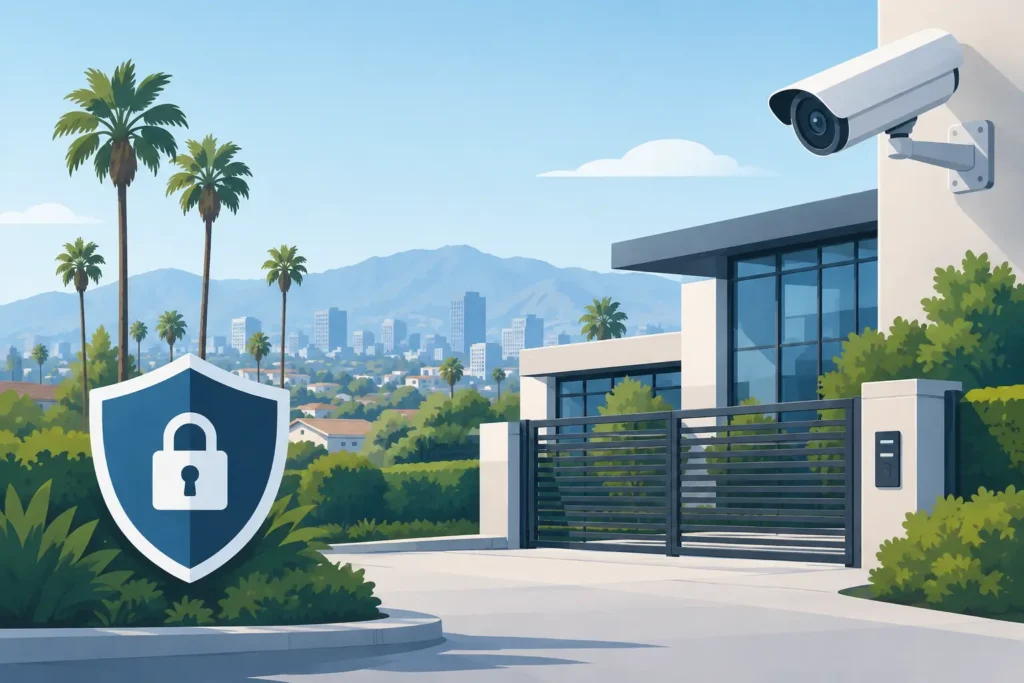
A property can look calm while carrying serious exposure. An unlocked side gate, an unattended delivery entrance, a recurring parking dispute, or a contractor left working after hours can create the opening for loss, liability, or disruption. Effective Sherman Oaks property security is not a generic guard assignment. It is a site-specific operating plan built around how people, vehicles, vendors, residents, employees, and visitors actually move through the property.
For property managers and operational leaders, the objective is clear: establish visible control without interfering with legitimate daily activity. That requires licensed and trained guards, defined post orders, responsive supervision, and reporting that gives management a clear record of what occurred and how it was handled.
Start With the Property’s Actual Exposure
Security coverage should begin with an assessment of the property’s operating conditions, not a standard staffing quote. A medical office building, construction site, apartment community, retail center, warehouse, and private event venue may all need an officer, but the risks and duties are different.
At a commercial property, access control and tenant service may take priority during business hours, while after-hours patrols focus on doors, loading areas, parking structures, and perimeter conditions. A residential community may need an officer who can manage guest access, deter trespassing, document disturbances, and enforce parking rules professionally. At an active construction site, material theft, unauthorized entry, fire-watch obligations, and unsecured equipment often drive the coverage plan.
A useful assessment looks at more than crime concerns. It examines where the public enters, which areas are difficult to observe, when staffing levels drop, how deliveries are received, whether gates and cameras are functioning, and which incidents have repeatedly consumed management time. It should also identify emergency routes, utility areas, fire equipment, key control procedures, and any tenant or client requirements that affect access.
The result should be a practical deployment model. Some properties require a fixed officer at a lobby or gate. Others benefit more from marked vehicle patrols that cover multiple buildings, lots, and perimeter points. High-traffic locations may require both: a controlled entry point and scheduled patrol activity beyond it.
What a Disciplined Security Post Looks Like
A guard standing at a desk without clear direction is not a security program. Officers need written post orders that define their responsibilities, authority, patrol routes, escalation procedures, reporting requirements, and communication expectations. The post should answer operational questions before an incident occurs.
For example, who is authorized to enter after hours? What should the officer do when a delivery driver arrives without a contact? When should a suspicious person be asked to leave, and when should law enforcement be called? Who receives notification if a gate is damaged or a fire alarm panel shows a trouble condition? Clear instructions allow officers to act consistently rather than relying on assumptions.
Professional appearance and visible presence matter, but they are only part of the assignment. A capable officer observes conditions, checks vulnerable areas, controls access, de-escalates conflicts where possible, protects the scene when an incident occurs, and records facts accurately. Those records help management identify patterns, respond to complaints, support insurance or legal matters, and make informed decisions about future coverage.
Access Control Must Match Daily Operations
Overly restrictive access can frustrate tenants, employees, and vendors. Loose access creates avoidable exposure. The correct balance depends on the location’s schedule and purpose.
At a managed office or mixed-use property, officers may verify visitors, direct deliveries, monitor service entrances, and keep unauthorized individuals from entering restricted areas. At residential properties, the focus may include guest verification, package-area monitoring, amenity access, and response to noise or parking issues. For industrial and logistics locations, driver verification, trailer and cargo oversight, and control of employee or vendor entry may be central duties.
The key is consistency. A rule enforced only when a particular officer is on duty is not a reliable control. Post orders, training, supervisor review, and clear client communication help ensure procedures are applied professionally across every shift.
Patrols Need Purpose, Not Random Movement
Patrol activity is most effective when it is scheduled, documented, and tied to known vulnerabilities. Officers should not simply walk or drive the same visible route at the same predictable time. A strong patrol procedure checks specific conditions: unlocked doors, propped gates, loitering, lighting outages, water leaks, fire hazards, damaged fencing, unauthorized vehicles, and signs of attempted entry.
Marked vehicle patrols can be especially useful for larger properties, multi-building sites, vacant spaces, and communities with expansive parking areas. They provide a visible deterrent and allow officers to cover ground efficiently. However, vehicle patrols are not a substitute for a fixed post when a location needs continuous access screening or immediate presence at a single point.
The best approach may change by time of day. A site can require lobby coverage during business hours, perimeter patrols after closing, and added support during tenant move-ins, construction activity, or special events.
Reporting Is Part of Sherman Oaks Property Security
Reliable incident reporting separates accountable contract security from informal watch coverage. Management needs more than a verbal assurance that the shift was quiet. Daily activity reports, patrol records, incident reports, and supervisor follow-up create a usable record of site conditions and officer actions.
Good reporting is factual, timely, and complete. It documents the date, time, location, people involved when known, observed behavior, actions taken, notifications made, and any remaining concern. It should avoid speculation and personal opinion. If a vehicle was blocking a fire lane, the report should identify the vehicle, location, notification process, and outcome. If an officer found a broken access gate, the report should state the condition and the steps taken to protect the area until repairs are made.
This documentation has operational value beyond a single event. Repeated reports of unsecured doors may indicate a maintenance issue. Frequent parking violations may require updated signage or enforcement procedures. Recurrent loitering at one entrance may justify adjusted lighting, camera coverage, or patrol timing. Security reporting should give property leadership evidence, not just paperwork.
When to Adjust the Coverage Plan
Security needs are not fixed. A property that was adequately covered six months ago may have new tenants, revised hours, a construction project, increased visitor volume, or recurring incidents that require a different approach. Leaders should review coverage after significant changes rather than waiting for a serious loss.
Common signals include repeated unauthorized access, an increase in vehicle break-ins, after-hours trespassing, employee safety complaints, vendor confusion at entry points, fire-system issues requiring watch coverage, or incident reports that show the same problem at the same time or location. These conditions do not always mean a property needs more guards. Sometimes the appropriate response is better post orders, adjusted patrol intervals, improved access procedures, or a temporary increase during a high-risk period.
Supervision is critical during these adjustments. Field officers need a clear chain of command and responsive management support when conditions change. A security provider should be able to review site activity, update instructions, reinforce expectations, and verify that coverage remains aligned with the client’s operations.
Selecting a Security Partner
Property decision-makers should look beyond hourly rates. Low-cost coverage can become expensive when officers are poorly supervised, posts are left uncovered, reports are incomplete, or site rules are enforced inconsistently. The provider should be licensed and insured, staffed with trained personnel, and capable of supporting the assignment with active supervision and documented procedures.
Ask how the provider develops post orders, handles call-offs, communicates incidents, monitors officer performance, and responds when a client needs coverage adjusted. Also ask whether the company has experience with the property’s type of activity. A security plan for a busy commercial building should not be copied directly onto a construction site or residential community.
Broadway Security Services approaches assignments with this operational discipline: define the risk, establish clear duties, maintain visible coverage, and document what matters. That structure helps clients protect people, property, and continuity of operations without turning daily business into a security obstacle.
The right security program should make the property feel controlled, orderly, and professionally managed. When officers understand the site, supervisors stay engaged, and reporting reveals what is happening on the ground, management can act before routine vulnerabilities become costly incidents.