

A guard posted at an entrance is only part of the protection plan. Security supervision determines whether that officer is alert, following post orders, documenting activity, escalating concerns, and responding correctly when conditions change. For property managers and operational leaders, that difference directly affects liability, tenant confidence, asset protection, and business continuity.
A security program should never depend on the assumption that every shift will run itself. Sites change throughout the day. Deliveries arrive early, access points are left unsecured, contractors work after hours, parking conflicts develop, and a routine patrol can become an emergency response without warning. Professional oversight keeps personnel, procedures, and communications aligned when those conditions change.
What Security Supervision Means in Practice
Security supervision is the active oversight of officers and operations in the field. It is not simply assigning guards, issuing uniforms, or checking a schedule at the start of the week. It means verifying that officers are present, prepared, visible, and performing the duties required at a specific location.
A supervisor should understand the property’s post orders, access control procedures, emergency contacts, patrol routes, restricted areas, reporting requirements, and known risks. That knowledge allows the supervisor to identify when an officer needs direction, when a post order needs adjustment, or when an incident requires immediate management involvement.
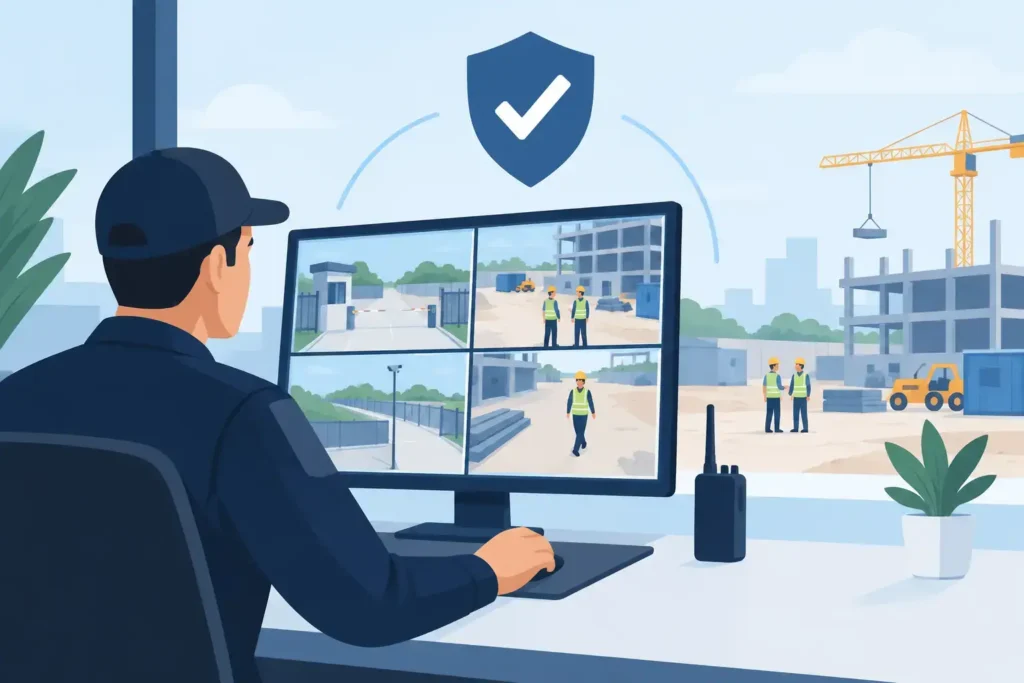
For a commercial property, supervision may focus on visitor screening, loading dock activity, after-hours access, and tenant concerns. At a construction site, it may center on perimeter integrity, equipment protection, fire watch duties, and contractor movement. For an event, the priority may be crowd flow, entry control, parking coordination, and rapid response to disruptions. The responsibilities differ, but the standard remains the same: the officer must be accountable to a clear plan.
Why Unsupervised Guard Coverage Creates Risk
A guard can be licensed and well-intentioned yet still need operational support. Long shifts, unfamiliar site conditions, unclear instructions, and changing activity can weaken performance if no one is checking the post. The most common failures are not always dramatic. They are missed patrols, incomplete logs, unlocked gates, inconsistent visitor procedures, delayed reports, and concerns that are not elevated soon enough.
These gaps can create larger exposure. An incomplete incident report may leave a property manager without the facts needed for an insurance claim or tenant complaint. A guard who does not know when to contact law enforcement may lose valuable response time. A patrol officer who is not properly briefed on a recurring trespass issue may overlook the behavior that should have been documented.
Visible supervision also changes how a security team performs. Officers are more likely to maintain professional appearance, follow patrol schedules, complete reports accurately, and communicate concerns when they know that field performance is reviewed. This is not about creating unnecessary pressure. It is about maintaining a professional standard at locations where clients depend on guards to make sound decisions.
The Core Elements of Effective Security Supervision
Strong oversight begins before the first officer arrives. A security provider should assess the location, identify exposure points, and establish site-specific post orders. Generic instructions are not enough for properties with different traffic patterns, tenant needs, access systems, or operating hours.
The field supervisor should then reinforce those instructions through regular contact. That may include shift check-ins, unannounced site inspections, patrol verification, review of daily activity reports, and direct coaching when procedures are not being followed. The appropriate frequency depends on the site’s risk level. A quiet office building may require a different level of oversight than a high-traffic retail center, logistics facility, or vacant property with repeated trespass activity.
Reliable supervision also requires clear escalation channels. Officers need to know who to contact when they encounter a safety hazard, medical emergency, suspicious person, broken access point, fire system issue, or conflict that exceeds the limits of their assignment. They should not have to guess whether a situation belongs in a routine report or requires immediate notification.
Documentation is equally important. Daily activity reports, incident reports, patrol records, inspection notes, and supervisor observations create an operating record. Good reporting does more than prove that a guard was present. It identifies patterns. Repeated gate alarms, recurring parking violations, unauthorized after-hours entries, or frequent disturbances may indicate that the site needs a procedural change, adjusted patrol timing, or additional coverage.
Supervision Should Improve the Post, Not Just Inspect It
The best supervisors do not only look for mistakes. They use what they see in the field to improve the security plan. If deliveries consistently arrive before the assigned access-control officer is in position, the schedule may need to change. If an officer is repeatedly called away from a lobby post to handle parking issues, a marked vehicle patrol may be a better fit. If a construction site has new perimeter openings, the patrol route and lighting checks should be updated.
This is where management oversight becomes valuable to the client. Security conditions are operational conditions. They should be reviewed with the same discipline applied to maintenance, staffing, vendor access, and emergency planning.
What Clients Should Expect From a Supervised Security Program
When evaluating a guard provider, decision-makers should ask how field performance is monitored after deployment. A proposal that lists officer hours but says little about supervision may leave an important gap in the service model.
Ask who is responsible for site inspections, how officers receive post-order updates, and what happens when an officer is late, absent, or unable to perform the assignment. Ask how incidents are escalated and when management contacts the client. The answers should be specific to the property, not limited to broad assurances about quality service.
Clients should also expect reporting that is useful, not merely frequent. A detailed report should state what occurred, where it occurred, when it was observed, what action the officer took, who was notified, and whether follow-up is needed. Reports that lack facts or arrive days after an event provide limited value when management must make a timely decision.
For higher-exposure locations, supervision should include readiness for replacement coverage and response support. No provider can eliminate every staffing challenge, especially during severe weather, regional emergencies, or unexpected site incidents. The meaningful distinction is whether the provider has a disciplined process to communicate the issue, deploy support, and keep the post covered.
Matching Oversight to the Property’s Actual Risk
More supervision is not automatically better if it does not address the right risks. A low-traffic professional office may need consistent overnight patrol verification and clear alarm-response procedures. A mixed-use property may require closer attention during evening tenant turnover, visitor access, and parking enforcement periods. A warehouse or cargo operation may need supervisor review of access logs, trailer activity, and perimeter checks.
Los Angeles-area properties often face another challenge: a single location can have very different conditions by time of day. A business park may be calm during office hours and vulnerable after closing. A retail site may need a visible presence during peak customer periods but more focused perimeter patrols late at night. Effective supervision recognizes these changes and adjusts assignments without disrupting normal operations.
Technology can support this work through patrol verification, reporting platforms, access records, and monitored communications. It cannot replace judgment in the field. A timestamp does not confirm that an officer recognized a hazard, calmed a conflict, or noticed that a secure door was propped open. Supervisory review turns information into accountable action.
A Higher Standard Is Visible on Every Shift
Professional security coverage should be measured by more than whether an officer is standing at a post. It should be measured by preparation, consistency, communication, and the ability to correct problems before they become losses or disruptions.
For clients, the practical goal is straightforward: establish a security operation where officers know their responsibilities, supervisors verify performance, and important events are documented and addressed. When supervision is treated as part of the service rather than an optional extra, a guard presence becomes a controlled, accountable layer of protection for the property and the people who rely on it.