


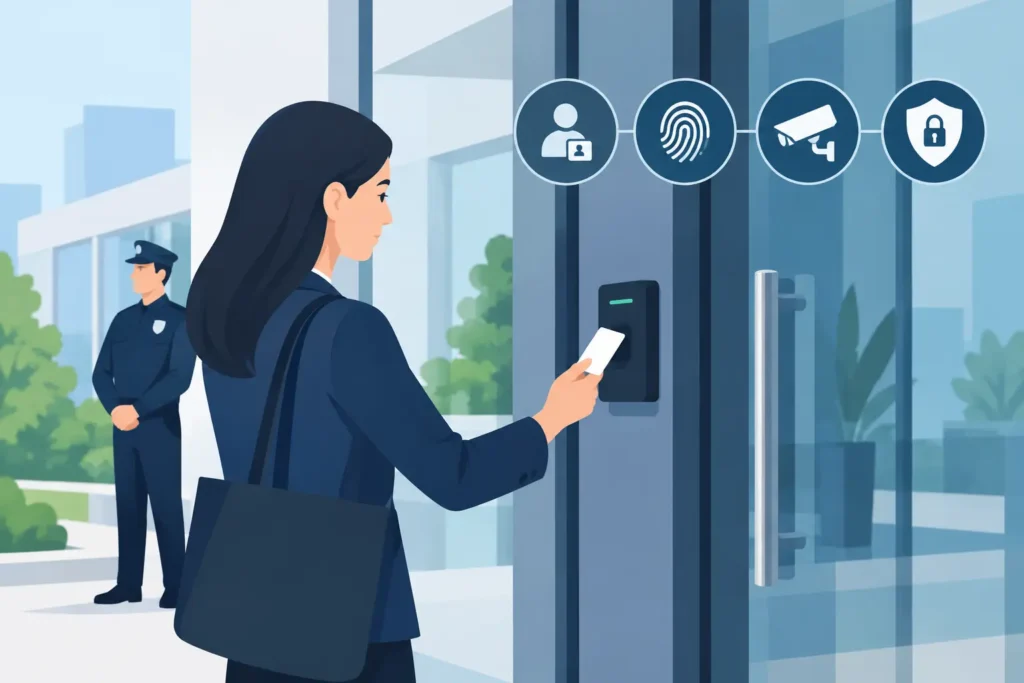
A loading dock door left open during a shift change, an unverified contractor entering through a side gate, or a former employee whose credential still works can create a serious exposure in minutes. The best access control procedures do more than restrict doors. They establish who may enter, where they may go, when access is allowed, and how exceptions are documented and handled.
For property managers, facility directors, logistics operators, and event organizers, access control is a daily operating function. It must protect people and assets without creating unnecessary delays for employees, residents, visitors, vendors, and emergency personnel. That requires a disciplined plan, trained officers, clear post orders, and supervision that keeps the plan active after installation.
Start With the Site’s Actual Exposure
Access control should be built around the property, not copied from a generic checklist. A downtown office building, construction site, apartment community, warehouse, school, and special event venue have different traffic patterns, entry points, and risk levels. The first step is identifying every place a person, vehicle, delivery, or asset can enter or leave.
This assessment should include main entrances, secondary doors, loading docks, parking areas, stairwells, gates, emergency exits, roof access, and temporary construction openings. It should also account for the times each point is most vulnerable. A door that is properly monitored during business hours may become an uncontrolled access point after a receptionist leaves or a delivery crew arrives overnight.
Security leadership should separate access points into three categories: public entry, controlled entry, and restricted entry. Public entry points may allow open access during designated hours but still require visible monitoring. Controlled entry points require verification before admission. Restricted areas, such as server rooms, medication storage, cash offices, equipment yards, and tenant-only floors, should be accessible only to authorized individuals with a documented business purpose.
Best Access Control Procedures Begin With Clear Authorization
The strongest hardware cannot correct weak authorization practices. Every site needs a defined process for approving employees, contractors, vendors, visitors, and temporary workers before they are permitted beyond the appropriate access point.
An access list should identify the individual, employer or host, approved areas, permitted hours, credential type, and expiration date. For larger facilities, an access matrix provides a practical way to control permissions:
- Employees receive access only to the areas needed for their duties.
- Supervisors approve temporary access for contractors and vendors.
- Visitors are admitted only through designated entry points and remain under escort when required.
- Former employees and completed vendors are removed from access lists immediately.
This process is especially important for properties with frequent turnover, multiple tenants, overnight operations, or active construction work. Access permissions should never remain active simply because no one has reviewed them. Regular reviews prevent old badges, codes, keys, and electronic credentials from becoming unnoticed security gaps.
For sensitive sites, approval should come from a designated manager rather than an individual guard making exceptions at the gate. Officers can verify authorization and enforce the established procedure, while management retains control over who receives access privileges.
Verify Identity Before Granting Entry
A professional access control post requires more than asking someone why they are there. Officers should verify identity against an approved list, appointment record, tenant confirmation, credential, or other established authorization method. The required level of verification depends on the location and risk profile.
At a commercial lobby, verification may involve checking a government-issued ID, confirming the visitor’s host, issuing a temporary badge, and recording entry time. At an industrial facility or cargo operation, the procedure may also require confirming vehicle information, delivery documentation, seal numbers, dock assignment, and authorized pickup or drop-off details.
Guards should avoid accepting vague explanations such as “I am here to see someone” or “I come here all the time” as authorization. A courteous but firm verification process protects the officer, the client, and legitimate visitors. When a person cannot be verified, the officer should deny entry or hold the individual at a safe, designated location while contacting the appropriate site representative.
Credentials must be treated as a security control, not a convenience item. Officers should watch for tailgating, badge sharing, propped doors, and people following authorized staff through secured entrances. These behaviors are common because they are easy to overlook during busy periods. Visible guard presence at key access points creates a deterrent and gives staff a clear point of contact when uncertain situations arise.
Control Vehicles, Deliveries, and After-Hours Activity
Vehicle access often receives less attention than pedestrian entry, even though parking structures, loading areas, gates, and service roads can present significant exposure. A controlled vehicle procedure should establish where drivers stop, what information is checked, where vehicles may park, and how departures are recorded when necessary.
Delivery drivers should be directed to approved receiving areas rather than allowed to wander through a site looking for a contact. For high-value shipments, officers may need to confirm the carrier, driver identity, purchase order, delivery appointment, or receiving contact before opening a gate or directing a vehicle to a dock. Cargo escort assignments require even tighter coordination, with documented custody points and immediate reporting of route, schedule, or seal discrepancies.
After-hours access demands additional discipline. The site should define who can authorize entry outside normal operating hours, how that authorization is communicated to security, and what officers must document. A call from an unknown person claiming to be an employee is not enough. The officer needs a verifiable name, approved contact, and documented authorization before allowing entry.
Give Officers Site-Specific Post Orders
Access control is only consistent when officers have written, site-specific instructions. Post orders should state which doors, gates, and areas are controlled; what identification is acceptable; who can approve exceptions; and when law enforcement, fire personnel, management, or emergency contacts must be notified.
They should also explain how to handle common situations: an unlisted visitor, a locked-out employee, a delivery arriving at the wrong time, an alarmed door, a hostile individual, or a person refusing to comply. Clear instructions reduce hesitation and prevent different officers from applying different rules to the same situation.
Broadway Security Services designs post orders around a property’s access points, operating schedule, and known risks. This approach gives licensed and trained guards a clear chain of responsibility while allowing the client’s operational needs to remain in control.
Document Every Meaningful Exception
Access control records support accountability. A visitor log, digital entry record, incident report, key-control log, or vehicle register can help management answer basic but critical questions: Who entered? When did they arrive? Who authorized them? Where were they permitted to go? What happened if access was denied?
Documentation is particularly valuable after theft, vandalism, unauthorized entry, workplace disputes, or safety incidents. It also helps identify recurring weaknesses, such as a tenant repeatedly leaving a door unsecured, a vendor arriving outside approved hours, or a gate malfunctioning during specific shifts.
Reports should be factual, timely, and complete. Officers should record observable details rather than assumptions. If an individual was denied entry, the report should identify the reason, the person contacted for verification, the time of the interaction, and whether the individual departed or remained on site. Accurate reporting allows management to respond before a minor access issue becomes a larger loss event.
Test Procedures, Not Just Equipment
Electronic access systems, cameras, intercoms, gates, and alarms are useful tools, but they require inspection and follow-through. A broken latch, unreadable badge reader, malfunctioning gate arm, or camera blind spot can undermine the entire procedure if nobody identifies and reports it.
Supervisors should conduct routine checks of access points and review whether officers are following post orders. Spot checks may include testing locked doors, verifying visitor logs, reviewing temporary credential expiration, and observing how guards manage peak traffic periods. The goal is not to slow operations. It is to confirm that security controls still work under normal pressure.
Procedures should also be adjusted when the site changes. New tenants, altered construction routes, increased delivery volume, special events, staffing changes, or repeated incidents may require a different deployment plan. Effective access control is not static. It is maintained through observation, reporting, and responsive supervision.
A controlled entrance sends a clear message: this property is monitored, authorization matters, and exceptions will be addressed. When guards, management, and employees follow the same procedure, access control becomes a reliable part of daily operations rather than a weak point waiting to be tested.