


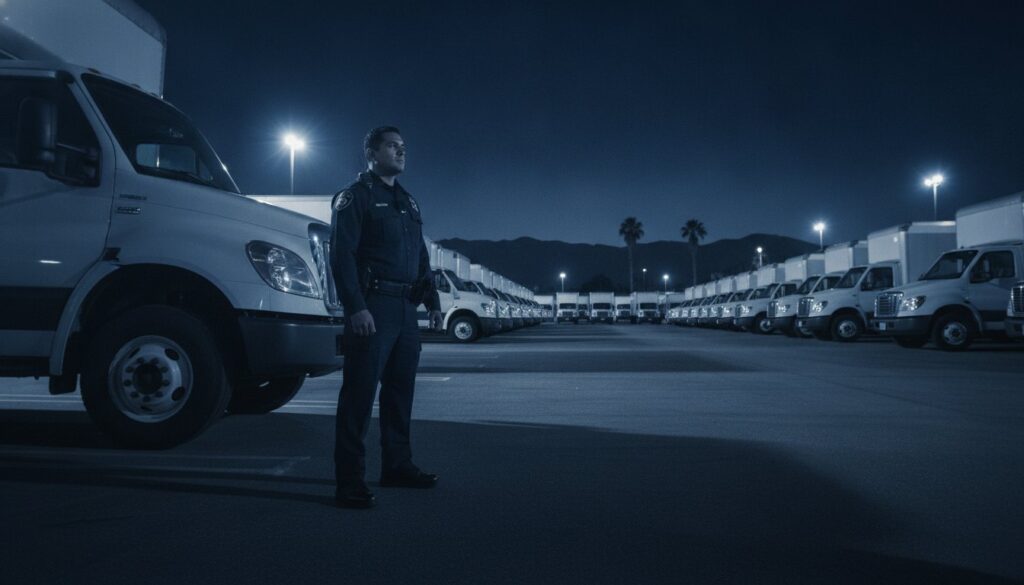
A professional thief needs less than 120 seconds to cripple a commercial vehicle. With rhodium prices reaching $7,900 per troy ounce in July 2026, your fleet represents a high-value opportunity for organized crime. You’re likely familiar with the frustration of exorbitant repair costs and the operational paralysis caused by vehicle downtime. When insurance claims average $2,900 per incident, reacting to theft is no longer a viable strategy for catalytic converter theft prevention for businesses.
True security requires a shift from passive hardware to a disciplined, multi-layered framework. This guide provides a strategic roadmap to protect your assets by prioritizing presence and prevention. We’ll outline a scalable security plan designed for large parking lots and high-stakes environments. You’ll learn to achieve zero-theft operational continuity while reducing your liability through rigorous oversight and professional standards. Our approach moves beyond simple equipment to establish a vigilant, unyielding shield over your commercial assets.
Key Takeaways
- Understand the 2026 market dynamics where high precious metal values turn commercial fleets into prioritized targets for organized theft rings.
- Evaluate the limitations of physical hardware and learn why a multi-layered approach is essential for catalytic converter theft prevention for businesses.
- Discover how the visible presence of professional security guards creates a psychological barrier that static monitoring systems cannot replicate.
- Implement a disciplined framework for site-wide protection by conducting rigorous vulnerability assessments and establishing tiered access controls.
- Leverage the Broadway Advantage to secure your assets with military-grade precision and a commitment to unyielding operational standards.
The 2026 Crisis: Why Commercial Fleets are Primary Targets
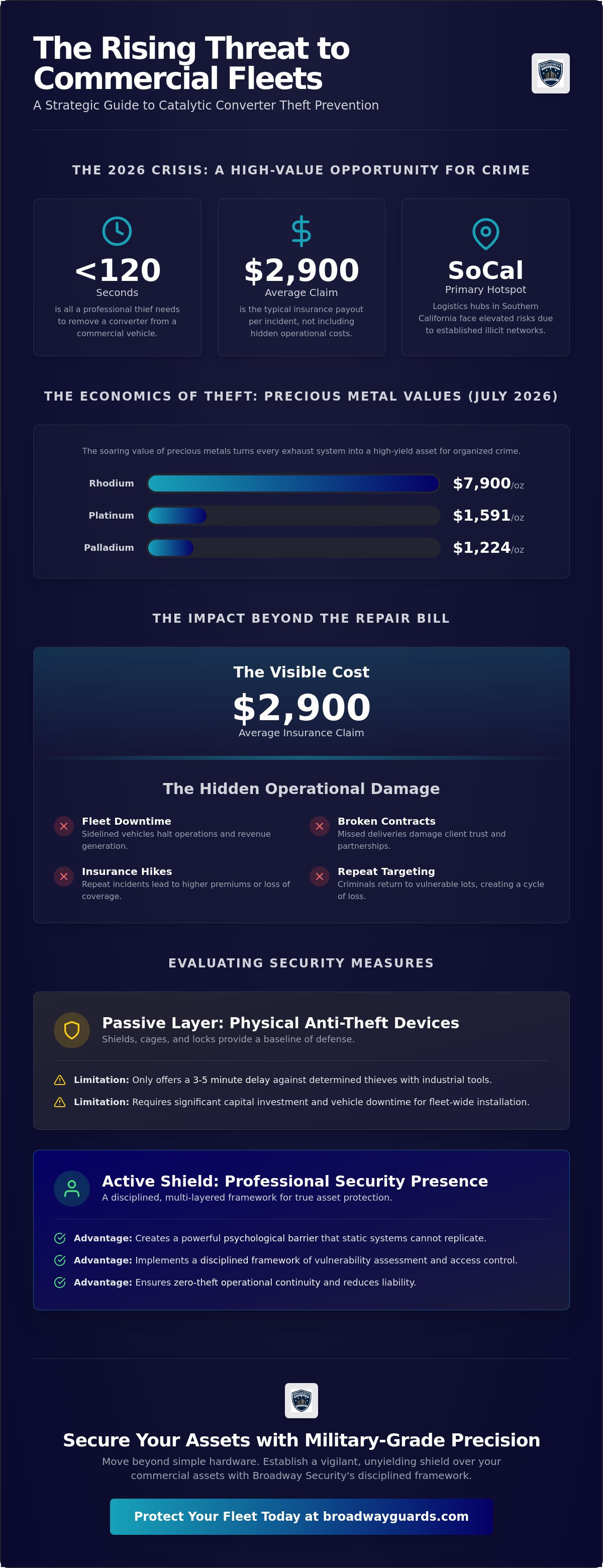
The operational security of your fleet is currently under siege by organized criminal elements. In 2026, the incentive for theft has reached a critical threshold driven by the surging value of precious metals. Rhodium currently trades at $7,900 per troy ounce, while platinum and palladium hold steady at $1,591 and $1,224 respectively. These valuations transform every exhaust system into a portable high-yield asset. Organized theft rings prioritize commercial lots over individual street parking because they offer high-density targets with predictable schedules. A single breach of a commercial perimeter allows a team to harvest dozens of units in a single night, maximizing their profit while minimizing their exposure time.
Southern California remains a primary hotspot for these activities. Businesses in the San Fernando Valley and surrounding logistics hubs face elevated risks due to established illicit supply chains. Professional “scrapping networks” in these areas operate with military-like efficiency, moving stolen goods through multiple layers of middle-men before the metals are even smelted. Understanding what catalytic converters are and why their chemical composition is so valuable is the first step in establishing a rigorous defense. For many, the realization of this vulnerability only comes after the damage is done. Catalytic converter theft prevention for businesses must be a proactive mandate rather than a reactive repair cost.
The Economics of Catalytic Converter Theft
Heavy-duty commercial converters contain significantly higher concentrations of precious metals than standard passenger vehicles. Thieves target these larger units to secure a higher payout per extraction. A professional thief requires less than two minutes to successfully extract a converter from a high-clearance commercial vehicle. This speed allows criminal teams to move through a lot with devastating precision. They operate under a structured hierarchy, where scouts identify vulnerabilities days before the actual strike occurs. Without disciplined oversight, your fleet remains a soft target for these sophisticated networks.
Business Impact Beyond the Repair Bill
The financial damage of a theft incident extends far beyond the $2,900 average insurance claim. Fleet downtime triggers a ripple effect that compromises client contracts and disrupts supply chain commitments. When a vehicle is sidelined, you lose the revenue it generates and face the logistical nightmare of missed deliveries. Employee frustration also mounts as drivers are left without the tools needed to perform their duties. Furthermore, a single hit often leads to repeat targeting of the same lot. Criminals return to the same location weeks later, betting that the business has replaced the stolen parts but failed to upgrade their catalytic converter theft prevention for businesses. This cycle of victimization leads to insurance premium spikes and can eventually result in the loss of coverage altogether.
Evaluating Physical Anti-Theft Devices: Shields, Cages, and Locks
Physical anti-theft devices are hardware installations designed to delay or deter the removal of exhaust components. These mechanical obstacles function as a baseline layer of defense for commercial fleets. Catalytic converter shields, typically constructed from heavy-gauge aluminum or stainless steel, bolt directly to the vehicle frame to fully enclose the converter. Cable cages offer a different approach, utilizing high-tensile steel cables to wrap the unit and anchor it to the chassis. While these tools increase the tactical difficulty of a strike, they don’t provide absolute immunity for your assets.
The reality of catalytic converter theft prevention for businesses is that hardware only provides a window of delay. Most physical barriers offer a resistance time of three to five minutes. This timeframe is significant, yet it remains insufficient against a nationwide catalytic converter theft network that utilizes specialized industrial equipment and coordinated team movements. For large-scale fleet operations, the logistics of outfitting dozens of vehicles require substantial capital and labor. You must also account for the operational downtime while vehicles are pulled from service for installation.
The Limitations of Hardware-Only Solutions
Modern criminal elements use high-torque cordless reciprocating saws equipped with diamond-tipped blades. These industrial tools can bypass common shields in under 60 seconds once a weak point is identified. A botched theft attempt on a caged unit often results in extensive collateral damage to the vehicle’s frame, manifold, or oxygen sensors. This leads to repair costs that frequently exceed the value of the converter itself. Hardware is a secondary layer of a disciplined defense, never the primary shield. Relying solely on metal plates ignores the sophisticated nature of 2026 theft rings.
Cost-Benefit Analysis for Fleet Managers
Evaluating the ROI of outfitting 50 or more vehicles involves more than the initial purchase price. Fleet managers must factor in recurring maintenance requirements. Shields and cages require regular inspections for rattle, corrosion, and loose fasteners that can compromise vehicle safety and performance. These physical measures should be integrated into your existing security risk assessment CA protocols to ensure every vulnerability is documented and addressed. While shields provide a baseline, a disciplined mobile patrol service ensures that thieves never have the quiet, unobserved environment they need to begin cutting in the first place.
Active Deterrence: Why Professional Security Outperforms Static Systems
Static security systems record history. Professional security changes it. While cameras and alarms provide a digital record of a crime, they rarely stop a determined thief from completing an extraction in under two minutes. According to data regarding the surge in catalytic converter thefts, organized crime rings exploit the gap between detection and police arrival. Effective catalytic converter theft prevention for businesses relies on immediate intervention rather than forensic review. A uniformed presence creates a psychological barrier that forces scouts to re-evaluate their targets. Criminals seek the path of least resistance. They avoid lots where a vigilant, human shield is actively monitoring the perimeter.
Human oversight provides a level of adaptability that software cannot match. Professional unarmed security guards maintain constant vigilance, identifying suspicious vehicles or individuals long before they enter the property. This proactive stance disrupts the “mask and vanish” tactics used by modern theft rings. While remote monitoring systems wait for a sensor to trip, a disciplined guard notices the subtle signs of a perimeter breach or a scout’s reconnaissance. This level of oversight ensures that your commercial assets remain under the care of a force that values prevention above all else.
The Failure of Passive Alarms
Industrial zones often suffer from siren fatigue. When alarms trigger frequently due to environmental factors, they’re often ignored by both the public and law enforcement. Thieves count on this delay. Low-light CCTV often fails to capture high-resolution identifying features of professional thieves who use hoods and masks. A camera only documents your loss. Human intervention stops the crime in progress. A guard’s presence eliminates the quiet, unobserved environment required for high-torque saws to operate unnoticed.
Strategic Deployment of Mobile Patrols
Mobile patrols offer a dynamic solution for large parking lots and storage facilities. By utilizing random interval patrolling, guards prevent thieves from timing the security rotation. This unpredictability is a core component of catalytic converter theft prevention for businesses. The effectiveness of construction site security guards illustrates this value; they protect high-clearance vehicles in vulnerable, open environments. Combining vehicular patrols with methodical foot inspections ensures that every row of your fleet is accounted for. This structured approach maintains a standard of quality that static systems simply cannot provide.
A Disciplined Framework for Site-Wide Fleet Protection
Establishing a site-wide strategy is the only way to ensure long-term asset security. A professional vulnerability assessment identifies the specific weak points where unauthorized entry is most likely to occur. This methodical review examines entry points, blind spots in lighting, and the structural integrity of your perimeter. Catalytic converter theft prevention for businesses requires more than just reactive hardware; it demands a structured environment where every vehicle is positioned for maximum protection. By treating your lot as a high-security zone rather than a simple parking area, you create a formidable barrier against organized crime.
Tiered access control is a critical component of this framework. Limiting who can enter vehicle storage areas and at what times reduces the risk of internal collusion or external reconnaissance. When access is granted only to authorized personnel through a verified checkpoint, the opportunity for a scout to map your fleet’s vulnerabilities is eliminated. This disciplined approach ensures that your assets remain under constant, controlled oversight. Every layer of defense you add increases the complexity and risk for a potential thief, making your facility an unattractive target for criminal operations.
Perimeter Hardening and Lighting Standards
Tactical lighting is a foundational requirement for any secure facility. High-intensity LED lighting eliminates shadows where thieves seek cover, making your lot a less attractive target for night-time reconnaissance. Standard chain-link fencing often fails because it’s easily breached with basic hand tools. Upgrading to reinforced, anti-climb barriers creates a formidable physical delay that forces criminals to expose themselves for longer periods. For ultra-high-risk distribution centers, integrating armed security guard services Los Angeles provides a superior level of protection that matches the intensity of professional criminal threats.
Operational Protocols for Fleet Lots
Rigorous operational standards turn your fleet into its own defense. Drivers must follow a strict “End of Shift” protocol to ensure vehicles are parked in a “boxed-in” configuration. By parking high-clearance trucks and SUVs between low-clearance sedans, you physically restrict access to the undercarriage. This simple maneuver complicates the extraction process and increases the time required for a theft. Daily reporting and incident logging are essential for identifying scouting patterns before a strike occurs. If a scout observes that your lot operates under a disciplined hierarchy, they’ll move on to a softer target. This site-wide approach to catalytic converter theft prevention for businesses ensures that no single failure point can lead to a total loss. To secure your facility with professional precision, you should consult with a security specialist to audit your current perimeter standards.
Broadway Security: The Disciplined Shield for Your Business Assets
Broadway Security functions as a disciplined shield for your commercial assets. We apply military-grade precision to fleet oversight, ensuring that every vehicle remains secure under our watch. In an environment where criminal networks operate with high-speed efficiency, our presence provides a level of high-stakes reliability that automated systems cannot replicate. Professionalism and a visible, uniformed presence remain the ultimate deterrents against organized crime scouts. Integrating Broadway’s protocols into your strategy for catalytic converter theft prevention for businesses ensures that your perimeter is never a soft target.
The Broadway Advantage is rooted in rigorous training and consistent field performance. We don’t merely observe; we execute a structured security plan designed to maintain order and accountability. Our guards are trained to recognize the subtle markers of criminal reconnaissance, allowing us to neutralize threats before they escalate into theft. This commitment to duty provides the peace of mind that your assets are under the care of a vigilant and unyielding force. We prioritize results through methodical oversight and clear reporting standards.
Expert Consultation and Risk Management
Our project-based risk assessments identify overlooked vulnerabilities that generic security checklists miss. We develop site-specific protocols that align with California regulatory standards, ensuring your operation remains compliant while staying protected. Understanding the local Canoga Park landscape allows our team to anticipate regional crime trends and adjust patrol patterns accordingly. This localized expertise ensures that our security management plans are tailored to the specific industrial needs of Southern California businesses. We analyze every entry point and lighting shadow to create a comprehensive zone of protection.
Securing Your Future Fleet Operations
Investing in professional security personnel represents a shift from reactive stress to proactive peace of mind. The long-term ROI of a disciplined security partner is found in the preservation of your operational continuity and the reduction of insurance liability. We provide the oversight necessary to protect your bottom line from the rising costs of fleet victimization. Our methodology ensures that your assets are guarded with the gravity they deserve. Contact Broadway Security today for a comprehensive site evaluation to fortify your fleet against the 2026 theft crisis.
Securing Your Operational Future
The 2026 theft landscape requires a transition from passive hope to active, disciplined defense. While shields and cages provide several minutes of delay, they can’t stop the industrial-grade precision of modern criminal networks. Effective catalytic converter theft prevention for businesses is achieved through the integration of human vigilance and rigorous site-wide protocols. By prioritizing presence and professional oversight, you eliminate the unobserved environment that thieves require to operate. This proactive approach protects your bottom line and ensures your fleet remains in service.
Highly trained armed and unarmed personnel provide a disciplined shield for your assets. Our specialized expertise in Southern California commercial security ensures that your facility meets the highest standards of protection. Through rigorous operational standards and real-time reporting, we maintain a constant state of readiness. Secure your commercial fleet with Broadway Security’s professional guard services. Establish a vigilant defense today and reclaim your operational peace of mind.
Frequently Asked Questions
Is catalytic converter theft still a major issue for businesses in 2026?
Yes, theft remains a critical threat in 2026 due to the sustained high value of precious metals. With rhodium trading at $7,900 per troy ounce, organized crime rings continue to prioritize commercial fleets for high-yield returns. Catalytic converter theft prevention for businesses is essential as theft rates correlate directly with global metal market volatility and the predictability of commercial parking environments.
Which commercial vehicles are most at risk for catalytic converter theft?
High-clearance vehicles such as the Ford F-150, Hyundai Tucson, and Ford Explorer are primary targets because they allow easy access to the undercarriage. Hybrid vehicles like the Toyota Prius also face elevated risk due to the higher concentration of precious metals in their exhaust systems. Thieves prioritize these models to maximize their profit while minimizing the time spent under the vehicle during an extraction.
Do catalytic converter shields actually work against professional thieves?
Shields and cages function as tactical delays rather than absolute prevention. While they can increase the time required for a theft by three to five minutes, professional thieves using diamond-tipped blades can often bypass them. These devices are most effective when integrated into a multi-layered security framework that includes active human oversight. Relying solely on hardware ignores the sophisticated tools used by modern criminal networks.
Can security guards prevent theft better than cameras?
Professional guards provide active deterrence that cameras cannot replicate. While cameras document a crime in progress, a uniformed security presence creates a psychological barrier that stops a strike before it begins. Guards identify suspicious perimeter activity and intervene immediately, neutralizing the “mask and vanish” tactics used by organized rings. Human oversight ensures that your assets are protected by a vigilant and unyielding force.
How much does a professional security assessment cost for a business?
Professional security assessments are customized based on the scale of your fleet and the complexity of your perimeter. Broadway Security provides these evaluations to identify tactical vulnerabilities and establish a disciplined framework for asset protection. You should contact a security specialist directly to receive a proposal tailored to your specific industrial requirements and risk profile. This ensures your security plan aligns with your operational budget.
What should I do immediately if my fleet is targeted by thieves?
Secure the area immediately to prevent further loss and document the damage for insurance purposes. You must file a formal police report and check for any local surveillance footage that may have captured the incident. Under California Assembly Bill 1740, documentation is critical for prosecution. Once the immediate crisis is managed, conduct a rigorous audit of your perimeter to identify and close the security gaps that allowed the breach.
Does insurance cover catalytic converter theft for commercial vehicles?
How does Broadway Security handle overnight patrol for large fleet lots?
Broadway Security utilizes Mobile Patrol Services to maintain a consistent yet unpredictable presence across large fleet lots. Our guards conduct random interval patrols and methodical foot inspections of high-clearance vehicles to disrupt scouting activities. This structured approach ensures that every asset remains under the care of a disciplined shield throughout the high-risk overnight hours. We prioritize real-time reporting and rigorous oversight to maintain the highest standards of fleet safety.