


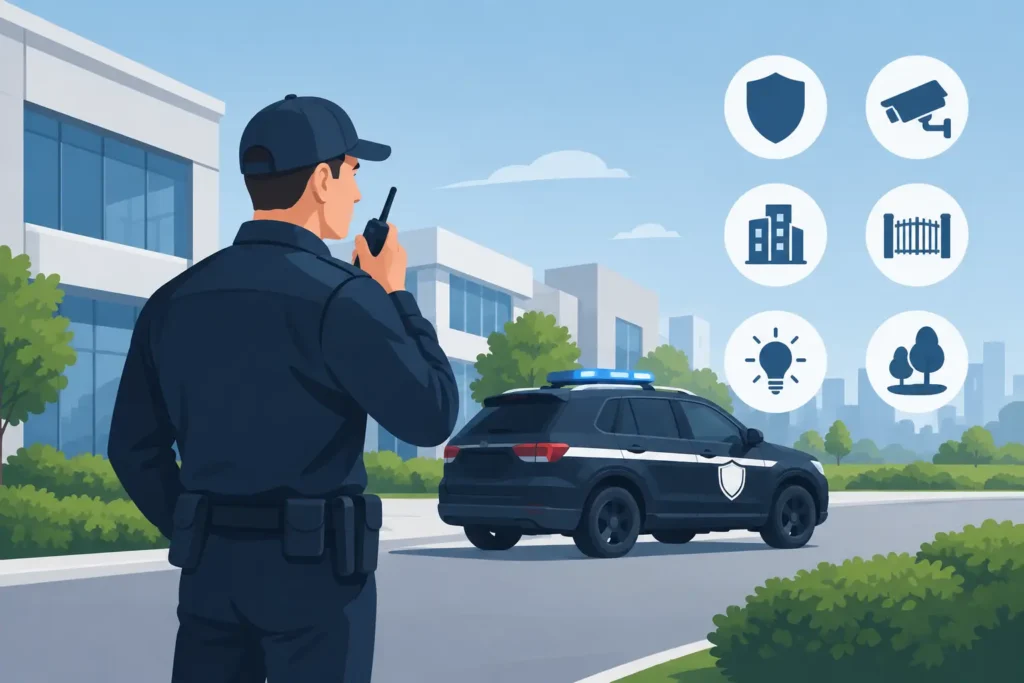
A vacant loading area at 2:00 a.m., an apartment garage with repeated vehicle break-ins, and a construction site with unsecured equipment do not always require a guard stationed at one door all night. They do require visible, disciplined coverage that makes unauthorized activity harder to carry out unnoticed. Mobile patrol security services provide that coverage through marked patrol vehicles, scheduled and randomized site checks, trained officers, and documented reporting.
For Los Angeles properties with multiple access points, large footprints, changing operating hours, or after-hours exposure, patrol coverage can be a practical way to improve deterrence without assigning a full-time officer to every location. The value depends on how the patrol program is designed, supervised, and documented. A vehicle driving through a lot without clear post orders is not a security plan. A structured patrol operation is.
What Mobile Patrol Security Services Do
Mobile patrol officers travel between assigned properties or patrol designated areas within a large site. Their primary function is to create a visible security presence, inspect conditions, identify suspicious activity, respond within the scope of their assignment, and record what occurred.
A patrol officer may check gates, doors, fencing, loading docks, parking areas, common areas, utility rooms, vacant units, construction equipment, and other vulnerable points. At a commercial property, the officer may confirm that rear entrances are secured after closing. At a residential community, the patrol may address parking violations, monitor amenity areas, and investigate resident concerns. At an industrial facility, the assignment may focus on perimeter integrity, vehicle activity, and access control after business hours.
The patrol route should not be treated as a casual drive-by. Effective coverage follows site-specific post orders that identify required checkpoints, access procedures, emergency contacts, escalation instructions, and known risks. Officers should know what normal operations look like at the property so they can recognize exceptions quickly.
Visible deterrence is part of the assignment
A marked vehicle, uniformed officer, and consistent patrol pattern send a clear message: the property is actively monitored. That presence can discourage trespassing, theft, vandalism, illegal dumping, vehicle burglary, and unauthorized access before an incident develops.
Visibility alone is not enough, however. Patrols must be frequent enough to matter and unpredictable enough that an offender cannot plan around them. Some sites benefit from fixed scheduled checks, such as opening and closing inspections. Others need randomized patrol windows because incidents tend to occur during late-night or low-traffic periods.
Patrol officers also identify conditions that create risk
Security concerns are not limited to criminal activity. An officer may find a damaged gate, a propped-open fire door, poor lighting, water intrusion, an unsecured key box, or a blocked emergency access route. These observations give property management an opportunity to correct problems before they become losses, liability issues, or operational disruptions.
Detailed incident and activity reporting is critical here. A useful report identifies the date, time, location, condition observed, actions taken, parties notified, and any recommended follow-up. Documentation supports management decisions and creates a record of the security provider’s performance.
When Mobile Patrol Coverage Is the Right Fit
Patrol coverage is often a strong option for properties that need regular oversight but do not need a dedicated officer at one fixed post every hour. This includes multi-tenant retail centers, office parks, warehouses, apartment communities, construction sites, vehicle yards, medical offices, schools during non-operating hours, and properties with several nearby locations.
It can also supplement existing staffing. A facility with a daytime lobby officer may use mobile patrols to secure the exterior after business hours. A construction site may need a patrol officer to make evening rounds while higher-risk phases of work require a dedicated overnight guard. An event venue may use vehicle patrols to monitor perimeter areas and parking zones beyond the main entry point.
The decision comes down to risk, layout, and response expectations. If a location has frequent confrontations, high-value assets, constant public traffic, or a critical access-control post, a dedicated on-site guard may be the better choice. Mobile patrols cannot maintain continuous observation of one entrance while they are checking another area or servicing another assigned property.
For many clients, the best approach is layered coverage: controlled access during active hours, mobile patrol inspections after hours, and clear procedures for alarm response or emergency escalation. The plan should match the actual exposure instead of forcing every property into the same staffing model.
Building an Effective Patrol Plan
A patrol assignment should begin with a site assessment. Security leadership needs to understand where people enter, where assets are stored, which areas are poorly lit, when the property is most vulnerable, and how employees, residents, vendors, or visitors move through the site.
The resulting plan should define patrol frequency, required checkpoints, vehicle access, officer duties, report requirements, communication procedures, and escalation authority. It should also account for practical site conditions. A patrol vehicle may be ideal for a large industrial yard, while an apartment complex may require the officer to park and conduct foot patrols through garages, corridors, and amenity spaces.
Post orders create consistency
Clear post orders prevent guesswork. They tell the officer which gates must be checked, whether doors should be locked or merely reported, who to contact for maintenance issues, how to handle trespassers, and when law enforcement or emergency services should be called.
They also establish boundaries. Security officers should enforce the client’s rules professionally and within their authority. The objective is to protect people and property, de-escalate when possible, and preserve accurate information for management and responding agencies.
Supervision protects service quality
Mobile patrol work requires active management because officers operate across wide areas and changing conditions. Responsive supervision helps confirm that patrol procedures are being followed, incidents are addressed correctly, and client concerns receive prompt attention.
A dependable provider should have a process for reviewing reports, handling missed checkpoints, updating post orders, and communicating recurring issues to the client. If a rear gate repeatedly fails to latch or a particular area draws trespassing complaints, that pattern should lead to a corrective recommendation, not simply another report.
What to Ask Before Hiring a Patrol Provider
Property managers and facility directors should look beyond an hourly rate. A lower-cost patrol service may offer little value if arrival times are unclear, reports are incomplete, and no supervisor follows up when problems repeat.
Ask how patrol frequency is established and whether patrol times can be randomized. Confirm what is included in each visit: exterior checks, interior common-area inspections, lock checks, alarm response, parking enforcement, or incident response may be separate services. Clarify how officers document activity, how quickly serious incidents are escalated, and who is available after normal business hours.
It is also reasonable to ask about licensing, insurance, officer training, vehicle identification, supervisory structure, and experience with properties similar to yours. For California clients, the provider should be properly licensed and staffed with trained personnel appropriate to the assignment. If armed coverage is being considered, the scope, risk level, and officer qualifications should be evaluated carefully rather than added as a default.
Reporting Turns Patrol Activity Into Accountability
A patrol service is easier to manage when each visit leaves a clear record. Reports should verify completed patrol activity and provide useful detail without burying the client in vague notes. “Property checked, all clear” does not explain which areas were inspected or whether any conditions required attention.
Better reporting helps clients identify trends. Repeated loitering near a side entrance may justify improved lighting or access controls. Frequent parking violations may require revised signage or enforcement procedures. Multiple false alarms may reveal a maintenance issue that needs correction. Security reporting should support operational decisions, not sit unread in an inbox.
Broadway Security Services approaches patrol deployment as a controlled field operation: site-specific procedures, visible marked patrols, responsive supervision, and reliable incident documentation. That discipline matters because patrol coverage is only as strong as the officer’s ability to observe, respond, and communicate.
The right patrol plan gives a property regular eyes on vulnerable areas without paying for unnecessary fixed coverage. Start with the conditions that create exposure at your site, then set patrol duties and reporting standards that make every visit accountable.