


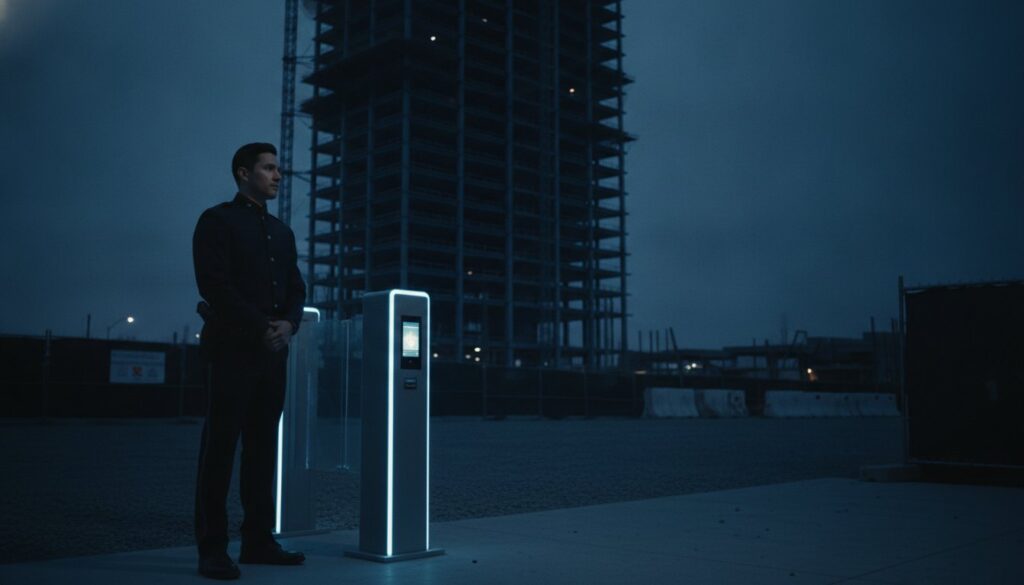
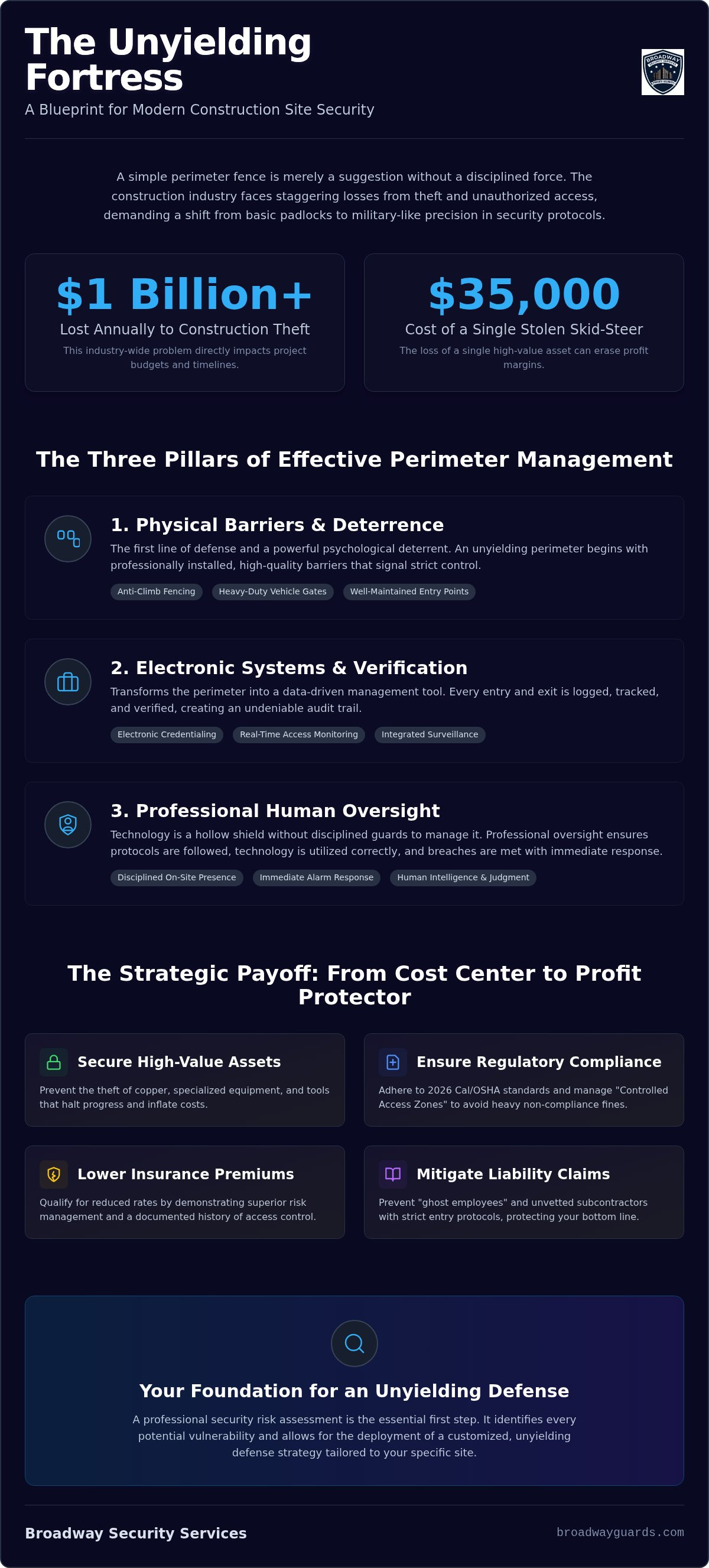
A single stolen skid-steer loader costs your project $35,000, yet the construction industry continues to lose over $1 billion annually to theft and unauthorized access. You know that a perimeter fence is merely a suggestion without a disciplined force to back it up. Managing a high-stakes site in 2026 requires more than just a padlock; it demands a rigorous protocol to mitigate liability and protect your bottom line. When you define construction site security guard duties through the lens of military-like precision, you transform a vulnerable lot into an unyielding fortress.
We agree that the rising complexity of site management creates a heavy administrative burden, particularly with the 2026 Cal/OSHA updates regarding lead exposure and lowered fall protection triggers. This guide promises to help you master site integrity, eliminate unauthorized entry, and ensure total regulatory compliance. We will preview the strategic integration of professional oversight and automated labor tracking. By the end, you’ll have a blueprint to achieve zero unauthorized entries, maintain a disciplined presence, and lower your insurance premiums through superior risk management.
Key Takeaways
- Modern site integrity requires integrating physical barriers with electronic verification to transform the perimeter into a data-driven management tool.
- Technology serves as a hollow shield without professional oversight; understanding construction site security guard duties is essential for managing automated gates and responding to breaches.
- Adherence to 2026 Cal/OSHA standards, specifically the designation of “Controlled Access Zones,” is mandatory to avoid heavy non-compliance fines.
- A professional risk assessment is the first step toward identifying perimeter vulnerabilities and implementing a customized, unyielding defense strategy.
- Effective access control directly impacts the bottom line by securing high-value assets and qualifying the site for reduced insurance premiums.
Defining Construction Site Access Control in the Modern Era
Modern access control is the strategic integration of physical barriers, electronic systems, and professional personnel designed to manage site entry with absolute precision. It represents a fundamental shift from simple fences and padlocks to a data-driven workforce management system. By implementing rigorous physical security measures, developers can monitor every movement across the perimeter in real time. This level of oversight is now a prerequisite for 2026 insurance standards, where carriers require documented proof of access management to justify lower premiums and coverage for high-value assets. This level of oversight often involves the deployment of unarmed security guards to manage the physical flow of personnel and equipment.
The execution of this strategy relies heavily on the professional performance of construction site security guard duties. These responsibilities include the verification of electronic credentials, the management of vehicle gates, and the immediate response to perimeter alarms. When guards operate as a disciplined shield, they eliminate the “hollow shield” effect of unmanned technology. This professional oversight reduces project delays by filtering out non-essential visitors and ensures that liability claims are mitigated through strict entry protocols. It’s a system built on accountability, where every person on-site is accounted for from the moment they arrive until they depart.
Beyond the Gate: The Strategic Importance of Site Integrity
Site integrity is paramount for preventing the financial leakage caused by “ghost employees” and unvetted subcontractors. Only workers who’ve completed the safety induction process should be granted access to the site perimeter. Unauthorized entry doesn’t just threaten property; it creates significant OSHA violation risks that can lead to heavy fines or project shutdowns. A secure perimeter is also the primary defense against the theft of copper and specialized equipment. These losses often occur when entry points are left unmonitored during shift changes or after-hours. A disciplined access strategy ensures that high-value materials remain protected behind a verified line of defense.
The Evolution of Perimeter Security in Southern California
Construction in high-density areas like the San Fernando Valley requires a more sophisticated approach than rural projects. The sheer volume of foot and vehicle traffic necessitates a transition from passive deterrence to active, monitored access points. To ensure the highest standard of protection, developers must start with a comprehensive security risk assessment CA to map out every potential breach point. This proactive step allows for the deployment of resources where they’re most needed. Site Integrity is the foundation of a construction site security guards strategy.
The Three Pillars of Effective Site Perimeter Management
Securing a project’s perimeter requires a multi-layered defense strategy that functions with military-like precision. This strategy rests on three interconnected pillars: physical barriers, electronic identification, and professional human oversight. When these elements operate in unison, they create an unyielding environment that protects assets and ensures compliance with construction site safety regulations. A failure in any single pillar compromises the entire system, leaving the site vulnerable to theft and liability. Integrated surveillance ties these pillars together, linking every access event to high-definition video evidence for a complete audit trail.
Physical Barriers and Deterrence
Physical barriers serve as the first line of defense and a powerful psychological deterrent. For high-traffic projects in the San Fernando Valley, selecting the right fencing and gate types is critical to maintaining order. Anti-climb fencing and heavy-duty vehicle gates signal to potential intruders that the site is under strict control. A professional, well-maintained entry point discourages unauthorized trespassers before they even attempt a breach. It’s essential to manage vehicle and pedestrian access through separate, dedicated channels to prevent bottlenecks that could lead to safety hazards or project delays. This structured approach ensures that the flow of traffic remains consistent and secure.
Electronic Credentials and Workforce Data
The industry is rapidly shifting toward mobile-based credentials and biometric verification for 2026. These electronic systems replace outdated manual sign-in sheets with digital logs that offer superior accuracy and accountability. Biometric scanning and RFID technology ensure that only inducted personnel enter the site, effectively eliminating the risk of “ghost employees.” These systems are engineered to perform in the harsh construction environments of Southern California, where dust and heat can cause lesser technology to fail. Digital records provide a transparent data set for insurance audits and labor tracking, proving that the site meets the highest standards of operational discipline.
Technology alone is a hollow shield; it requires a trained professional to manage exceptions and verify alerts. This is where construction site security guard duties become the vital link in the security chain. Guards act as the primary management layer, overseeing automated entry points and conducting visual inspections that sensors might miss. They ensure that every individual entering the perimeter is authorized and equipped with the necessary safety gear. If your current perimeter feels like a liability, Broadway Security Services can provide the professional oversight needed to harden your site against modern threats. By integrating guards with advanced surveillance, you create a comprehensive audit trail that documents every movement across your perimeter.
Technology vs. Guarding: Finding the Optimal Balance
Relying solely on automated hardware creates a false sense of security. While electronic gates and turnstiles provide valuable data, they remain a hollow shield when faced with a determined intruder or a complex logistical error. Software lacks the situational awareness to distinguish between a legitimate delivery driver and a trespasser slipping in through an open vehicle gate. True site integrity requires a disciplined human layer to interpret data and enforce protocols with absolute authority. This is why the integration of unarmed security guards is critical for any high-value development in Southern California.
The ROI of professional staffing far outweighs the cost of potential losses or liability claims. While an automated system might flag a breach, it cannot execute a physical response or provide the judgment needed during a high-stress incident. Professional construction site security guard duties extend beyond simple gatekeeping; they include managing credential failures and visitor logistics without disrupting the project’s rhythm. A guard provides the immediate, on-site intervention that software simply cannot offer. They ensure that technology serves as a tool for protection rather than a point of failure.
The Limitations of Automated Access Control
Tailgating and piggybacking are the most frequent points of failure for tech-only systems. Without a physical presence, a single valid credential can allow multiple unauthorized individuals to enter the perimeter. Additionally, hardware often struggles with visitor management and credential malfunctions. When a subcontractor’s biometric scan fails due to environmental factors, a guard ensures the workflow continues while maintaining security standards. A physical response is mandatory whenever electronic sensors detect a breach, as remote monitoring alone rarely deters a motivated thief.
The Synergy of High-Tech and High-Touch
Positioning professional personnel as the intelligent operators of your site’s technology maximizes your security investment. Guards perform random audits of digital credentials to ensure that every individual on-site is fully compliant with induction requirements. This layer of oversight prevents the use of shared badges or expired credentials. In large-scale developments, mobile patrols complement fixed access points by providing a visible, moving deterrent across the entire property. This combination of high-tech data and high-touch discipline ensures that your assets remain under constant, vigilant care.
Implementing a Compliant Access Control Strategy in California
Establishing a compliant perimeter in California requires more than basic fencing; it demands a systematic approach that aligns with the specific regulatory environment of 2026. The first step is to conduct a security risk assessment CA to map every vulnerability across the project site. This assessment serves as the foundation for your defensive posture, identifying where physical barriers and electronic systems must be reinforced by professional personnel. Without this initial audit, your access control strategy remains reactive rather than proactive.
Once vulnerabilities are identified, you must define “Controlled Access Zones” in strict accordance with Cal/OSHA 2026 standards. These standards now include updated safety orders for confined spaces under Title 8 CCR §§ 1951 through 1956 and lower trigger heights for fall protection. Professional construction site security guard duties include enforcing these zones by ensuring only workers with specific training and safety inductions enter high-risk areas. This level of discipline prevents costly OSHA non-compliance fines and protects workers from hazards like lead exposure, which saw stricter “trigger task” regulations take effect on January 1, 2026.
Clear entry protocols for employees, subcontractors, and visitors must be established and enforced with military-like precision. Every person entering the site must be verified against a digital roster and confirmed to have the required safety credentials. Deploying a combination of physical barriers, such as anti-climb fencing, alongside professional security personnel ensures that these protocols are never bypassed. This integrated approach transforms your perimeter into a regulatory checkpoint that mitigates liability and secures your high-value assets. If your project requires this level of operational rigor, Broadway Security Services can deploy a disciplined shield to manage your site’s integrity.
Navigating Cal/OSHA and Local Regulations
Compliance in California involves a complex web of legal requirements, including mandatory site signage and detailed worker orientation records. Access control systems must be designed so they do not impede emergency egress, which often triggers specific Fire Watch requirements. Managing these overlapping regulations is a core component of modern site integrity. For projects where access control impacts fire safety systems, refer to our fire watch services California guide to ensure dual-compliance with both security and fire marshal standards.
Regional Logistics in Southern California
Operating in high-density areas like the San Fernando Valley introduces unique logistical challenges, particularly regarding traffic flow and vendor access. In congested urban sites like Canoga Park, managing the arrival of heavy machinery and material deliveries requires constant coordination to prevent public right-of-way obstructions. Security personnel must maintain clear communication with local law enforcement and emergency responders to ensure the site remains a controlled environment. This vigilance must extend to 24/7 coverage during weekends and holidays, as these are the windows when sites are most vulnerable to unauthorized trespassers and organized theft.
Broadway Security: Professional Oversight for High-Value Sites
Broadway Security Services positions itself as the disciplined shield for Southern California developers. We don’t just provide staffing; we provide a comprehensive management layer that ensures total site integrity. By integrating professional guards with modern access control technology, we create a system where digital data is constantly verified by expert human judgment. Construction site security guard duties under Broadway’s command are executed with absolute accountability and military-like precision. This ensures that your high-value assets remain under the care of a vigilant and unyielding force at all times. Our professional risk assessment services provide the strategic roadmap necessary to harden your perimeter before the first shovel hits the ground in high-stakes areas like the San Fernando Valley.
The Broadway Standard of Discipline and Vigilance
Our training protocols are exceptionally rigorous. Personnel are trained to be experts in both 2026 Cal/OSHA safety standards and professional communication etiquette. This dual focus ensures that your site remains secure without alienating essential subcontractors or delivery vendors. We prioritize total transparency through our reporting systems. Every gate entry, perimeter check, and suspicious activity is recorded in a structured digital log, providing a clear audit trail for insurance carriers and project managers. Our guards focus on three core operational standards:
- Credential Verification: Rigorous checks of all digital and physical identification to prevent unauthorized entry.
- Perimeter Patrols: Methodical sweeps of the entire site boundary to identify potential breach points.
- Incident Reporting: Immediate, transparent documentation of all security events for real-time oversight.
In a recent operation, our vigilant perimeter management prevented the theft of a high-value excavator when a guard identified a fraudulent delivery credential during an after-hours shift. This level of methodical oversight is what differentiates a standard guard service from a disciplined protector. We don’t wait for alarms to trigger; we actively scan for anomalies before they escalate into losses.
Securing Your Next Project with Broadway
Security requirements shift significantly as a project moves from initial excavation to final interior finishing. Broadway offers customizable security contracts tailored to the specific phase of your construction project. We provide both unarmed personnel for standard gate-keeping and high-risk armed protection for sites housing sensitive assets or specialized equipment. This flexibility allows developers to scale their protection as the project’s complexity and value increase. Our unwavering commitment to duty ensures that your assets are never left vulnerable to the financial drain of unauthorized entry or vandalism. Request a professional consultation for your site access control today.
Securing the Future of Your Development
Maintaining site integrity in 2026 requires a shift from passive deterrence to active, professional oversight. You’ve learned that technology alone is a hollow shield; true protection stems from the strategic integration of physical barriers and human intelligence. By defining construction site security guard duties through a lens of military-grade discipline, you ensure that every entry point remains a verified checkpoint rather than a vulnerability. Adhering to the latest Cal/OSHA standards isn’t just about avoiding fines; it’s about building a culture of safety and accountability that protects your high-value assets and your workforce.
As you move forward with your next Southern California project, prioritize a foundation of order and precision. Our team of California-licensed professionals specializes in construction site security, offering the rigorous oversight needed to eliminate unauthorized entry and lower your liability risks. Take the first step toward an unyielding perimeter today.
Secure Your Site Perimeter with Broadway Security Services and gain the peace of mind that comes with a disciplined shield. Your project deserves the highest standard of protection.
Frequently Asked Questions
What is the most effective type of construction site access control for urban areas?
The most effective strategy for urban environments like Canoga Park combines high-strength physical barriers with professional human oversight. Urban sites face constant foot traffic and proximity to public spaces, which increases the risk of unauthorized entry. A disciplined presence at every entry point ensures that only inducted personnel pass the perimeter. Integrating mobile patrols with fixed gate security creates an unyielding defense that adapts to the high-density challenges of the San Fernando Valley.
How do I ensure my access control system is Cal/OSHA compliant in 2026?
Compliance requires the strict designation of “Controlled Access Zones” in accordance with 2026 safety orders. You must maintain detailed worker orientation records and enforce the new lead exposure trigger tasks that took effect on January 1, 2026. Professional construction site security guard duties include verifying that every individual entering these zones has the required training and safety gear. This methodical enforcement prevents costly regulatory fines and ensures the project remains within legal safety standards.
Can access control systems integrate with my existing payroll and time-tracking software?
Modern electronic credentials such as RFID and biometric scans are designed to sync directly with workforce management platforms. This integration provides a transparent audit trail of labor hours and ensures that only active, inducted employees are granted entry. By linking access events to your payroll software, you eliminate the risk of ghost employees and manual reporting errors. This data-driven approach enhances project accountability and provides the rigorous oversight required for high-stakes Southern California developments.
What is the difference between a gatekeeper and a professional security guard?
A gatekeeper performs a passive role, whereas a professional security guard acts as an active, disciplined protector. While a gatekeeper might simply monitor a latch, professional construction site security guard duties involve risk assessment, regulatory compliance, and incident response. Guards are trained to identify anomalies before they escalate into breaches. They provide the professional judgment and military-like precision needed to manage complex site logistics and enforce safety protocols with absolute authority.
How much does a professional construction site access control system cost to implement?
Implementation costs depend on the project’s scale, the number of access points, and the required level of technological integration. Factors such as the choice between armed or unarmed personnel and the duration of the contract also influence the total investment. We recommend a project-based risk assessment to identify your specific vulnerabilities and develop a tailored security plan. This strategic evaluation ensures you deploy resources efficiently while maintaining the highest standard of site integrity and asset protection.
What happens to site access control during an emergency or fire evacuation?
Access control systems must never impede emergency egress or violate fire safety regulations. Modern systems include fail-safe mechanisms that automatically release locks and open gates when a fire alarm is triggered. Professional guards coordinate with fire watch personnel to manage the evacuation and ensure all workers are accounted for at designated muster points. This synchronized response maintains order during a crisis and ensures that emergency responders have immediate, unobstructed access to the site.
How can I prevent tailgating at my construction site entry points?
Preventing tailgating requires a combination of physical turnstiles and a vigilant human presence. Electronic sensors can detect multiple entries on a single credential, but they cannot physically stop an intruder. A disciplined guard provides the visual verification necessary to ensure only one person enters per scan. This high-touch oversight identifies “piggybacking” attempts immediately, closing the gap that technology alone leaves open. Consistent enforcement of entry protocols is the only way to maintain a secure perimeter.
Do I need armed guards for construction site access control?
The need for armed protection depends on the value of your on-site assets and the risk profile of the local area. For sites housing high-value materials like copper or specialized heavy machinery, armed guards provide a superior level of deterrence against organized theft. We evaluate each project through a professional risk assessment to determine the appropriate force level. In many Southern California developments, a visible, armed presence is the most effective way to signal that the site is under unyielding protection.