


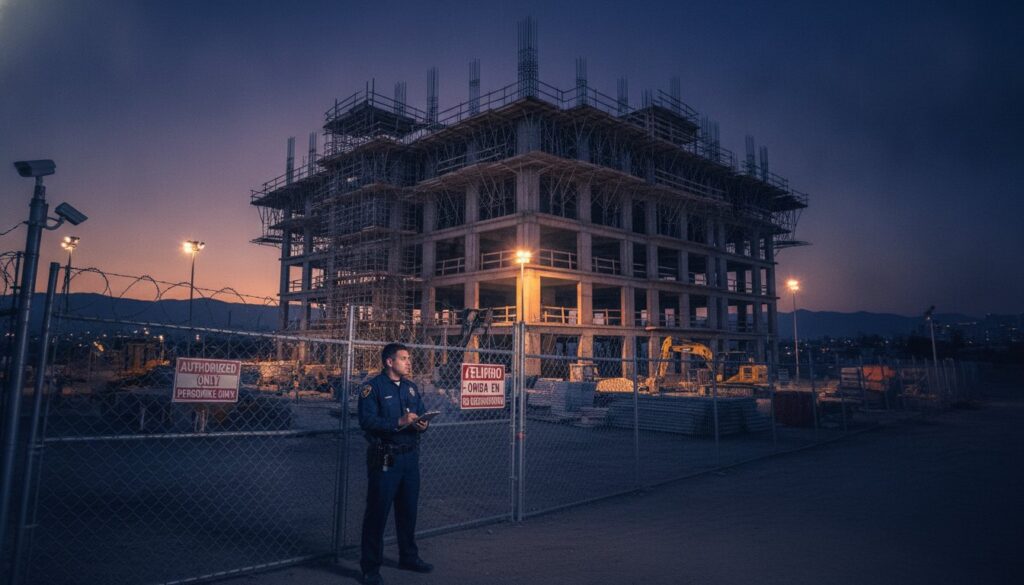
A perimeter fence is merely a suggestion to a determined intruder without a disciplined strategy behind it. In the San Fernando Valley, project managers are facing a surge in high-value equipment theft that standard oversight simply cannot stop. You understand that keeping a job site secure while managing complex Cal/OSHA and fire safety regulations is a high-stakes balancing act that leaves no room for error. This guide provides the master framework for a professional construction site security risk assessment designed to transform your project into a multi-layered fortress of order and accountability.
By following this rigorous protocol, you’ll learn how to identify hidden vulnerabilities, integrate specialized fire watch services, and maintain the precise standards required for total regulatory compliance. We’ll examine the specific methodologies that ensure your assets remain under the care of a vigilant and unyielding force. From Canoga Park to Woodland Hills, these professional standards provide the peace of mind that comes from methodical, project-based risk mitigation and elite oversight. This is the roadmap to establishing a secure perimeter that satisfies insurance requirements and protects your bottom line.
Key Takeaways
- Transition from reactive guarding to a proactive, disciplined framework that prioritizes methodical risk management over simple presence.
- Identify critical vulnerabilities by evaluating perimeter integrity and establishing high-value asset zones for machinery protection.
- Master the professional construction site security risk assessment process to determine the precise level of tactical oversight required for your project.
- Integrate specialized fire watch services into your broader security strategy to ensure strict adherence to Cal/OSHA and local regulatory mandates.
- Develop a dynamic Site Security Plan that translates assessment findings into actionable protocols that evolve with your project’s lifecycle.
The Architecture of a Professional Construction Site Security Risk Assessment
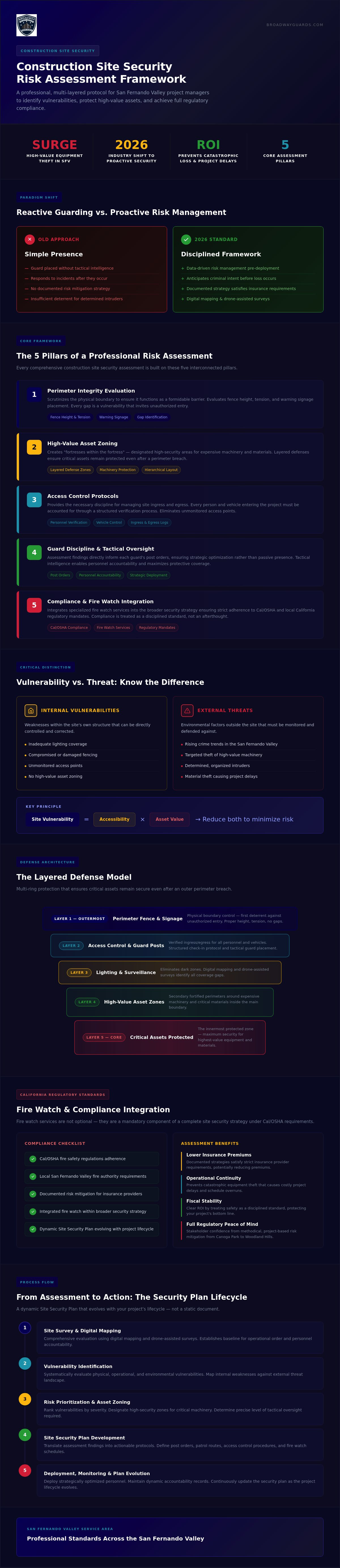
A professional construction site security risk assessment is a systematic evaluation of a site’s physical, operational, and environmental vulnerabilities. In 2026, the industry has undergone a significant shift, moving away from reactive guarding toward proactive, data-driven risk management. This evolution is driven by the necessity for order in an increasingly complex threat environment. Simple presence is no longer a sufficient deterrent; protection now requires a disciplined framework that anticipates criminal intent before it manifests as a loss.
This assessment serves as the mandatory prerequisite for the deployment of construction site security guards. Without a comprehensive evaluation, personnel lack the tactical intelligence required to maintain a secure perimeter. The assessment provides the blueprint for every guard’s post orders, ensuring that their presence is not just visible but strategically optimized for maximum protection. It establishes a foundation of high-stakes reliability that stakeholders expect from professional security providers.
The financial imperative behind this process is undeniable. A rigorous assessment offers a clear ROI by preventing the catastrophic costs of equipment theft and project delays. Furthermore, documented risk mitigation strategies often satisfy the strict requirements of insurance providers, potentially leading to lower premiums. When safety is treated as a disciplined standard rather than an afterthought, the project benefits from both operational continuity and fiscal stability.
Vulnerability vs. Threat: Knowing the Difference
Effective protection requires a clear distinction between internal vulnerabilities and external threats. Internal vulnerabilities are weaknesses within the site’s structure, such as inadequate lighting, compromised fencing, or unmonitored access points. External threats are the environmental factors, including rising crime trends in the San Fernando Valley that target high-value machinery. Broadway Security Services bridges the gap between identification and neutralization by applying a rigorous tactical framework to every site survey. We don’t just identify weaknesses; we establish the protocols to eliminate them, ensuring your assets remain under the care of a vigilant and unyielding force.
The 2026 Standard for Site Evaluations
The modern standard for site evaluations has moved beyond the traditional clipboard. Professional assessments now utilize digital mapping and drone-assisted surveys to provide a comprehensive view of the landscape. These tools establish a baseline for operational order and personnel accountability, allowing for a precise deployment of resources. This methodical approach ensures that every square foot of the job site is accounted for in the security plan. Site Vulnerability is the intersection of accessibility and asset value. By reducing accessibility through methodical barriers and increasing the difficulty of target acquisition, we create a secure environment that prioritizes safety and peace of mind.
Identifying Critical Vulnerabilities: Perimeter and Asset Protection
Perimeter integrity represents the first line of defense in any disciplined security strategy. A professional construction site security risk assessment must scrutinize the physical boundary to ensure it functions as a formidable barrier rather than a mere boundary. This involves evaluating fence height, tension, and the placement of warning signage. Every gap is a vulnerability that invites unauthorized entry, making a rigorous inspection of the perimeter line essential for maintaining a secure environment.
Effective protection requires the implementation of high-value asset zoning. This strategy involves creating “fortresses within the fortress” by designating specific, high-security areas for expensive machinery and materials. By layering defenses, you ensure that even if a perimeter breach occurs, your most critical assets remain protected behind additional barriers. This hierarchical approach to site layout is a hallmark of professional oversight and order.
Access control protocols provide the necessary discipline for managing site ingress and egress. Every person and vehicle entering the project must be accounted for through a structured verification process. Without strict access management, the site becomes a chaotic environment where theft can occur unnoticed. Complementing these protocols with strategic lighting eliminates the shadow zones that attract vandalism and criminal activity after hours. Visibility is a powerful deterrent that reinforces the presence of a vigilant force.
Securing the Perimeter in Urban California
Project sites in Canoga Park and Los Angeles face unique urban challenges, including high foot traffic and proximity to public spaces. The assessment must address these local factors by identifying blind spots that are not visible from the street. Integrating mobile patrol services into the security plan ensures that the perimeter is consistently monitored, providing a dynamic layer of protection that static barriers cannot achieve alone.
Asset Management and Tool Storage
Copper theft and the loss of specialized tools remain primary concerns for Southern California contractors. A professional evaluation includes a full asset register and the establishment of secure inventory controls. By securing materials in reinforced containers and utilizing technology-linked barriers, you maintain 24/7 oversight of your inventory. This methodical approach to asset management ensures that every piece of equipment is accounted for, providing the peace of mind that comes from a truly theft-proof site.
The Human Element: Guard Discipline and Tactical Oversight
Technology serves as a valuable tool, but it’s an insufficient shield when used in isolation. Cameras and sensors can record a breach, but they lack the capacity for active intervention. A professional construction site security risk assessment must prioritize the human element to transform passive monitoring into a proactive defense. In high-stakes environments, the presence of a disciplined protector is the decisive factor that prevents a vulnerability from becoming a loss. This tactical oversight ensures that your project is not just observed, but actively defended.
The efficacy of a security team depends entirely on the standards of their training and the rigor of their oversight. Personnel must be more than just observers; they’re the physical manifestation of your site’s security protocols. Their professional appearance and methodical conduct serve as a constant reminder that the perimeter is under unyielding care. This creates an atmosphere of order that deters criminal intent before it can manifest on your job site.
Armed vs. Unarmed Personnel: A Strategic Choice
Determining the appropriate force posture is a critical component of your risk mitigation strategy. High-risk projects or sites containing extremely valuable machinery may necessitate armed security guard services Los Angeles to provide a credible deterrent against sophisticated threats. This choice isn’t about aggression; it’s about matching the level of professional protection to the specific threat profile of the San Fernando Valley. Every individual deployed must meet rigorous California training and licensing standards to ensure they operate within the strict boundaries of legal and operational excellence.
Discipline as a Deterrent
The psychological impact of a uniformed, disciplined security presence cannot be overstated. When an intruder observes a guard moving with military-like precision and maintaining a vigilant posture, the perceived risk of detection increases significantly. Broadway Security’s commitment to hierarchy and structure ensures that every guard functions as a reliable component of your broader safety framework. Visible discipline discourages internal and external theft by projecting an image of unwavering vigilance and total site control. It signals to all parties that the site is managed with a gravity that leaves no room for opportunistic crime.
Accountability is maintained through rigorous reporting standards, specifically the Daily Activity Report (DAR). This document provides a granular, chronological record of all site activity and patrol findings. By reviewing these reports, project managers gain peace of mind through professional oversight, knowing that every vulnerability is being methodically monitored and addressed. This level of transparency ensures that the findings of your initial construction site security risk assessment are being acted upon with consistent, daily precision.
Compliance and Fire Watch: California Regulatory Standards
A professional construction site security risk assessment is incomplete without a rigorous evaluation of fire-related hazards. In California, security and fire safety are intrinsically linked through strict regulatory frameworks. Failing to integrate fire watch services California into your broader security strategy creates a dangerous gap in your site’s defense. This integration ensures that your project remains compliant with both Cal/OSHA standards and local Los Angeles Fire Department mandates, providing a unified shield against multiple forms of loss.
Hot work zones represent one of the most significant physical risks on a modern job site. Activities such as welding, cutting, or brazing require constant vigilance to prevent catastrophic fire incidents. Cal/OSHA regulations typically mandate a fire watch for at least 30 minutes after hot work is completed, though high-risk environments often require extended monitoring to ensure total safety. Ignoring these durations or failing to provide dedicated personnel results in more than just safety risks; it invites heavy fines, project shutdowns, and significant legal liability that can jeopardize the entire project’s timeline.
The Fire Watch Protocol
Maintaining a safe site requires a methodical, three-step protocol that mirrors the discipline of professional security patrols. This structured approach ensures no detail is overlooked during high-risk operations, maintaining a state of constant readiness.
- Step 1: Identify all fire hazards and combustible material storage areas during the initial site survey to establish a baseline of risk.
- Step 2: Assign dedicated, trained personnel for continuous monitoring during and after hot work sessions to provide immediate response capability.
- Step 3: Document all patrols, equipment checks, and incidents in real-time to maintain a precise audit trail for regulatory inspectors and insurance providers.
Liability Mitigation and Legal Safeguards
A comprehensive security risk assessment CA serves as a critical legal shield for project stakeholders. By identifying risks and documenting the specific mitigation steps taken, you establish a record of due diligence. This documentation is essential if an incident occurs, as it proves your commitment to professional standards and regulatory compliance. Staying ahead of evolving California legislation requires a partner who treats safety as a disciplined mandate. For professional oversight that satisfies both legal and operational requirements, you can request a consultation with Broadway Security Services to evaluate your site’s current compliance posture and protective measures.
Executing the Security Strategy: From Assessment to Action
A construction site security risk assessment only provides value when its findings are translated into a disciplined Site Security Plan (SSP). This document acts as the definitive operational framework for your project, establishing a clear hierarchy and specific protocols for every identified vulnerability. Execution requires more than just following a list; it demands a command structure that can manage incident response and crisis management with absolute precision. By formalizing these procedures, you ensure that every member of the security team understands their role within the protective shield.
Order is maintained through the recognition that a construction site is a dynamic environment. As the physical landscape of the project changes, so do the risks. The assessment must be treated as a living document, subject to regular review and adjustment. This methodical approach ensures that security measures remain relevant and effective throughout the entire project lifecycle. Continuous improvement is the standard for those who prioritize high-stakes reliability and the safety of their assets.
Phased Security Deployment
A strategic deployment follows the natural progression of the build, adjusting the force posture to match evolving threats. This categorical approach ensures that resources are never wasted while maintaining a constant state of readiness.
- Phase 1 (Site Prep): The primary focus remains on establishing the perimeter and rigorous access control. This phase sets the tone for the project, creating a visible barrier against unauthorized entry and establishing site order.
- Phase 2 (Vertical Build): As the structure rises, internal patrols and asset monitoring become the priority. This phase addresses the increased complexity of the site and the presence of high-value machinery.
- Phase 3 (Finishing): The final stage focuses on mitigating the theft of high-value appliances and fixtures. Security protocols shift to protect the interior environment as the project nears completion.
The Broadway Security Partnership
Broadway Security Services provides the professional consultation required to maintain long-term site integrity across the San Fernando Valley. Our expertise in Woodland Hills and Canoga Park allows us to customize security contracts that meet the unique demands of local developers. We don’t just provide a service; we act as a disciplined protector for your investment. By linking rigorous operational standards with legal compliance, we offer a level of oversight that ensures your peace of mind. Secure your site today with a professional risk assessment from Broadway Security Services to establish the unyielding defense your project requires.
Securing the Future of Your Southern California Project
Maintaining site order requires a transition from passive observation to a proactive, disciplined framework. A professional construction site security risk assessment is the essential foundation for this transformation, ensuring that every vulnerability is identified and neutralized before it impacts your bottom line. By integrating tactical guard oversight with rigorous fire watch protocols, you create a multi-layered defense that satisfies both insurance requirements and complex California regulatory standards. This methodical approach ensures your project remains a secure environment where safety is a constant, unyielding standard.
Broadway Security Services brings military-grade oversight and specialized San Fernando Valley expertise to every engagement. Our California-licensed professionals operate with the precision and accountability necessary to protect high-value assets in the most demanding environments. Don’t leave your project’s safety to chance or undisciplined personnel. Establish a secure perimeter and achieve total peace of mind through methodical, professional oversight. Request a Professional Construction Site Risk Assessment today to safeguard your investment and ensure your project remains a secure, theft-proof fortress. We’re prepared to stand as your disciplined shield.
Frequently Asked Questions
What is included in a construction site security risk assessment?
A professional evaluation includes a comprehensive review of physical boundaries, access control points, and high-value asset storage zones. It also incorporates an analysis of local crime data and environmental risks specific to the project’s location. This disciplined review forms the definitive basis for all post orders and personnel deployment strategies, ensuring every vulnerability is addressed through a structured framework of protection.
How often should a construction site security assessment be updated?
Assessments must be updated at every major phase of the construction lifecycle, such as the transition from site preparation to vertical build. Regular reviews are also mandatory when significant new equipment arrives or if local crime trends shift. Treating the assessment as a living document ensures that your security posture remains effective as the site’s physical landscape and associated risks evolve.
Why is a fire watch assessment required for California construction sites?
California Fire Code and Cal/OSHA mandates require a fire watch assessment to mitigate risks associated with hot work like welding or cutting. This evaluation identifies combustible storage areas and establishes a continuous monitoring protocol to prevent catastrophic loss. It is a critical component of a professional construction site security risk assessment that ensures total regulatory compliance and site safety.
Can a risk assessment help reduce my construction insurance premiums?
Insurers often view a documented, professional risk assessment as a sign of due diligence and lower operational risk. By demonstrating a disciplined framework for theft prevention and fire safety, project managers can negotiate more favorable terms. This proactive approach to risk management provides a clear financial return through reduced liability and the potential for significant insurance premium discounts.
What are the most common security vulnerabilities on Los Angeles job sites?
Common vulnerabilities include poorly lit perimeter gaps, unmonitored copper storage, and inadequate access control during shift changes. In the San Fernando Valley, the proximity of job sites to high-traffic urban areas increases the risk of opportunistic theft. Addressing these shadow zones through methodical oversight and high-visibility patrols is essential for maintaining a secure and theft-proof job site.
How does Broadway Security Services handle high-risk site evaluations?
Broadway Security Services utilizes a project-based risk assessment framework that combines digital mapping with on-site tactical surveys. We analyze the specific threat profile of locations like Canoga Park to inform the deployment of armed or unarmed guards. This approach ensures that every site is under the care of a vigilant force trained specifically for high-stakes construction environments.
Is an armed guard always necessary for a construction site?
Armed guards are not always mandatory but are recommended for sites with high-value machinery or those located in high-crime areas. The decision is based on the threat level identified during the construction site security risk assessment. We evaluate the total asset value and local crime data to determine the appropriate force posture required to maintain order and protect your investment.
What is the difference between a threat assessment and a vulnerability assessment?
A threat assessment focuses on external actors and environmental risks, such as local crime trends or fire hazards. A vulnerability assessment evaluates internal weaknesses, like compromised fencing or unmonitored gates, that an actor could exploit. Understanding this distinction allows for a more precise security strategy that addresses both the external source of the risk and the site’s inherent physical weaknesses.