


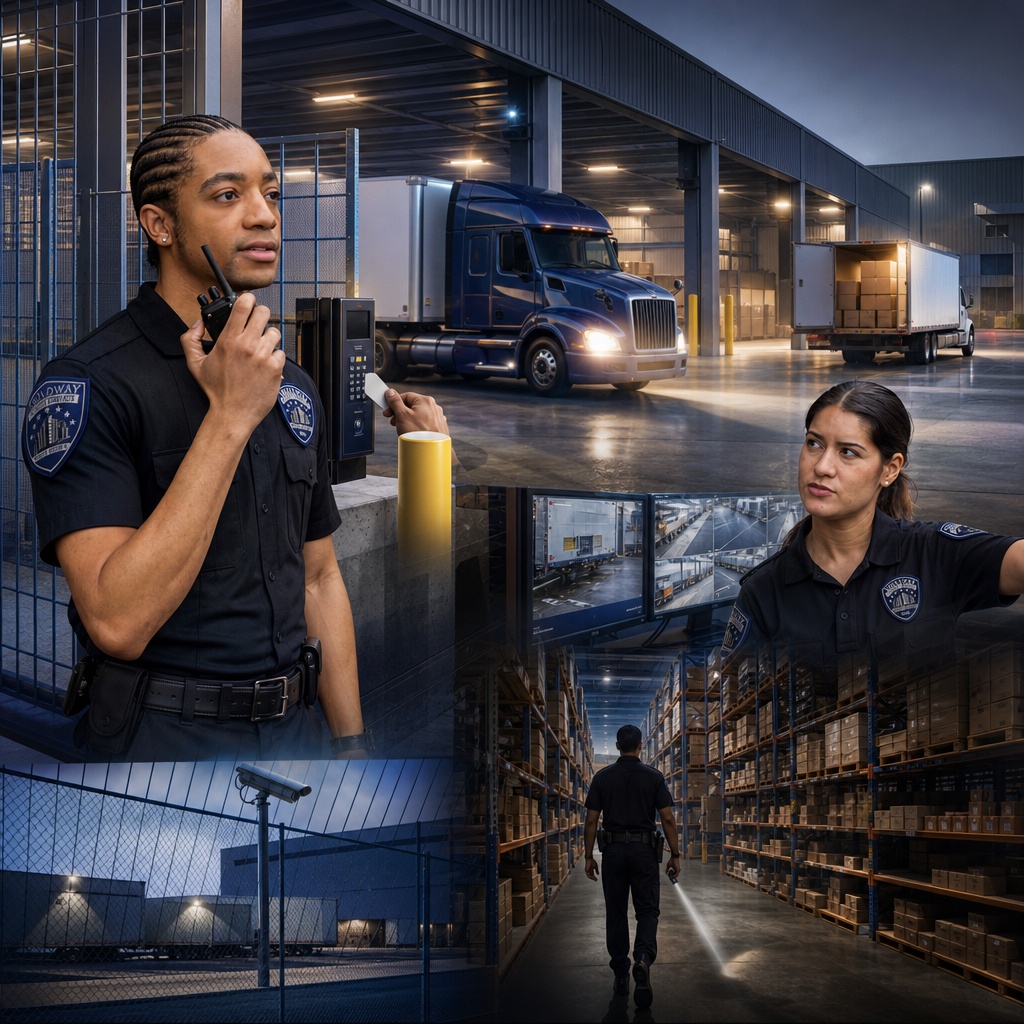
A warehouse can lose control long before a theft is discovered. A delivery driver enters through an unmonitored gate, a visitor walks past the check-in point, a trailer seal is broken after hours, or a dispute escalates on a busy loading dock. Security guards for warehouses give facility leaders a trained, visible presence that can control these moments before they become an inventory loss, injury, claim, or operational delay.
For logistics operators, manufacturers, distributors, and third-party warehouse managers, security coverage is not simply about placing a guard at a door. It is about building accountability around people, vehicles, cargo, access points, and the specific hours when the property is most exposed.
Why Warehouses Need Controlled Security Coverage
Warehouses create a distinct security environment. They often combine high-value inventory, multiple entry points, large exterior yards, temporary drivers, shift changes, contractor activity, and periods of limited management presence. The same features that keep goods moving can also create opportunities for unauthorized access and loss.
A visible officer can deter casual trespassing and opportunistic theft. More importantly, a trained officer can apply site rules consistently. This includes confirming identification, recording visitor arrivals, directing drivers to approved areas, checking gates, observing trailer activity, and reporting conditions that require management attention.
The need for coverage depends on the operation. A small warehouse with limited hours may need targeted evening patrols or controlled access during deliveries. A high-volume facility with overnight loading, valuable cargo, or repeated access-control issues may require an officer at the gate plus scheduled patrols of the building perimeter and dock area. The right plan follows the facility’s actual exposure, not a generic staffing model.
What Security Guards for Warehouses Should Handle
Warehouse officers should work from written post orders that define their authority, responsibilities, patrol routes, reporting procedures, and escalation contacts. Clear instructions protect the client, the officer, and daily operations. They also prevent guards from improvising when a driver refuses direction, an alarm activates, or an employee reports suspicious activity.
Access Control That Does Not Slow Operations
Controlled access monitoring is often the foundation of warehouse security. Officers can verify employees, visitors, vendors, contractors, and drivers before allowing entry. They may maintain visitor logs, check delivery appointments, issue passes, monitor gate activity, and ensure unauthorized individuals do not enter restricted areas.
The goal is not to create unnecessary delays. A disciplined officer understands the difference between a scheduled carrier that requires efficient processing and an unverified person attempting to enter a secure yard. Professional conduct matters. Guards must enforce procedures firmly while communicating clearly with drivers and employees who are under pressure to keep freight moving.
Patrols of Docks, Yards, and Vulnerable Areas
A fixed post alone will not cover a large warehouse property. Scheduled and randomized patrols help officers observe conditions at loading docks, employee entrances, trailer rows, parking areas, fencing, exterior doors, and dark or isolated areas.
Patrols can identify unsecured doors, damaged fencing, blocked fire lanes, suspicious vehicles, broken lighting, loitering, and safety hazards before those conditions produce a more serious event. Officers should document patrol activity and exceptions, giving facility leadership a dependable record of what was observed and when.
Incident Response and Accurate Reporting
A security officer is not a replacement for law enforcement, emergency medical services, or fire personnel. The officer’s role is to assess the situation, protect people, preserve the scene when appropriate, notify the correct contacts, and follow established response procedures.
Reliable incident reporting is especially valuable in warehouse settings. A report should record objective facts: the time, location, people involved, actions taken, notifications made, and any observed damage or loss. This documentation can support management reviews, insurance claims, internal investigations, and corrective action. Vague reports do not provide accountability. Clear, timely reports do.
Support During After-Hours and High-Risk Periods
Many warehouse incidents occur when normal supervision is reduced. Overnight shifts, weekends, holidays, shutdowns, and periods of heavy seasonal volume can increase exposure. A marked vehicle patrol may be appropriate for a property that needs periodic visible checks, while a dedicated on-site guard is better suited to a busy facility requiring continuous access control.
Cargo escort security may also be appropriate when high-value shipments move between a warehouse, rail yard, port area, or customer location. This is a specialized assignment that should be planned around the route, cargo profile, handoff process, communications, and response contacts.
Building a Warehouse Security Plan Around Real Risks
An effective plan begins with a site assessment. Facility leaders should examine where people enter, where vehicles queue, how keys and credentials are controlled, when inventory is most vulnerable, and what incidents have already occurred. Loss patterns, trespassing calls, employee concerns, yard theft, and access violations all provide useful direction.
A security provider should then define coverage by post, shift, and task. For example, one officer may control the main gate during peak delivery hours, while another patrols docks and the employee parking area overnight. At a smaller site, a single officer may rotate through access control, perimeter checks, and documented interior patrols based on a planned schedule.
The deployment plan should address four practical questions:
- Which entrances, gates, and zones require controlled access?
- When does the property face its highest exposure?
- What actions should an officer take for trespassing, theft, medical issues, fires, and disturbances?
- Who receives reports and has authority to make operational decisions?
These details should be documented in site-specific post orders, not left to verbal direction at the start of a shift. Site conditions change as tenant activity, freight volume, construction, staffing, and operational hours change. Coverage should be reviewed accordingly.
Armed or Unarmed Guards: Make the Decision Carefully
Most warehouse assignments are effectively handled by professional unarmed guards trained in access control, patrol procedures, observation, de-escalation, and incident reporting. An unarmed officer provides a visible deterrent while supporting a controlled, businesslike environment for employees, visitors, and drivers.
Armed coverage may be considered where the risk profile is materially higher, such as repeated serious criminal activity, high-value cargo exposure, isolated locations, or specific client requirements. It should never be selected as a default response. Armed assignments require qualified, properly licensed personnel, clear post orders, disciplined supervision, and a defined use-of-force policy.
The decision should reflect the property, local conditions, cargo value, operating hours, and the client’s tolerance for risk. A professional provider will explain the operational trade-offs rather than oversell a level of coverage that does not fit the site.
What to Expect From a Contract Security Provider
A warehouse security program is only as dependable as its management. Hiring a company simply to fill shifts can create gaps in coverage, inconsistent conduct, and weak reporting. Facility leaders should expect licensed and trained guards, reliable scheduling, responsive supervision, and an accountable chain of communication.
Before service begins, the provider should understand the property layout, operating schedule, access procedures, emergency contacts, restricted areas, and client expectations. Officers should arrive in a professional uniform, receive post-specific direction, and know how to contact a supervisor when an issue exceeds normal site procedures.
Supervision matters after deployment as well. Field oversight helps verify that officers are following post orders, completing patrols, maintaining logs, and addressing recurring concerns. When a facility identifies an emerging problem, such as drivers bypassing check-in or repeated activity near a damaged fence, the security plan should be adjusted quickly.
Broadway Security Services designs warehouse coverage around site activity, access points, traffic patterns, and the risks that can interrupt operations. That approach helps create a visible, accountable security presence without losing sight of the practical demands of a working facility.
Security Is Part of Warehouse Continuity
The strongest warehouse security programs do more than respond to loss after it occurs. They establish order at the gate, create visibility across the property, document exceptions, and give management earlier notice of developing problems.
For a facility director or logistics operator, the useful question is not whether a guard can stand watch. It is whether the security program will protect people, control access, support freight movement, and produce the records needed to act with confidence. When coverage is designed around that standard, security becomes a disciplined part of keeping the warehouse open, organized, and ready for the next shift.