


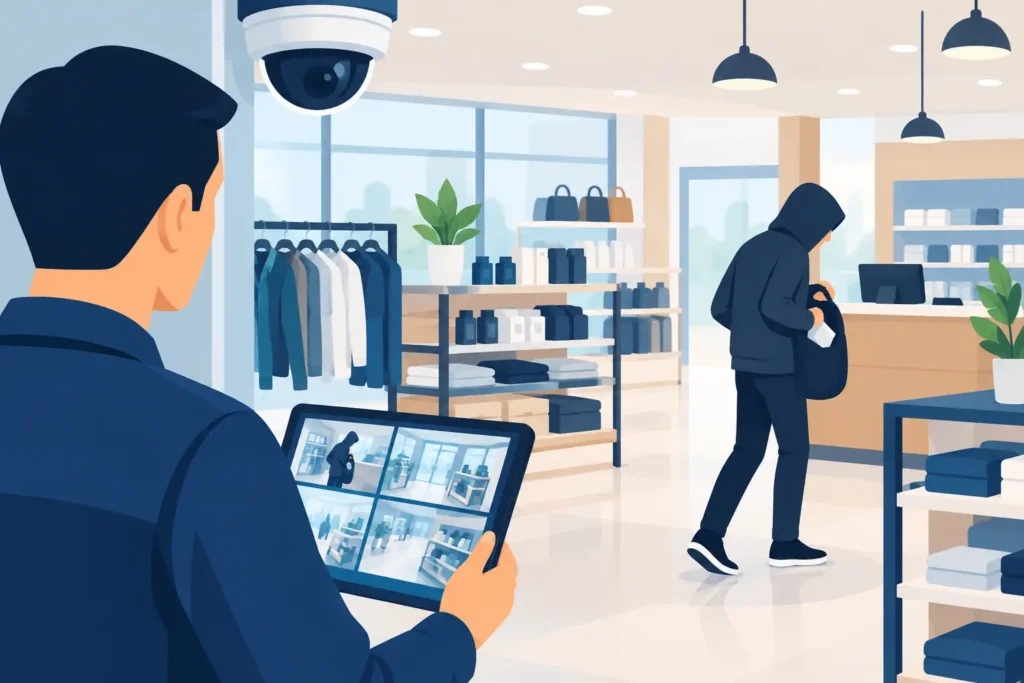
A single theft incident can become a larger operational problem quickly. Staff may feel unsafe, customers may avoid the location, merchandise may be damaged, and managers may lose valuable time handling reports and recovery efforts. Effective retail theft prevention is not based on one camera, one sign, or one guard at the door. It requires a site-specific security plan that creates visible deterrence, identifies suspicious activity early, and gives employees a clear response process.
For retail properties in Los Angeles and other high-traffic markets, the right approach must reduce loss without creating unnecessary friction for legitimate customers. That balance comes from disciplined coverage, trained personnel, controlled access practices, and accountable incident reporting.
Retail Theft Prevention Starts With a Site Assessment
Retail theft does not occur the same way at every property. A standalone store with a rear delivery entrance has different exposures than a shopping center tenant, a high-end showroom, a pharmacy, or a big-box retailer with several public exits. Before assigning coverage, management should assess how people, products, and vehicles move through the site.
The assessment should examine entrance and exit points, blind areas, merchandise placement, stockroom access, delivery schedules, cash-handling procedures, parking conditions, and the times when theft or disorder is most likely to occur. It should also account for prior incidents. Repeated shoplifting, organized retail crime, loitering, employee theft concerns, and after-hours trespassing require different patrol priorities and post orders.
A generic guard assignment can create the appearance of security without addressing the actual risk. A better plan defines where officers are positioned, when they patrol, what activity requires attention, who they notify, and how every incident is documented.
Use Visible Security as a Credible Deterrent
Visible protection changes behavior when it is consistent and professional. A uniformed security officer stationed near a primary entrance, monitoring high-value areas, or conducting scheduled exterior patrols makes it more difficult for potential offenders to test the property without being observed.
Visibility alone is not enough. Officers must remain alert, move with purpose, and understand the site. An officer who stays behind a counter, uses a phone, or has no clear patrol pattern can be easy to ignore. A trained guard who conducts access checks, observes customer flow, monitors suspicious behavior, and maintains a professional presence sends a different message.
For some locations, a fixed-post officer at the entrance is appropriate. For larger stores, shopping centers, or properties with parking exposure, a combination of interior coverage and marked vehicle patrols may provide stronger deterrence. The best deployment depends on the site layout, operating hours, incident history, and budget.
Position Officers Where Loss Risk Is Highest
High-value merchandise, return counters, fitting rooms, cash areas, loading docks, and rear doors deserve focused attention. This does not mean an officer should stare at customers or interfere with normal shopping. It means security should maintain a clear line of sight, perform routine patrols, and be available when employees need support.
Placement should change when operations change. A delivery window may require dock coverage in the morning, while evening staffing may shift toward customer exits and parking areas. Security coverage that follows the actual rhythm of the business is more effective than coverage built around convenience.
Control Access Without Disrupting Business
Uncontrolled access creates opportunities for theft and complicates investigations. Retail managers should know who is entering employee-only areas, receiving merchandise, removing trash, accessing keys, and opening or closing the building. Controlled access monitoring helps prevent both external theft and internal loss.
Basic procedures can make a meaningful difference. Receiving doors should not be left unsecured between deliveries. Employees should not prop open rear exits. Contractors and vendors should be verified before entering restricted areas. Keys, alarm codes, and access credentials should be issued and tracked carefully.
Security officers can support these controls by checking delivery activity, monitoring back-of-house entrances, recording vendor arrivals, and reporting unsecured doors or policy violations. Their role is not to slow operations. It is to make sure routine activity remains accountable.
Give Employees Clear Reporting and Response Procedures
Retail employees are often the first people to notice suspicious behavior. They may observe concealment, tag switching, coordinated distractions, repeated trips into fitting rooms, or individuals watching staff patterns. Without clear instructions, employees may ignore warning signs or attempt an unsafe confrontation.
Management should establish a straightforward escalation process. Employees need to know whom to contact, what details to provide, and when to step away from a situation. Security personnel should be informed promptly and respond according to established post orders and applicable law.
In many cases, recovery of merchandise is not worth putting an employee or customer at risk. The priority is maintaining safety, observing accurately, preserving evidence where available, and notifying law enforcement when appropriate. Officers should never operate on assumptions. Clear observation, professional communication, and detailed reporting protect the business after an incident.
Documentation Supports Better Decisions
A reliable incident report should record the date, time, location, individuals involved, observed actions, property affected, response taken, witnesses, and law enforcement case information when applicable. Consistent reports help management identify patterns that may not be obvious from isolated events.
For example, reports may show that incidents increase near a particular exit, during staffing changes, or after a certain delivery time. That information allows managers to adjust officer assignments, improve lighting, revise procedures, or request additional coverage during high-risk periods.
Documentation also matters when incidents involve employee conduct, repeat offenders, property damage, or liability concerns. A professional security provider should deliver clear, timely reporting that gives management a usable record, not vague notes with missing details.
Address Organized Retail Theft Differently
Organized retail theft can involve coordinated groups, distraction tactics, aggressive behavior, rapid removal of high-value merchandise, or repeated targeting of multiple locations. These incidents should not be handled like routine shoplifting.
The immediate goal is safety and accurate observation. Officers should communicate with store management, maintain awareness of exits and vehicles, avoid unnecessary escalation, and contact law enforcement when conditions warrant. If the same people, vehicles, or methods appear repeatedly, documented details can support stronger coordination with property management and law enforcement.
Retailers should also protect employees from being pressured into physical intervention. A disciplined response plan defines what security officers may do, when supervisors must be notified, and how the business will preserve information after the event. This approach reduces confusion during stressful incidents.
Extend Protection Beyond the Sales Floor
Theft risk does not end at the front door. Parking lots, loading areas, trash enclosures, exterior displays, and closing procedures can create significant exposure. Employees leaving after dark may be vulnerable to harassment or robbery. Unsecured carts, returned merchandise, and delivery materials can also become targets.
Exterior patrols help identify suspicious vehicles, loitering, broken lighting, unsecured gates, and after-hours activity before those conditions lead to a larger problem. A marked patrol vehicle can be especially valuable for shopping centers, strip malls, and retailers with broad parking areas where a fixed-post officer cannot maintain constant visibility.
Opening and closing procedures also deserve attention. Officers can support employee escorts, perimeter checks, door inspections, and alarm-related response procedures. These duties protect people while reinforcing disciplined site control.
Choose Security Coverage That Can Be Managed and Measured
Retail security works best when officers have written post orders, defined patrol expectations, active supervision, and a reporting process that management can review. Staffing alone is not a security plan. The provider must understand the property, communicate with managers, and adjust coverage as conditions change.
Broadway Security Services develops guard coverage around each location’s access points, operating activity, traffic patterns, and identified risks. Licensed and trained guards provide a visible, accountable presence while supporting controlled access monitoring, patrol procedures, and reliable incident reporting.
The right retail theft prevention strategy should make the property harder to exploit without making normal customers feel unwelcome. Start by identifying where loss occurs, establish clear responsibilities, and ensure security personnel are prepared to respond with discipline. A well-managed presence protects merchandise, supports employees, and helps the business continue operating with confidence.