
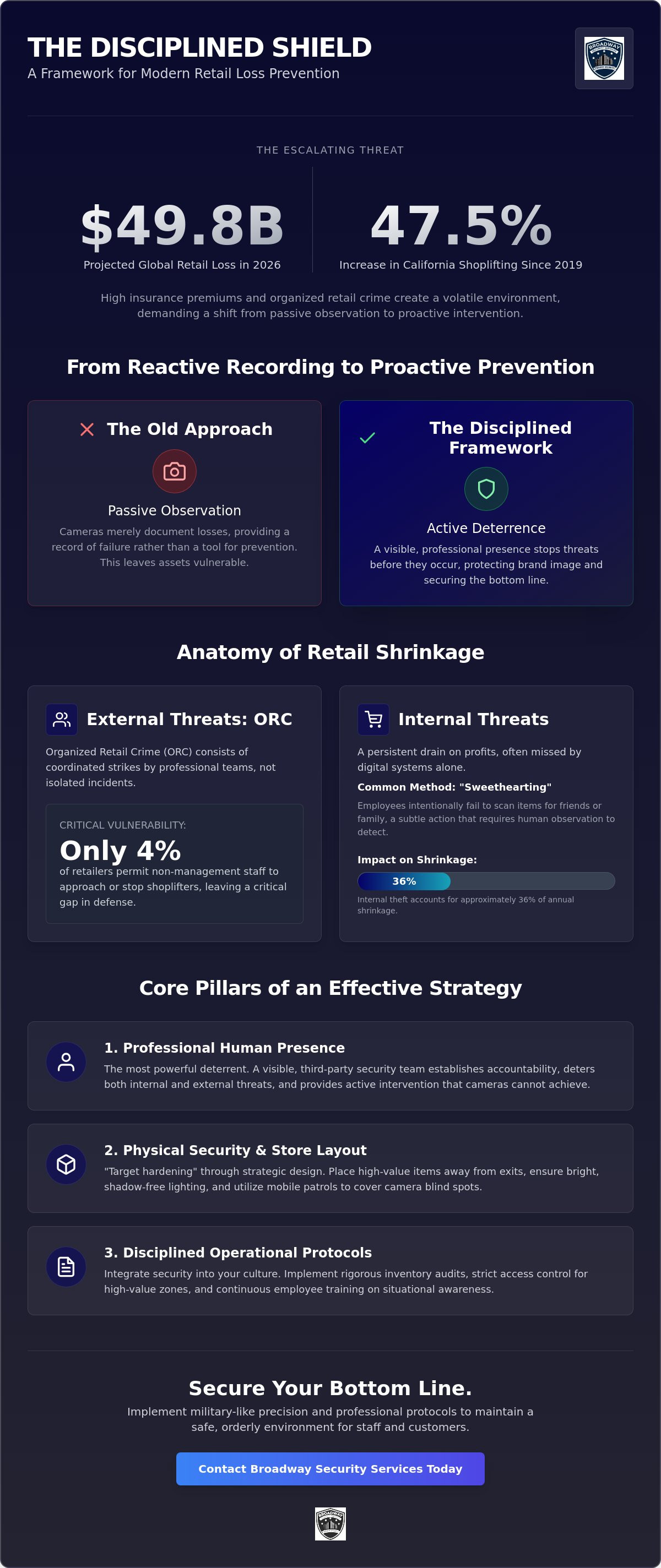
In 2026, retail theft is projected to drain $49.8 billion from the global market, a figure that demands more than just passive observation. Implementing rigorous retail loss prevention strategies is no longer optional; it’s a requirement for operational survival. In California, shoplifting has surged 47.5% since 2019, leaving many businesses with cameras that merely document their losses rather than preventing them. You recognize that high insurance premiums and the threat of organized retail crime create a volatile environment for your staff and your assets.
This guide provides the disciplined framework and professional protocols you need to eliminate shrinkage and secure your bottom line. We will examine the transition from reactive recording to proactive intervention through a combination of elite personnel and advanced oversight. You’ll learn how to establish a visible, unyielding presence that protects your brand image and ensures a safer environment for every employee. Our focus remains on the intersection of legal compliance and operational rigor to provide total peace of mind.
Key Takeaways
- Adopt a proactive, disciplined framework for asset protection that moves your operations beyond passive observation.
- Implement multi-layered retail loss prevention strategies that integrate physical, digital, and human elements to create an impenetrable shield.
- Understand why professional human presence provides active deterrence that surveillance cameras alone cannot achieve in high-stakes retail environments.
- Execute a phased implementation plan starting with a comprehensive site vulnerability evaluation and the establishment of defined security zones.
- Secure your bottom line by leveraging military-like precision and professional protocols to maintain a safe, orderly environment for staff and customers.
Understanding Retail Loss Prevention in 2026: Beyond the Basics
Effective retail loss prevention is a disciplined framework that prioritizes asset protection through proactive oversight. It’s no longer sufficient to simply react after a theft occurs. In 2026, the retail sector faces a projected $49.8 billion loss due to theft. This staggering figure proves that traditional, passive methods have failed to secure commercial interests. A professional approach treats security as a vigilant shield, ensuring that every protocol is executed with military-like precision.
Southern California remains a high-risk zone for retailers. Recent data shows shoplifting in California rose 13.8% in 2024, reaching levels 47.5% higher than in 2019. Businesses must distinguish between administrative “paper shrink”—caused by clerical errors or inventory mismanagement—and malicious external theft. While administrative issues require better training, malicious theft requires a tactical response. Reactive strategies that focus on recording crime only serve to document your losses. True retail loss prevention strategies focus on stopping the event before it compromises your bottom line.
The Rise of Organized Retail Crime (ORC)
Internal vs. External Threats
Shrinkage isn’t always an external problem. While external theft accounts for approximately 36% of annual shrinkage, internal threats remain a persistent drain on profits. One common method is “sweethearting,” where employees intentionally fail to scan items for friends or family. Digital systems often miss these subtle actions because they lack the human element of observation. A visible, third-party security presence acts as a deterrent to internal collusion by establishing a standard of accountability. Deploying professional Loss Prevention Services ensures that both employees and customers understand that the premises are under constant, methodical oversight. This presence breaks the cycle of opportunity that fuels both internal and external theft.
Core Pillars of an Effective Retail Loss Prevention Strategy
Physical Security and Store Layout
Target hardening involves strategic merchandise placement. High-value items should never be positioned near exits. Instead, they should be located in high-traffic zones with clear sightlines that facilitate constant oversight. Lighting serves as a primary deterrent. Shadow-free environments eliminate the concealment that opportunistic thieves rely on. While cameras provide a record of events, they have fixed perspectives. Mobile patrol services fill these tactical gaps, providing a dynamic presence in blind spots that stationary technology cannot reach.
Operational Protocols and Employee Training
Establishing a culture of security among floor staff is essential for long-term success. Every team member should understand their role in the broader defense framework. Standardized incident reporting ensures accountability and legal compliance, transforming a chaotic event into a documented, actionable data point. To identify specific procedural gaps, retailers should implement a professional security risk assessment CA. This evaluation provides the blueprint for your defensive posture, grounding professional claims in legal and regulatory reality.
For those seeking to harden their retail footprint against rising threats, partnering with professional Loss Prevention Services ensures that your assets are protected by a vigilant and unyielding force.
The Power of Professional Presence: Why Technology Isn’t Enough
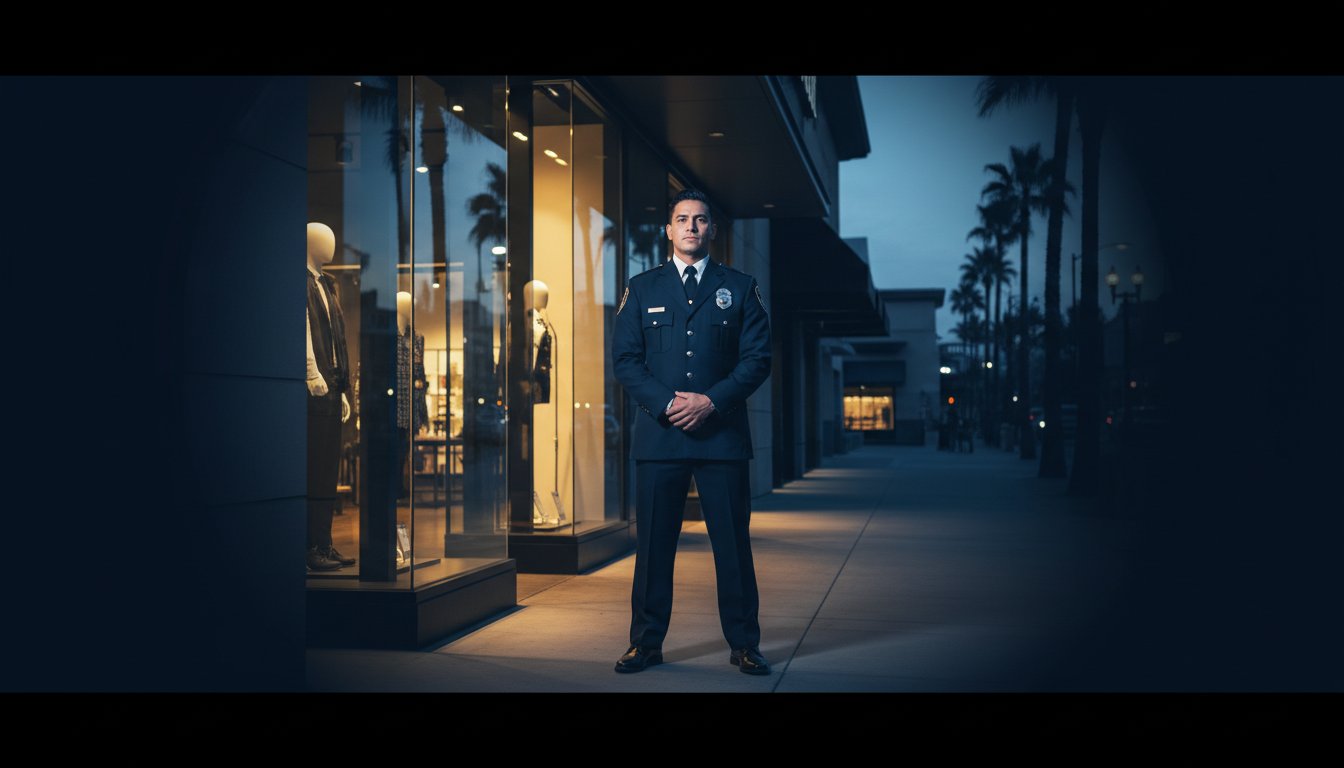
Passive surveillance systems are fundamentally limited by their inability to intervene. While digital hardware provides a constant stream of data, it cannot stop a theft in progress or de-escalate a volatile confrontation. A camera captures the loss; a professional guard prevents it. This distinction is the cornerstone of sophisticated retail loss prevention strategies. A disciplined human presence serves as a proactive shield that technology alone cannot provide, transforming security from a recording tool into an unyielding force of deterrence.
The psychological impact of a professional security presence on potential offenders is immediate and significant. Criminals prioritize soft targets where oversight is minimal and the risk of intervention is low. A uniformed, vigilant guard signals that the premises are under strict, methodical control. This creates an atmosphere of high-stakes reliability that discourages opportunistic theft before it begins. It communicates to everyone entering the store that order is maintained through constant observation and professional accountability.
Professional guards also adopt a model where customer service and security converge. They act as a visible point of contact for legitimate shoppers, offering assistance and directions while maintaining a watchful eye for suspicious behavior. This approach addresses the common objection that security diminishes the shopping experience. In reality, a disciplined presence enhances brand prestige by demonstrating a commitment to customer safety. It reassures patrons that they are in a secure environment, which is a hallmark of a professional brand image.
Unarmed vs. Armed Security Guards for Retail
Determining the correct level of force is a tactical decision based on your specific risk profile. High-visibility deterrence in standard retail environments often starts with unarmed security guards. These professionals focus on situational awareness and verbal de-escalation. For high-risk zones or stores carrying high-value inventory, assessing the need for armed security guard services Los Angeles is a tactical necessity. Specialized retail training ensures that all personnel understand the nuances of the retail environment, balancing protection with professional conduct.
Real-Time Intervention and De-escalation
Trained guards are experts in handling confrontations without escalating violence. They use established protocols to manage incidents, ensuring that the safety of employees and customers remains the priority. Utilizing a licensed PPO (Private Patrol Operator) provides significant legal advantages, as these professionals are trained to manage incidents with military-like precision. Professional presence reduces liability by ensuring incidents are handled per California regulations. This structured approach ensures that every action taken is documented and compliant with state law, protecting the business from the legal fallout of unmanaged incidents.
Implementing a Phased Loss Prevention Plan
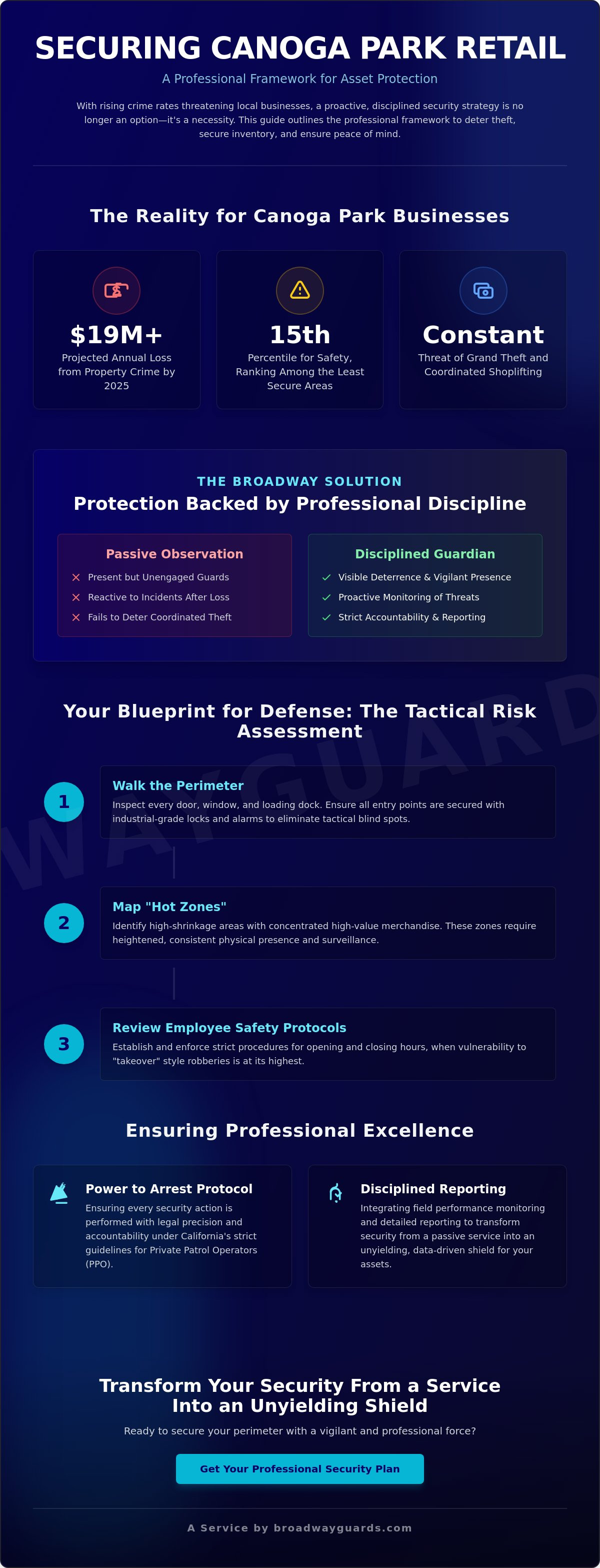
Establishing unyielding protection requires a methodical, phased approach. Effective retail loss prevention strategies don’t happen by accident; they’re the result of rigorous planning and disciplined execution. A phased plan ensures that every defensive layer is tested and verified before full deployment. This structured transition allows management to identify and address vulnerabilities without disrupting daily commerce. By following a predictable cadence of implementation, you create a culture where safety and operational standards are inextricably linked.
The implementation process follows five critical stages of oversight:
- Step 1: Conduct a comprehensive site vulnerability evaluation to identify perimeter gaps.
- Step 2: Define specific security zones for high-value merchandise and restricted access areas.
- Step 3: Deploy a strategic mix of surveillance technology and mobile patrol services tailored to your specific site layout.
- Step 4: Establish a rigorous reporting and feedback loop to ensure field performance matches professional expectations.
- Step 5: Review and adjust the strategy based on quarterly shrinkage data and emerging local crime trends.
Site Vulnerability Evaluation
A professional evaluation begins at the perimeter. Identifying entry and exit weaknesses is the first step in hardening your store against intrusion. We evaluate the effectiveness of current electronic article surveillance (EAS) systems to ensure they’re functioning as a true deterrent rather than a passive alarm. Beyond hardware, we assess the “human perimeter.” This involves measuring staff response times and their adherence to established safety protocols. High-stakes reliability depends on every individual understanding their role within the protective shield.
The Role of Mobile Patrols in Retail Centers
External security is as vital as interior oversight. Utilizing mobile patrols for parking lot security provides a visible deterrent that prevents vehicle break-ins and “smash and grab” incidents before they reach your front doors. Retail risk incidents are known to spike 363% at store openings and peak between 6:00 and 8:00 p.m., making timed patrols a tactical necessity. Integrating exterior security with interior loss prevention teams ensures a seamless flow of information and a comprehensive defense against organized retail crime. This synchronized effort provides the peace of mind that comes from knowing every inch of your property is under vigilant care.
To begin hardening your retail footprint against modern threats, secure your assets with Broadway’s professional Loss Prevention Services today.
Broadway Security Services: California’s Disciplined Shield for Retailers
Our commitment to “Presence and Prevention” is the foundation of our service. We don’t just provide guards; we deploy a structured framework of order. Every contract is customized to fit the specific retail footprint of the client, ensuring that security protocols match the unique risks of the location. This military-like precision creates an atmosphere of high-stakes reliability that potential offenders cannot ignore. Our personality is that of a disciplined protector, focused on hierarchy and an unwavering commitment to duty. This philosophy ensures that our presence is felt as a deterrent rather than just a witness to inventory loss.
Specialized Retail Training and Oversight
Broadway Security Services personnel must meet rigorous standards before deployment. Our training focuses on situational awareness, de-escalation, and the specific legal requirements of the retail environment. We maintain a high degree of self-assurance through consistent management oversight and detailed field performance reporting. This ensures every guard acts as a disciplined extension of your brand, maintaining professional standards in every interaction. You receive methodical updates on security status through our structured reporting systems. This grounds our professional claims in documented reality and ensures accountability at every level of the hierarchy, from the field to your executive team.
Strategic Security Management
Multi-location retailers benefit from our centralized approach to security management. We ensure every site adheres to the same high operational standards, creating a rhythmic reinforcement of safety across your entire enterprise. Our services guarantee compliance with California’s strict security regulations and licensing requirements. This intersection of legal compliance and operational rigor defines our identity as a premier provider. We value rules, protocols, and visible results above all else. Contact Broadway Security Services for a professional risk assessment today to secure your bottom line and restore order to your retail environment through elite professional intervention.
Secure Your Commercial Future Through Disciplined Oversight
The transition from vulnerability to resilience requires the unyielding application of the protocols discussed in this guide. Implementing these retail loss prevention strategies provides the structural integrity needed to withstand the evolving landscape of organized crime. By adopting this disciplined framework, you ensure that your assets are not merely monitored but actively defended. This proactive stance is the only way to maintain order and protect your commercial interests in an increasingly volatile market. You now have the blueprint to move beyond passive observation toward a standard of high-stakes reliability.
Broadway Security Services provides the professional infrastructure necessary for this level of protection. As a California-licensed Private Patrol Operator serving Southern California and the San Fernando Valley, we deploy elite personnel trained to act as a vigilant shield for your operations. Our presence reinforces your brand’s commitment to safety and operational excellence. Secure Your Assets with Broadway’s Disciplined Security Solutions today. You possess the tools to establish a standard of protection that secures your commercial future and provides total peace of mind for your team.
Frequently Asked Questions
What are the most effective retail loss prevention strategies for 2026?
The most effective retail loss prevention strategies combine professional human presence with rigorous operational protocols. This multi-layered approach ensures that physical barriers, digital surveillance, and trained personnel work in synergy. By prioritizing situational awareness, businesses move beyond passive recording to proactive deterrence. This disciplined framework creates an unyielding shield that protects both assets and personnel from sophisticated external threats.
How does a professional security guard reduce retail shrinkage better than cameras?
Professional guards provide active deterrence and real-time intervention that cameras simply cannot achieve. While cameras document a crime for later review, a uniformed guard prevents the incident from occurring through constant observation. This physical presence disrupts the psychological comfort of potential offenders. It ensures that any suspicious activity is addressed immediately, reducing shrinkage before it impacts the bottom line.
What is the difference between armed and unarmed guards for retail stores?
The choice depends on the specific risk profile and inventory value of the retail environment. Unarmed guards provide high-visibility deterrence and are ideal for standard retail settings where verbal de-escalation is the primary tool. Armed guards are deployed in high-risk zones or stores carrying luxury assets where a higher level of force is a tactical requirement. Both roles require specialized training to maintain professional standards and high-stakes reliability.
Are security guards legally allowed to detain shoplifters in California?
Security guards in California operate under specific legal frameworks, including the Merchant’s Privilege and private person’s arrest protocols. Licensed professionals are trained to handle these incidents with strict adherence to state regulations to minimize liability. Every action must be documented through field performance reporting to ensure legal compliance. This methodical approach protects the business from the legal fallout associated with unmanaged confrontations.
How much does it cost to implement a professional loss prevention plan?
Implementation costs vary based on the specific retail footprint, risk level, and required personnel density. A professional risk assessment identifies the necessary defensive layers, whether they involve stationary guards or mobile patrols. Each plan is customized to provide maximum protection without unnecessary expenditure. We recommend a comprehensive evaluation to determine the most efficient allocation of security resources for your specific location.
What is Organized Retail Crime (ORC) and how can businesses prevent it?
Organized Retail Crime (ORC) involves coordinated strikes by professional groups targeting high-value merchandise for resale. Preventing ORC requires more than standard retail staff; it demands personnel trained in tactical oversight and situational awareness. By establishing a visible, unyielding presence, retailers make their locations difficult targets for these sophisticated criminal networks that prioritize soft targets with minimal oversight.
How do I choose between mobile patrols and stationary guards for my retail location?
Stationary guards are best for interior monitoring and point-of-sale protection, while mobile patrols are essential for perimeter security and parking lot deterrence. Large retail centers often require a combination of both to eliminate blind spots. Mobile patrols are particularly effective at preventing vehicle break-ins and “smash and grab” incidents during peak risk hours, which typically occur between 6:00 and 8:00 p.m.
Can professional security guards help with internal employee theft?
Professional presence acts as a powerful deterrent against internal collusion and employee theft. Guards establish a standard of accountability that discourages practices like “sweethearting” or unauthorized inventory removal. By maintaining a vigilant and observant environment, security personnel ensure that every transaction and movement of goods follows established operational protocols. This oversight creates a culture of integrity throughout the retail floor.