
Hotel Security Guard Services That Protect Guests

A hotel can appear calm at the front desk while facing multiple security exposures across the property. Uncontrolled visitor access, disputes in parking areas, unauthorized entry to guest floors, employee safety concerns, and after-hours incidents can affect guest confidence and daily operations quickly. Hotel security guard services give management a trained, visible presence to manage these risks without turning hospitality into a confrontational environment.

The right security program does more than place an officer in a lobby. It establishes clear coverage responsibilities, controlled access procedures, patrol routes, escalation protocols, and reporting standards that support the hotel’s operating model. For Los Angeles hotels, where high guest turnover, public-facing amenities, parking activity, and large events can create added exposure, site-specific planning matters.

What Hotel Security Guard Services Should Cover

Hotel security coverage should reflect how the property actually operates. A limited-service hotel with one entrance and a small parking lot has different needs than a full-service property with restaurants, conference rooms, multiple guest towers, loading areas, and overnight activity.

A professional guard program begins with a review of access points, guest traffic, staffing patterns, parking conditions, nearby activity, and previous incidents. From there, management can define post orders that tell officers exactly what to monitor, when to patrol, who to contact, and how to document concerns.

At many hotels, officers are responsible for controlled access monitoring at key entrances, guest-floor access points, loading docks, employee entrances, and parking areas. They may verify visitors, observe suspicious behavior, deter trespassing, address unauthorized vehicles, and respond to disturbances before they escalate.

The objective is not to interfere with legitimate guests. It is to maintain a professional level of order that allows guests and staff to move through the property confidently.

Visible Presence Is a Practical Deterrent

A uniformed officer positioned where people can see them changes behavior. It discourages unauthorized loitering, vehicle break-ins, trespassing, and disruptive conduct before a manager has to handle the situation alone. A visible presence also reassures front-desk employees who may be asked to deal with difficult guests, intoxicated individuals, or visitors attempting to bypass hotel policies.

Placement matters. An officer assigned only to a back office will not provide the same deterrence as an officer who conducts scheduled lobby, corridor, exterior, and parking patrols. At the same time, constant fixed-post coverage is not always necessary. The proper deployment depends on the property’s risk profile, layout, occupancy, and hours of operation.

Controlled Access Protects Guest Areas

Guest floors, pools, fitness centers, meeting rooms, and parking structures can become vulnerable when access is not monitored. Security officers can support hotel staff by checking credentials where appropriate, observing entrances during busy periods, and identifying people attempting to access restricted areas.

This work requires judgment and professional communication. Guards must be prepared to enforce property rules firmly while recognizing that a hotel remains a service environment. Clear post orders and supervisor direction help officers act consistently, particularly when handling visitors, delivery personnel, vendors, or individuals who claim to be meeting a registered guest.

Security Risks That Require More Than Front Desk Staff

Front-desk teams are trained to welcome guests, process reservations, and resolve service issues. They should not be expected to manage every security concern alone. When a situation involves a possible threat, repeated policy violation, trespasser, theft allegation, or escalating dispute, a trained security officer provides immediate support and a defined response process.

Parking areas deserve particular attention. Poor lighting, limited visibility, overnight vehicle storage, and multiple entry points can make lots and garages attractive targets for theft or unauthorized activity. Marked vehicle patrols can extend visible coverage across larger properties while giving officers the ability to inspect perimeter conditions, gates, lighting issues, and suspicious vehicles.

Hotels hosting weddings, conferences, nightlife events, or high-profile guests may need additional coverage during peak periods. Event security can manage entry points, observe crowd conditions, monitor restricted spaces, and coordinate with hotel management when an issue requires a controlled response. Coverage can be increased for a specific event rather than maintaining the same staffing level year-round.

Selecting the Right Level of Coverage

There is no single staffing model for every hotel. A property with recurring overnight disturbances may benefit from an overnight fixed-post officer and scheduled exterior patrols. A hotel with a high-volume lobby and event space may need coverage during check-in peaks, banquet activity, and guest departures. A property undergoing renovation may require added access control, fire watch, or material protection.

When evaluating coverage, management should consider four operational questions:

  • Where can unauthorized people enter or move through the property?
  • When are employees, guests, and assets most exposed?
  • Which incidents have occurred before, including near misses and recurring complaints?
  • Who has authority to make decisions when an officer identifies a problem?

The answers determine whether unarmed guards, armed guards, vehicle patrols, or a blended deployment is appropriate. Unarmed officers are often the right fit for access monitoring, lobby presence, guest-area patrols, parking enforcement, and routine incident response. Armed coverage may be considered where a credible threat assessment, high-value assets, or the nature of the property justifies a higher level of protection. The decision should be based on documented risk, not appearance alone.

Reporting and Supervision Are Part of the Service

A guard presence without documentation leaves management with limited visibility into what occurs after hours or outside the front office. Reliable incident reporting creates an operational record of disturbances, trespass contacts, safety hazards, access issues, parking concerns, and officer actions.

These reports help hotel leaders identify patterns. For example, repeated incidents near a side entrance may show a need for improved lighting, repaired access hardware, adjusted patrol times, or changes to visitor procedures. Reports also provide accountability when management needs to review an event, communicate with ownership, or coordinate with law enforcement and insurance representatives.

Supervision is equally important. Officers should not be left to operate without direction or follow-up. Responsive field supervision verifies that post orders are being followed, addresses staffing issues, reviews performance, and adjusts coverage when hotel conditions change. A guard company should be able to explain how officers are briefed, how absences are covered, who supervises the account, and how concerns are escalated.

Fire Watch and Emergency Readiness

Hotels cannot always pause operations when a fire alarm panel, sprinkler system, or related life-safety equipment is impaired. When required by the authority having jurisdiction or directed by property management, fire watch personnel can conduct documented patrols to monitor for fire and life-safety hazards during an impairment.

Fire watch is not routine security patrol. It requires defined rounds, accurate logs, immediate reporting of hazards, and an understanding of emergency notification procedures. For hotel operators, disciplined fire watch coverage can support compliance while management works to restore the affected system.

Security officers should also understand the hotel’s emergency framework. That includes evacuation routes, assembly locations, emergency contacts, medical response procedures, and the chain of command. Officers are not a replacement for public safety agencies, but they can stabilize the scene, control access, direct people away from danger, preserve information, and communicate conditions clearly until additional help arrives.

Questions to Ask a Hotel Security Provider

Before selecting a provider, hotel management should look beyond hourly rates. Low-cost staffing can become expensive when officers arrive late, lack site training, fail to document incidents, or cannot obtain supervisor support during a problem.

Ask whether the company is properly licensed and insured, how it screens and trains officers, and how it creates site-specific post orders. Confirm whether the provider has a structured process for patrol verification, incident reporting, relief coverage, and management communication. It is also reasonable to ask how quickly a supervisor can respond when a serious issue occurs.

Broadway Security Services builds hotel coverage around each property’s access points, traffic patterns, operating hours, and known concerns. Licensed and trained guards are supported through clear post orders, responsive supervision, patrol procedures, and reliable reporting so management has accountable protection rather than generic staffing.

A hotel security program works best when security leadership and hotel management communicate regularly. Review incident trends, occupancy changes, upcoming events, construction activity, and guest complaints before they create a larger exposure. That disciplined approach keeps protection aligned with the property and helps your team maintain the safe, professional guest experience your hotel is expected to deliver.
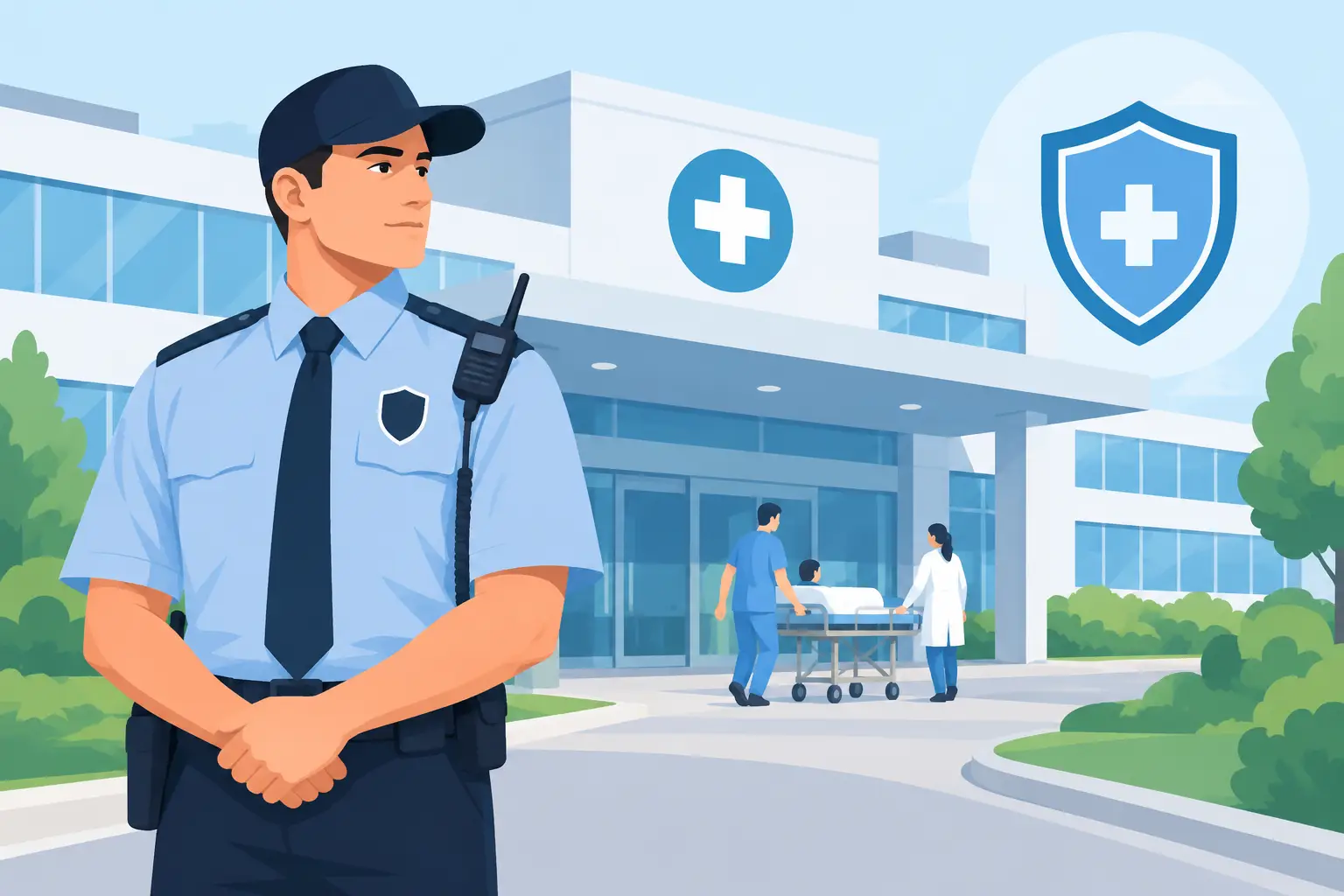

Security Guards for Hospitals: What Coverage Requires

A hospital entrance can shift from routine to high pressure in minutes. A distressed family member needs direction, an unauthorized visitor attempts to enter a restricted unit, a patient becomes disruptive, or an ambulance bay becomes congested. Security guards for hospitals help the facility maintain order through visible presence, controlled access monitoring, calm intervention, and clear incident documentation.

Hospital security is not a generic guard assignment. The environment operates around patient care, privacy, clinical urgency, public access, and 24-hour activity. Coverage must support medical staff without interfering with treatment, while giving administrators a dependable response structure for daily security concerns and serious incidents alike.

Why Hospitals Need Site-Specific Security Coverage

Hospitals have multiple security environments under one roof. The emergency department, labor and delivery floor, behavioral health unit, visitor lobby, parking structure, pharmacy area, loading dock, and administrative offices each present different access and safety concerns. A single officer positioned at a front desk cannot adequately manage every risk across an active campus.

The right deployment begins with how the property actually operates. Security planning should account for visitor volume, entry points, shift changes, high-risk departments, after-hours traffic, parking conditions, and the location of sensitive records, medications, equipment, and supplies. It should also account for when tensions typically rise, such as during emergency department surges, visiting-hour transitions, or late-night arrivals.

A visible, professional guard presence can discourage trespassing, theft, disorderly conduct, and unauthorized access before those issues escalate. Just as important, guards give employees, patients, and visitors a clear point of contact when they need help finding a department, reporting suspicious activity, or responding to a conflict.

Security Guards for Hospitals Must Work Within Care Operations

Healthcare security requires sound judgment and professional restraint. Officers may encounter people who are frightened, grieving, confused, intoxicated, experiencing a behavioral health crisis, or under significant stress. Their role is to maintain safety and enforce facility rules while communicating in a controlled, respectful manner.

That means post orders must be specific. Officers need to know which departments require escort-only access, how visitor screening is handled, where they should position themselves during shift changes, who to contact during a patient-related event, and when an issue must be elevated to hospital leadership or law enforcement. Vague instructions produce inconsistent coverage. Clear post orders create accountability across every shift.

Security personnel are not clinical staff, and they should never attempt to replace medical judgment. Their value is in protecting the environment where care is delivered: managing access, observing conditions, supporting staff during disturbances, preserving a safe perimeter, and documenting events accurately. The best programs establish clear boundaries between security responsibilities, clinical responsibilities, and emergency response authority.

Core Posts That Deserve Attention

Not every hospital needs the same staffing model. A small outpatient center may need a controlled-access officer during operating hours and mobile patrol coverage after closing. A large medical campus may need fixed posts, foot patrols, vehicle patrols, and a supervisor coordinating activity across several buildings.

The emergency department is often a priority post because it combines public access, unpredictable arrivals, emotionally charged interactions, and high patient turnover. A trained officer can monitor the entrance, support visitor limits, identify unauthorized access attempts, and respond quickly when staff request assistance.

Labor and delivery, neonatal units, behavioral health areas, pharmacies, and medication storage locations may require tighter access procedures. In these areas, the guard assignment should focus on credential verification, visitor policy enforcement, escort procedures, and immediate reporting of irregular activity.

Parking lots and structures also require attention. Poor lighting, isolated areas, vehicle break-ins, loitering, and traffic congestion can affect both staff safety and patient confidence. Marked vehicle patrols and scheduled foot patrols increase visibility while allowing officers to identify hazards such as damaged gates, unsecured doors, blocked fire lanes, or suspicious vehicles.

Access Control Is More Than Checking Badges

Controlled access monitoring depends on consistent procedures, not just a person standing at a door. Officers should know how to verify visitor authorization, enforce sign-in requirements, direct guests to the correct area, and respond when someone refuses to follow facility rules. They must also understand which exceptions require approval rather than making assumptions during a sensitive situation.

Access procedures should remain practical. A hospital cannot operate like a closed industrial site, especially during emergencies or periods of high public demand. The objective is to manage entry without creating unnecessary delays for patients, families, vendors, and responding agencies. This balance depends on the facility’s layout, risk profile, and clinical needs.

For restricted areas, the security provider and hospital should establish a documented process for lost badges, tailgating, after-hours vendor access, visitor disputes, and contractor check-in. When officers know the procedure, they can act promptly and report exceptions to the right people.

Reporting and Supervision Protect the Hospital After an Incident

A guard’s presence matters at the moment of an incident. Reliable reporting matters afterward. Hospital leaders need a factual record of what occurred, when it occurred, who was notified, what action was taken, and whether follow-up is required. Poorly written reports create operational gaps and can make it difficult to identify recurring concerns.

Incident reports should be timely, objective, and detailed enough to support internal review. They should avoid speculation and clearly separate observed facts from statements made by others. Depending on the event, documentation may involve a visitor removal, damaged property, a missing item, an access-control violation, a parking incident, or a request for law enforcement assistance.

Responsive supervision is equally important. Supervisors should inspect posts, confirm officers are following post orders, address attendance issues, review incident activity, and adjust coverage when conditions change. A hospital security program cannot rely on staffing alone. It requires active management and consistent field accountability.

Armed or Unarmed Coverage: Make the Decision Deliberately

The question of armed versus unarmed coverage should be based on a documented risk assessment, not a default assumption. Many hospital posts are well served by unarmed licensed guards trained in de-escalation, access control, patrol procedures, and professional reporting. Their visible presence can address a wide range of daily concerns without changing the atmosphere of care.

Armed coverage may be considered for specific risk conditions, such as a facility’s history of serious threats, isolated locations, high-value controlled assets, or requirements established by the hospital’s security leadership. If armed officers are used, the provider must apply strict licensing, training, supervision, equipment, and post-order standards. The assignment should also be coordinated with the hospital’s policies and local law enforcement response procedures.

There is no one-size-fits-all answer. The right decision depends on the site, the role of existing in-house security, the level of public access, and the facility’s tolerance for risk.

What to Expect From a Contract Security Partner

Hospital administrators should expect more than filled shifts. A qualified contract security provider should evaluate the property before recommending posts, schedules, patrol routes, and access-control procedures. The provider should be able to explain how coverage will be supervised, how incidents will be documented, and how staffing changes will be communicated.

In California, licensing and insurance should be verified before deployment. Hospital leaders should also ask about officer training, supervisor availability, replacement procedures, report review, and the process for updating post orders after an incident or operational change. These details determine whether coverage remains dependable during nights, weekends, call-offs, and high-demand periods.

Broadway Security Services builds assignments around site conditions, clear post orders, visible patrol activity, and accountable reporting. For hospital environments, that disciplined approach helps security remain a reliable operational function rather than an afterthought.

A hospital’s security program should give clinicians more room to focus on care, not more uncertainty to manage. When guards are properly assigned, supervised, and prepared for the facility’s actual conditions, they protect the order and confidence that patients, families, and staff rely on every day.

Cargo Escort Security Services for Safer Loads

A delayed shipment can be expensive. A stolen, diverted, or tampered-with shipment can disrupt customer commitments, trigger insurance claims, expose sensitive goods, and place drivers at risk. Cargo escort security services provide a visible, organized layer of protection for loads that require more than ordinary transportation procedures.

For logistics operators, distributors, manufacturers, construction suppliers, and transportation managers in Los Angeles, the right escort assignment is not simply a guard vehicle following a truck. It is a planned security operation built around the cargo, route, stopping points, delivery schedule, threat exposure, and communication requirements. The objective is clear: help the shipment move safely while maintaining accountability from departure through delivery.

When Cargo Escort Security Services Are Needed

Not every shipment requires an escort. Standard loads moving on predictable schedules may be adequately protected through carrier controls, GPS tracking, secure yards, and established delivery procedures. Escort coverage becomes more appropriate when the consequences of loss, theft, delay, or interference are higher.

Common assignments include high-value merchandise, electronics, pharmaceuticals, controlled materials, luxury goods, construction equipment, confidential assets, and loads moving through areas with elevated theft activity. Escorts may also support shipments leaving a warehouse after hours, traveling to a temporary job site, making multiple planned stops, or requiring delivery during periods when facility staffing is limited.

The decision should be based on risk, not assumptions. A shipment’s value matters, but so do visibility, route predictability, driver experience, parking needs, delivery-site controls, and whether criminals can easily identify the cargo. A load that appears routine can still be vulnerable if it follows the same route at the same time each week or waits unattended at an unsecured location.

What a Professional Cargo Escort Assignment Includes

Effective cargo protection begins before the vehicle leaves the property. A professional security provider reviews the assignment scope and establishes clear post orders for the escort officer. Those orders define the officer’s role, reporting expectations, points of contact, communication procedures, emergency escalation process, and the boundaries of authority during the transport operation.

Route and stop planning

The route should account for expected travel conditions, construction zones, traffic patterns, known delay points, fuel needs, and approved rest or staging locations. Planning does not eliminate unexpected conditions, but it gives the driver and escort team a controlled framework for making decisions when conditions change.

Stops deserve the same attention as the route itself. Cargo theft often occurs during predictable pauses, including fuel stops, meal breaks, staging periods, or waiting time outside a delivery facility. The escort officer helps maintain awareness at approved stops, monitors surrounding activity, and supports prompt reporting when conditions appear suspicious or unsafe.

Visible deterrence and controlled observation

A marked security presence can discourage opportunistic theft, unauthorized approach, and tampering attempts. Visibility is particularly valuable during loading, departure, arrival, and periods when the shipment must remain temporarily stationary.

The officer’s role is not to interfere with the driver’s operational responsibilities. The driver remains responsible for the vehicle and transport process. The escort officer focuses on observation, security awareness, access concerns, incident response, and communication with designated client contacts. Clear role separation prevents confusion when time-sensitive decisions are required.

Reliable communication and reporting

A cargo escort assignment should never depend on informal check-ins or memory at the end of the day. Officers need established communication procedures for departure, significant delays, unplanned stops, suspicious activity, arrival, and incident escalation.

Detailed reporting provides a record of the assignment and supports follow-up if a concern arises. Reports can document times, locations, security observations, exceptions to the plan, contacts made, and actions taken. For operational leaders, this documentation is more than paperwork. It provides accountability, helps identify repeated vulnerabilities, and supports review after a loss, claim, or delivery dispute.

Armed or Unarmed Escort Coverage: What Determines the Choice?

The appropriate level of coverage depends on the assignment’s risk profile, client requirements, cargo type, route conditions, and applicable laws. An unarmed escort may be suitable when the primary need is visible deterrence, observation, access control at stops, and documented oversight. It is often a practical option for routine high-value movements where the risk is elevated but not known to involve a credible violent threat.

Armed coverage may be considered for higher-exposure assignments when a documented security assessment, client policy, and legal requirements support that decision. It requires properly licensed, trained personnel and careful coordination. Armed security is not a default upgrade. It introduces additional responsibilities, including more exacting officer selection, post orders, supervision, and incident protocols.

The strongest decision is not based solely on cargo value. It is based on the full operating environment. A lower-value shipment traveling through an isolated area late at night may present more exposure than a higher-value load moving directly between controlled facilities during business hours.

The Importance of Departure and Delivery-Site Security

An escort can be compromised before the vehicle reaches public roads. Warehouse yards, loading docks, construction staging areas, and distribution centers often involve changing traffic, contractors, vendors, and drivers. Without controlled access and clear release procedures, unauthorized individuals may observe loading activity, identify cargo, or gain information about the shipment’s destination and departure time.

Before departure, the escort officer should understand who is authorized to release the shipment, what vehicle and driver are expected, where loading will occur, and what concerns require immediate escalation. At delivery, the same discipline applies. The officer should support a controlled arrival, observe the immediate environment, and confirm that handoff procedures follow the client’s established process.

This is especially important for deliveries to sites with limited lighting, temporary entrances, active construction, or crowded receiving areas. Security cannot compensate for every operational weakness, but a disciplined presence can identify concerns early and help keep the delivery process organized.

Choosing a Cargo Security Provider

A provider should be evaluated on operational readiness, not just hourly pricing. Cargo movement is time-sensitive, and a missed handoff, late officer, poor communication, or incomplete report can create costly exposure. Ask how the provider staffs assignments, who supervises officers in the field, how post orders are prepared, and what reporting will be delivered after the assignment.

Look for a company that can explain how it assesses route and stop risks without offering generic promises. The provider should also be able to coordinate with drivers, dispatch personnel, warehouse managers, and receiving contacts while maintaining a defined chain of communication.

Four qualifications deserve particular attention:

  • Appropriate California licensing and insurance for the assigned service.
  • Officers trained for the specific assignment, including communication, observation, emergency response, and report writing.
  • Responsive field supervision and a clear process for handling schedule changes or incidents.
  • Site-specific post orders that define responsibilities instead of relying on broad instructions.

A professional appearance also matters. Cargo escort personnel represent a visible security control at facilities, public stops, and delivery locations. Officers should be prepared, identifiable, punctual, and capable of enforcing the security plan without creating unnecessary disruption for drivers or operations staff.

Building an Escort Plan That Supports Operations

The best security plan protects the shipment without slowing the business unnecessarily. That requires early coordination between security, transportation, and facility leadership. Provide accurate pickup and delivery windows, cargo sensitivity, approved contacts, special handling restrictions, driver details, and any known route constraints. When information changes, update the escort provider promptly rather than expecting officers to work from outdated instructions.

Avoid treating escort coverage as a stand-alone purchase. It works best alongside controlled yard access, secure loading practices, vehicle inspection procedures, GPS or dispatch monitoring, and trained personnel at both ends of the shipment. Each measure addresses a different point of exposure.

Broadway Security Services approaches cargo assignments with the same priorities applied to on-site protection: licensed and trained guards, visible presence, responsive supervision, clear post orders, and reliable incident reporting. The goal is not simply to accompany a load. It is to provide accountable protection that helps the shipment reach its destination under controlled conditions.

When cargo exposure is high, the most useful security partner is the one that asks the operational questions before departure. A defined plan, qualified escort officer, controlled stops, and documented communication give decision-makers greater control over the movement of assets that cannot afford to be left unprotected.

Executive Protection Services Los Angeles

Los Angeles principals rarely follow a predictable schedule. A single day may involve an office arrival in Downtown LA, a meeting in Beverly Hills, a production site visit, a public appearance, and a late departure from a private residence. Executive protection services Los Angeles organizations use must account for that changing environment without creating unnecessary disruption, attention, or delay.

Effective protection is not defined by a visible bodyguard standing nearby. It is a planned security function built around the principal’s exposure, travel patterns, public profile, family considerations, workplace conditions, and event schedule. The objective is straightforward: maintain safety, preserve mobility, and give the client room to operate with confidence.

What Executive Protection Should Accomplish

Executive protection is a specialized assignment, not standard guard coverage placed at the side of an executive. The work requires advance planning, sound judgment, professional communication, and the discipline to recognize developing concerns before they interfere with business or personal activity.

For many organizations, the protected individual is closely tied to continuity. An injury, confrontation, unwanted approach, travel disruption, or security incident can affect leadership decisions, staff confidence, operations, and reputation. Protection coverage helps reduce those risks through controlled movement, access awareness, route planning, secure arrivals and departures, and prompt response when conditions change.

The right level of visibility depends on the assignment. A high-profile event may require a clearly identifiable protective presence to discourage unwanted behavior. A corporate executive traveling between meetings may need discreet coverage that supports the schedule without drawing attention. Neither approach is automatically better. The deployment should match the actual risk, venue, public exposure, and client preference.

Executive Protection Services Los Angeles Clients Can Plan Around

Los Angeles presents security conditions that need local operational awareness. Traffic congestion can alter departure windows and emergency routes. Large venues, hotels, entertainment locations, private residences, corporate campuses, and construction sites each create different access and perimeter concerns. High-traffic public settings also make it harder to distinguish routine activity from behavior that deserves attention.

A disciplined executive protection plan starts before an officer meets the principal. The security provider should understand where the client is going, how the location operates, who has authorized access, where vehicles will stage, and what procedures apply if a meeting runs late or a route must change. This preparation supports protection that is calm and controlled rather than reactive.

For a recurring assignment, post orders should define the officer’s responsibilities, reporting chain, communication expectations, emergency contacts, vehicle procedures, visitor handling, and escalation protocol. Clear post orders prevent assumptions. They also give the client a consistent standard of service when schedules, sites, or staffing needs shift.

Daily Movement and Travel Support

Daily executive protection often centers on movement between residences, offices, meetings, airports, and private events. Officers may monitor arrival areas, coordinate secure vehicle transitions, assess conditions at unfamiliar locations, and maintain awareness during public-facing activities.

Travel support should not be treated as a last-minute add-on. A sound plan considers timing, parking, venue access, alternate exits, communication coverage, and contingencies for delays. Los Angeles traffic alone can require a flexible approach, particularly when the schedule includes multiple stops or a time-sensitive appearance.

Workplace and Corporate Coverage

Corporate protection assignments can involve more than the executive’s immediate surroundings. A facility director or business owner may need controlled access monitoring at the office, a professional presence in reception areas, visitor screening procedures, and coordination with on-site management.

This is particularly relevant during layoffs, internal disputes, litigation-related meetings, high-value negotiations, or periods of heightened public attention. Executive protection officers must remain professional with employees, visitors, and vendors while maintaining the authority to enforce site rules. The goal is to protect the principal without interrupting legitimate business activity.

Events, Appearances, and Public Exposure

A public event introduces variables that do not exist in a controlled workplace. Attendees arrive at different times, venue layouts can change, staff may be unfamiliar with security procedures, and the principal may need to interact with guests, media, or members of the public.

Protection planning should establish who controls entry, how credentials are verified, where the principal enters and exits, and how the team will respond to an uninvited person or medical emergency. When an event requires multiple officers, defined roles are essential. One officer cannot effectively manage close protection, access points, crowd movement, and emergency coordination at the same time.

Selecting the Appropriate Protection Level

Not every executive needs a full-time protection detail. Some clients need coverage for a specific event, a sensitive termination meeting, a litigation appearance, a business trip, or a period of elevated concern. Others require an ongoing plan that follows a regular schedule and adapts to changing business demands.

A qualified security provider should assess practical factors instead of selling a fixed package. These include the principal’s public visibility, known threats or unwanted contacts, travel frequency, family exposure, worksite layout, valuable assets, and the likelihood of public interaction. A lower-profile assignment may need one trained officer and defined procedures. A complex event or high-exposure principal may require a larger protective team, advance work, marked patrol support, or coordination with site security.

Armed or unarmed coverage also depends on the assignment. An armed officer is not a default solution for every client or location. The decision should consider the threat environment, client policy, property rules, legal requirements, and whether the officer’s role is primarily deterrence, access control, close protection, or response capability. In every case, licensed personnel, proper training, and clear supervision are non-negotiable.

Accountability Separates Coverage From Presence

A professional appearance matters, but it is only one part of a reliable executive protection program. Decision-makers need to know who is assigned, what procedures are in place, how supervisors remain involved, and what occurs if an incident develops.

Reliable incident reporting gives clients an accurate record of unusual activity, policy violations, access issues, suspicious contacts, and response actions. It supports informed decisions after the assignment and helps refine future procedures. Reporting should be factual, timely, and specific enough to be useful without compromising the principal’s privacy.

Supervision is equally important. Security conditions can change quickly because of a schedule adjustment, a venue issue, an emerging threat, or a staffing concern. Responsive management provides the officer with direction and gives the client a point of accountability beyond the individual assigned to the detail.

Broadway Security Services approaches executive protection with the same operating standards required across high-exposure security assignments: licensed and trained guards, site-specific post orders, responsive supervision, visible readiness when needed, and dependable reporting. Protection coverage should be organized around the client’s actual movement and risk, not a generic staffing model.

Questions to Address Before Coverage Begins

Before selecting a provider, clients should establish the assignment’s scope. Is the primary concern public attention, workplace conflict, travel, a specific threat, or a high-profile event? Will the officer work independently, coordinate with an existing corporate security team, or support facility guards? Does the client require discreet attire, a marked presence, vehicle patrol support, or a combination of these measures?

It is also wise to define communications in advance. The principal should know how to reach the protection officer or supervisor, while the security team should know who can authorize schedule changes, route changes, and escalation decisions. Clear authority prevents confusion at the moment fast decisions are required.

The strongest protection details are rarely the most noticeable. They are the ones that anticipate the schedule, control preventable exposure, communicate clearly, document what matters, and allow the principal to move through Los Angeles with security handled professionally in the background.

What Mobile Patrol Security Services Cover

A vacant loading area at 2:00 a.m., an apartment garage with repeated vehicle break-ins, and a construction site with unsecured equipment do not always require a guard stationed at one door all night. They do require visible, disciplined coverage that makes unauthorized activity harder to carry out unnoticed. Mobile patrol security services provide that coverage through marked patrol vehicles, scheduled and randomized site checks, trained officers, and documented reporting.

For Los Angeles properties with multiple access points, large footprints, changing operating hours, or after-hours exposure, patrol coverage can be a practical way to improve deterrence without assigning a full-time officer to every location. The value depends on how the patrol program is designed, supervised, and documented. A vehicle driving through a lot without clear post orders is not a security plan. A structured patrol operation is.

What Mobile Patrol Security Services Do

Mobile patrol officers travel between assigned properties or patrol designated areas within a large site. Their primary function is to create a visible security presence, inspect conditions, identify suspicious activity, respond within the scope of their assignment, and record what occurred.

A patrol officer may check gates, doors, fencing, loading docks, parking areas, common areas, utility rooms, vacant units, construction equipment, and other vulnerable points. At a commercial property, the officer may confirm that rear entrances are secured after closing. At a residential community, the patrol may address parking violations, monitor amenity areas, and investigate resident concerns. At an industrial facility, the assignment may focus on perimeter integrity, vehicle activity, and access control after business hours.

The patrol route should not be treated as a casual drive-by. Effective coverage follows site-specific post orders that identify required checkpoints, access procedures, emergency contacts, escalation instructions, and known risks. Officers should know what normal operations look like at the property so they can recognize exceptions quickly.

Visible deterrence is part of the assignment

A marked vehicle, uniformed officer, and consistent patrol pattern send a clear message: the property is actively monitored. That presence can discourage trespassing, theft, vandalism, illegal dumping, vehicle burglary, and unauthorized access before an incident develops.

Visibility alone is not enough, however. Patrols must be frequent enough to matter and unpredictable enough that an offender cannot plan around them. Some sites benefit from fixed scheduled checks, such as opening and closing inspections. Others need randomized patrol windows because incidents tend to occur during late-night or low-traffic periods.

Patrol officers also identify conditions that create risk

Security concerns are not limited to criminal activity. An officer may find a damaged gate, a propped-open fire door, poor lighting, water intrusion, an unsecured key box, or a blocked emergency access route. These observations give property management an opportunity to correct problems before they become losses, liability issues, or operational disruptions.

Detailed incident and activity reporting is critical here. A useful report identifies the date, time, location, condition observed, actions taken, parties notified, and any recommended follow-up. Documentation supports management decisions and creates a record of the security provider’s performance.

When Mobile Patrol Coverage Is the Right Fit

Patrol coverage is often a strong option for properties that need regular oversight but do not need a dedicated officer at one fixed post every hour. This includes multi-tenant retail centers, office parks, warehouses, apartment communities, construction sites, vehicle yards, medical offices, schools during non-operating hours, and properties with several nearby locations.

It can also supplement existing staffing. A facility with a daytime lobby officer may use mobile patrols to secure the exterior after business hours. A construction site may need a patrol officer to make evening rounds while higher-risk phases of work require a dedicated overnight guard. An event venue may use vehicle patrols to monitor perimeter areas and parking zones beyond the main entry point.

The decision comes down to risk, layout, and response expectations. If a location has frequent confrontations, high-value assets, constant public traffic, or a critical access-control post, a dedicated on-site guard may be the better choice. Mobile patrols cannot maintain continuous observation of one entrance while they are checking another area or servicing another assigned property.

For many clients, the best approach is layered coverage: controlled access during active hours, mobile patrol inspections after hours, and clear procedures for alarm response or emergency escalation. The plan should match the actual exposure instead of forcing every property into the same staffing model.

Building an Effective Patrol Plan

A patrol assignment should begin with a site assessment. Security leadership needs to understand where people enter, where assets are stored, which areas are poorly lit, when the property is most vulnerable, and how employees, residents, vendors, or visitors move through the site.

The resulting plan should define patrol frequency, required checkpoints, vehicle access, officer duties, report requirements, communication procedures, and escalation authority. It should also account for practical site conditions. A patrol vehicle may be ideal for a large industrial yard, while an apartment complex may require the officer to park and conduct foot patrols through garages, corridors, and amenity spaces.

Post orders create consistency

Clear post orders prevent guesswork. They tell the officer which gates must be checked, whether doors should be locked or merely reported, who to contact for maintenance issues, how to handle trespassers, and when law enforcement or emergency services should be called.

They also establish boundaries. Security officers should enforce the client’s rules professionally and within their authority. The objective is to protect people and property, de-escalate when possible, and preserve accurate information for management and responding agencies.

Supervision protects service quality

Mobile patrol work requires active management because officers operate across wide areas and changing conditions. Responsive supervision helps confirm that patrol procedures are being followed, incidents are addressed correctly, and client concerns receive prompt attention.

A dependable provider should have a process for reviewing reports, handling missed checkpoints, updating post orders, and communicating recurring issues to the client. If a rear gate repeatedly fails to latch or a particular area draws trespassing complaints, that pattern should lead to a corrective recommendation, not simply another report.

What to Ask Before Hiring a Patrol Provider

Property managers and facility directors should look beyond an hourly rate. A lower-cost patrol service may offer little value if arrival times are unclear, reports are incomplete, and no supervisor follows up when problems repeat.

Ask how patrol frequency is established and whether patrol times can be randomized. Confirm what is included in each visit: exterior checks, interior common-area inspections, lock checks, alarm response, parking enforcement, or incident response may be separate services. Clarify how officers document activity, how quickly serious incidents are escalated, and who is available after normal business hours.

It is also reasonable to ask about licensing, insurance, officer training, vehicle identification, supervisory structure, and experience with properties similar to yours. For California clients, the provider should be properly licensed and staffed with trained personnel appropriate to the assignment. If armed coverage is being considered, the scope, risk level, and officer qualifications should be evaluated carefully rather than added as a default.

Reporting Turns Patrol Activity Into Accountability

A patrol service is easier to manage when each visit leaves a clear record. Reports should verify completed patrol activity and provide useful detail without burying the client in vague notes. “Property checked, all clear” does not explain which areas were inspected or whether any conditions required attention.

Better reporting helps clients identify trends. Repeated loitering near a side entrance may justify improved lighting or access controls. Frequent parking violations may require revised signage or enforcement procedures. Multiple false alarms may reveal a maintenance issue that needs correction. Security reporting should support operational decisions, not sit unread in an inbox.

Broadway Security Services approaches patrol deployment as a controlled field operation: site-specific procedures, visible marked patrols, responsive supervision, and reliable incident documentation. That discipline matters because patrol coverage is only as strong as the officer’s ability to observe, respond, and communicate.

The right patrol plan gives a property regular eyes on vulnerable areas without paying for unnecessary fixed coverage. Start with the conditions that create exposure at your site, then set patrol duties and reporting standards that make every visit accountable.

Event Security Guard Services That Keep Control

A crowded venue can turn from orderly to exposed in minutes. A gate left unstaffed, an unverified vendor entry, a parking conflict, or a medical emergency can disrupt the event and place staff, guests, and property at risk. Event security guard services provide the visible presence and structured control needed to keep operations moving without creating unnecessary friction for attendees.

For Los Angeles event organizers, security is not simply a uniform at the entrance. It is a planned field operation built around access points, crowd movement, venue rules, emergency procedures, and clear lines of responsibility. The right security plan supports a safe guest experience while protecting the client from avoidable disruption, liability, and reputational damage.

Event Security Guard Services Start With Site Control

Every event has a different exposure level. A private corporate reception may require discreet lobby coverage and credential verification. A concert, festival, sporting event, or public gathering may require multiple entry posts, perimeter patrols, crowd observation, vehicle control, and rapid coordination with venue management.

Security coverage should be designed around the actual site rather than selected as a generic staffing package. Before deployment, a professional provider should assess the venue layout, expected attendance, event schedule, access restrictions, parking arrangements, alcohol service, vendor activity, and nearby conditions that may affect operations. This assessment determines where guards should be posted, how they will communicate, and what they are authorized to enforce.

A strong plan identifies who is allowed where and when. It also establishes what happens when a guest refuses to comply, a credential does not match, a vehicle blocks an emergency lane, or a dispute develops near an entrance. These decisions should be made before doors open, not while staff are reacting to a growing problem.

Controlled Access Protects More Than the Entrance

Entry screening is often the most visible part of event security, but effective access control continues throughout the property. Guards may monitor restricted rooms, back-of-house areas, loading zones, green rooms, staff-only corridors, equipment storage, and VIP sections. These posts reduce unauthorized access while giving event staff a reliable point of contact when conditions change.

Credential checks must be consistent. If guards make exceptions without direction, restricted areas lose their purpose. At the same time, enforcement should remain professional and measured. Experienced officers know how to communicate a policy clearly, redirect guests, and request management support without escalating a routine interaction.

For larger events, access control also requires coordination among ticketing personnel, venue staff, vendors, and event management. Security officers should understand the chain of command, approved credentials, admission procedures, and escalation process. Clear post orders prevent conflicting instructions at the gate.

Visible Presence Changes Behavior

A professional security presence is a practical deterrent. Guests are more likely to follow posted rules when trained officers are positioned at entrances, patrol routes, and high-traffic areas. Staff members are also more likely to report concerns promptly when they know who is responsible for responding.

Visibility matters, but placement matters more. A guard standing in a low-traffic corner may satisfy a staffing count without providing meaningful protection. Officers should be deployed where they can observe activity, control access, discourage prohibited conduct, and reach developing issues quickly.

The appropriate level of visibility depends on the event. A formal fundraiser may need polished, customer-service-oriented unarmed guards who blend into the venue while maintaining control. A high-profile appearance, cash-handling operation, or event with credible elevated risk may require armed coverage, executive protection coordination, or a more defined perimeter. The decision should follow a documented risk review and applicable California requirements, not assumptions about what looks impressive.

Crowd Management Requires Early Intervention

Crowd issues rarely begin as major incidents. They usually start with congestion at a doorway, a disagreement in a parking area, unmonitored lines, or unclear direction after an event program ends. A trained officer watches for these conditions early and takes practical steps before they become harder to manage.

This may include redirecting foot traffic, opening a controlled alternate route, separating parties in a verbal dispute, securing a temporarily closed area, or notifying event leadership that a particular zone needs attention. The objective is not to over-police the event. It is to maintain order and protect people without interrupting legitimate activity.

Communication is central to crowd management. Guards need clear radio procedures, accurate information about event timing, and defined procedures for requesting assistance. When officers work independently without supervision or a shared plan, small issues can be missed or handled inconsistently.

For events with alcohol service, late-night departures, or large public attendance, organizers should plan specifically for transition periods. Arrival, intermission, closing time, and parking lot exit periods often create the greatest congestion and conflict risk. Security staffing should account for these peaks rather than remain static throughout the entire event.

Parking and Perimeter Coverage Extend the Security Plan

The event does not begin and end at the front door. Parking lots, valet areas, loading zones, rideshare pickup points, and adjacent sidewalks can become vulnerable when they are poorly monitored. Theft, vehicle damage, traffic conflicts, unauthorized entry, and confrontations often occur outside the primary venue footprint.

Marked vehicle patrols can provide added visibility across larger properties or multiple event areas. On-foot officers may be better suited for dense parking, pedestrian routes, and close observation near gates. The right method depends on the property size, lighting, traffic flow, and available access routes.

Security should also preserve emergency access. Fire lanes, service entrances, ambulance routes, and exit lanes must remain clear. Officers assigned to traffic and parking enforcement need authority from the client and clear instructions on when to warn, redirect, document, or request towing support through the proper process.

Incident Response Must Be Disciplined and Documented

No security provider can promise that an incident will never occur. What matters is whether officers recognize a problem quickly, respond within their training and authority, protect the scene, notify the right people, and document the facts accurately.

Event post orders should address foreseeable situations such as medical emergencies, lost children, disorderly conduct, suspicious activity, unauthorized entry, property damage, fire alarms, evacuation, and severe weather. Officers should know the location of exits, first-aid resources, fire extinguishers, assembly areas, and venue contacts before their shift begins.

Reporting is not an administrative afterthought. Accurate daily activity reports and incident reports give organizers a documented record of what occurred, when it occurred, what actions were taken, and who was notified. This information can support follow-up decisions, insurance matters, internal reviews, and future event planning.

Reliable reporting also creates accountability. Management should be able to verify that assigned posts were covered, patrols were completed, and significant issues were escalated. A security plan is only as dependable as the supervision behind it.

What to Evaluate Before Hiring Event Security

When comparing providers, look beyond hourly rates and headcount. Lower-cost coverage can become expensive if guards arrive without site instructions, lack professional supervision, fail to document incidents, or cannot manage access and guest interactions with confidence.

Ask how the provider develops post orders, supervises officers, confirms attendance, communicates with event leadership, and handles incident reporting. Confirm that guards are properly licensed and trained for their assigned duties. If armed officers are under consideration, verify that the assignment is justified by the risk and that all required qualifications and procedures are in place.

It is also reasonable to ask who is available if staffing needs change. Events can expand, schedules can shift, and a last-minute concern can require additional coverage. A responsive security partner should have a clear process for escalation and operational support.

Broadway Security Services approaches event assignments with site-specific deployment, licensed and trained guards, responsive supervision, and reliable incident reporting. The objective is disciplined protection that supports the event team rather than distracting it from guests, programming, and operations.

The best time to establish control is before the first guest arrives. When security officers understand the venue, the rules, the expected traffic, and the client’s priorities, they can protect the event with the calm, visible discipline that keeps problems from taking over the day.

When to Hire Armed Security Guards in Los Angeles

A late-night trespassing call, an aggressive removal, a threatened employee, or a high-value delivery can change a property’s security requirements immediately. When evaluating armed security guards, Los Angeles property managers and business owners need more than a visible officer at the front gate. They need a disciplined security plan built around the actual exposure at the site, clear authority, reliable supervision, and documented incident response.

Armed coverage is a serious operational decision. It can strengthen deterrence and provide a higher level of readiness at locations facing credible risk, but it is not the right default for every property. The best deployments match the officer’s training, post orders, equipment, and patrol activity to the conditions on the ground.

When Armed Security Guards in Los Angeles Are Appropriate

Armed security is generally considered when a site has a demonstrated risk of violent confrontation, targeted theft, significant asset exposure, or vulnerable personnel working during high-risk hours. Commercial buildings with repeated break-ins, logistics yards handling valuable cargo, construction sites with expensive equipment, dispensaries, financial operations, and certain late-night businesses may require a stronger visible deterrent than unarmed coverage alone can provide.

The decision should be based on evidence, not assumptions. Review recent incidents, police calls, employee concerns, theft losses, access-control failures, neighborhood conditions, operating hours, and the value of assets on site. A facility that is quiet during business hours may become highly exposed after closing when entrances are unattended, lighting is limited, and deliveries or contractors move through the property.

Armed officers may also be appropriate for executive protection assignments, sensitive transportation activity, or special events where organizers anticipate elevated threats. In each case, the assignment should have a defined purpose. “Armed guard” is not a complete security strategy. It is one component of a controlled plan that may also include access monitoring, vehicle patrols, visitor screening, perimeter checks, camera coordination, and incident reporting.

There are trade-offs. A visibly armed officer can discourage criminal activity and reassure staff, tenants, and visitors. It can also change the atmosphere at a customer-facing location. Retail centers, hospitality properties, schools, medical facilities, and residential communities often need an approach that balances firm enforcement with a professional, calm public presence. In some environments, an unarmed officer, marked vehicle patrol, or layered plan provides the right level of protection without creating unnecessary tension.

Start With a Site-Specific Risk Assessment

A credible provider should begin by learning how the property operates. Security requirements are shaped by more than square footage. A small facility with one uncontrolled rear entrance may carry greater exposure than a larger building with strong access control and active staff presence.

The assessment should identify who enters the property, when traffic peaks, where employees park, how vendors check in, which doors are routinely propped open, and where prior incidents occurred. It should also examine blind spots, lighting, fencing, emergency exits, cash-handling areas, loading zones, and the time between shifts. These details determine whether an officer should remain fixed at an entry point, conduct foot patrols, use a marked patrol vehicle, or rotate among several posts.

Post orders turn those findings into daily direction. They should state what the officer is responsible for, which areas require scheduled checks, who has authority to grant access, how to handle trespassers, when management must be notified, and how incidents are documented. Clear post orders protect the client and the officer by replacing guesswork with defined procedures.

For an armed assignment, those instructions should also address escalation protocols, communications, emergency contacts, coordination with law enforcement, and expectations for professional conduct. Officers must understand that the firearm is not a substitute for observation, communication, de-escalation, or sound judgment.

What Professional Armed Coverage Looks Like

The quality of armed security guards in Los Angeles depends heavily on the operational structure behind them. A guard standing at a desk without supervision, reporting standards, or site instructions may offer limited value, regardless of whether the officer is armed. Effective coverage requires active management.

A professional officer arrives in proper uniform, on time, and prepared to carry out the assigned post. The officer maintains controlled access, observes activity, performs documented patrols, enforces property rules, and responds according to established procedures. Just as important, the officer communicates concerns before they become larger problems. A broken gate, recurring unauthorized parking, an unsecured door, or a pattern of suspicious activity should appear in reports and receive management attention.

Visible Deterrence and Controlled Access

At many high-exposure sites, deterrence begins before an incident occurs. A uniformed officer positioned at the correct access point can discourage trespassing, theft, vandalism, and unauthorized entry. The officer’s presence must be consistent enough that employees, residents, vendors, and repeat visitors understand the property is monitored.

Controlled access is especially important for industrial facilities, construction projects, corporate campuses, and multi-tenant buildings. Officers may verify credentials, direct delivery drivers, monitor visitor logs, inspect gates, and keep unauthorized vehicles away from loading zones. This work supports both asset protection and day-to-day operations by keeping traffic organized and ensuring that people enter only where they are expected.

Response, Reporting, and Supervision

Security incidents require calm decision-making. Officers should recognize suspicious behavior, use verbal direction when appropriate, request assistance early, preserve the scene when necessary, and promptly notify designated contacts. The response must remain within the scope of the assignment and applicable legal requirements.

Detailed reporting is not paperwork for its own sake. It gives property leadership a record of what occurred, how the officer responded, whether a pattern is developing, and what corrective action may be needed. Reliable reports are particularly valuable for tenant disputes, employee issues, liability concerns, recurring trespassing, theft investigations, and insurance documentation.

Responsive supervision is equally important. A security company should verify officer performance, address attendance issues, review reports, and adjust coverage when site conditions change. Broadway Security Services builds assignments around these controls so clients receive accountable protection rather than generic staffing.

Questions to Ask Before Hiring an Armed Guard Company

Before signing a contract, decision-makers should confirm that the provider is properly licensed and insured for the services being requested. Ask how the company verifies officer qualifications for armed assignments, how it manages scheduling and relief coverage, and who is available when an urgent issue occurs after normal business hours.

It is also reasonable to ask how the company develops post orders, conducts site inspections, documents patrol activity, and communicates incidents to client contacts. A vendor should be able to explain its supervision process in direct operational terms. Vague promises of “top security” are not enough when the officer will be responsible for access control, employee safety, valuable assets, and potentially difficult encounters.

Look closely at the proposed deployment. One armed officer may be sufficient for a controlled entrance with limited traffic. A large warehouse yard, multi-building campus, or high-attendance event may require multiple posts, mobile patrols, coordinated communications, and defined relief periods. The right staffing level depends on coverage hours, property layout, expected activity, and the consequences of a missed response.

Avoid Treating Armed Coverage as a Standalone Fix

An armed officer cannot correct a failing gate, poor lighting, uncontrolled keys, inconsistent visitor procedures, or an understaffed overnight operation. Physical security and operational discipline still matter. Security works best when the client and provider address repeat vulnerabilities together.

For example, recurring after-hours trespassing may call for an armed officer at key times, but it may also require repaired fencing, stronger lighting, revised access rules, and scheduled patrols around known entry points. A theft problem in a loading area may involve guard coverage, delivery verification, camera placement, and better coordination between warehouse personnel and drivers.

The most effective plan is measured against outcomes: fewer unauthorized entries, faster reporting, clearer access control, reduced losses, and a safer working environment. Coverage should be reviewed as the property changes, especially after an incident, renovation, new tenant move-in, schedule change, or increase in valuable inventory.

A well-planned armed security assignment gives leadership a visible layer of protection without losing control of the details. Start with the real risks at the property, define the officer’s responsibilities precisely, and require the supervision and reporting that keep the assignment accountable every day.

When Apartment Complex Security Guards Make Sense

A resident finds an unfamiliar person testing a side gate after dark. A delivery driver is blocked from entering because the call box is damaged. A noise complaint turns into a confrontation in a parking structure. These are the operating conditions apartment complex security guards are hired to manage: not by replacing property management, but by providing a trained, visible presence when rules, access, and resident safety need consistent enforcement.

For Los Angeles-area multifamily properties, security needs rarely fit a generic staffing package. A 30-unit building with one controlled entrance has different exposure than a 300-unit community with open parking, package lockers, multiple pedestrian gates, vacant units, and late-night visitor traffic. The right guard plan starts with the property’s actual vulnerabilities, not a preset number of hours.

What Apartment Complex Security Guards Actually Do

Effective residential security is operational. Officers monitor access points, conduct documented patrols, address observable safety concerns, respond to disturbances, and report incidents to the designated property representative. Their presence can discourage trespassing, vandalism, vehicle break-ins, unauthorized parking, and other opportunistic activity that tends to increase when a site appears unmonitored.

A professional officer also gives residents and onsite staff a clear point of contact when a concern develops. That does not mean a guard should be expected to solve every resident dispute or act as law enforcement. Their role is to observe, communicate, de-escalate when appropriate, enforce established site rules, document facts, and contact emergency services when the situation requires it.

The difference is discipline. An officer working from clear post orders knows which gates must remain secured, how visitor access is handled, which areas require scheduled patrols, who receives an incident report, and when management must be notified immediately. Without those standards, a uniform alone does not provide meaningful protection.

Signs a Property Needs Guard Coverage

Some properties need a standing officer at a lobby, gate, or leasing area. Others are better served by scheduled patrols during evening and overnight hours. The decision depends on risk, resident expectations, layout, and the recurring problems management is trying to control.

Guard coverage deserves serious consideration when incidents are becoming repetitive rather than isolated. Frequent trespassing, vehicle damage, unauthorized occupants, package theft, after-hours disturbances, gate failures, and unsecured common areas are all indicators that the property needs a more visible control measure. A recent break-in or violent incident may also justify immediate temporary coverage while management addresses longer-term repairs or access-control improvements.

Properties undergoing renovation or turnover can face a separate set of concerns. Vacant units, contractor traffic, exposed materials, and temporarily disabled doors create openings that are not present during normal operations. Fire watch may be required in certain situations when a fire protection system is impaired, but it should be treated as a distinct compliance assignment with defined procedures, not as a substitute for general security planning.

Build Coverage Around the Site, Not a Standard Shift

The most useful security assessment follows the path a person would take through the property. Start at the perimeter, then examine vehicle entrances, pedestrian gates, parking areas, mail and package locations, laundry rooms, amenities, leasing offices, stairwells, elevator lobbies, trash enclosures, and vacant units. The goal is to identify where unauthorized entry is likely, where residents feel exposed, and where an officer can make the strongest deterrent impact.

Management should also review incident patterns by time and location. If calls peak between 9 p.m. and 3 a.m., a daytime lobby officer may look professional but fail to address the actual risk. If vehicle-related incidents occur across several lots, a marked patrol vehicle or foot patrol route may provide better coverage than a stationary post. If the issue is unauthorized access through a single gate, controlled entry monitoring may be the priority.

A site-specific plan should address four connected areas:

  • Access control, including gates, keys, credentials, visitor procedures, deliveries, and vendor entry.
  • Patrol procedures, including routes, frequency, checkpoint expectations, and areas requiring close inspection.
  • Incident response, including emergency contacts, escalation thresholds, law enforcement coordination, and resident communication boundaries.
  • Reporting, including daily activity records, patrol logs, maintenance hazards, photographs when authorized, and prompt incident reports.

These details turn guard coverage into an accountable operating function. They also help property managers measure whether the service is being performed as contracted.

Armed or Unarmed: Match the Assignment to the Risk

Most apartment communities benefit from professional unarmed officers. An unarmed guard can provide visible deterrence, access monitoring, patrol presence, policy enforcement, and incident documentation without introducing the heightened responsibility associated with an armed post. For many residential settings, that approach aligns with the community environment and the type of incidents commonly reported.

Armed coverage may be appropriate for a property facing a documented elevated threat, repeated violent activity, or a specific high-risk condition. It requires careful planning, properly licensed personnel, clear post orders, and strong supervision. It should not be selected merely because a property wants a more imposing appearance.

The same principle applies to uniforms and patrol vehicles. A marked vehicle can be highly effective for larger properties or locations with broad parking areas because it extends visibility across the site. A uniformed lobby officer may be more effective where visitor screening and resident interaction are the main concerns. The best deployment is the one that directly addresses the exposure.

Reporting Is Part of the Protection

Security coverage is difficult to manage if managers only hear about problems through resident complaints. Reliable reporting provides a record of what officers observed, what action they took, what conditions require maintenance attention, and whether a recurring issue is improving or escalating.

For example, a patrol report may show that a rear pedestrian gate was found unsecured on three separate nights. That information gives management a specific maintenance issue to correct and a documented basis for follow-up. A report that simply says “all clear” provides little operational value.

Incident reports should be factual, timely, and complete. They should identify the date, time, location, involved parties when known, observations, actions taken, notifications made, and any remaining risks. Accurate documentation supports management decisions, insurance matters, vendor coordination, and communication with law enforcement when needed.

Supervision Separates Coverage From Staffing

A contract security provider should not disappear after assigning an officer. Residential properties change constantly: a gate stops working, a construction crew begins arriving earlier, a resident complaint identifies a blind spot, or a nearby incident changes the property’s risk profile. Responsive supervision ensures post orders and patrol expectations are adjusted when conditions change.

Property managers should expect clear communication channels, field oversight, replacement procedures for call-offs, and accountability for officer performance. Ask how patrol activity is verified, who reviews reports, how quickly supervisors respond to concerns, and how the provider handles an officer who is not following post orders. These are practical questions, not administrative details.

At Broadway Security Services, coverage is built around disciplined deployment, licensed and trained guards, responsive supervision, and reporting that gives property management usable information. The objective is not to create unnecessary friction for residents. It is to maintain order, protect access points, and make the property less attractive to unauthorized activity.

Set Expectations With Residents and Staff

Security works best when residents understand what the officer can and cannot do. Management should communicate the purpose of coverage, how to report non-emergency concerns, and when residents should call 911 directly. Guards should be introduced as a safety resource, while their enforcement authority remains tied to property rules and management direction.

Leasing staff, maintenance teams, and vendors also need consistent procedures. If one employee routinely props open a secured door for convenience, or a contractor is allowed to enter without verification, the security plan weakens quickly. Access control only works when the people operating the property follow it.

A well-run guard program gives a property manager more than a person at a post. It creates a documented, visible standard of control at the hours and locations where the property is most exposed. Start with the problems that are actually occurring, define what an officer must do on every shift, and hold the service accountable for doing it.

Fire Watch Security Service for Los Angeles Sites

A fire watch security service is not routine guard coverage with a different label. It is a focused life-safety assignment used when a building’s fire protection systems are impaired, a construction activity creates elevated risk, or an authority requires continuous monitoring. For Los Angeles property managers and facility operators, the quality of that coverage can directly affect occupant safety, operational continuity, and compliance documentation.

When alarms, sprinkler systems, fire pumps, standpipes, or other protective systems are out of service, a site can lose its normal early-warning capability. A trained fire watch officer provides visible, documented oversight during that gap. The assignment requires disciplined patrols, clear post orders, immediate escalation procedures, and management supervision that does not leave critical decisions to chance.

When a Fire Watch Security Service Is Needed

Fire watch coverage is commonly required after an alarm panel malfunction, sprinkler impairment, planned system maintenance, fire pump issue, water shutdown, or damage caused by construction, weather, or an incident. It may also be appropriate at properties where hot work, combustible materials, vacant areas, or limited access create a higher fire exposure.

The exact requirement depends on the nature and duration of the impairment, the occupancy, the site’s fire protection features, and direction from the local fire authority or other responsible parties. A warehouse with large storage areas presents different concerns than a high-rise residential property, medical facility, school, construction site, or event venue. The right deployment plan should reflect those differences rather than apply the same patrol routine to every location.

A fire watch does not repair a system or replace the work of a licensed fire protection contractor. Its purpose is to maintain active human observation while the underlying condition is corrected. That distinction matters. A properly assigned officer can identify smoke, heat, unsafe activity, blocked exits, or changing hazards early and follow established emergency procedures without delay.

What Effective Fire Watch Coverage Looks Like

Effective coverage begins before the first patrol. Security leadership should identify the impaired equipment, affected floors or zones, building access points, stairwells, utility rooms, loading areas, storage locations, and any areas where occupants may be at greater risk. The officer’s post orders should define the patrol route, patrol frequency, communication procedures, reporting requirements, and escalation contacts.

During an assignment, officers conduct repeated physical inspections of designated areas. They watch for smoke, flames, unusual odors, heat, unsafe storage, obstructed fire lanes, blocked exits, unauthorized access, and conditions that could delay evacuation or emergency response. In an industrial or construction setting, patrols may also focus on welding activity, temporary power, fuel storage, debris accumulation, and areas where workers are performing hot work.

The guard’s visible presence adds another layer of protection. Contractors, visitors, employees, and residents are more likely to follow site rules when an officer is actively monitoring the property. That presence can help prevent unauthorized entry into mechanical rooms, restricted work zones, and areas where impaired equipment could be tampered with or overlooked.

Patrol activity must be documented accurately. Reliable logs should record patrol times, areas checked, observed conditions, system status information provided by the client, corrective actions, and notifications made to designated contacts. If an issue occurs, an incident report should establish a clear record of what was observed, when it was identified, who was notified, and what action followed.

Fire Watch Officers Need Clear Authority

A guard assigned to a fire watch post needs more than a uniform and a clipboard. The officer must understand the property’s emergency procedures and have direct access to the people authorized to make operational decisions. This includes property management, facilities personnel, the fire alarm vendor or contractor when applicable, and emergency contacts.

Clear authority is particularly important after business hours. If an officer finds a blocked exit, an open electrical room, smoke near a trash enclosure, or a contractor working outside approved conditions, there must be no uncertainty about the next step. Post orders should state when the officer is expected to correct a condition if it can be done safely, when to contact site management, and when to activate emergency response.

Officers should never be placed in a position where they are expected to fight a growing fire, perform technical repairs, or make decisions beyond their training. Their role is observation, notification, access control, hazard awareness, and orderly support of emergency procedures. The strongest fire watch plans protect the officer as well as the people and property on site.

Coverage Must Match the Property’s Risk

One officer may be appropriate for a small, single-level commercial space with a limited impairment. That same staffing level may be inadequate for a large apartment complex, multi-building industrial site, active construction project, or facility operating around the clock. Coverage should be based on patrol travel time, building layout, occupancy levels, active work, access restrictions, and the number of affected systems.

For example, a logistics operation may need an officer who can monitor truck access, loading docks, battery charging areas, and storage aisles while maintaining fire watch patrols. A residential property may need coverage that accounts for occupied units, parking structures, common areas, and controlled entry points. At an event site, the plan may need to account for temporary structures, crowd movement, vendor equipment, and changing conditions throughout the day.

This is where site-specific post orders make a practical difference. Generic instructions such as “walk the property and look for hazards” do not establish accountability. A disciplined assignment identifies the required inspection areas, documents the schedule, and sets a communication chain for any exception.

Selecting a Fire Watch Security Provider

A fire watch assignment often starts with urgency, but urgent does not mean unstructured. Before selecting a provider, decision-makers should confirm that the company can deploy licensed and trained guards, provide responsive supervision, and produce reporting that supports the site’s records. The provider should ask informed questions about the impairment, property layout, occupancy, operating hours, access procedures, and known hazards.

Look for a company that can provide a defined plan rather than simply fill a shift. The plan should address the officer’s instructions, patrol expectations, communication tools, supervisor availability, relief procedures, and documentation process. If conditions change, such as an impairment expanding to another area or repairs extending overnight, the provider should be able to adjust coverage without compromising the assignment.

Price remains a legitimate procurement concern, but the lowest hourly rate can become costly when staffing is poorly supervised, patrols are inconsistent, or records are incomplete. Fire watch is a time-sensitive life-safety function. The provider’s readiness, officer quality, and reporting discipline deserve the same scrutiny as the rate.

Documentation Protects Operations

Thorough reporting does more than demonstrate that a guard was present. It gives property management a usable record of system downtime, patrol activity, hazards identified, notifications made, and corrective actions taken. That information can support communication with fire protection contractors, insurers, ownership groups, and local authorities when required.

Documentation is also valuable when an impairment spans multiple shifts. Each incoming officer should know the current system condition, affected areas, active work, recent observations, and any unresolved issues. Consistent handoffs prevent gaps that can occur when information stays in informal text messages or verbal updates.

Broadway Security Services approaches fire watch assignments with that operational discipline: licensed guards, site-specific post orders, visible patrols, responsive supervision, and reliable incident reporting. Coverage is built around the real conditions at the property, not assumptions about what a standard fire watch shift should look like.

When a fire protection system is down, the most useful question is not simply how quickly a guard can arrive. Ask whether the coverage plan gives that guard the route, authority, communication support, and documentation standards needed to protect the site until normal fire protection is restored.

Construction Site Security Guards That Protect Projects

A missing skid steer, unauthorized delivery, or overnight trespasser can set a construction project back before the next crew arrives. Construction site security guards provide the visible, disciplined presence needed to protect materials, equipment, workers, and access points when a jobsite is most exposed.

For Los Angeles construction managers and property owners, security is not simply a response to theft. It is a site-control function. Properly deployed guards help maintain order around changing work zones, document incidents, monitor safety concerns, and enforce the rules that keep a project moving.

Why Construction Sites Need Controlled Security

Construction sites are difficult environments to secure because they change constantly. Fencing moves, new subcontractors arrive, equipment is relocated, deliveries occur at irregular hours, and portions of the site may remain open while other areas are secured. A plan that worked during grading may no longer fit once structural work, interior buildout, or tenant improvements begin.

The most common exposures are well known: theft of tools and copper, fuel loss, vandalism, unauthorized entry, illegal dumping, fire hazards, and damage to parked equipment. Yet the operational impact often goes beyond the value of a stolen item. A missing generator can delay a concrete pour. Damaged fencing can create a liability concern. Unauthorized persons entering an active work area can put workers, the public, and the project owner at risk.

A guard presence creates a direct deterrent while providing a trained person who can observe conditions, challenge unauthorized activity professionally, and escalate issues according to clear post orders. Cameras, alarms, and lighting have value, but they do not replace an officer who can assess an unusual situation in real time, control access, and call for support when needed.

What Construction Site Security Guards Do

The responsibilities of construction site security guards should be defined around the site rather than copied from a generic guard checklist. A high-rise project, a vacant redevelopment parcel, and a warehouse renovation each require different patrol routes, access procedures, and reporting standards.

At most sites, guards manage entry and exit activity by checking identification, verifying authorized vendors, logging deliveries, and directing visitors to the appropriate contact. This controlled access monitoring helps prevent unknown individuals from walking onto an active jobsite or removing property without authorization.

Guards also conduct scheduled and random patrols. These patrols may cover perimeter fencing, gates, storage containers, material laydown areas, parking areas, equipment staging zones, temporary offices, and fire watch locations. Patrol activity should be documented, not assumed. Time-stamped reports give site management a record of observed conditions, access issues, damaged barriers, and incidents requiring follow-up.

After hours, the officer’s role often centers on deterrence and early detection. They can identify an open gate, a cut fence, suspicious vehicles, water leaks, fire risks, unsecured equipment, or activity near high-value materials before the issue becomes a larger loss. When an incident occurs, the guard should preserve the scene when safe, notify designated contacts, coordinate with emergency responders as necessary, and prepare a factual report.

The Right Coverage Depends on the Project Phase

Security coverage should change as the project changes. Early-stage sites with open perimeters may benefit from mobile patrols, gate checks, and irregular inspection times. Once expensive equipment, copper, appliances, fixtures, or finished materials are on site, a dedicated overnight officer may be justified.

Daytime coverage can be equally valuable on busy projects. A professional guard at the entrance can manage contractor sign-in procedures, verify deliveries, reduce gate congestion, and keep unauthorized solicitors or visitors away from crews. This is particularly useful where projects share space with occupied buildings, retail operations, schools, hospitals, or residential communities.

The choice between armed and unarmed coverage requires a realistic assessment of the location and threat level. Unarmed guards are appropriate for many construction sites where access control, patrol discipline, and visible deterrence are the primary needs. Armed coverage may be considered for sites with repeated criminal activity, high-value assets, isolated conditions, or credible threats. It should never be selected as a substitute for sound access procedures, lighting, fencing, communication, and responsive supervision.

Coverage hours also require careful review. A site that is empty from 6 p.m. to 6 a.m. has a different exposure than one with night work, early material deliveries, or weekend activity. In some cases, marked vehicle patrols provide effective periodic visibility. In others, continuous on-site staffing is necessary because response time, equipment value, or neighborhood conditions leave little room for gaps.

Build Post Orders Around Real Jobsite Risks

Clear post orders separate accountable security service from a guard who has merely been assigned to stand at a gate. Written instructions should identify the guard’s duties, patrol locations, authorized contacts, emergency procedures, access rules, delivery protocols, and documentation requirements.

For example, a guard should know who may approve an after-hours vendor, how to respond when a gate alarm activates, where fire extinguishers and shutoffs are located, and which site areas are restricted. They should understand when to notify the superintendent, when to contact law enforcement, and when conditions require emergency services.

Post orders should also address practical issues that are easy to overlook. Are subcontractors required to display badges? Can vehicles enter without a delivery appointment? Where should drivers wait? Who has authority to release stored materials? Are there noise restrictions near neighboring residences? These details reduce confusion and help guards enforce consistent standards without disrupting legitimate work.

A construction security provider should review post orders with site leadership and update them as conditions change. A static plan becomes unreliable quickly when new gates, trailers, material storage areas, or work shifts are introduced.

Reporting Is Part of the Protection

Security reporting is more than an administrative task. Accurate daily activity reports and incident reports provide management with a usable record of what occurred on site, when it occurred, what action was taken, and whether additional controls are needed.

Useful reports document patrol times, visitor and vehicle activity, access violations, suspicious behavior, safety observations, damaged property, and communications with site representatives. If a pattern develops, such as repeated attempts to enter through a weak portion of the fence, management can act on evidence rather than assumptions.

Documentation also supports accountability. Property owners, general contractors, and project managers need to know whether patrols were completed, whether access rules were enforced, and whether concerns were escalated promptly. A security program without reliable reporting leaves too much uncertainty after an incident.

What to Look for in a Security Provider

When evaluating a contractor, look beyond the hourly rate. Low-cost staffing can create expensive gaps if officers arrive late, lack site-specific direction, receive little supervision, or fail to produce usable reports. Construction work demands personnel who present themselves professionally, follow procedures, and understand that the site superintendent needs concise, timely communication.

Ask how officers are selected, trained, supervised, and relieved at shift change. Confirm that the provider is licensed and insured, can supply the appropriate level of coverage, and has a process for responding to call-offs or urgent changes. Review sample reporting practices and ask how field supervisors verify officer performance.

It is also reasonable to ask how the company will learn the site. A provider should evaluate perimeter conditions, gate locations, traffic patterns, material storage, neighboring activity, lighting, existing cameras, and known incidents before recommending coverage. Broadway Security Services builds assignments around these conditions so guard responsibilities support the project rather than becoming a disconnected presence at the gate.

Security Should Protect the Schedule, Not Just the Site

The strongest construction security program is visible, documented, and adaptable. It protects equipment and materials, but it also reduces the interruptions that can affect labor, deliveries, inspections, and project milestones. That requires trained officers, clear post orders, responsive supervision, and regular communication with site leadership.

A construction site changes every week. Security should be reviewed with the same discipline. When the perimeter, stored assets, work hours, or neighborhood exposure changes, the coverage plan should change with it. That ongoing attention is what turns guard coverage into a practical layer of project control.