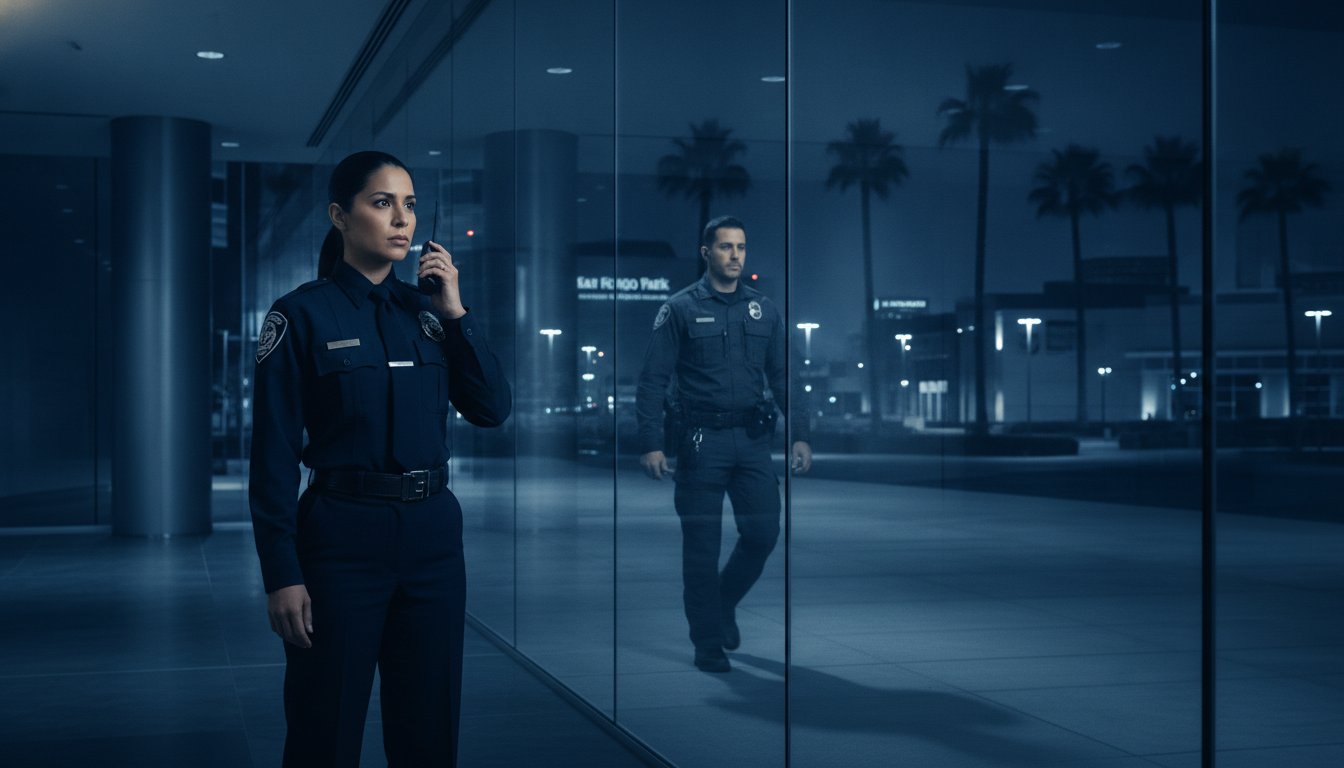
Armed Security for LA Dispensaries: 2026 Tactical Guide

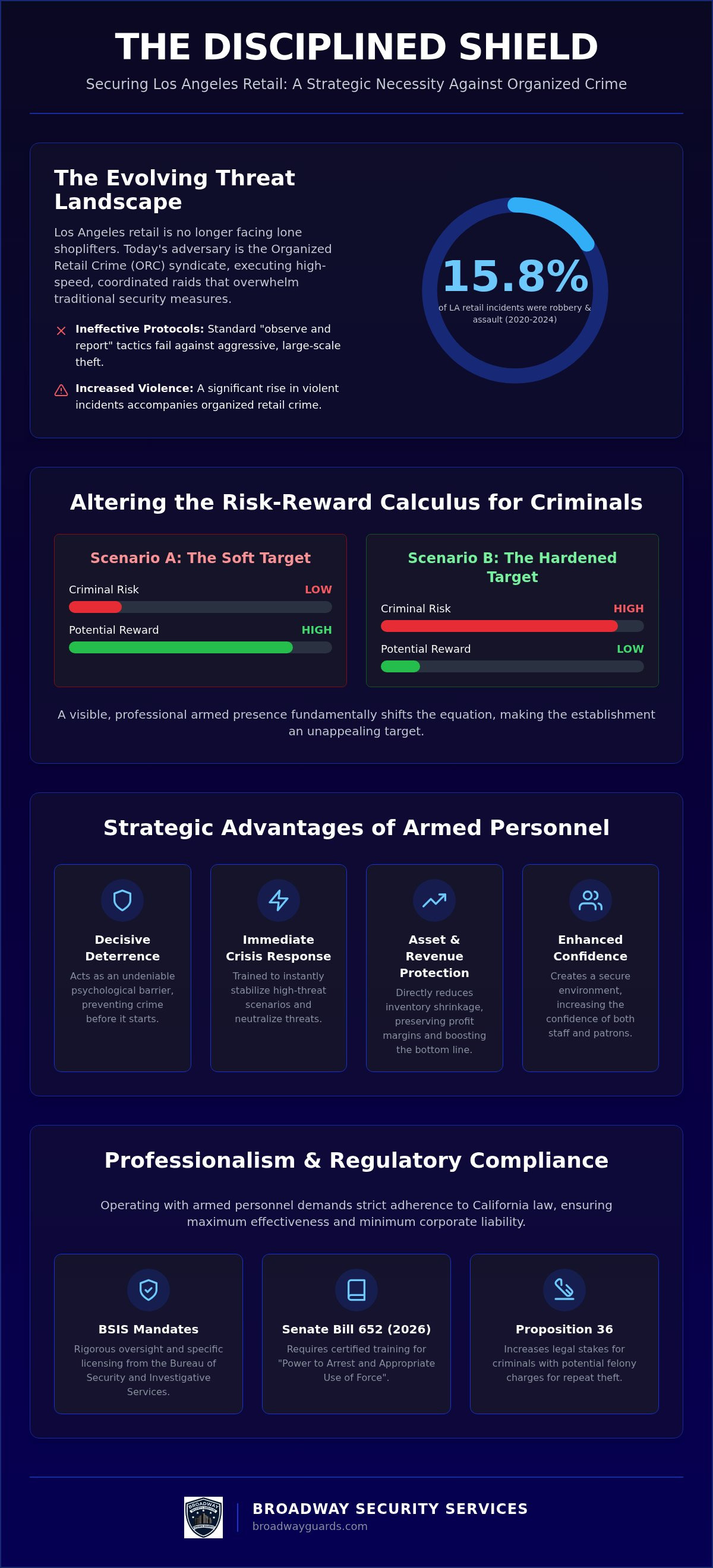
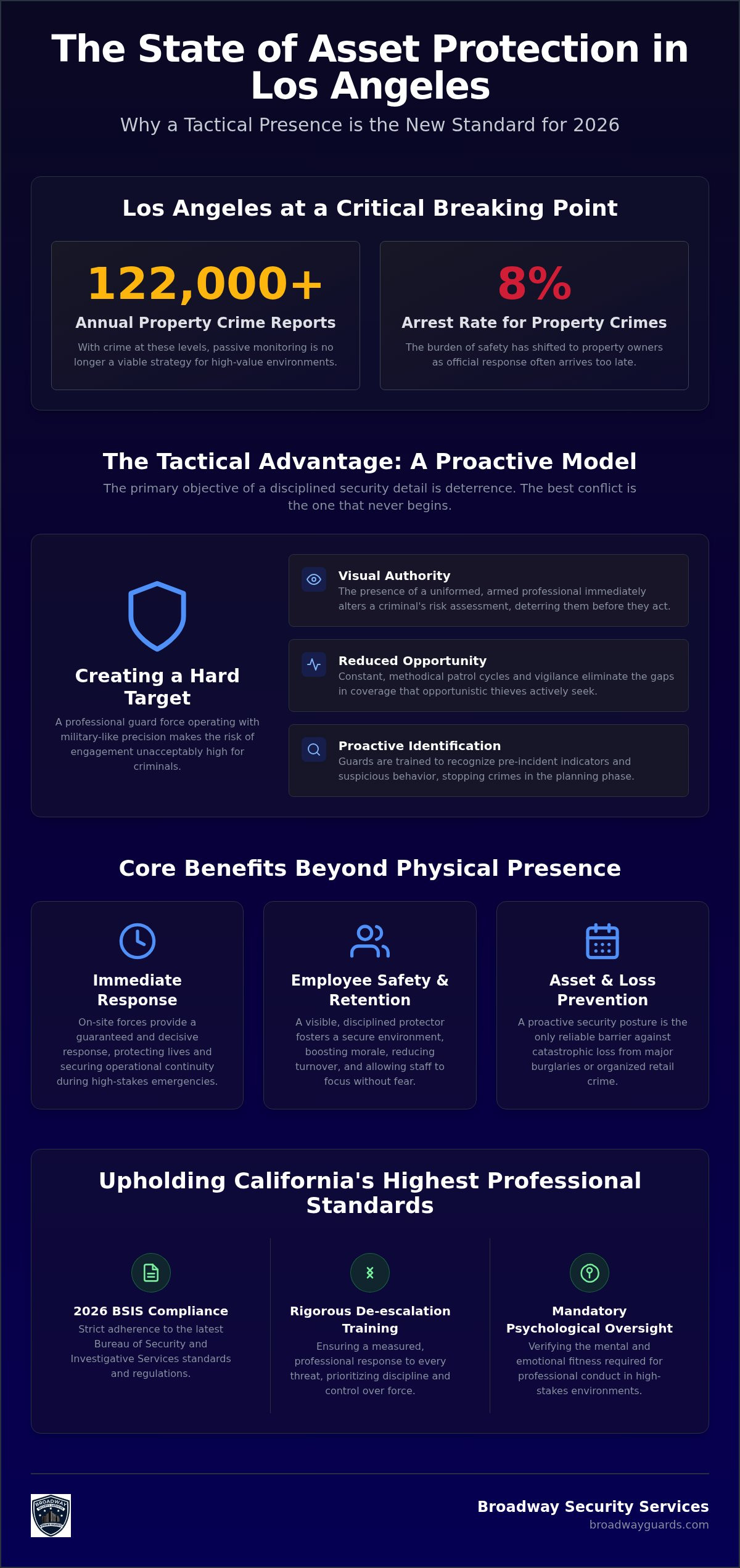
The most dangerous assumption a Los Angeles dispensary owner can make is that visible security alone is enough to deter a determined threat. It isn’t. Armed robbery targeting cannabis retail operations remains a persistent and serious risk across the LA market, and the consequences of an underprepared response extend far beyond the immediate incident: compromised staff safety, regulatory scrutiny, and a brand reputation that takes years to rebuild.

You already know the stakes. Running a dispensary in Los Angeles means operating at the intersection of high-value inventory, strict Department of Cannabis Control oversight, and a threat environment that demands more than a uniform at the door. The question most operators are really asking isn’t whether they need armed security for dispensaries in Los Angeles. It’s how to deploy it with the precision and professionalism that protects assets without alienating the clientele who walk through the door every day.

This guide answers that question directly. Drawing on the tactical standards and risk assessment frameworks used by Southern California’s most disciplined security operations, it covers DCC compliance requirements, guard deployment strategy, and how to build a protection posture that reassures staff, satisfies regulators, and keeps your operation running without incident.

Key Takeaways

  • The 2026 threat landscape for Los Angeles cannabis retailers is defined by organized, targeted criminal activity—understanding current crime trends is the first step toward building a protection posture that holds.
  • Deploying armed security for dispensaries in Los Angeles requires strict alignment with DCC regulations and BSIS licensing standards; non-compliance exposes your operation to penalties that can be as damaging as the threats you’re guarding against.
  • The decision between armed and unarmed guards is not a matter of budget—it is a calculated risk assessment based on your location, inventory value, and the criminal’s risk-reward calculation when facing a visible, credentialed armed presence.
  • A disciplined crisis strategy begins before any incident occurs: site-specific vulnerability mapping and internal diversion protocols are the structural foundation that separates prepared operations from reactive ones.
  • Localized expertise and rigorous personnel standards are not interchangeable with general security services—learn what separates a disciplined, cannabis-specialized security partner from a commodity guard provider.

The Security Landscape for Los Angeles Dispensaries in 2026

Cannabis retail in Los Angeles doesn’t operate in a vacuum. It operates inside a threat environment that has evolved considerably since the state’s legal framework took shape, and operators who treat security as a static checklist are consistently the ones caught unprepared. The California cannabis regulatory framework created a licensed, taxed industry, but it also concentrated high-value inventory and large volumes of cash inside retail storefronts, making dispensaries structurally attractive targets for organized criminal activity.

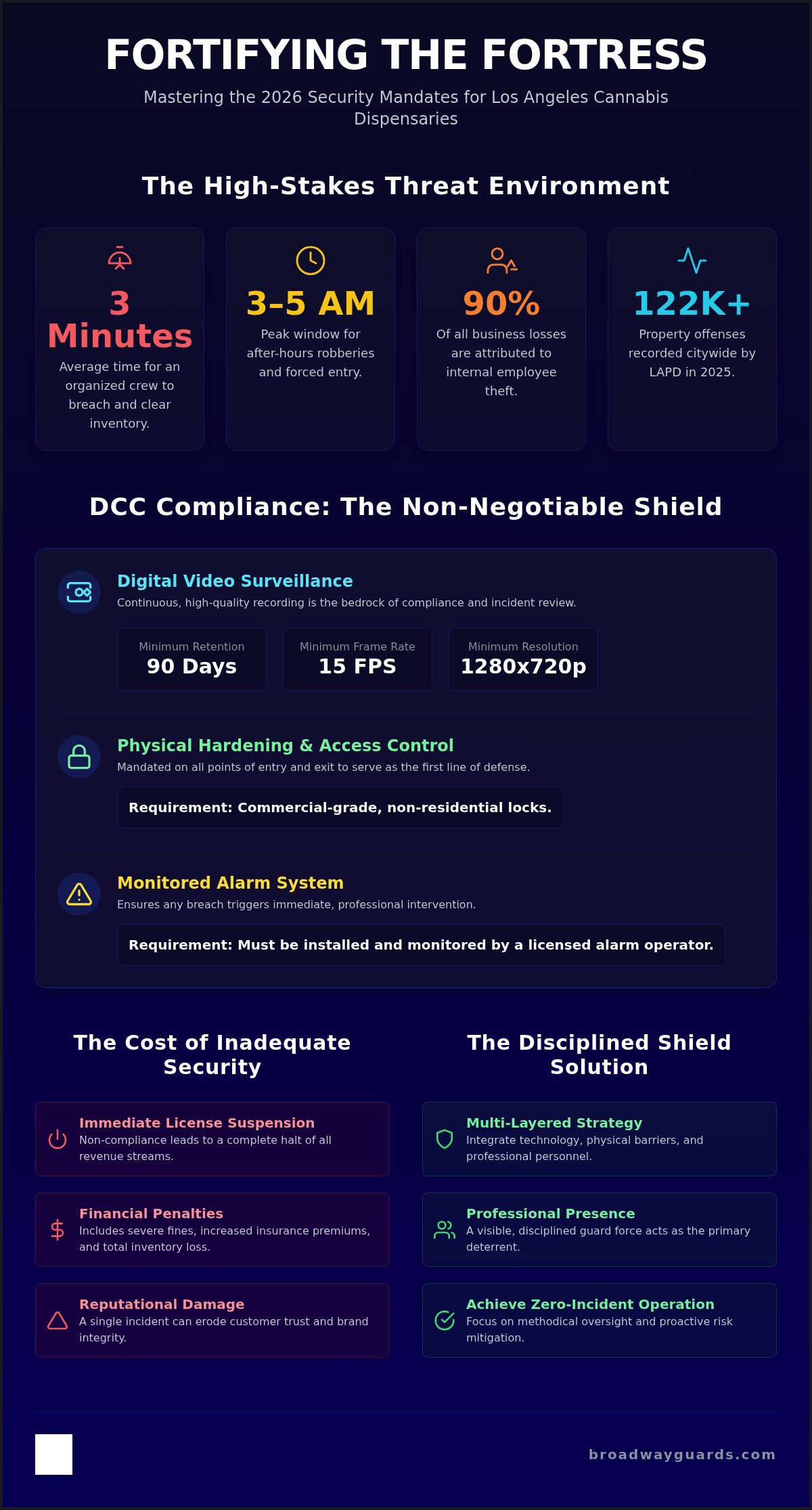
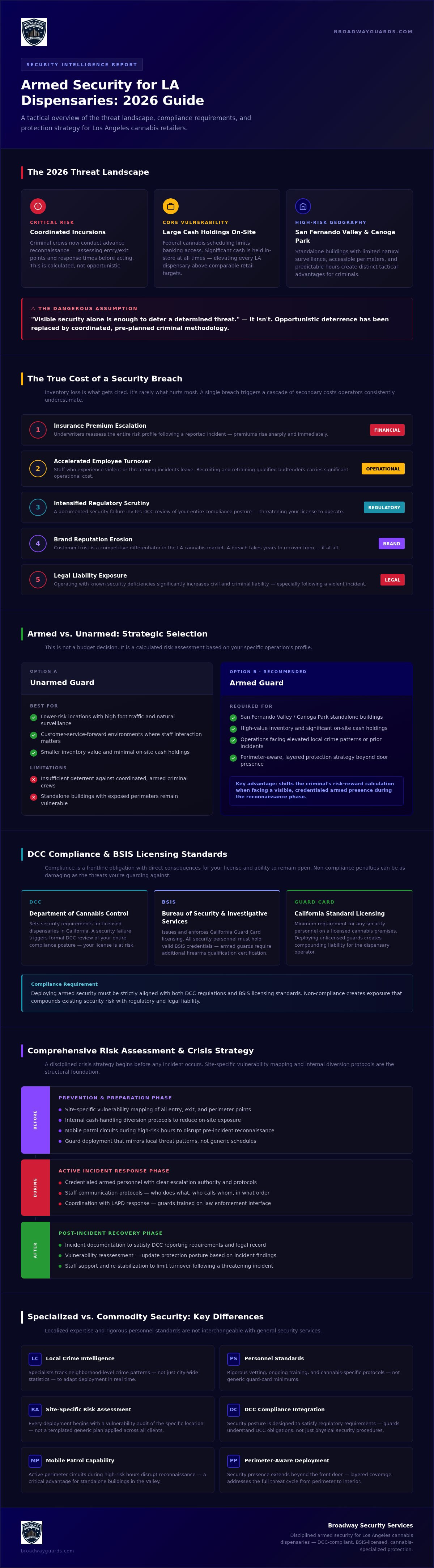
What’s changed in recent years isn’t the motivation. It’s the methodology. Opportunistic theft, the kind deterred by a visible camera or a single guard at the door, has given way to coordinated incursions. Crews conduct advance reconnaissance. Entry and exit points are assessed before a single move is made. Response times are factored in. This is not random criminal behavior. It’s calculated, and it demands a calculated response.

Cash is the core vulnerability. Because cannabis remains federally classified, most dispensaries operate with limited banking access, meaning significant cash holdings on-site at any given time. That single structural reality elevates the risk profile of every dispensary in the Los Angeles market above virtually any comparable retail operation. Criminals understand this. Your security posture needs to account for it directly.

High-Risk Zones: San Fernando Valley and Canoga Park

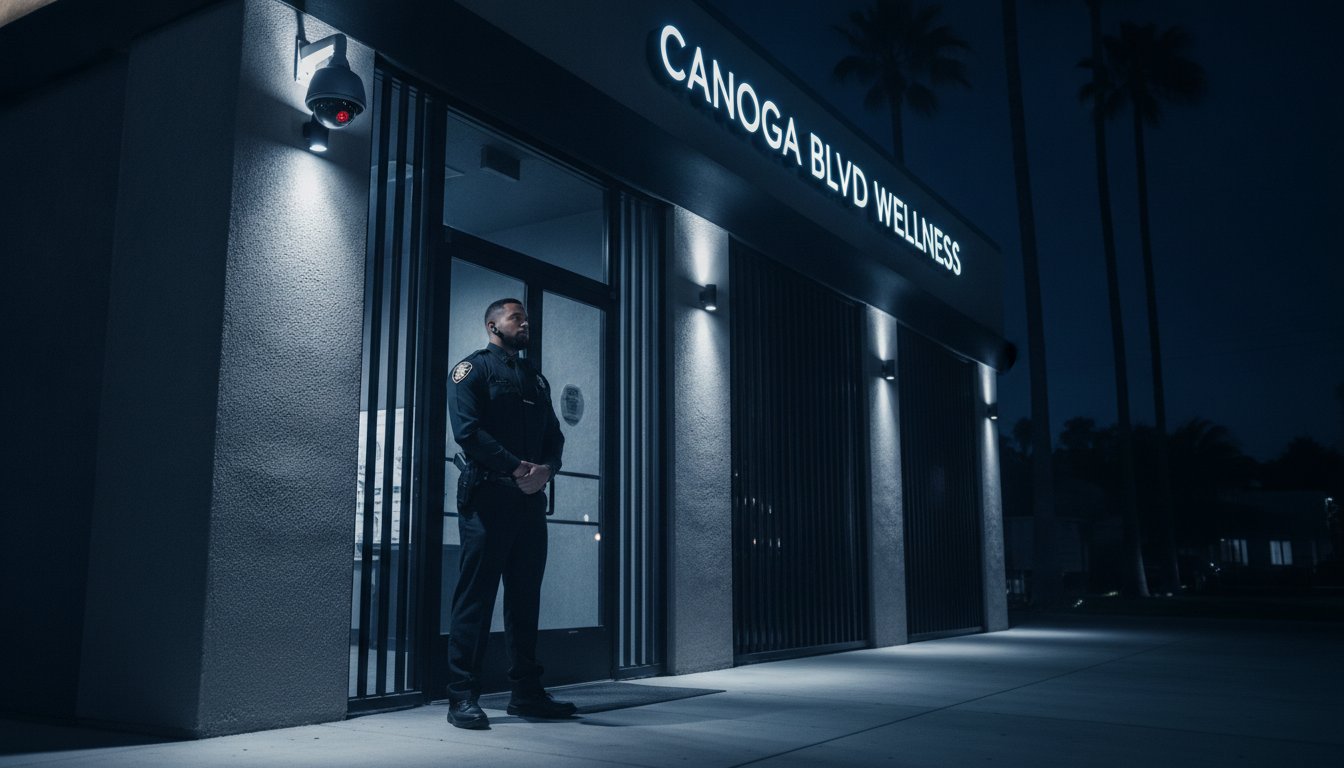
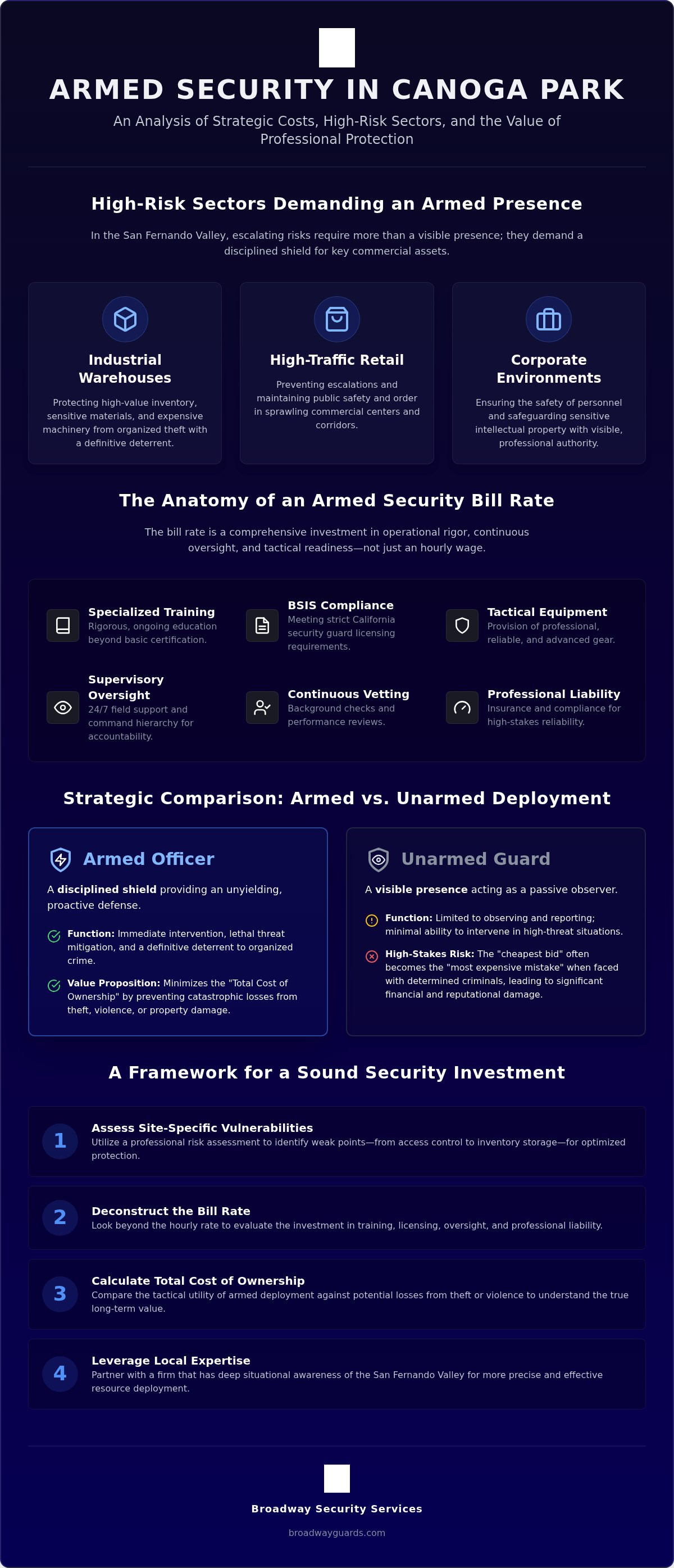
The San Fernando Valley presents specific challenges for cannabis retailers. Standalone dispensary buildings, common throughout the Valley corridor, offer criminals distinct tactical advantages: limited natural surveillance from neighboring businesses, accessible perimeters, and predictable operating hours. Perimeter security isn’t a secondary consideration in this geography; it’s foundational. Mobile patrol services that actively circuit a building’s exterior during high-risk hours disrupt the reconnaissance phase that precedes most planned incursions. For operators in the Canoga Park area specifically, local threat patterns reinforce the case for deploying armed security for dispensaries in Los Angeles as a layered, perimeter-aware strategy rather than a static, door-only presence.

The Cost of Inadequate Protection

Inventory loss is the number that gets cited. It’s rarely the number that hurts most. A security breach triggers a cascade of secondary costs that operators consistently underestimate:

  • Insurance premiums escalate sharply following a reported incident, with underwriters reassessing the entire risk profile of the operation
  • Employee turnover accelerates after staff experience a violent or threatening incident; recruiting and retraining qualified budtenders and floor staff carries real operational cost
  • Regulatory scrutiny intensifies; a documented security failure invites DCC review of your entire compliance posture
  • Brand reputation erodes in a market where customer trust is a competitive differentiator
  • Legal liability exposure increases significantly if an owner is found to have operated with known security deficiencies

Tactical security, in this context, means something precise: a protection posture built on site-specific risk assessment, credentialed personnel, and structured protocols that address the full threat cycle before, during, and after a potential incident. It’s the standard that separates disciplined armed security for dispensaries in Los Angeles from a commodity guard service that checks a compliance box and nothing more.

DCC Compliance and California Guard Card Standards

Compliance isn’t a background concern for Los Angeles dispensary operators. It’s a frontline obligation with direct consequences for your license, your operation, and your ability to remain open. The Department of Cannabis Control sets the regulatory floor for security, and the Bureau of Security and Investigative Services sets the personnel standards that determine who is legally authorized to stand on your floor. Understanding both frameworks isn’t optional; it’s the structural prerequisite for any defensible security posture.

DCC Operating Hours and Presence Requirements

California Code of Regulations Title 4, Sections 15044 through 15048, establishes the security baseline for licensed cannabis retail storefronts. These provisions require that licensed premises maintain continuous video surveillance with sufficient resolution to identify individuals at all entry and exit points, integrated alarm systems, and controlled access to restricted areas. Critically, the DCC mandates that a licensed security guard be present during all operating hours. That requirement isn’t satisfied by a camera system alone or by a manager standing near the door. It requires a credentialed, BSIS-licensed guard whose presence is documented and verifiable.

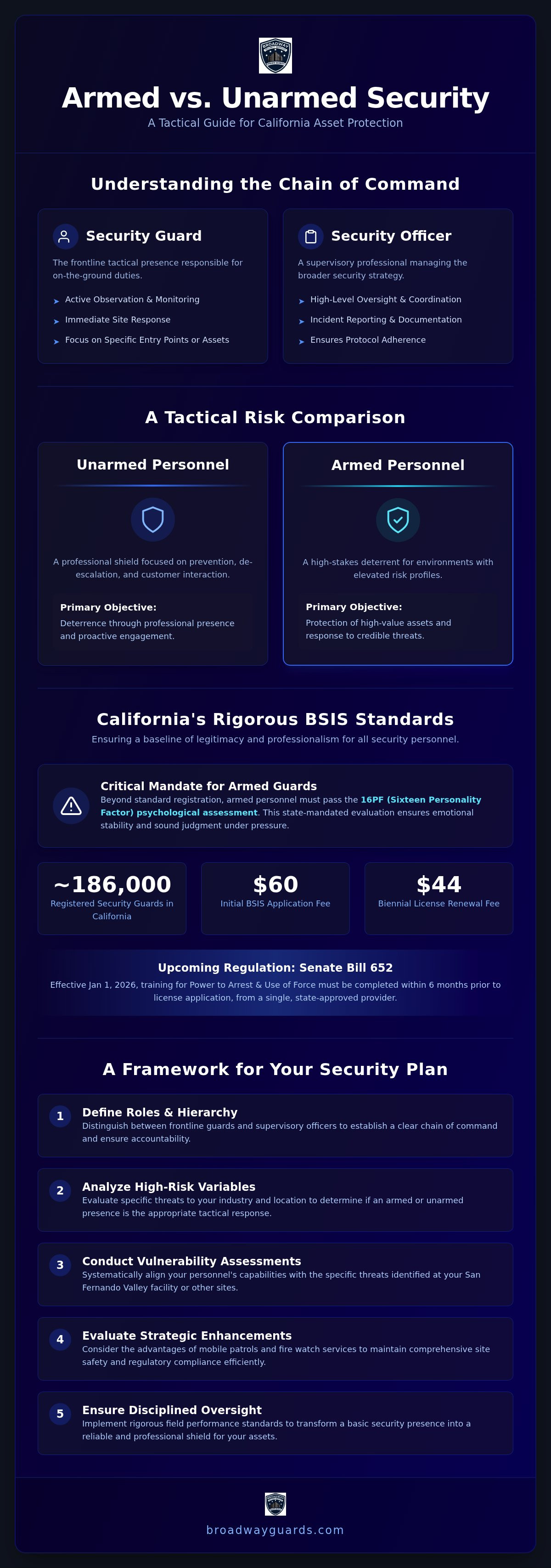
BSIS licensing is the legal threshold. Any individual providing security services in California, armed or unarmed, must hold a valid Guard Card issued by the Bureau of Security and Investigative Services. For armed security for dispensaries in Los Angeles, the requirements go further: personnel must obtain a separate Firearms Permit through BSIS, which requires a minimum of fourteen hours of firearms training, a live-fire qualification, and a background investigation. That permit must be renewed annually, with ongoing qualification standards that confirm the guard remains proficient and legally authorized to carry. Operators who engage security personnel without verifying these credentials expose themselves to regulatory penalties that have nothing to do with any criminal incident.

The distinction between armed and unarmed certification matters operationally, not just administratively. An unarmed guard cannot legally carry a firearm on your premises, regardless of the threat environment. Confirming the specific credentials of every guard assigned to your location is not a courtesy; it’s a compliance requirement.

Written Security Plans and METRC Awareness

The DCC requires licensees to maintain a written security plan that documents protocols for access control, response procedures, and surveillance system maintenance. During a state inspection, this document is reviewed as evidence that your operation has thought through its protection posture systematically, not reactively. A plan that exists only on paper and hasn’t been operationalized will not satisfy a disciplined inspector.

Where many operators create an unnecessary gap is at the intersection of physical security and seed-to-sale tracking. METRC, California’s cannabis track-and-trace system, creates a digital record of every product movement within your facility. Physical security guards who understand the importance of logging all entries and exits to restricted areas provide a human layer that supports the integrity of that digital record. Discrepancies between METRC data and physical access logs are a red flag during compliance audits. Guards trained to maintain accurate entry and exit documentation close that gap before it becomes a liability.

Operators who want to build a security program that holds up under both criminal pressure and regulatory scrutiny should start with a site-specific risk assessment. Consulting a cannabis-specialized security firm before finalizing your written security plan ensures the document reflects real operational conditions, not a generic template that satisfies no one.

Armed vs. Unarmed Guards: Strategic Selection for High-Value Assets

The choice between armed and unarmed security isn’t a budget line item. It’s a tactical decision rooted in a single question: what does a determined criminal see when they assess your location? The answer to that question determines whether your security posture functions as a genuine deterrent or as a threshold that gets crossed anyway.

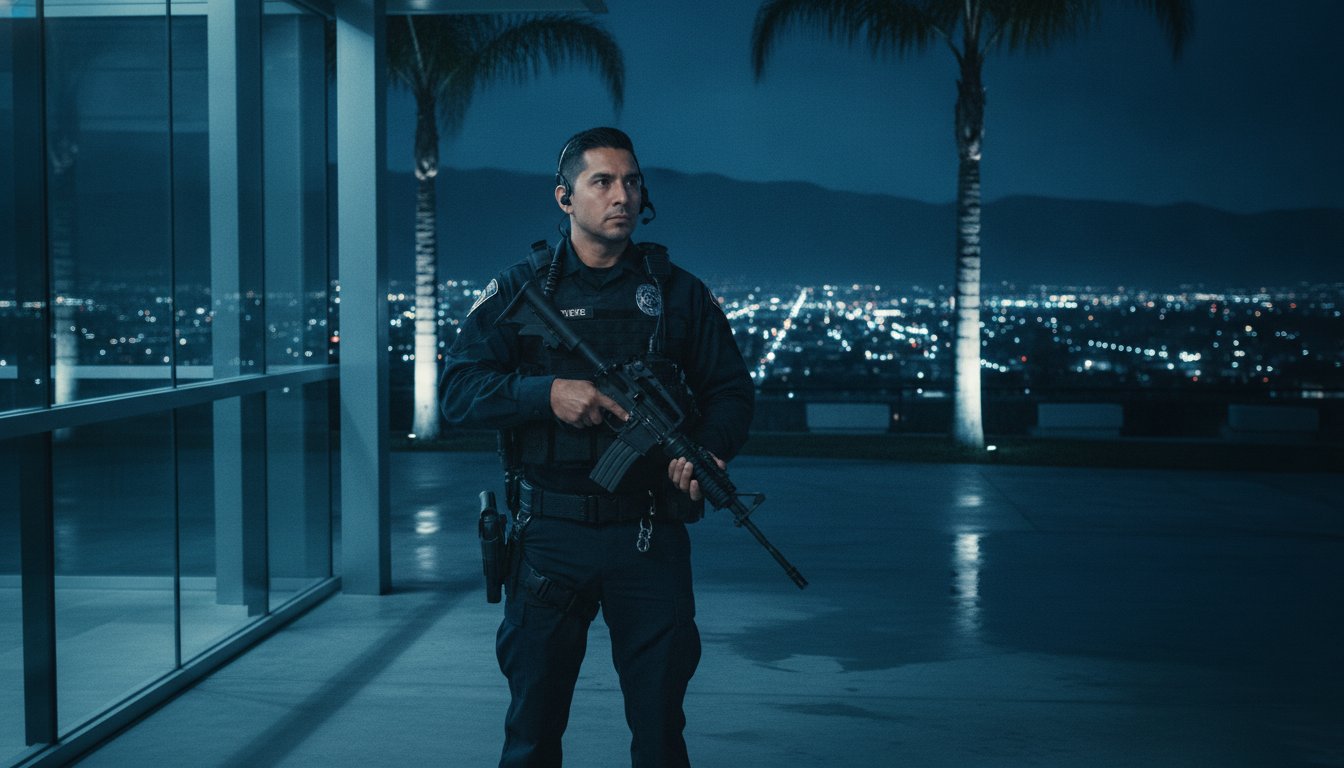
Armed presence changes the criminal’s risk-reward calculation in a way that unarmed presence simply cannot replicate. A coordinated crew conducting advance reconnaissance on a dispensary doesn’t just count cameras. They assess the consequences of moving forward. A credentialed, armed guard signals that those consequences are severe and immediate. That signal alone disrupts the planning phase that precedes most organized incursions. It doesn’t guarantee immunity, but it fundamentally alters the math that drives criminal decision-making.

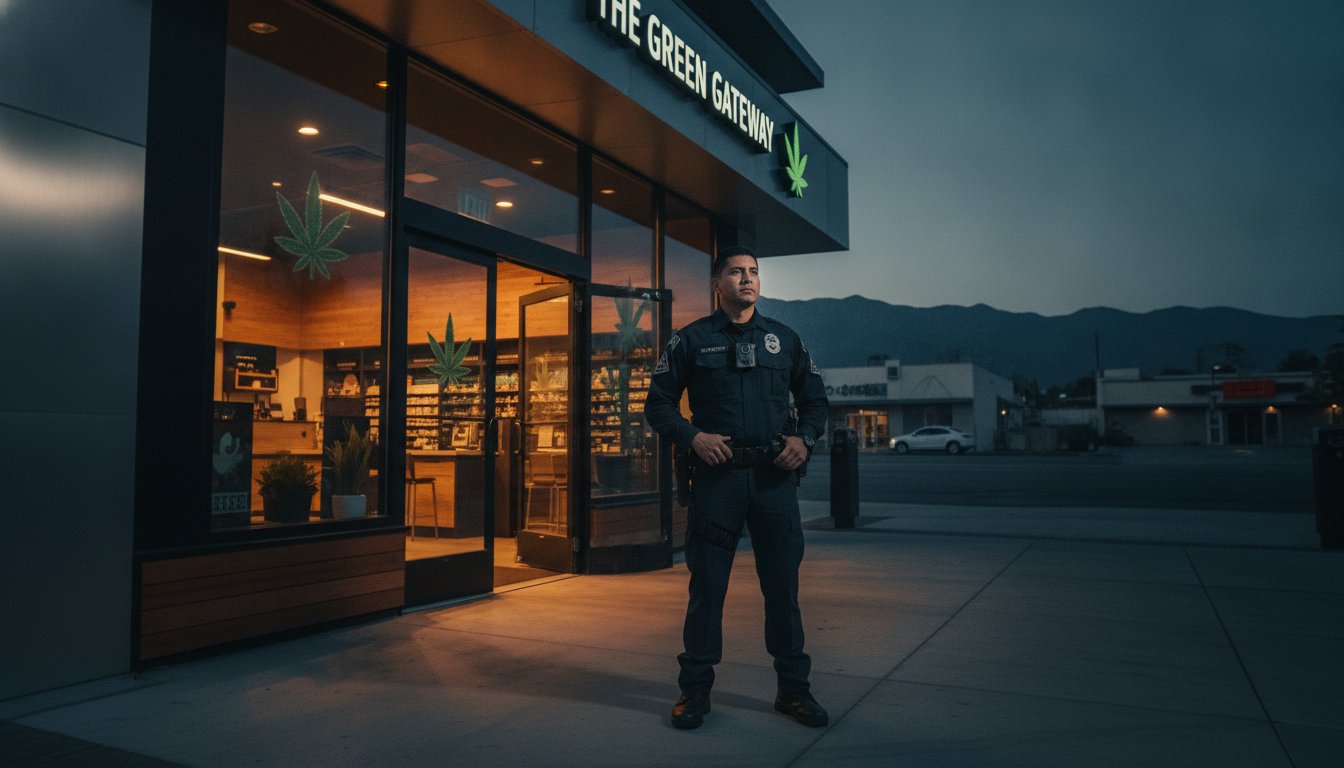
The concern most operators raise at this point is legitimate: how do you deploy that level of protection without creating an atmosphere that feels adversarial to the customers who drive your revenue? The answer is professional presence. Armed guards who are trained in customer interaction, de-escalation, and retail-environment protocols project authority without projecting aggression. The uniform communicates seriousness. The conduct communicates professionalism. That combination is achievable, and it’s the standard that separates disciplined armed security for dispensaries in Los Angeles from a blunt-force approach that costs you customers.

When Armed Security is Non-Negotiable

Three operational realities remove ambiguity from this decision. First, high-volume cash handling and vault access. Any location where significant cash accumulates on a predictable schedule requires armed oversight at those moments specifically. Second, inventory transport and delivery windows. The movement of product between your facility and a vehicle is a structurally vulnerable interval; it requires a credentialed armed presence, not a passive one. Third, documented history. If a location has experienced a robbery or credible threat, the risk profile is no longer theoretical. It’s established. Responding to that history with unarmed personnel isn’t a cost-saving measure; it’s an unacceptable exposure.

The Role of Unarmed Guards in Low-Risk Scenarios

Unarmed personnel serve a defined and valuable function in the right context. Concierge-level access control, ID verification, and customer flow management don’t require a firearms permit. They require professionalism and situational awareness. In lower-risk environments, or in areas of your facility that are structurally separated from cash and inventory, unarmed guards provide a cost-efficient layer that keeps your overall security architecture calibrated to actual threat levels rather than uniformly over-resourced.

The most operationally sound approach for high-volume dispensaries is a layered model: armed personnel at vault access points, cash-handling areas, and exterior perimeter positions, with unarmed staff managing the customer-facing floor. This structure controls cost without compromising protection where it counts. For a detailed breakdown of how unarmed personnel fit into a comprehensive protection strategy, The Strategic Guide to Unarmed Security Guards covers the operational framework directly.

The starting point for any deployment decision is a site-specific risk assessment. Location, operating hours, cash volume, prior incident history, and proximity to high-risk corridors all factor into a defensible recommendation. Generic staffing models don’t account for these variables. A disciplined security partner builds the deployment around your actual threat environment, not a standard template.

Armed Security for LA Dispensaries: 2026 Tactical Guide

Developing a Comprehensive Risk Assessment and Crisis Strategy

A written security plan that satisfies a DCC inspector is not the same thing as a security plan that actually protects your operation. The gap between those two documents is where most dispensaries are exposed. Closing that gap requires a structured methodology: one that moves systematically from physical vulnerabilities to operational weaknesses, and from prevention protocols to active crisis response.

The Methodology of Professional Risk Assessment

Physical security and operational security are not the same discipline, and treating them as interchangeable is a structural error. Physical assessment maps the built environment: entry and exit points, blind spots in camera coverage, perimeter exposure, vault proximity to customer-facing areas, and the sightlines available to a guard stationed at any given position. Operational assessment goes deeper. It examines staff scheduling patterns, cash-handling procedures, access control logs, and the human behaviors that create predictable windows of vulnerability.

A disciplined assessment addresses both layers simultaneously. Identifying that a rear delivery entrance sits in a camera blind spot is a physical finding. Identifying that the same entrance is staffed by a single unarmed employee during a predictable shift overlap is an operational finding. Neither is complete without the other. How to Conduct a Professional Security Risk Assessment in California outlines the full framework for integrating these two dimensions into a single, actionable protection posture.

Periodic reassessment isn’t optional in the cannabis market. Criminal methodology evolves, staffing changes, and inventory volumes shift seasonally. A risk assessment conducted at license approval reflects conditions that may no longer exist. Scheduling structured reassessments at defined intervals ensures your protection posture remains calibrated to your current threat environment, not a historical one.

Internal diversion is a specific risk category that operators consistently underweight. Employee theft in cannabis retail is a documented pattern, and it often exploits gaps between physical access controls and METRC tracking data. Diversion protocols should include access tiering that limits vault and back-office entry to credentialed personnel, dual-verification requirements for high-value inventory movements, and clear documentation standards that create an auditable record. These aren’t punitive measures; they’re structural controls that protect honest employees as much as they deter dishonest ones.

Crisis Management and Emergency Response

A crisis protocol that exists only as a document fails at the moment it’s needed most. Effective crisis management for armed security for dispensaries in Los Angeles requires pre-established communication channels with local LAPD divisions, not a general emergency number pulled from memory under duress. Guards and staff should have direct contact protocols that specify who initiates law enforcement contact, what information is communicated first, and who manages internal communication during an active incident.

Lockdown and evacuation procedures must be site-specific. A lockdown that works in a standalone Valley building doesn’t translate directly to a shared commercial space with common corridors. Staff training on these protocols should be conducted in the actual physical environment, not in a conference room. The difference between a rehearsed response and an improvised one is measurable in outcomes.

Armed guards function as the first line of active defense during a crisis, but their role is defined by protocol, not instinct. Trained armed personnel assess, contain, and communicate. They do not act unilaterally. The value of a credentialed armed presence in an active threat scenario is the structured authority it projects and the response time it buys for law enforcement to arrive. That value is only realized when the guard’s crisis role is clearly defined before an incident occurs.

Operators who want a protection posture built on methodology rather than assumption should start with a site-specific consultation. Contact Broadway Security Services to schedule a risk assessment that integrates physical, operational, and crisis response planning into a single, defensible framework.

Why Broadway Security is the Disciplined Shield for LA Cannabis Firms

Broadway Security Services operates on a single principle: precision is the only acceptable standard for high-stakes protection. In a market where generalist firms treat security as a commodity, we position ourselves as a disciplined shield for the cannabis industry. Our approach to armed security for dispensaries in Los Angeles is built on military-like rigor and a deep understanding of the unique threat landscape facing Southern California operators. We don’t just fill posts; we deploy trained personnel who understand that their presence is the primary deterrent against coordinated criminal activity.

Our localized expertise is a core operational advantage. Based in Canoga Park, we possess an intimate understanding of the San Fernando Valley’s specific security challenges. This regional focus allows us to provide more than just a visible presence. We provide a strategic partnership rooted in risk assessment and crisis management. Every security contract we execute is customized to the specific vulnerabilities of the site, from standalone retail storefronts to high-volume cash-handling facilities. We build the protection around your actual risks, ensuring no resource is wasted and no gap is left unaddressed.

Professionalism and Accountability in the Field

We reject the aggressive, uncoordinated posture often seen in retail security. Broadway personnel maintain a stoic, authoritative presence that reassures high-value clientele while signaling unyielding vigilance to potential threats. This professional image is backed by structured oversight. Every deployment includes field performance reporting that ensures protocols are followed with methodical consistency. Our guards are held to a standard of accountability that mirrors the high stakes of the assets they protect. For a deeper look at our operational framework, see our guide on Armed Security Guard Services Los Angeles: Strategic Safety.

Securing the Future of the Cannabis Industry

We don’t just provide personnel; we provide the operational stability required for your business to flourish. Our commitment to regulatory excellence means your dispensary remains in total alignment with DCC requirements, protecting your license as effectively as we protect your inventory. We believe that a secure environment is the foundation of a successful retail operation. When your staff feels safe and your clientele feels reassured, your business has the space to grow without the constant shadow of potential incursions.

Choosing armed security for dispensaries in Los Angeles is a decision that defines your operational resilience. Don’t leave your assets to chance or commodity guard services. Your business deserves the care of a vigilant and unyielding force that takes its duty with the utmost gravity. Contact Broadway Security Services today to schedule a professional consultation and a comprehensive risk assessment for your facility.

Build Your Protection Posture Before the Threat Does

The threat environment facing Los Angeles dispensaries in 2026 is organized, calculated, and unforgiving of preparation gaps. Three realities define every defensible security posture: strict DCC and BSIS compliance is non-negotiable, the decision between armed and unarmed personnel must be driven by actual risk assessment rather than budget assumptions, and crisis protocols only work when they’re built before an incident occurs.

Operators who treat armed security for dispensaries Los Angeles as a compliance checkbox will remain exposed. Those who build a layered, site-specific protection strategy will operate with the stability their staff, clientele, and license depend on.

Broadway Security Services brings BSIS-licensed and DCC-compliant personnel, specialized Southern California cannabis expertise, and a structured approach to risk assessment and crisis management to every engagement. Your operation deserves a partner who takes that responsibility with the same gravity you do.

Secure your dispensary with Broadway’s disciplined armed protection and put a credentialed, methodical security framework between your assets and every threat that targets them.

Frequently Asked Questions About Armed Security for Dispensaries in Los Angeles

Does California law require armed security for dispensaries?

California law doesn’t mandate armed guards specifically, but the Department of Cannabis Control requires a licensed security guard to be present during all operating hours. Whether that guard is armed is a risk-based decision left to the operator. That said, the DCC’s written security plan requirement means your deployment choice must be documented and defensible, not arbitrary.

Operators in high-risk corridors or those handling significant cash volumes regularly find that unarmed personnel don’t satisfy their actual threat exposure, even when they technically satisfy the regulatory minimum. Compliance and protection are not always the same standard.

What are the BSIS requirements for armed security guards in Los Angeles?

Every security guard operating in California must hold a valid Guard Card issued by the Bureau of Security and Investigative Services. Armed personnel carry an additional requirement: a BSIS Firearms Permit, which mandates a minimum of fourteen hours of firearms training, a live-fire qualification, and a background investigation. That permit requires annual renewal with continued qualification standards.

Operators should verify both credentials for every guard assigned to their location. An individual holding a Guard Card but not a current Firearms Permit cannot legally carry on your premises, regardless of what a staffing firm may represent.

How much does armed security for a dispensary cost in 2026?

We don’t publish pricing here because security costs vary considerably based on deployment structure, hours of coverage, number of personnel, and site-specific risk factors. Quoting a range without knowing your operation’s actual requirements would be misleading. What’s consistent across the industry is that the cost of inadequate security, measured in inventory loss, insurance increases, regulatory penalties, and staff turnover, routinely exceeds the cost of a properly structured security contract.

The right starting point is a site-specific risk assessment that defines your actual coverage requirements. Contact Broadway Security Services directly to discuss a deployment structure calibrated to your facility and budget.

Can armed security guards assist with DCC compliance and inspections?

Armed guards contribute directly to compliance when they’re trained to do so. Guards who understand METRC’s role in seed-to-sale tracking and who maintain accurate entry and exit documentation for restricted areas provide a human layer that supports the integrity of your digital records. Discrepancies between access logs and METRC data are a documented audit trigger, and disciplined guards close that gap.

During a DCC inspection, a credentialed guard whose presence is documented and whose credentials are current is itself a compliance asset. It demonstrates that your written security plan has been operationalized, not just filed.

What is the difference between armed and unarmed guards for cannabis retail?

The practical difference is deterrence weight. Armed security for dispensaries in Los Angeles changes the criminal’s risk-reward calculation in a way unarmed presence can’t replicate. A coordinated crew assessing a location factors in the consequences of proceeding. An armed, credentialed guard signals those consequences are immediate and severe. Unarmed personnel serve a defined function in customer-facing, lower-risk areas, but they don’t carry that same deterrent signal.

The most operationally sound model for high-volume dispensaries layers both: armed personnel at vault access points and cash-handling areas, with unarmed staff managing customer flow and ID verification. This structure matches protection intensity to actual risk level at each position.

How do I ensure armed guards don’t intimidate my customers?

Professional presence is the answer, and it’s a trainable standard. Guards who are selected and trained for retail cannabis environments understand that their conduct communicates as much as their uniform. A stoic, authoritative posture that signals vigilance to a potential threat reads as reassurance to a legitimate customer. The two aren’t in conflict when personnel standards are high enough.

Operators should ask any security firm directly about retail-specific training protocols and customer interaction standards before signing a contract. Guards who’ve only worked warehouse or construction environments don’t automatically translate to a dispensary floor without that specialized preparation.

Are armed guards trained in de-escalation for retail environments?

They should be, and confirming this is a non-negotiable part of vetting any security partner. De-escalation training for retail environments covers verbal communication techniques, threat recognition before a situation becomes physical, and protocols for managing agitated individuals without force. In a cannabis dispensary, where customer interactions are frequent and varied, these skills are as operationally important as firearms proficiency.

A disciplined security firm doesn’t treat de-escalation as a supplemental skill. It’s a core competency that protects staff, customers, and the operator’s liability exposure simultaneously. Ask for specifics on training curriculum, not just a general confirmation that it exists.

What should be included in a dispensary’s written security plan?

The DCC requires a written security plan that covers access control protocols, surveillance system maintenance procedures, and response procedures for security incidents. A plan that satisfies regulatory review and actually protects your operation goes further: it documents guard deployment positions, cash-handling protocols, lockdown and evacuation procedures specific to your physical layout, and internal diversion controls tied to your METRC access structure.

Generic templates don’t account for site-specific vulnerabilities. A plan built from an actual physical and operational assessment of your facility is the only version that holds up under both a disciplined DCC inspector and a real incident. Broadway Security Services structures its risk assessments to produce documentation that meets both standards.

Cost of Armed Security Guard in Los Angeles: 2026 Pricing Guide

In 2026, a “budget” security strategy in Los Angeles is no longer just a financial risk; it’s a fundamental failure in operational oversight. You recognize that as crime rates fluctuate across Downtown LA and the San Fernando Valley, the need for a disciplined shield has never been more critical. You also understand that the January 2026 California wage increases and SB 652 training mandates have fundamentally shifted the financial landscape for professional protection. This guide provides a comprehensive analysis of the cost of armed security guard in Los Angeles, ensuring you can distinguish between mere presence and true professional deterrence.

Investing in high-stakes reliability requires an understanding of the rigorous training and regulatory compliance that define modern safety standards. We’ll examine the impact of 2026 BSIS fee increases and the mandatory 16PF psychological assessments that now govern armed personnel. You’ll gain a clear framework for justifying the premium of armed versus unarmed coverage. This analysis moves beyond simple line items to focus on the intersection of legal compliance and operational rigor, helping you secure a vigilant force that protects your assets with unwavering commitment.

Key Takeaways

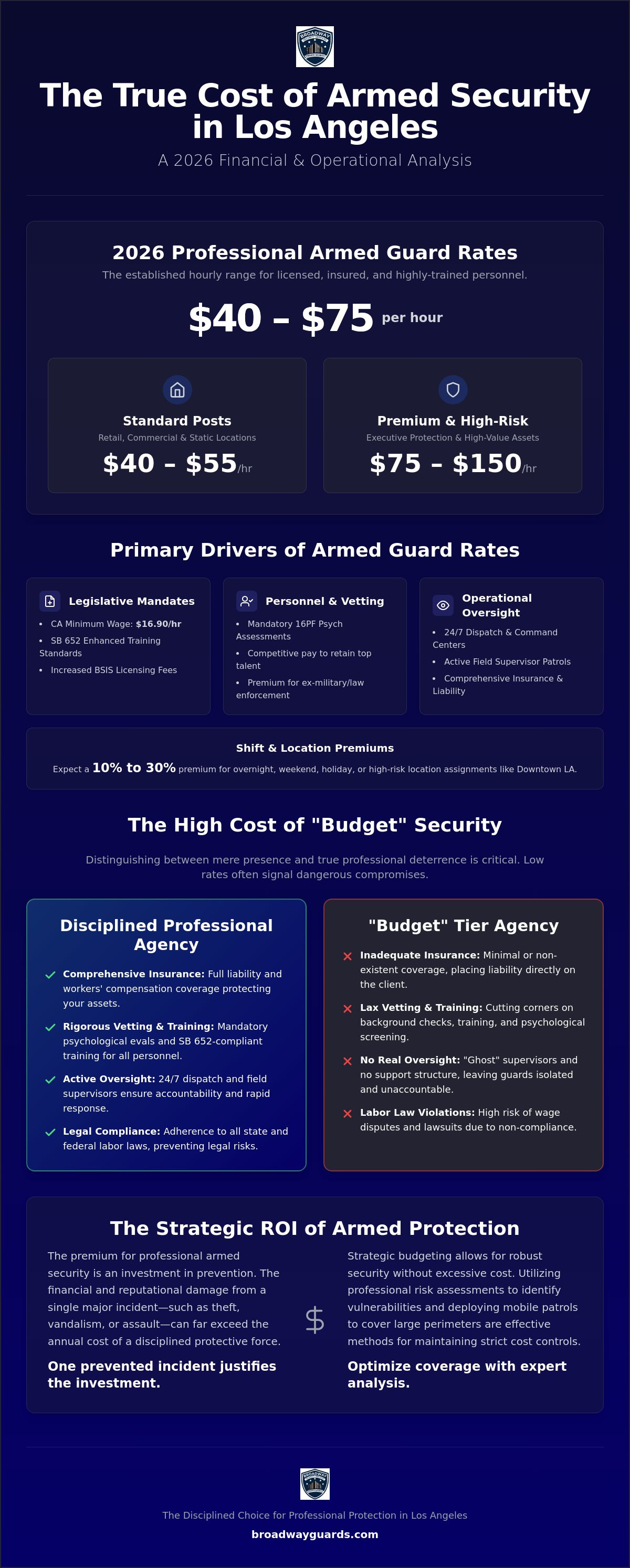
  • Establish a realistic 2026 budget by understanding why the professional cost of armed security guard in Los Angeles now ranges from $40 to $75 per hour.
  • Learn how the new SB 652 training standards and mandatory psychological evaluations ensure higher field performance and long-term reliability.
  • Analyze the strategic ROI of armed protection, focusing on how one prevented incident justifies the annual premium over unarmed alternatives.
  • Discover how utilizing professional risk assessments and mobile patrols can secure large perimeters while maintaining strict cost controls.
  • Identify the hallmarks of a disciplined protector to avoid the high-stakes risks associated with budget-tier security agencies that compromise on insurance and oversight.

The Landscape of Armed Security Pricing in Los Angeles (2026)

Professional protection in Southern California is no longer a commodity; it’s a disciplined investment in risk mitigation. As we move through 2026, the baseline cost of armed security guard in Los Angeles has shifted significantly due to new legislative mandates and increased operational overhead. For most professional agencies, the average hourly rate now ranges between $40 and $75. While some providers may offer lower figures, these “budget” options frequently compromise on the insurance coverage and rigorous training required to maintain a safe environment. A disciplined operational budget is the only way to ensure your assets remain under the care of a vigilant and unyielding force.

Geographic variables within the county also influence these rates. A high-stakes environment in Downtown LA often demands a different level of tactical readiness than a residential complex in the San Fernando Valley. Understanding the duties of a security guard is the first step in recognizing why these professionals require specialized compensation. The complexity of the post, the local crime statistics, and the specific regulatory requirements of 2026 all play a role in the final pricing structure. Professionalism requires a transparent link between the fee paid and the quality of the shield provided.

Standard Armed Guard Hourly Rates

Retail and commercial static posts represent the baseline for armed protection. In 2026, these positions typically command rates between $40 and $55 per hour. This increase from previous years is driven by the California state minimum wage reaching $16.90 and the implementation of SB 652. This law requires more intensive, single-provider training for all guards before they can even apply for a license. Shift differentials also apply here. Expect to pay a premium of 10% to 30% for overnight coverage, weekend shifts, or holiday protection. These rates ensure that the personnel on your site are not just present, but actively observant and prepared for any crisis.

Premium and High-Risk Protection Costs

Specialized executive protection and high-value asset transport require a higher tier of expertise. Rates for these services generally span from $75 to $150 per hour. This pricing reflects the cost of deploying former military or law enforcement personnel who bring a higher level of tactical discipline to the role. High-profile neighborhoods such as Woodland Hills or Beverly Hills often demand these elevated standards to match their specific risk profiles. When the stakes involve high-value assets or personal safety, the cost of armed security guard in Los Angeles reflects the specialized vetting and psychological assessments now required by law. Professionalism in these environments isn’t optional; it’s the standard that ensures peace of mind.

Primary Drivers of Armed Guard Rates in Southern California

Calculating the cost of armed security guard in Los Angeles requires an analysis of the operational infrastructure behind the individual. A professional rate isn’t merely a reflection of an hourly wage; it’s the financial foundation of a disciplined shield. Several factors converge to create this price point, ranging from mandated labor costs to the high-stakes oversight required for armed deployment. In a city where crime patterns in DTLA and the San Fernando Valley demand constant vigilance, the administrative support and tactical readiness of a firm are non-negotiable components of the total expense.

California labor laws in 2026 have significantly altered the overhead for security agencies. With the state minimum wage reaching $16.90 per hour, the associated costs for payroll taxes, workers’ compensation, and mandatory benefits have scaled proportionally. Firms must also account for the national wage and employment data which indicates a rising demand for protective services, forcing agencies to offer competitive packages to retain high-tier personnel. This ensures that the guard on your property isn’t just an observer, but a dedicated professional with a vested interest in your safety.

Operational oversight adds another layer of cost. Reliable firms maintain 24/7 dispatch centers and field supervisors who provide methodical oversight of all posts. This hierarchy ensures accountability and rapid response during a crisis. For those seeking this level of unyielding protection, reviewing armed security guard services Los Angeles can clarify how these administrative structures directly support field performance.

Regulatory Compliance and Licensing

Maintaining compliance in 2026 involves significant recurring costs. Agencies must cover the expenses of mandatory 16PF psychological assessments and rigorous background checks for every armed applicant. These protocols ensure that only the most disciplined individuals carry a firearm on your behalf. In 2026, all armed personnel must maintain a valid BSIS firearms permit and complete the standardized Power to Arrest training through a single, approved provider. These regulatory credentials ground our professional claims in legal reality and operational rigor.

Insurance and Liability Mitigation

Armed posts carry inherent risks that demand high-tier insurance coverage. Professional firms maintain multi-million dollar general liability and professional liability policies to protect clients from secondary litigation. There’s a direct correlation between guard experience levels and liability mitigation; higher-paid, former military personnel often reduce the long-term risk profile of a site. This comprehensive coverage acts as a financial shield, ensuring that an incident on your property doesn’t translate into a catastrophic legal burden for your organization.

Armed vs. Unarmed Protection: Calculating the ROI

Deciding between armed and unarmed personnel is a strategic choice that directly impacts your risk profile. While the cost of armed security guard in Los Angeles is higher than unarmed alternatives, the return on investment is measured in prevented losses and preserved operational continuity. Unarmed observers serve a purpose in low-risk environments, but for high-value sites, relying solely on unarmed security guards is often a tactical error. Professional criminals assess a site’s defenses with clinical precision. They recognize the difference between a simple monitor and a disciplined shield.

In areas like the San Fernando Valley, retail shrinkage and vandalism represent significant financial drains on commercial assets. A single prevented smash-and-grab incident can justify the entire annual premium of an armed presence. We focus on the “cost of loss” rather than just the hourly rate. When you calculate potential liability and asset replacement costs, the higher baseline for armed protection becomes a logical insurance policy against catastrophic disruption. A vigilant force doesn’t just watch for trouble; it actively deters it through a posture of unyielding readiness.

Tactical Deterrence Value

Visible armed personnel provide a psychological barrier that unarmed guards cannot replicate. Professional criminal elements avoid targets where the risk of a disciplined response is present. For instance, a jewelry store in Woodland Hills faces a different threat level than a general office building. The presence of a guard who meets all California’s armed security licensing requirements signals that the facility is under methodical oversight. This deterrence is a proactive measure that stops incidents before they begin, saving your business from the reputational and financial damage of a successful crime.

Comparing the Total Cost of Ownership

Selecting a security partner based on the lowest bid often results in the highest long-term expense. Budget agencies often lack the insurance depth or training standards required to mitigate professional liability. Below is a comparison of typical 2026 market rates in the Los Angeles area for different service levels. These figures reflect the necessary investment in training, compliance, and high-tier insurance coverage.

Service Type Typical Hourly Rate (2026)
Unarmed Security $28–$45
Fire Watch $35–$60
Armed Security $40–$75

The cost of armed security guard in Los Angeles reflects the specialized vetting and tactical readiness required to protect high-stakes assets. Investing in a professional agency ensures your coverage remains unyielding, even when faced with evolving criminal tactics. When safety is the priority, the most expensive choice is often the one that fails to provide a disciplined defense.

Cost of Armed Security Guard in Los Angeles: 2026 Pricing Guide

Strategic Budgeting: Managing Security Costs in Los Angeles

Managing the cost of armed security guard in Los Angeles requires a tactical approach to resource allocation. Blindly hiring guards without a clear plan leads to operational bloat and wasted capital. A professional security risk assessment CA identifies specific vulnerabilities, allowing you to deploy personnel only where they’re most effective. This methodical identification of threats ensures that every dollar spent contributes directly to the safety of your assets. True safety isn’t found in the number of guards, but in the precision of their placement.

Right-Sizing Your Security Force

Optimization starts with data. By identifying high-vulnerability hours, you can scale your presence up or down to match the actual risk level. For example, construction site security guards are often most critical during after-hours when high-value equipment is most exposed. Combining these static guards with mobile units creates a layered defense that prevents “over-guarding” during low-risk periods. This precise risk analysis keeps your operational budget lean without sacrificing the safety of your perimeter. It’s about having the right force at the right time.

The Value of Localized Expertise in Canoga Park

Proximity is an operational advantage. Hiring a firm based in Canoga Park ensures that the command structure is intimately familiar with San Fernando Valley crime patterns. This local knowledge allows for the efficient deployment of resources based on real-time neighborhood intelligence. Localized expertise also reduces logistical overhead and ensures rapid response times during a crisis. A local command structure provides immediate oversight, ensuring that the cost of armed security guard in Los Angeles remains focused on results rather than travel time and administrative delays. Reliability is built on local presence and unyielding commitment.

Secure your assets with a disciplined and localized strategy. Contact Broadway Security Services to begin your comprehensive risk analysis today.

Why Broadway Security Services is the Disciplined Choice

Broadway Security Services operates with a level of order and precision that transforms security from a passive presence into an unyielding force. We recognize that your assets in Southern California require more than a simple monitor. They require a disciplined shield. Our commitment to high-stakes reliability ensures that every post is managed by a professional who prioritizes order and safety. This methodical approach to protection is what distinguishes a professional agency from a budget-tier provider. We provide the peace of mind that comes from knowing your assets are under the care of a vigilant and unyielding force.

The cost of armed security guard in Los Angeles is an investment in the caliber of the individual standing watch. Broadway does not participate in the race to the bottom regarding pricing. Instead, we focus on the value of elite personnel. Our armed security guard services Los Angeles involve a rigorous vetting process that exceeds state mandates. We recruit individuals with backgrounds in military and law enforcement to ensure a baseline of tactical discipline. This investment in human capital is reflected in our transparent pricing, providing you with the assurance that your protection is grounded in experience and legal compliance.

Elite Training and Operational Rigor

Our standards begin where the BSIS requirements end. Broadway maintains strict internal tactical protocols and mandatory de-escalation training to manage high-pressure situations with clinical precision. A professional appearance is non-negotiable; a sharp, authoritative presence serves as a primary deterrent to criminal elements. Our guards are trained to be observant, prepared, and unyielding in their duty. Broadway Security Services operates as a disciplined protector, utilizing military-grade protocols to maintain order and ensure absolute accountability across every post. This level of operational rigor ensures that your site remains a hard target for any threat.

Securing Your Assets Today

Reliability is built on a foundation of constant vigilance. We provide 24/7 oversight for all Southern California clients, backed by a local command structure in Canoga Park that is ready to manage any crisis immediately. You can request a professional consultation and a comprehensive risk assessment to identify the exact needs of your facility. Our guarantee is simple: we provide the professionalism and peace of mind necessary for you to focus on your operations. Secure your future by partnering with a firm that takes your safety with the utmost gravity. When you evaluate the cost of armed security guard in Los Angeles, look beyond the hourly rate to the standard of protection provided. Contact us today to establish your disciplined shield.

Establishing Your Disciplined Shield for 2026

Navigating the 2026 security landscape requires a commitment to order and methodical risk management. You now understand how California wage laws and new training mandates under SB 652 have redefined professional rates across the region. A vigilant presence is no longer a luxury; it’s a fundamental requirement for high-stakes environments in the San Fernando Valley and beyond. When evaluating the cost of armed security guard in Los Angeles, remember that professional discipline directly correlates with the outcome of protection and the safety of your assets.

Broadway Security Services, based in Canoga Park, provides the military-grade training and unyielding oversight necessary to meet these rigorous standards. Our operations are fully licensed and insured according to 2026 California regulations, ensuring your compliance and absolute peace of mind. We serve all of Southern California with a focus on hierarchy, structure, and visible results. By choosing a disciplined protector, you ensure that your facility remains a hard target for any threat. Your safety is our unwavering commitment.

Secure Your Assets with Broadway’s Disciplined Protection—Request a Quote Today. Take the first step toward a more secure and orderly future for your business.

Frequently Asked Questions

What is the average hourly rate for an armed security guard in Los Angeles in 2026?

The market rate for professional armed protection in 2026 typically ranges from $40 to $75 per hour. This figure accounts for the specialized training, high-tier insurance, and regulatory compliance required for armed deployment. High-risk environments or specialized executive protection roles often command rates exceeding $100 per hour. These rates ensure that your assets are under the care of a vigilant and unyielding force.

Why is armed security more expensive than unarmed security in California?

Armed security commands a higher premium due to increased liability, specialized training, and rigorous licensing requirements. Agencies must maintain multi-million dollar insurance policies and cover the costs of mandatory psychological evaluations and firearm certifications. These factors ensure that the personnel on your site possess the tactical discipline required for high-stakes environments. Professionalism requires a transparent link between the fee paid and the quality of the shield provided.

Do armed guards require special insurance coverage in Los Angeles?

Yes, armed guards must be backed by comprehensive professional and general liability policies that specifically cover the use of firearms. Professional firms in Los Angeles maintain high-tier coverage to protect clients from secondary litigation and catastrophic financial loss. This insurance infrastructure is a critical component of a disciplined shield. It is a fundamental part of the cost of armed security guard in Los Angeles.

How do 2026 California wage laws affect security guard pricing?

The January 2026 minimum wage increase to $16.90 per hour has raised the baseline for all security personnel in California. This legislative shift increases the total overhead for agencies, including payroll taxes, workers’ compensation, and mandatory benefits. Professional agencies must offer competitive wages to attract and retain the elite personnel capable of maintaining our military-like standards of protection. Reliability is built on consistent standards and fair compensation for disciplined protectors.

Can I reduce the cost of armed security through a hybrid model?

A hybrid model that combines static armed posts with mobile patrols can optimize your security budget without sacrificing safety. By utilizing mobile patrols to cover larger perimeters and reserving armed guards for high-vulnerability points, you maintain a strong deterrent while controlling costs. A professional risk assessment is the most effective way to determine the correct balance of personnel for your specific site. Efficiency is found in the precision of resource placement.

What training certifications should I look for in a professional armed guard?

You should verify that guards hold a valid BSIS firearms permit and have completed the mandatory Power to Arrest training through an approved provider. In 2026, all armed applicants must also pass a 16PF psychological assessment to ensure mental readiness and tactical discipline. Broadway Security Services goes beyond these legal minimums by enforcing internal tactical standards and rigorous de-escalation protocols. These credentials ground professional claims in legal and operational reality.

Is it more cost-effective to hire armed guards for short-term events or long-term contracts?

Long-term contracts are generally more cost-effective as they provide budget stability and lower hourly rates compared to emergency staffing. Short-term event security often involves higher administrative overhead and mobilization costs. Establishing a consistent, long-term partnership ensures that your security force is intimately familiar with your site’s specific protocols and vulnerabilities. A disciplined budget relies on predictable oversight and consistent standards across the duration of the contract.

Does the location of my business in LA affect the cost of armed security?

Yes, location influences the cost of armed security guard in Los Angeles based on local crime statistics and the required level of tactical readiness. High-traffic areas like Downtown LA or high-value residential zones in the San Fernando Valley often demand a more robust presence. Localized expertise allows an agency to deploy resources efficiently. This ensures your protection is tailored to the specific risks of your neighborhood while maintaining strict cost controls.

How Much Do Security Guards Cost in Los Angeles 2026: The Strategic Pricing Guide

A low-cost security bid is often a mask for inadequate insurance and substandard training that leaves your property vulnerable. In a city where operational risks are constantly evolving, selecting a protector based on price alone is a compromise you cannot afford to make. You likely recognize that rising labor costs and strict California PPO regulations have shifted the market significantly. Understanding how much do security guards cost in Los Angeles 2026 is about more than just numbers; it’s about securing a disciplined shield that prioritizes your peace of mind over a bottom-line discount.

We agree that transparency is the foundation of a professional partnership. This guide provides a strategic framework to help you budget for high-caliber protection that meets the legal and operational demands of the current year. We’ll examine the critical differences between armed and unarmed deployments and explain how specialized oversight ensures your assets remain under the care of a vigilant, unyielding force. You’ll gain a clear understanding of the market forces driving rates and how to identify a provider that values order and accountability above all else.

Key Takeaways

  • Analyze how California’s 2026 labor laws and equipment inflation establish the new baseline for professional staffing standards.
  • Determine exactly how much do security guards cost in Los Angeles 2026 through a structured hierarchy of risk and specialization.
  • Evaluate how regional logistics and shift duration influence your total investment to ensure your budget aligns with tactical needs.
  • Mitigate financial risk by identifying the essential insurance components required to shield your assets from hidden liabilities.
  • Utilize a Strategic Asset Protection model to ensure every dollar invested translates into disciplined and unyielding oversight.

The 2026 Security Landscape: Why Los Angeles Rates Are Shifting

The economic environment in Los Angeles has undergone a fundamental transformation as we move through 2026. Determining how much do security guards cost in Los Angeles 2026 requires a deep look at the converging factors of labor law, inflation, and local demand. California’s updated minimum wage, which reached $16.90 per hour at the start of the year, serves as the absolute floor for staffing costs. However, in a competitive metropolitan area like Los Angeles, professional agencies must pay well above this baseline to attract personnel capable of maintaining a disciplined presence. Agencies that quote rates near the minimum wage are often bypassing the essential overheads required to operate legally and effectively.

Inflation has also redefined the cost of the professional equipment that supports a vigilant defense. High-grade body cameras, encrypted radio systems, and specialized tactical gear have seen significant price increases over the last twelve months. Furthermore, the rising crime statistics across various Los Angeles sectors have created a surge in demand for high-caliber protection. This scarcity of elite talent means that businesses must view security as a strategic investment rather than a generic commodity. “Discount” agencies frequently fail to meet 2026 compliance standards, leaving clients exposed to massive legal liabilities when an incident occurs.

California Labor Trends and Private Patrol Operator (PPO) Standards

The Bureau of Security and Investigative Services (BSIS) has implemented more rigorous training protocols as of 2026. These mandates ensure that the private security industry functions with military-like precision. For armed personnel, the requirements for specialized certifications and recurring legal training have intensified. These additional hours of range time and de-escalation schooling naturally increase the base hourly rate. We prioritize fair wages because guard retention is a pillar of site safety. A consistent, well-compensated team understands the specific nuances of your property, whereas high-turnover agencies provide little more than a body in a uniform.

The Economic Reality of Security in Southern California

The high cost of living in Los Angeles dictates the expectations of professional protectors. To secure a guard who is observant and prepared, an agency must provide a wage that reflects the gravity of their duty. Logistics also play a major role in pricing. The expenses associated with mobile patrol services have risen due to the increased costs of fuel and vehicle maintenance for high-visibility fleets. Furthermore, the integration of real-time reporting software and GPS tracking is now a standard requirement for accountability. These technological layers ensure that every patrol is logged and every incident is documented, providing the peace of mind that comes from methodical oversight.

Hourly Rate Benchmarks for Professional Personnel in 2026

Establishing a clear budget requires an understanding of the operational hierarchy that governs professional safety. When analyzing how much do security guards cost in Los Angeles 2026, clients must distinguish between entry-level staffing and the disciplined personnel required for high-stakes environments. The Broadway Standard of pricing prioritizes total transparency. It ensures that every dollar invested supports a rigorous framework of training, supervision, and field accountability. Temporary deployments for events often command higher hourly rates due to the logistical intensity of short-notice mobilization, whereas long-term commercial contracts provide a more stable pricing structure for sustained oversight. Specialized requirements, such as fire watch services California, operate under unique pricing models dictated by emergency compliance needs.

Unarmed vs. Armed Guard Cost Comparison

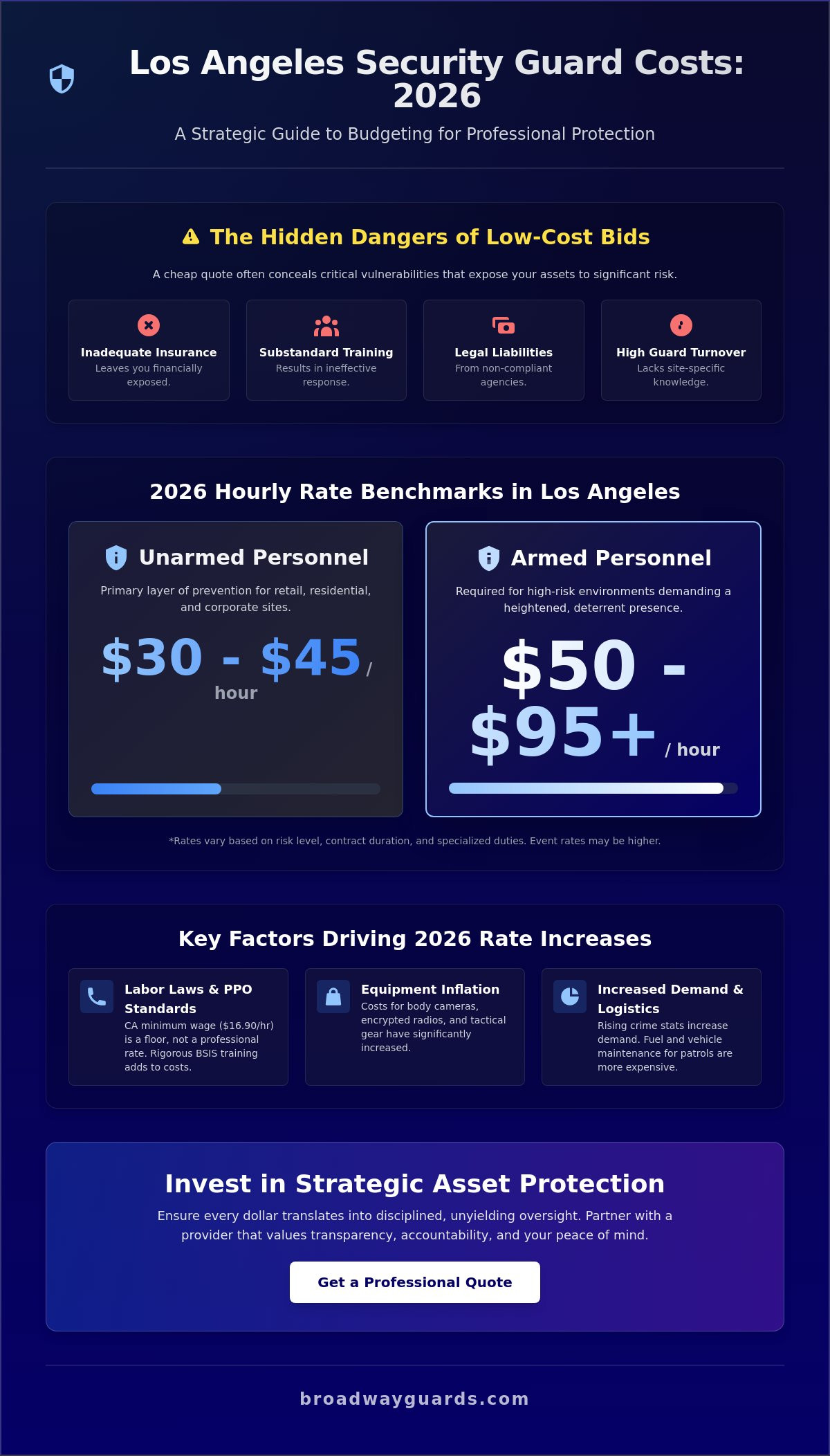
Unarmed security personnel typically represent the primary layer of prevention for retail and residential sites. For professional-grade service in 2026, market benchmarks for unarmed guards range from $30 to $45 per hour. Armed personnel require a significantly higher investment, with rates ranging from $50 to $95+ per hour. When assessing how much do security guards cost in Los Angeles 2026, the distinction between armed and unarmed capabilities is the most significant budget driver. This price gap is a direct reflection of the increased liability and the advanced training mandated by California’s Bureau of Security and Investigative Services (BSIS). Armed guards undergo rigorous psychological screening and firearms proficiency tests to ensure they can act as a disciplined shield in high-threat scenarios. Choosing the lower end of these ranges often results in hiring personnel who lack the tactical maturity required for complex Los Angeles environments.

Specialized Service Rates: Fire Watch and Mobile Patrol

Fire watch services are critical for maintaining legal compliance when life-safety systems fail. These emergency 24/7 monitoring roles often command a premium because of the immediate deployment required and the strict reporting protocols involved. Mobile patrol services offer a different economic profile. Clients can choose between per-stop pricing, where a vehicle checks the property at randomized intervals, or dedicated hourly patrols for larger industrial complexes. For high-profile assets, executive protection provides a specialized tier of safety focused on VIP and close-proximity defense. This service level involves extensive planning and intelligence gathering, which is reflected in its premium cost structure. If you require a detailed assessment of your specific site needs, you can request a strategic security consultation to align your budget with professional standards.

Key Variables Influencing Your Security Budget in LA

Calculating how much do security guards cost in Los Angeles 2026 requires an analysis of variables that extend beyond simple hourly wages. While the Bureau of Labor Statistics wage data provides a macro-economic baseline for the region, your specific operational requirements will dictate the final investment. Geography, shift duration, and the inherent risk of the site are the primary drivers of cost. A retail environment in a high-traffic area demands a different tactical approach than a secured warehouse. We prioritize a methodical assessment of these factors to ensure your budget supports a disciplined shield rather than a generic presence. Failing to account for these nuances often leads to gaps in coverage or unexpected surcharges during critical periods.

Shift timing is another critical component of your financial planning. 24/7 coverage requires a multi-guard rotation, which introduces complexities in scheduling and supervision that are not present in overnight-only shifts. Additionally, the “holiday premium” remains a standard industry practice. Expect rates to increase by 50 to 100 percent on major holidays to ensure your site remains under the care of a vigilant and unyielding force. Emergency staffing requests made with less than 24 hours’ notice also typically incur surcharges, as rapid mobilization requires significant logistical coordination to maintain our rigorous operational standards.

Geographic Nuances: Canoga Park and San Fernando Valley

The location of your project within the Los Angeles basin significantly impacts logistics and response times. Hiring a firm with a strong presence in Canoga Park for San Fernando Valley projects offers distinct financial advantages. Local providers often waive or reduce “zone fees” and travel time charges that agencies from Downtown or the Westside might include. Furthermore, deep knowledge of San Fernando Valley crime trends allows for more efficient staffing. We understand which neighborhoods require a more visible, aggressive patrol profile and where a leaner, more observant presence is sufficient. This local intelligence ensures you aren’t overpaying for unnecessary resources while maintaining absolute order.

Site Complexity and Risk Assessment

Complexity is a direct multiplier of cost. High-risk environments, such as construction sites with valuable machinery or financial institutions, require higher insurance tiers and personnel with specialized tactical training. Conversely, a corporate lobby may only require a professional unarmed presence to manage access control. Conducting a professional security risk assessment CA is the most effective way to optimize your spend. This process identifies precise vulnerabilities, allowing you to allocate funds where they are most needed. By pinpointing high-traffic entry points or blind spots in your perimeter, we ensure your budget focuses on prevention and accountability. Investing in an assessment early prevents the long-term cost of hiring an inadequate force that creates liability rather than safety.

How Much Do Security Guards Cost in Los Angeles 2026: The Strategic Pricing Guide

Beyond the Hourly Rate: Identifying Hidden Costs and Liabilities

Professional agencies must account for several critical overhead components to maintain high-stakes reliability. These include:

  • 24/7 Dispatch Operations: A centralized command center ensures that guards are supported and monitored at all times.
  • Field Supervision: Mobile supervisors conduct unannounced inspections to verify that all protocols are being followed with military-like precision.
  • Tactical Equipment: Encrypted radios, body-worn cameras, and professional uniforms signal authority and ensure accurate reporting.
  • Administrative Compliance: Managing the complex payroll taxes and regulatory filings required by California law.

The Price of Liability: Why Insurance Matters

Hiring an under-insured security agency in 2026 exposes your organization to direct legal responsibility for every action taken by a guard on your property. Broadway Security Services maintains a robust insurance portfolio, including General Liability, Workers’ Compensation, and high-limit Umbrella policies, to provide a total financial shield for our clients. Our rigorous operational standards are designed to reduce vicarious liability by ensuring every guard operates within strict legal and professional boundaries. The cost of a professional security contract is negligible when contrasted with the multi-million dollar expense of a single negligent security lawsuit. If you value unyielding reliability, you should verify a security provider’s insurance credentials before finalizing any agreement.

Training and Professional Oversight

Optimizing Your Security Spend with Broadway Security Services

Broadway Security Services stands as the disciplined choice for organizations that refuse to gamble with their safety. While understanding how much do security guards cost in Los Angeles 2026 is necessary for budgeting, the true goal is achieving a state of order and high-stakes reliability. We don’t just provide personnel; we implement a Strategic Asset Protection model. This approach integrates field intelligence, rigorous training, and consistent oversight to create a force that is both vigilant and unyielding. Our deep roots in Canoga Park allow us to serve the San Fernando Valley with a level of local tactical knowledge that larger, more detached agencies cannot replicate. We understand the specific crime trends and logistical challenges of our local neighborhoods, allowing us to deploy resources with maximum efficiency and precision.

Obtaining a quote from us is a transparent process designed to avoid common market pitfalls. We conduct thorough site assessments to identify precise needs, ensuring you don’t overpay for ineffective coverage. Our pricing reflects the reality of California compliance and the high standards of a professional protector. We prioritize accountability through digital activity logs and randomized field inspections. This methodical approach ensures that your investment translates directly into a secure and orderly environment. By aligning your budget with our rigorous operational standards, you ensure that your assets remain under the care of a force that values rules, protocols, and visible results above all else.

The Broadway Advantage: Presence and Prevention

We execute every deployment with military-like precision. Our site management protocols ensure that every guard understands their duty and remains a visible deterrent to any potential threat. We specialize in armed security guard services Los Angeles, providing personnel who are trained to handle high-risk scenarios with stoic professionalism. This unyielding presence is the foundation of our prevention strategy. We prioritize order, ensuring your property remains a hard target. Every member of our team is vetted and trained to operate within the strict legal and regulatory framework of the BSIS, providing you with a legitimate and professional shield that minimizes liability.

Securing Your Los Angeles Assets Today

Professional security is a disciplined shield that provides the peace of mind you require to focus on your core operations. Don’t settle for a provider that treats your safety as a commodity or offers quotes that compromise on compliance. Schedule a professional consultation to discuss your specific site requirements and risk profile. We’ll provide a tailored strategy that aligns with your budget while maintaining the highest standards of field performance. Our goal is to make you feel that your assets are under the care of a vigilant and unyielding force. Contact Broadway Security Services for a strategic quote and experience the reliability of a force committed to your protection.

Securing Your Operational Future in Los Angeles

Navigating the 2026 economic landscape requires a shift from viewing security as a simple line item to recognizing it as a vital defensive asset. You’ve seen that the question of how much do security guards cost in Los Angeles 2026 is inseparable from the quality of oversight and the depth of insurance coverage provided. True protection is built on a foundation of legal compliance and methodical field performance. By prioritizing a provider that maintains rigorous military-style training standards, you eliminate the vulnerabilities created by cut-rate staffing models that often ignore California’s stringent regulatory requirements.

Broadway Security Services remains specialized in San Fernando Valley asset protection and is fully California PPO Licensed and Insured. This commitment to professional legitimacy ensures that your property is shielded from both physical threats and the massive financial risks of vicarious liability. Order and safety aren’t accidents; they’re the direct results of a vigilant and unyielding force. Take the next step in fortifying your perimeter with a partner that values discipline and accountability above all else. Request a Professional Security Quote from Broadway Security Services today to align your budget with the highest standards of professional safety. We look forward to providing the disciplined shield your assets deserve.

Frequently Asked Questions

How much does an unarmed security guard cost per hour in Los Angeles 2026?

Professional unarmed security rates in the Los Angeles metropolitan area reflect the current 2026 minimum wage standards and the essential overhead required for legal compliance. These rates ensure that the personnel assigned to your property are fully vetted and operate under a strict framework of supervision. When determining how much do security guards cost in Los Angeles 2026, you should prioritize agencies that bundle insurance and training costs into their hourly figures to avoid hidden liabilities.

Why is armed security significantly more expensive than unarmed coverage?

Armed coverage requires a higher investment because of the intensive tactical training and psychological screening mandated by California regulatory bodies. The liability insurance premiums for armed personnel are also substantially higher than those for unarmed guards. This cost supports the specialized equipment and recurring firearms proficiency certifications required to maintain a disciplined and unyielding presence in high-risk environments where the stakes of protection are at their highest.

Are there extra fees for emergency fire watch services in California?

Emergency fire watch services often command a premium due to the immediate mobilization required to meet fire marshal compliance standards. These assignments involve 24/7 monitoring and detailed reporting logs that must be maintained with military-like precision to ensure site safety. The specialized nature of life-safety monitoring and the logistical challenges of rapid, short-notice deployment are reflected in the final cost structure for these critical compliance services.

Does the location within Los Angeles, like Canoga Park, change the price?

Geographic location influences pricing through logistical variables such as travel time and localized crime trends. Hiring a provider with deep roots in Canoga Park for San Fernando Valley projects can reduce zone fees and ensure the staffing model is optimized for the neighborhood’s specific risks. Local intelligence allows for a more efficient deployment of resources compared to agencies traveling from distant parts of the county with less regional expertise.

Do security guard rates increase for overnight or holiday shifts?

Shift timing directly impacts the hourly rate; holiday deployments often incur surcharges of 50 to 100 percent to ensure consistent coverage. Overnight shifts may also command a premium to ensure that the personnel remains vigilant and observant during low-visibility hours. These adjustments are necessary to maintain a consistent and disciplined shield regardless of the time or date, ensuring your assets remain under the care of a professional force.

What insurance should I verify before signing a security contract?

Every professional security contract must be backed by comprehensive General Liability, Workers’ Compensation, and high-limit Umbrella policies. Verifying these credentials protects your organization from vicarious liability in the event of a field incident. A legitimate Private Patrol Operator will provide proof of these coverages to demonstrate their commitment to legal and professional accountability. Failing to verify insurance can lead to catastrophic financial exposure for your business.

Is it cheaper to hire a security guard for a long-term contract?

Long-term commercial contracts typically offer more stable pricing than temporary or event-based assignments. Stability in staffing allows the agency to implement site-specific training and maintain higher guard retention. When evaluating how much do security guards cost in Los Angeles 2026, consider that a sustained partnership reduces the logistical costs associated with frequent mobilization. This long-term approach ensures a more methodical and consistent level of oversight for your property.

How does a risk assessment help determine my total security budget?

A professional risk assessment identifies specific vulnerabilities, allowing you to allocate your budget with methodical precision. This process ensures that you aren’t over-staffing low-risk areas while leaving critical entry points exposed. By pinpointing exact needs, you can optimize your spend on the specific level of protection required to maintain order. A disciplined assessment prevents the waste of resources and focuses your investment on the areas of highest risk.