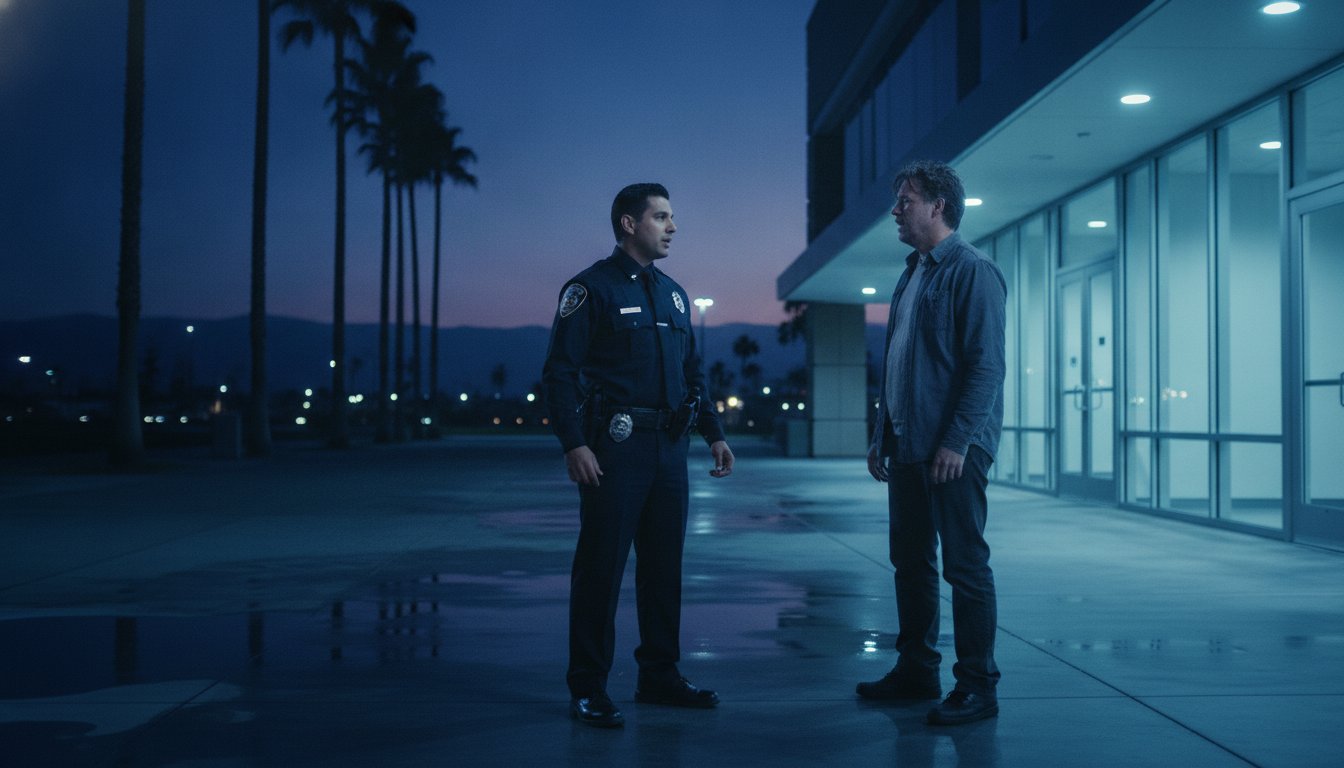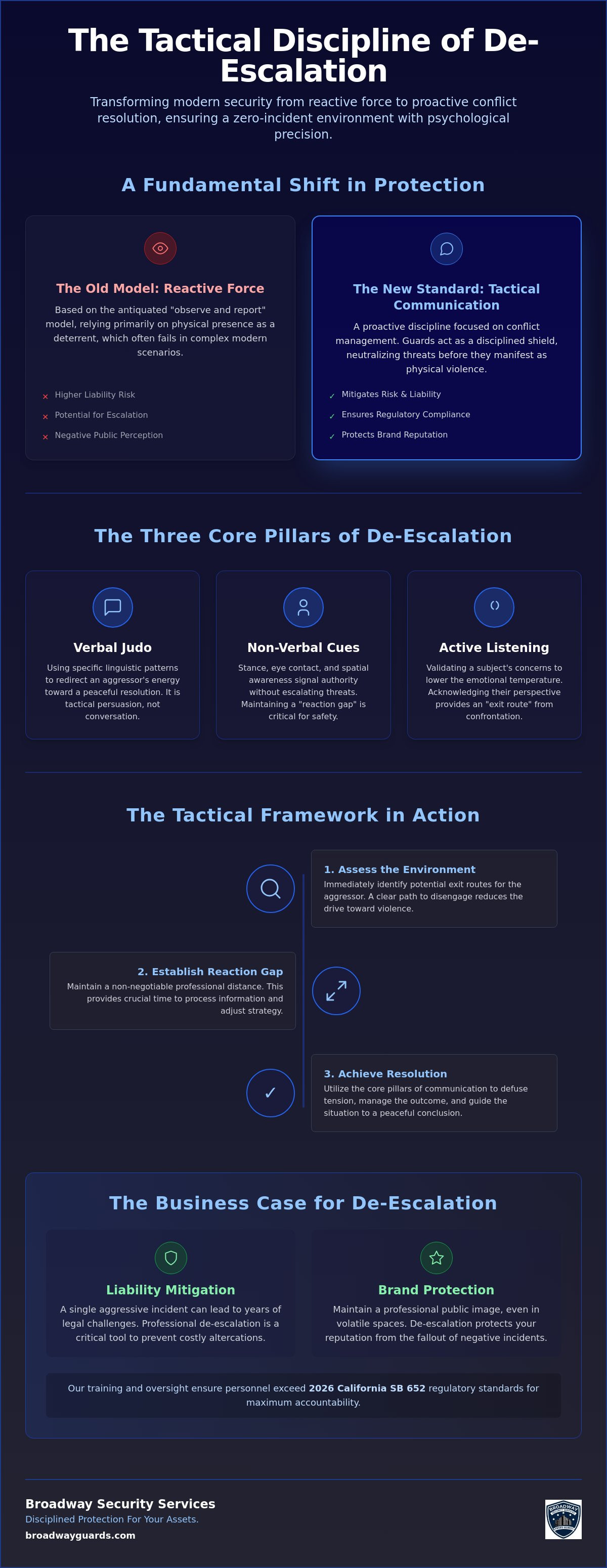
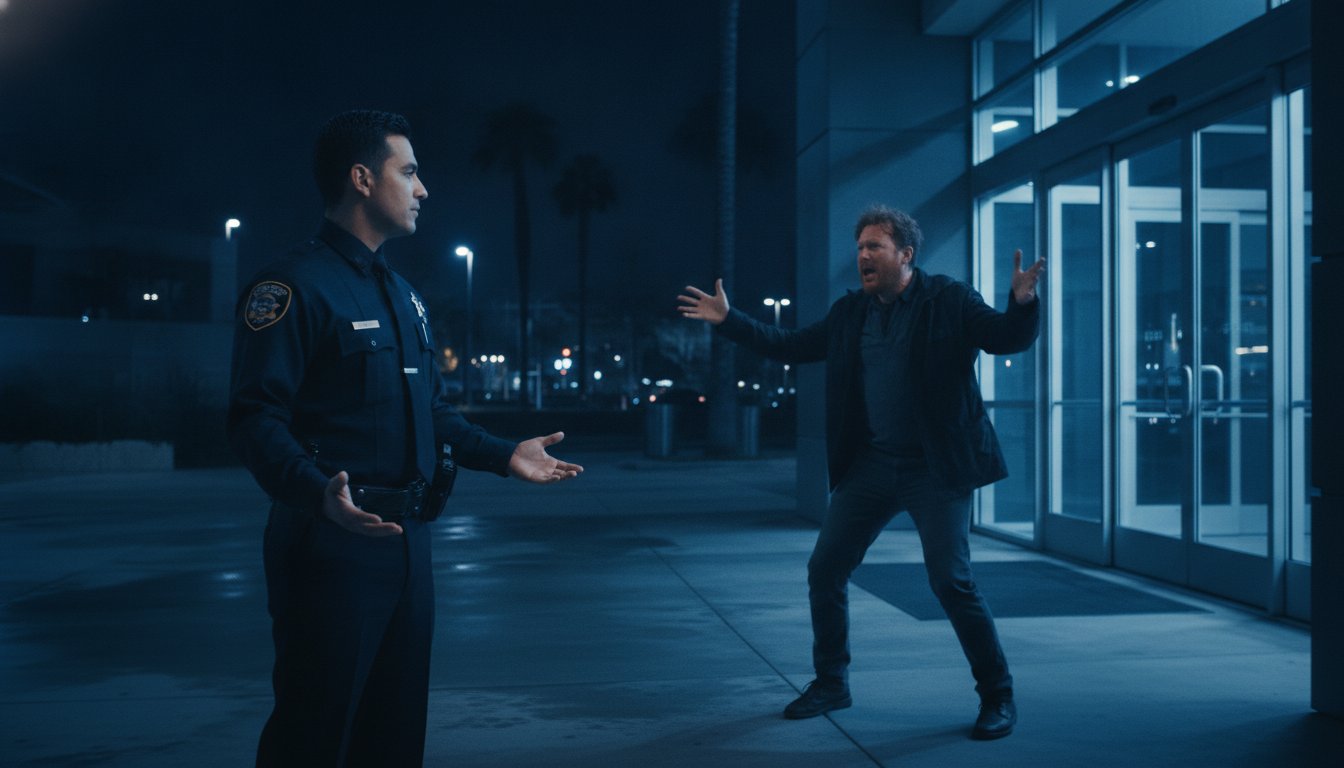
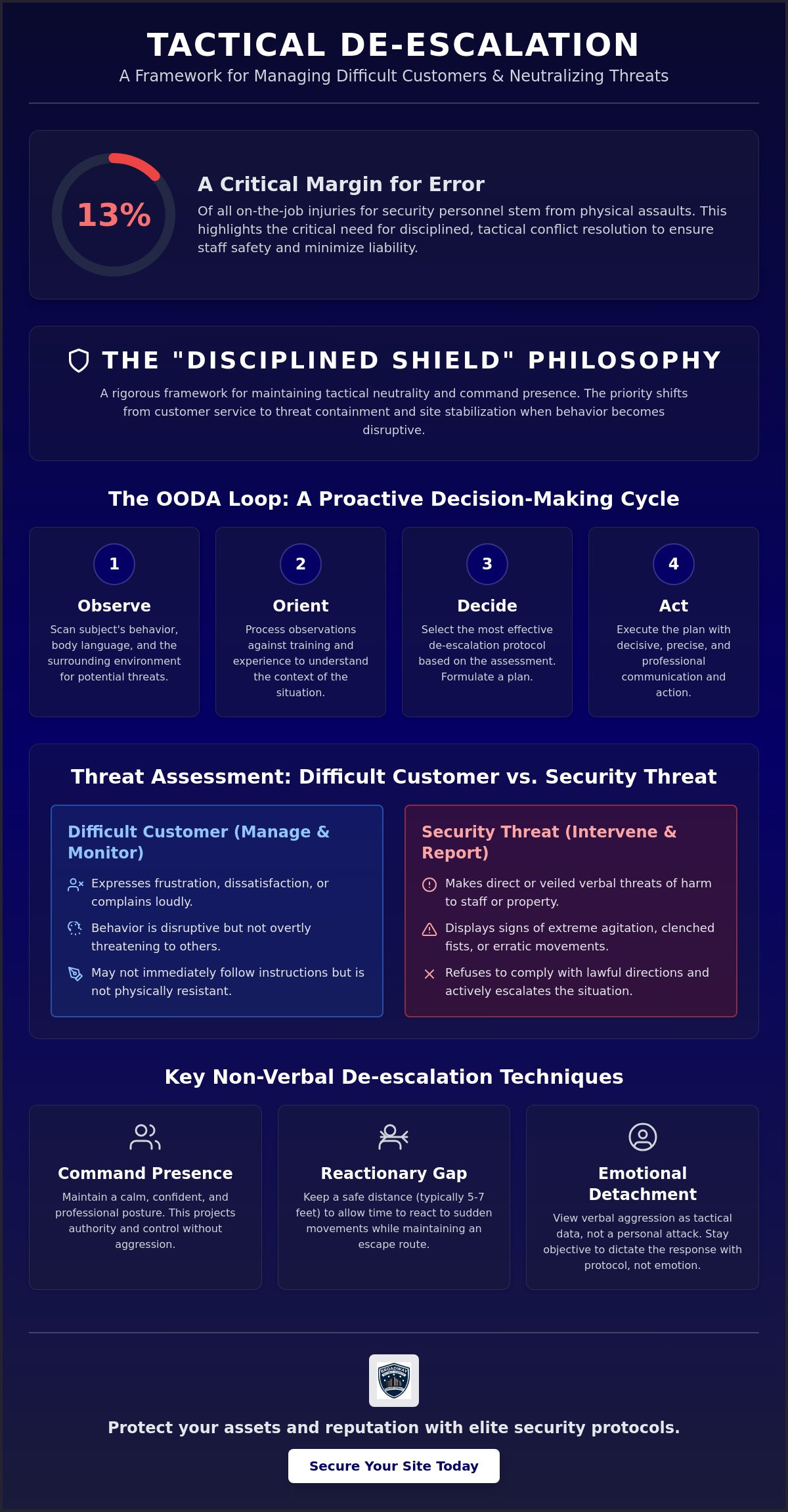
When 13% of all on-the-job injuries for security personnel stem from physical assaults, the margin for error in conflict resolution disappears. Maintaining order in a volatile environment requires more than just a physical presence; it demands a disciplined, tactical approach to managing difficult customers security protocols. You likely recognize the mounting pressure of staff burnout and the constant threat of legal liability that follows a poorly handled public incident. It is a reality that verbal abuse and unpredictable behavior can compromise the safety of your assets and the integrity of your brand if left unchecked.
This guide provides the professional protocols and tactical de-escalation techniques used by elite personnel to neutralize threats before they escalate. We will establish a clear framework for conflict resolution that reduces incident rates and reinforces a standard of unyielding professionalism on your site. You will learn how to transform volatile interactions into controlled outcomes, ensuring your business remains a secure and orderly environment. By the end of this article, you will have a command of the communication strategies necessary to protect your staff and your reputation with military precision.
Key Takeaways
- Master the “Disciplined Shield” philosophy to maintain tactical neutrality and command presence during high-stress encounters.
- Identify precise non-verbal communication techniques for managing difficult customers security protocols, focusing on stance and distance to neutralize aggression.
- Establish clear thresholds for security intervention by distinguishing between standard customer frustration and legitimate security threats.
- Implement standardized incident reporting procedures that provide a rigorous legal defense and ensure accountability across all site operations.
- Understand why professional security training is essential for mitigating liability and protecting brand reputation in public-facing commercial environments.
The Volatility of Public-Facing Environments in 2026
Southern California commercial landscapes in 2026 demand a higher level of operational vigilance. Economic pressures have heightened public sensitivity, making on-site interactions significantly more unpredictable. Managing difficult customers security is a specialized discipline that goes beyond basic hospitality. It requires an unwavering commitment to tactical neutrality. While customer service staff focus on satisfaction, security personnel focus on the preservation of order. This distinction is critical for maintaining a secure environment where assets and personnel remain protected from escalating threats.
Poorly managed confrontations carry heavy financial and reputational weight. A single incident captured on video can damage a brand’s perception for years. Beyond the public image, the legal liability of a physical altercation can be devastating for any organization. Security professionals act as the disciplined shield that prevents these outcomes. They don’t instigate; they stabilize. This role requires a mindset of military-like precision, where every word and movement is calculated to lower the temperature of a situation and maintain site integrity.
The Evolution of On-Site Conflict
Conflict in retail and corporate settings has evolved into a high-stakes performance. Modern triggers for customer aggression often include:
- Economic instability and heightened personal stress.
- The pursuit of viral content through public filming and “clout” chasing.
- Performative aggression designed to intimidate staff.
Security personnel must operate with the understanding that they’re always under observation. The dangerous mantra that “the customer is always right” must be discarded when it clashes with safety protocols. When a person’s behavior becomes disruptive, the professional priority shifts from service to containment. Order is the only standard that matters when safety is at risk.
Asset Protection and Personnel Safety
Conflict management is a vital component of a comprehensive security risk assessment CA. Identifying potential flashpoints before they ignite is a hallmark of professional oversight. By employing structured de-escalation techniques, guards protect on-site staff from the psychological trauma of verbal abuse. This proactive stance ensures business continuity. It prevents operations from grinding to a halt because of a single aggressive individual. A disciplined protector doesn’t just react to chaos; they anticipate and neutralize it through methodical, professional communication.
Mechanics of Tactical De-escalation: The Disciplined Shield
Broadway Security Services operates under the “Disciplined Shield” philosophy, which is a rigorous framework for managing difficult customers security challenges. This approach relies on the OODA Loop, a decision-making cycle consisting of Observe, Orient, Decide, and Act. Personnel observe the subject’s behavior, orient themselves within the environment, decide on the most effective protocol, and act with decisive precision. This methodical cycle allows our officers to stay ahead of an escalating situation, ensuring that every move is calculated to preserve site safety and minimize liability. It’s a proactive mindset that replaces chaos with order.
Maintaining emotional detachment is the bedrock of this philosophy. Professional guards don’t view verbal aggression as a personal attack; they view it as a tactical data point. This stoic mindset prevents the guard from being drawn into a customer’s emotional instability. By practicing tactical neutrality, the officer remains the dominant, stabilizing force in the room. This discipline ensures that the response is dictated by established protocols rather than impulsive reactions, which is essential for protecting the client’s assets and reputation. Every interaction is managed with the gravity of a high-stakes security operation.
The Power of Presence and Posture
Strategic positioning is more than a physical stance. It’s a method of commanding respect while maintaining an exit route. Guards utilize a “reactionary gap,” ensuring enough distance to respond to sudden movements without appearing aggressive. This command presence is how unarmed security guards prevent conflict before it begins. Unlike aggressive posturing, which can trigger further hostility, a professional posture signals that the site is under vigilant oversight. It’s a visible deterrent that communicates order and readiness to intervene if necessary, establishing a boundary that disruptive individuals are hesitant to cross.
Active Listening as a Security Tool
Tactical empathy is a sophisticated security tool used to gather intelligence and lower a subject’s physiological arousal. It involves listening to a grievance to identify the “hook,” which is the underlying issue driving the disruptive behavior. By paraphrasing and clarifying the subject’s statements, guards slow the interaction’s tempo and gain valuable time to assess the threat level. Aligning these techniques with Operational Protocols for Site Management ensures that every word serves the goal of stabilization. For organizations that require this level of operational rigor, exploring our specialized security solutions provides a path toward a more secure and predictable environment.
Difficult Customer vs. Security Threat: A Comparison Framework
Precision in assessment is the foundation of site safety. Effective managing difficult customers security requires a clear distinction between a dissatisfied patron and a legitimate security risk. A difficult customer typically expresses frustration regarding a service or product. A security threat engages in behavior that compromises the safety of personnel, guests, or physical assets. The transition between these states is often rapid; therefore, professional guards maintain a state of constant observation to identify the exact moment a service issue becomes an operational crisis.
The spectrum of behavior moves from frustration to verbal abuse and finally to physical threat. In California, verbal abuse that includes specific threats of violence or persistent haranguing may meet the legal threshold for harassment. When an individual is asked to leave the premises and refuses, the situation escalates to trespassing under California Penal Code 602. Recognizing these legal benchmarks is essential. It ensures that security intervention is grounded in regulatory reality rather than emotional reaction. When de-escalation fails to achieve compliance, the protocol must shift from communication to tactical removal or law enforcement notification.
Identifying Red Flags and Pre-Attack Indicators
Professional protectors look for physiological signs that precede physical violence. These “red flags” include target glancing, clenched fists, and thousand-yard stares. Distinguishing between a customer “venting” and a targeted threat is a skill developed through rigorous training. A person venting uses generalized language; a threat is specific and directed. In high-stakes environments where the potential for violence is elevated, the deployment of armed security guard services Los Angeles provides a necessary layer of advanced threat management. These personnel are trained to neutralize high-risk indicators with the poise of a disciplined shield.
The Decision Matrix for Site Managers
Standardized response protocols prevent confusion during a crisis. Site managers must implement a decision matrix that dictates exactly when staff should disengage and allow security to take command. This hierarchy of response ensures that untrained employees aren’t exposed to unnecessary risk. Every interaction, regardless of the outcome, requires meticulous documentation. A professional incident report serves as the primary defense against future liability claims. It provides a chronological, fact-based account of the encounter, demonstrating that all actions taken were necessary, proportionate, and aligned with established safety standards. This level of accountability is what maintains the integrity of the business environment.
Operational Protocols for Site Management and Incident Reporting
Coordination with local San Fernando Valley law enforcement is a critical component of this framework. Whether dealing with the LAPD or the Los Angeles County Sheriff’s Department, your security team must provide a seamless transition of authority. This requires a deep understanding of California Bureau of Security and Investigative Services (BSIS) reporting standards. Failing to document incidents correctly can result in regulatory fines or weakened positions in future litigation. A disciplined protector views the paperwork as being just as vital as the physical presence on site.
Step-by-Step Incident Response
The response begins with the “Professional Greeting.” This is a formal assessment where the guard establishes authority while offering the individual a chance to comply voluntarily. If the disruption persists, the officer moves to the “Set Limits” phase. During this stage, the guard clearly states the consequences of continued behavior, such as removal or police intervention. The “Final Warning” is the last opportunity for the subject to self-correct. Once this threshold is crossed, the officer executes removal protocols with precision, ensuring the individual is escorted off the premises without unnecessary escalation.
Professional Documentation Standards
Documentation is the primary shield against legal repercussions. An incident report must be written in objective, non-emotive language. Avoid subjective descriptions like “the customer was angry.” Instead, use factual observations like “the subject raised their voice and clenched their fists.” Every report should include a single, concise sentence that defines the core incident clearly. Capturing witness statements and preserving video evidence immediately after the event is mandatory. These detailed records are essential for construction site security guards and retail personnel who must justify their actions in high-stakes legal disputes.
Post-incident debriefing allows your team to analyze the confrontation and refine future responses. This constant cycle of evaluation and improvement is what maintains a high standard of oversight. To ensure your facility is protected by personnel who master these rigorous protocols, contact Broadway Security today for a comprehensive consultation on our professional guard services.
Integrating Broadway Security Services for Strategic Conflict Mitigation
Professional training is the only reliable substitute for instinct when the safety of a facility is at stake. While many organizations rely on general employee common sense, Broadway Security Services implements a rigorous curriculum that transforms guards into disciplined stabilizers. Our personnel are trained to meet the specific requirements of California’s 2026 training regulations, including Senate Bill 652. This ensures every officer possesses the legal knowledge and tactical proficiency required for managing difficult customers security challenges. By replacing unpredictable human reactions with standardized, high-stakes protocols, we eliminate the gaps where liability often resides.
Tailored Solutions for Canoga Park Businesses
Regional expertise allows for a more responsive and intelligent security posture. Broadway Security Services maintains a deep operational footprint in the San Fernando Valley, providing Canoga Park businesses with localized support that understands the area’s specific challenges. We adapt our “Disciplined Shield” philosophy for high-density environments, such as event security Los Angeles requirements. Our consultation services help site managers develop internal crisis management strategies that sync perfectly with our guard operations. This creates a unified front that discourages disruption before it can manifest on your premises.
The Professionalism Guarantee
Our commitment to duty is defined by accountability and unyielding discipline. We don’t just provide a service; we provide an atmosphere of total reliability. Every guard from Broadway Security Services is a prepared protector who values rules and visible results above all else. This persona of self-assurance and structure gives our clients the peace of mind to focus on their core operations. The next step in securing your facility is a strategic partnership with our elite personnel. Contact Broadway Security Services today to begin a comprehensive assessment of your site’s security needs and fortify your defense against on-site volatility.
Commanding Site Order Through Professional Oversight
The landscape of 2026 requires a shift from reactive measures to a proactive, disciplined stance. You’ve learned that managing difficult customers security isn’t about winning arguments; it’s about neutralizing threats through tactical neutrality and precision communication. By implementing the Disciplined Shield philosophy and adhering to rigorous reporting standards, you protect both your physical assets and your brand’s reputation. Order is maintained when assessment is accurate and response is methodical.
Relying on Broadway’s highly trained BSIS-certified guards ensures your facility is under the care of personnel who master specialized de-escalation training protocols. Our Southern California regional security expertise provides a localized advantage in high-stakes environments. Secure your assets with Broadway’s disciplined security personnel today. Establishing a secure environment is the first step toward long-term operational success and peace of mind.
Frequently Asked Questions
What is the most effective de-escalation technique for security guards?
Tactical empathy is the primary technique for neutralizing high-stress encounters. It involves active listening to gather intelligence while simultaneously lowering the subject’s physiological arousal. By demonstrating that the grievance has been heard without conceding to the subject’s demands, guards maintain control. This methodical approach ensures that the officer remains the stabilizing force on site, preventing the escalation of tension through professional communication.
Can a security guard legally remove a difficult customer in California?
Security guards in California have the legal right to remove individuals who refuse to depart from private property. Once a subject is asked to leave and declines, they are in violation of California Penal Code 602 regarding trespassing. Guards must follow a strict removal protocol that prioritizes safety and site integrity. Minimizing physical contact is essential to prevent legal liability while maintaining the professional standards of the facility.
What is the difference between an angry customer and an abusive one?
An angry customer expresses dissatisfaction with a service or product, whereas an abusive individual targets personnel with harassment or specific threats. Identifying this threshold is vital for managing difficult customers security operations. When behavior shifts from venting to targeted intimidation, the situation moves from a service issue to a legitimate security threat. This requires a transition from verbal de-escalation to removal or law enforcement notification.
How does Broadway Security Services train guards for conflict resolution?
Broadway Security Services implements a training regimen that exceeds standard state mandates. Every guard undergoes instruction that complies with the 2026 requirements of California Senate Bill 652, including in-person de-escalation and use-of-force training. This ensures our personnel operate as a disciplined shield, capable of neutralizing tension through professional oversight. Our training is grounded in regulatory reality to ensure both site safety and legal compliance for every client.
Should I hire armed or unarmed guards for managing difficult customers?
The choice between armed and unarmed guards is determined by your site’s specific risk assessment and environmental triggers. Unarmed guards are highly effective for managing difficult customers security in retail or corporate settings where visible deterrence is the priority. Armed guards are reserved for high-risk environments where the potential for violence requires a higher tier of deterrent force. Both roles prioritize the preservation of order through disciplined oversight.
What information should be included in a security incident report?
A professional incident report must contain objective, non-emotive facts that provide a chronological account of the encounter. It should include the date, time, location, specific behaviors observed, and the guard’s response actions. Witness statements and descriptions of preserved video evidence are also mandatory. This documentation serves as the primary legal defense for the business, proving that all actions taken were necessary, proportionate, and aligned with site protocols.
How do I handle a customer who is filming a security interaction?
Guards must remain indifferent to the camera and maintain strict adherence to professional protocols. Filming is often a tactic used to provoke an emotional reaction or create viral content. By ignoring the device and focusing on the individual’s behavior, the guard maintains a command presence. This stoic response ensures that any resulting footage demonstrates a disciplined interaction, protecting the brand’s reputation and neutralizing the subject’s attempt at provocation.
When should I call the police during a customer confrontation?
Police notification is required when a situation exceeds a guard’s legal authority or safety threshold. This includes instances of physical assault, the brandishing of weapons, or a persistent refusal to leave after a final warning. Coordination with local law enforcement ensures a seamless transition of authority. It minimizes the risk of prolonged on-site disruption and ensures that criminal behavior is handled by the appropriate agency with military-like precision.