
A professional security presence is defined by more than just a uniform; it’s a commitment to methodical oversight and unyielding discipline. Many Southern California asset managers worry that unarmed personnel lack the authority to prevent incidents, often fearing they’re merely paying for a visible figure rather than a strategic asset. You deserve the peace of mind that comes from knowing your property is protected by a vigilant force capable of mitigating risk before it escalates. Understanding the specific unarmed security guard responsibilities is essential for any stakeholder who values order and accountability over mere presence.
This strategic guide for 2026 provides the framework you need to evaluate security performance and fortify your assets with professional precision. We’ll detail the critical duties that transform a standard guard into a disciplined shield, moving beyond passive observation into proactive risk management. You’ll learn how to distinguish high-level field performance from basic monitoring, ensuring your security investment provides a legitimate return in safety. From reporting protocols to crisis response, we provide the clarity required to maintain a secure and compliant environment.
Key Takeaways
- Learn to distinguish between passive observation and active surveillance to ensure your personnel act as a proactive deterrent.
- Understand the core unarmed security guard responsibilities that maintain perimeter integrity and manage high-traffic access points with professional discipline.
- Establish a framework for high-stakes incident reporting that reduces liability and provides clear operational accountability.
- Identify industry-specific duties for construction sites and retail centers to address unique vulnerabilities in Southern California.
- Discover how a professional risk assessment translates into a disciplined shield for your property and personnel.
Beyond Observation: The Strategic Role of Unarmed Security Personnel
The traditional perception of a guard merely standing watch is obsolete. In a modern commercial environment, unarmed security functions as a disciplined shield, providing a proactive layer of asset protection that prioritizes prevention over reaction. This distinction between passive watching and active surveillance is critical. While a passive observer might notice an incident after it occurs, a professional engaged in active surveillance identifies the subtle anomalies that precede a breach. By maintaining this level of vigilance, personnel serve as the primary coordinators of safety, ensuring that small irregularities don’t evolve into significant liabilities.
The duties of a security guard encompass a wide range of preventive measures designed to mitigate risk before it reaches a critical threshold. Within this framework, unarmed security guard responsibilities are centered on the methodical observation of surroundings and the enforcement of established protocols. This approach creates a sense of order that is both visible and unyielding, positioning the guard as a strategic asset rather than a decorative presence. Order is established immediately. A professional guard understands that their presence serves as a psychological barrier, signaling to potential intruders that the environment is under strict oversight.
Professional Presence as a Visible Deterrent
A uniformed security professional projects an image of military-like precision. This authoritative stance discourages criminal intent by signaling that the property is under constant, disciplined oversight. When guards are strategically positioned at high-vulnerability entry points, they serve as a psychological barrier. Potential intruders often bypass locations where they observe a vigilant and prepared force. This visible deterrent effect is not accidental; it’s the result of rigorous training and a commitment to maintaining a standard of high-stakes reliability. It’s about establishing a perimeter of trust that residents and clients can rely on daily.
The Legal and Liability Advantages of Unarmed Staff
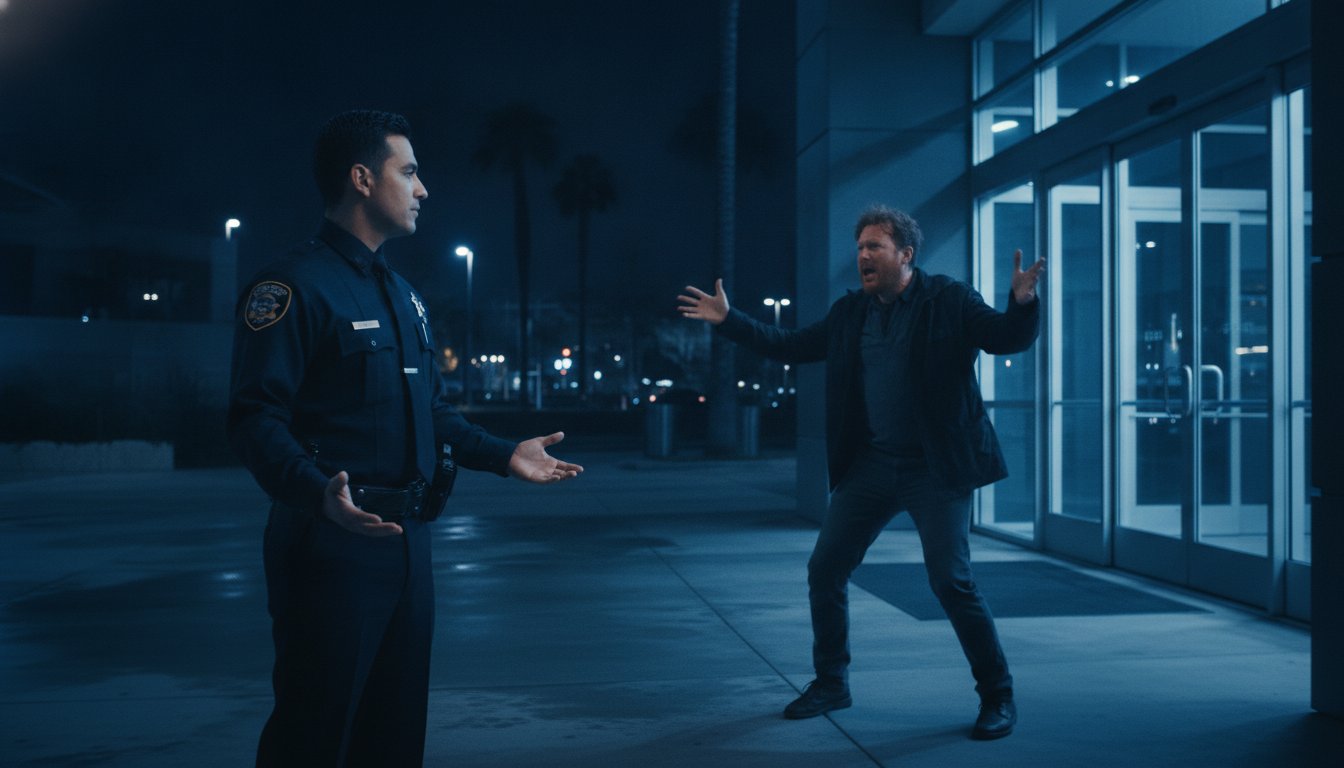
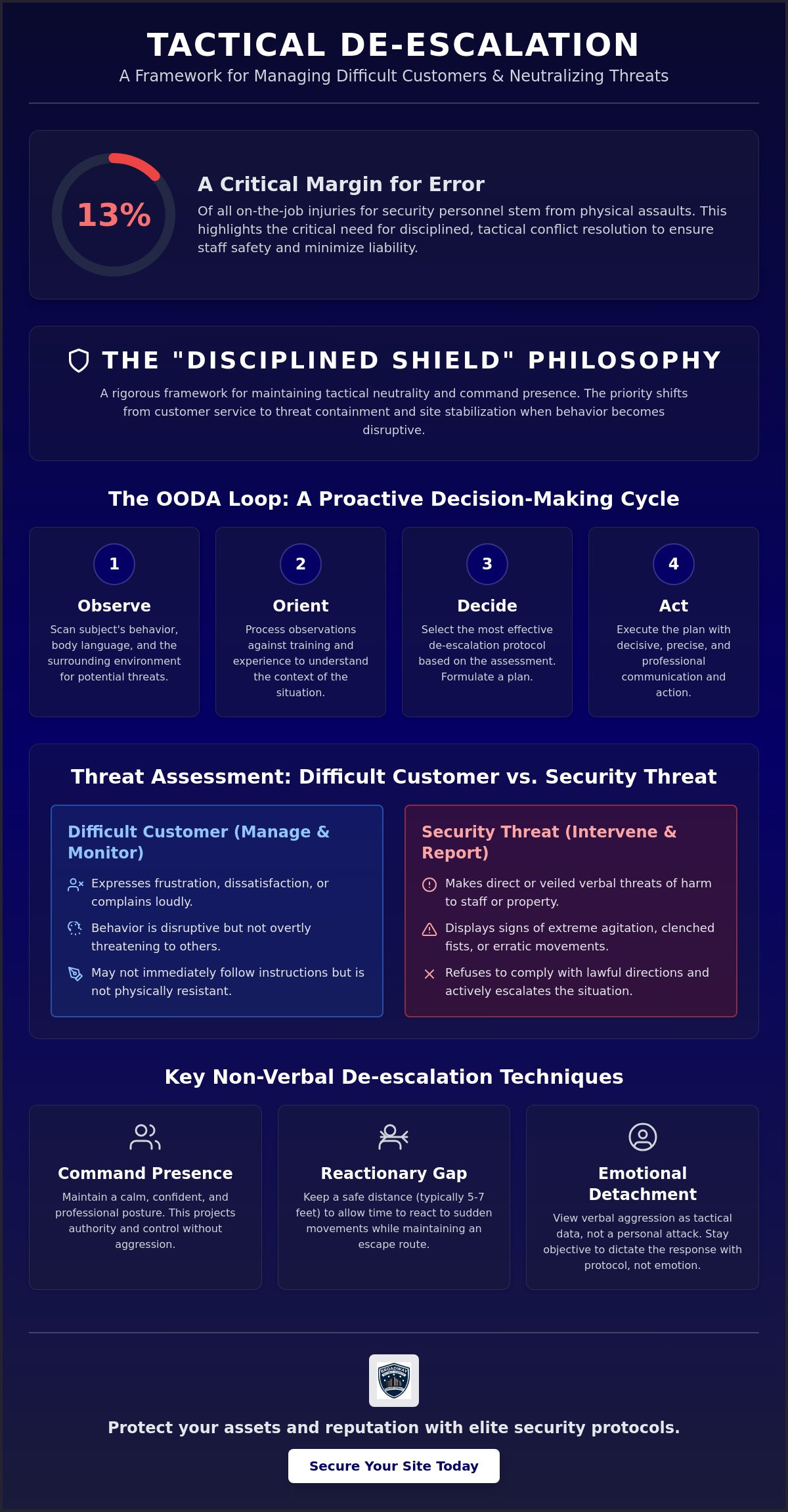
Utilizing unarmed personnel offers significant liability advantages for Southern California businesses. In low-to-medium risk environments like retail centers or residential complexes, the focus remains on de-escalation and non-confrontational conflict resolution. Professional guards are trained to manage incidents with verbal commands and procedural adherence, which minimizes the risk of physical altercations that could lead to corporate litigation. By choosing unarmed staff for these settings, stakeholders ensure their assets are protected by a force that understands the intersection of legal compliance and operational rigor. This strategy provides peace of mind while maintaining a safe, professional atmosphere without the complications of armed intervention.
Core Operational Responsibilities: Access Control and Perimeter Integrity
Operational excellence relies on the meticulous management of space and access. Unarmed security guard responsibilities center on the enforcement of strict protocols that govern who enters a facility and how that facility is monitored. This isn’t a passive role. It’s an active engagement with the environment to ensure that every vulnerability is identified and addressed before it becomes a liability. By integrating human intelligence with technical surveillance systems, guards create a comprehensive safety net that maintains order and discipline at all times. A professional approach to Core Duties of Unarmed Security ensures that your assets remain under the care of a vigilant and unyielding force.
Managing Entry Points and Visitor Protocols
Credential verification is the first line of defense in any professional security plan. Guards must follow standardized visitor logging procedures with military-like precision to ensure a clear audit trail. This process involves more than just checking IDs; it requires a disciplined eye to spot inconsistencies in credentials or behavior. When an unauthorized individual attempts access, the guard must respond with professional firmness. It’s a delicate balance where customer service meets strict security enforcement. This level of oversight ensures that only authorized personnel move through your facility, protecting both physical assets and sensitive information from internal and external threats.
Methodical Patrols and Perimeter Surveillance
Systematic patrols are far superior to random wandering. A disciplined guard follows timed, structured routes designed to cover every blind spot and high-traffic area. This methodology allows for the consistent identification of facility vulnerabilities such as broken locks, failed lighting, or compromised fencing. In areas like Canoga Park, where large-scale perimeters are common, these methodical patrols are essential for maintaining a secure environment. A thorough understanding of unarmed security guard responsibilities ensures that these patrols aren’t just walks; they’re tactical assessments of the property’s integrity. For businesses requiring consistent oversight, choosing a provider that offers professional mobile patrol services can significantly enhance the security of larger commercial or construction sites.
Effective perimeter surveillance also means recognizing how environmental changes affect security. A professional guard notices when a delivery truck blocks a camera’s view or when new landscaping creates a hiding spot. They report these issues immediately, ensuring that the ‘disciplined shield’ remains intact. This proactive reporting is what separates a professional security partner from a mere observer, providing you with the peace of mind that your property is being managed with the utmost gravity and care.
Crisis Management and Incident Reporting Standards
Professional security isn’t tested when things are quiet; it’s proven during the chaos of a crisis. In these high-stakes moments, unarmed security guard responsibilities shift from observation to active incident coordination. A guard must maintain a stoic and prepared mindset, acting as the primary point of contact for both site management and emergency services. This role requires an unwavering commitment to duty and a high degree of self-assurance to manage emergencies with order and precision. By serving as a disciplined shield, the guard ensures that a coordinated response begins the moment an anomaly is detected.
Real-Time Communication and Emergency Coordination
When a fire, medical emergency, or security alert occurs, the guard executes established crisis management strategies without hesitation. Communication must be clear and declarative. There is no room for ambiguity when directing personnel to safety or providing situational reports to management. In the San Fernando Valley, professional guards act as a vital link to local law enforcement and fire departments. By acting as a liaison, they facilitate rapid site entry for emergency responders, ensuring that help arrives exactly where it’s needed without delay. This coordination protects lives through methodical oversight and rigorous adherence to protocol.
The Critical Importance of Detailed Incident Documentation
High-stakes reporting is a fundamental aspect of unarmed security guard responsibilities that protects the client from future liability. A professional guard’s duty doesn’t end when the sirens fade. Every report must be built on the foundation of ‘who, what, when, where, and how.’ This precision is what distinguishes a professional guard from a mere observer. By using digital logs for real-time oversight, stakeholders can verify that protocols were followed to the letter, providing a level of accountability that is essential for modern asset protection.
Detailed reports serve several critical functions for Southern California businesses:
- Legal Protection: They provide a factual record that protects businesses during insurance claims or litigation.
- Risk Forensic: They allow for a methodical analysis of the incident to identify and close security gaps.
- Regulatory Compliance: They ensure that all reporting standards for 2026 are met with total transparency.
Maintaining this level of detail is a non-negotiable standard. It provides the peace of mind that every incident is handled with the gravity it deserves. When a guard documents a facility vulnerability or a security breach with military-like precision, they reinforce the safety of the entire operation. This commitment to reporting ensures that your assets remain under the care of a vigilant and unyielding force, even after an incident is resolved.

Specialized Duties: From Retail Loss Prevention to Fire Watch
Security requirements vary significantly across different sectors. A professional guard must adapt their approach based on the specific vulnerabilities of the environment. In the San Fernando Valley, construction sites often require a focus on perimeter integrity to prevent the theft of raw materials and heavy machinery. Here, unarmed security guard responsibilities include conducting rigorous gate checks and verifying the credentials of every contractor entering the zone. This disciplined oversight transforms a chaotic work site into a controlled, secure environment where assets are protected with military-like precision.
Retail and Commercial Asset Protection
Retail centers demand a high degree of situational awareness combined with professional poise. Guards act as a visible deterrent to discourage shoplifting and organized retail crime before they occur. By maintaining a vigilant floor presence, they provide a sense of order that reassures both staff and shoppers. They work closely with management to execute retail security Canoga Park strategies that focus on high-risk areas and peak traffic times. This proactive layer of defense is essential for minimizing loss and ensuring that the commercial space remains a safe, productive environment.
Integrated Fire Watch and Safety Monitoring
Fire safety is a matter of strict legal compliance and operational continuity. If a building’s fire suppression or alarm system becomes inoperable, the risk to life and property increases exponentially. Guards providing professional fire watch services California are deployed to conduct continuous, 24/7 inspections of the premises. They look for early signs of smoke, fire, or hazardous conditions that could compromise the structure. This role requires an unwavering commitment to detail, as every patrol must be documented in a fire watch log that meets the rigorous standards of the local fire marshal. It’s a high-stakes duty where accuracy isn’t optional.
Methodical monitoring prevents the forced closure of facilities and protects businesses from devastating liability. A guard’s presence ensures that even when technology fails, human vigilance remains unyielding. If you need to secure a high-value site or maintain compliance during a system failure, you can secure professional unarmed guards to act as your disciplined shield. This commitment to safety and order is the hallmark of a professional security partnership that prioritizes your peace of mind above all else.
Implementing Professional Standards: The Broadway Security Methodology
Broadway Security doesn’t just provide personnel; we deploy a disciplined shield designed to withstand the complexities of the modern threat landscape. This methodology starts with a foundation of rigorous analysis. We translate the findings of a comprehensive security risk assessment CA into actionable, site-specific unarmed security guard responsibilities. This ensures that every movement, patrol, and protocol is grounded in the actual vulnerabilities of your property. Our commitment to Southern California safety is reflected in this methodical approach. We prioritize order and visible results above all else, ensuring that your assets are under the care of a vigilant and unyielding force.
Site-Specific Post Orders and Training
Every commercial or industrial environment has its own set of unique challenges. We develop customized post orders for construction site security guards and retail personnel that address these specific needs. These orders are not generic templates; they’re living documents that evolve as local risk factors change in the San Fernando Valley. Every guard undergoes intensive training specific to the client’s location. They learn the nuances of the perimeter, the specific entry protocols required, and the high-traffic zones that demand constant vigilance. This site-specific focus guarantees that the force on your property is fully prepared for the unique threats it may face daily.
Rigorous Oversight and Accountability Frameworks
Accountability is the cornerstone of professional security operations. We utilize a framework of rigorous oversight that includes unannounced field supervisor visits and constant performance reviews. This system ensures that the standard of quality we promise is the standard of quality delivered in the field. To maintain high-stakes reliability, we employ GPS-verified patrols and digital reporting systems. These tools provide real-time oversight, allowing you to verify that every second of contracted time is dedicated to vigilant protection. You’ll receive clear, declarative documentation of all activity, reinforcing the foundation of trust between our agency and your management team.
We don’t believe in providing ‘warm bodies’ to fill a post. We believe in a professional force managed with military-like precision. By integrating digital accountability with physical field inspections, we ensure that unarmed security guard responsibilities are executed to the highest industry standards. This structured approach moves with a predictable cadence, mirroring the methodical oversight required to protect high-value assets. When you partner with us, you’re investing in a system that values rules, protocols, and visible results. This commitment to operational rigor provides the peace of mind that your Southern California property is secure, compliant, and under the watch of a disciplined protector.
Securing Your Assets with Professional Discipline
Professional security in 2026 demands more than just a presence; it requires a systematic approach to asset protection. You’ve seen how a disciplined shield transforms standard monitoring into a proactive deterrent that minimizes liability. By mastering unarmed security guard responsibilities, from methodical access control to high-stakes incident reporting, you ensure your property remains under the care of a vigilant force. This level of order and accountability is essential for maintaining safety in complex commercial and industrial environments across Southern California.
Broadway Security Services provides California-certified security professionals with deep regional expertise in the San Fernando Valley and Los Angeles. Our management team includes a comprehensive risk assessment with every service to ensure your security strategy is perfectly aligned with your operational needs. Secure your property with Broadway’s disciplined unarmed guards today. Your commitment to safety deserves a partner that values rules, protocols, and visible results above all else.
Frequently Asked Questions
What is the primary difference between unarmed and armed security responsibilities?
The primary difference lies in the level of authorized force and the nature of the threat environment. Unarmed security guard responsibilities prioritize observation, reporting, and verbal de-escalation to manage low-to-medium risk scenarios. Armed personnel are reserved for high-risk assets where lethal defense is a potential requirement. While both roles maintain order, unarmed staff focus on a disciplined presence that minimizes liability through non-confrontational protocols and methodical oversight.
Can unarmed security guards physically detain someone in California?
In California, security guards possess the same power of arrest as any private citizen. They can physically detain an individual if they witness a felony or a misdemeanor involving a breach of peace. However, professional standards dictate that detention is a last resort. Guards are trained to prioritize safety and wait for local law enforcement arrival to minimize legal complications and corporate liability for the client.
How do unarmed guards handle emergency situations without weapons?
Unarmed personnel handle emergencies through methodical coordination and rapid communication. They act as the primary liaison for first responders, ensuring emergency services reach the exact location without delay. Their value comes from executing established crisis management strategies with a stoic mindset. By maintaining order and providing clear, declarative instructions to site occupants, they prevent panic and ensure a structured response to fire, medical, or security alerts.
What kind of training are unarmed security guards required to have in 2026?
By 2026, California guards must complete the mandatory 40 hours of training required by the Bureau of Security and Investigative Services (BSIS). This includes 8 hours of pre-assignment training and 32 hours of continuing education within the first six months. Professional firms also mandate annual refresher courses on de-escalation and legal updates. These rigorous standards ensure that every guard understands the intersection of legal compliance and operational rigor.
Are unarmed guards effective for construction site theft prevention?
Unarmed guards are highly effective for construction site protection. They serve as a visible deterrent that discourages opportunistic theft of materials and machinery. By enforcing strict gate control and conducting timed, methodical patrols, they identify vulnerabilities like breached fencing or poor lighting. Their presence signals that the site is under disciplined oversight, which is often enough to divert criminal intent to less secure locations in Southern California.
How do unarmed security guards assist with fire watch compliance?
Guards assist with fire watch compliance by conducting continuous, 24/7 inspections of the premises when alarm systems are compromised. They maintain detailed, GPS-verified logs that meet the strict requirements of the California fire marshal. This methodical monitoring identifies early signs of smoke or hazards, preventing site shutdowns and ensuring the building remains occupied legally. This service provides a critical safety net during technical failures through unwavering commitment to detail.
What industries benefit most from unarmed security personnel?
Retail, residential complexes, and construction sites benefit significantly from a professional unarmed presence. These industries require a balance of customer service and strict security enforcement. Hospitals and commercial office buildings also rely on unarmed personnel to manage high-traffic access points with professional poise. These environments prioritize a disciplined shield that maintains order without the heightened liability or aggressive optics often associated with armed security forces.
How does Broadway Security ensure its guards follow site-specific responsibilities?
Broadway Security ensures adherence to unarmed security guard responsibilities through a framework of rigorous oversight. We translate a comprehensive risk assessment into site-specific post orders that every guard must master. Field supervisors conduct unannounced inspections to verify performance, while digital reporting systems provide GPS-verified proof of patrols. This structured approach guarantees that every second of contracted time is dedicated to the vigilant protection of your assets with military-like precision.