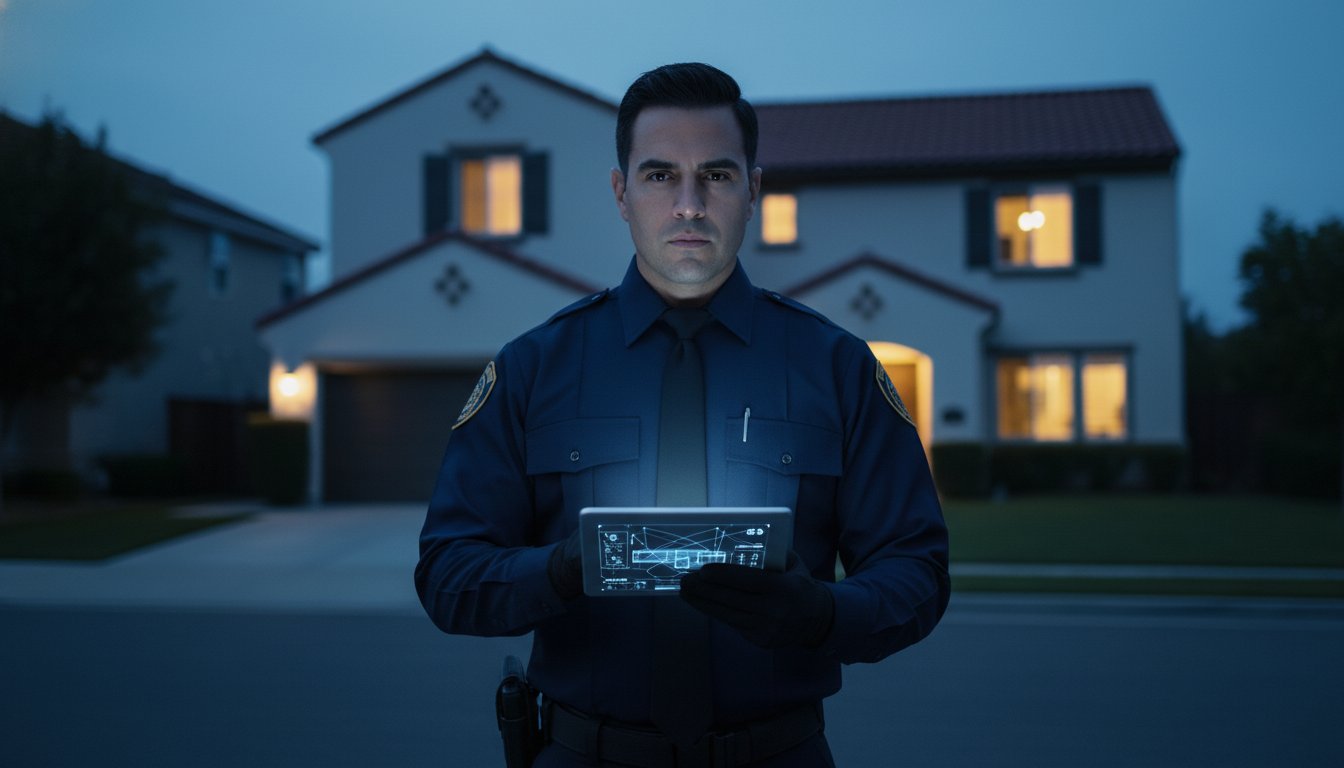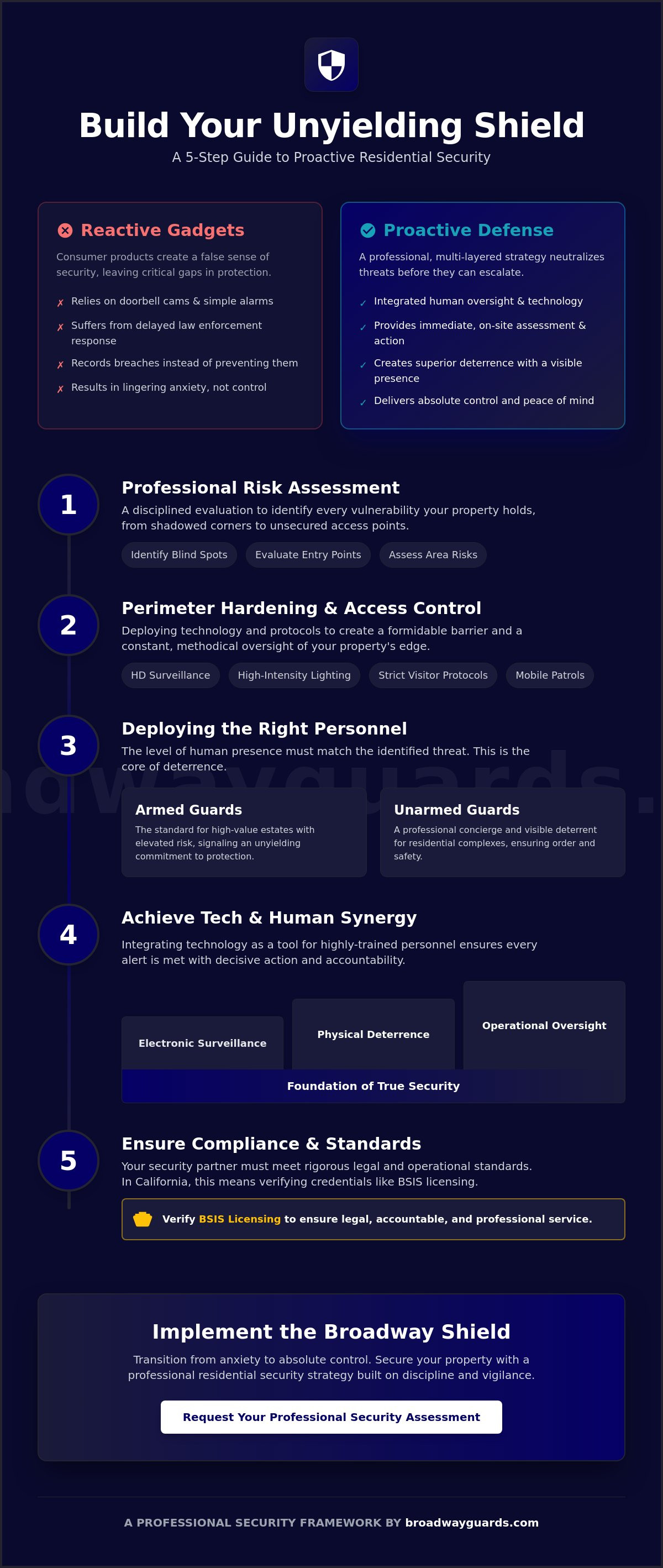
A high-definition video of a masked intruder is not a security victory; it’s a documented failure of prevention. If you rely solely on cameras that record crimes without stopping them, you’re essentially paying to watch your own losses in slow motion. Professional oversight requires more than passive technology. It demands a proactive strategy focused on preventing overnight business break-ins through visible, disciplined intervention. You’ve likely realized that rising insurance premiums and the constant threat of property damage require a more rigorous standard of protection than a simple alarm system can provide.
We understand that your business is more than just a building; it’s an asset that requires a vigilant shield. This article provides a strategic security framework for 2026, teaching you how to harden your commercial property using a multi-layered approach that prioritizes active deterrence over reactive recording. We’ll examine the critical shift from passive monitoring to professional human presence, ensuring your operations remain secure long after the sun goes down. This disciplined method transforms your security from a recording device into an unyielding force of prevention.
Key Takeaways
- Analyze the high-risk overnight window to understand how current 2026 criminal trends target commercial assets.
- Implement CPTED principles and tactical illumination to create an environment that discourages unauthorized entry.
- Learn why active professional intervention is the only reliable method for preventing overnight business break-ins compared to passive recording.
- Utilize unpredictable mobile patrol schedules to maintain a constant, unyielding presence that denies intruders the ability to time your security.
- Develop a disciplined chain of command and perform regular audits to keep your defensive framework ahead of sophisticated threats.
Understanding the Overnight Vulnerability Window
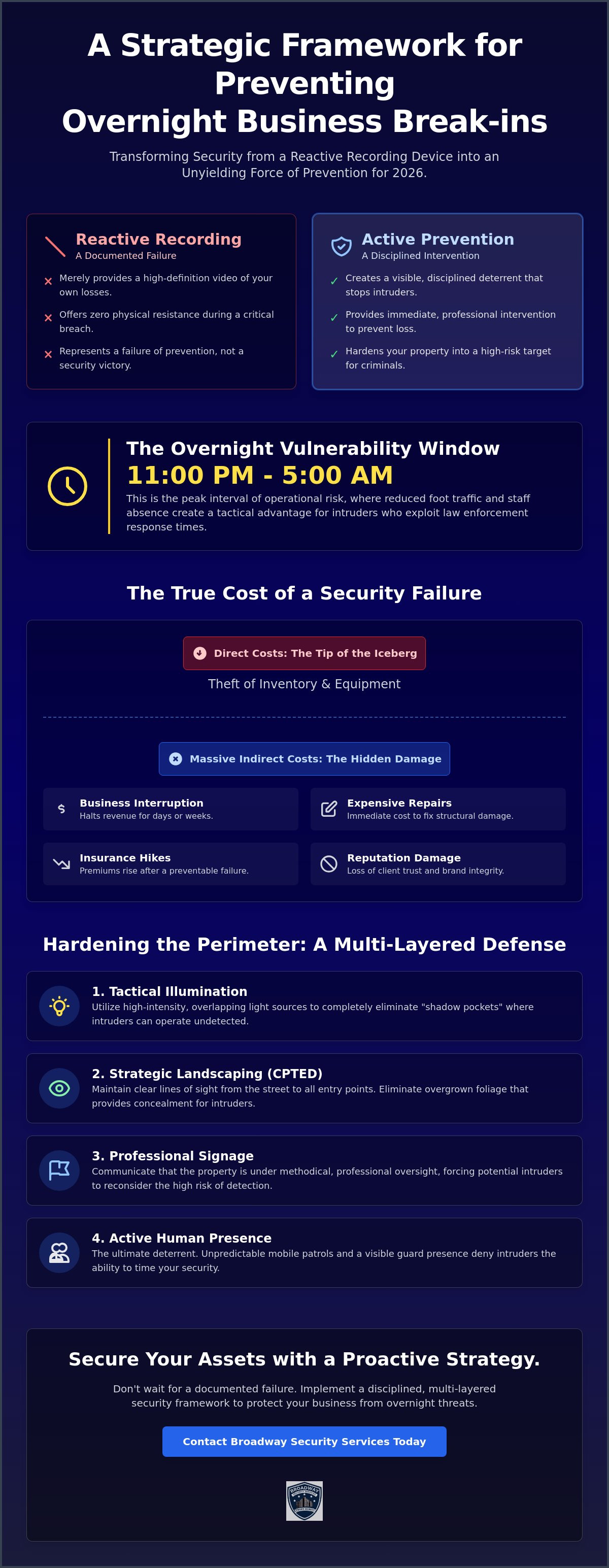
The overnight window represents the peak interval of operational risk for any commercial facility. Between the hours of 11:00 PM and 5:00 AM, the absence of staff and reduced foot traffic create a tactical advantage for intruders. Many owners mistakenly rely on passive recording devices, yet these systems provide no resistance during the critical minutes of an actual breach. In 2026, criminal tactics have evolved to exploit the gap between an alarm trigger and the arrival of law enforcement. Effective protection requires a shift from documenting crime to actively preventing overnight business break-ins.
Successful intruders don’t act on impulse. They follow a disciplined progression from “casing” to “breaching.” During the casing phase, they identify blind spots in surveillance and test the consistency of physical barriers. If they determine that a property lacks an active human presence, the transition to breaching is rapid and violent. The goal of a professional security framework isn’t just to catch the criminal afterward. It’s to break the psychological confidence of the intruder before the first entry point is compromised. When a facility looks and feels monitored by a vigilant force, the intruder’s risk assessment changes, often forcing them to abandon the target entirely.
Regional Threat Profiles in Southern California
Commercial sectors in the San Fernando Valley and Canoga Park face unique environmental challenges. High-density zoning often results in narrow alleys and shadowed loading docks that facilitate unobserved movement. Local infrastructure frequently relies on outdated lighting standards that create deep pockets of darkness. When combined with the high volume of calls received by local law enforcement, the resulting response times often exceed the duration of a professional burglary. Effective security requires incorporating Crime Prevention Through Environmental Design to eliminate these structural vulnerabilities. This disciplined approach ensures that your property is not an easy target in the eyes of local criminal elements.
The Cost of a Successful Breach
A security failure results in immediate financial hemorrhaging. Beyond the direct theft of inventory or equipment, businesses face staggering indirect costs. Business interruption can halt revenue for days or weeks, while damage to physical structures requires expensive, immediate repairs. Insurance policies often fail to cover the full scope of recovery, particularly the loss of client trust and brand reputation. An overnight burglary is a preventable operational failure that indicates a breakdown in defensive protocols. By prioritizing the strategy of preventing overnight business break-ins, you protect your bottom line from the true recovery time that follows a successful breach.
Hardening the Perimeter: Environmental Deterrence
A hardened perimeter serves as the primary layer of a disciplined defensive strategy. Environmental design is not merely an aesthetic choice; it’s a strategic necessity for preventing overnight business break-ins. By utilizing Crime Prevention Through Environmental Design (CPTED), a facility can be transformed into a high-stakes environment that discourages criminal interest before a breach is even attempted. This approach relies on the psychological impact of order and the physical reality of restricted access. Implementing these business security management tips ensures that every square foot of your property actively contributes to its own protection.
Tactical Lighting and Visibility Standards
Effective security requires moving beyond simple brightness to tactical illumination. Aesthetic lighting often leaves “shadow pockets” where intruders can operate undetected. A professional lighting plan utilizes high-intensity, overlapping light sources to eliminate these dark zones entirely. The goal is to create a consistent field of visibility that supports high-resolution recording and human observation. When lighting is applied with military-like precision, it acts as a silent but unyielding force that denies cover to anyone attempting an unauthorized approach. This standard of quality is essential for maintaining operational safety during the high-risk overnight window.
Securing Physical Vulnerabilities
Reinforcing entry points is a critical component of perimeter hardening. Doors and windows must be equipped with high-grade security glass and heavy-duty deadbolts to resist forced entry. Specialized intruders often target roof access points and HVAC units to bypass ground-level sensors. These areas require dedicated physical barriers and vibration sensors to ensure total facility integrity. To identify these specific weak points, owners should prioritize a professional security risk assessment CA. This systematic evaluation provides a roadmap for hardening your assets against sophisticated threats. Establishing a rigorous defensive posture starts with understanding where your current protocols fall short. For those seeking to establish a truly unyielding shield, conducting a thorough audit of all physical barriers is the only path to comprehensive peace of mind.
Passive vs. Active Security: A Strategic Comparison
Relying on hardware alone creates a dangerous sense of security. Cameras record crime; they don’t stop it. This is known as the “Recording Fallacy.” By 2026, intruders have learned to mask their identities or disable equipment before the first frame is captured. A truly disciplined approach to preventing overnight business break-ins requires moving beyond passive observation. You must prioritize active intervention that disrupts a criminal’s timeline in real-time. While passive systems offer lower monthly fees, the average loss from a breach far outweighs the cost of professional oversight. Investing in a vigilant shield is an investment in your company’s survival.
Automated alerts often result in significant delays that favor the intruder. When an alarm triggers, the signal must travel to a monitoring center, undergo a verification process, and then be relayed to local authorities. In high-density commercial zones, police response times can vary wildly depending on current call volume. On-site professional presence eliminates this dangerous gap entirely. A vigilant guard provides immediate assessment and intervention, ensuring that a threat is neutralized before it escalates into a breach. This proactive stance transforms your security from a witness into a deterrent, providing the peace of mind that only a visible force can offer.
The Limits of Alarm Systems
Standard intrusion detection systems are frequently plagued by “alarm fatigue.” With false alarm fines averaging $150 per incident, many businesses and law enforcement agencies have become desensitized to automated notifications. Sophisticated criminals exploit this reality by intentionally triggering alarms to test response patterns or by using specialized technology to bypass sensors. Without human verification, an alarm is often treated as a low-priority event. This delay provides the window of opportunity an intruder needs to compromise your assets and exit the premises before help arrives. Relying on an unverified alarm is a gamble with your business’s integrity.
Active Deterrence: The Disciplined Shield
Professional presence fundamentally alters the risk-reward calculation for a burglar. Most criminals seek the path of least resistance and will abandon a target if the risk of immediate capture is too high. The strategic deployment of unarmed security guards creates a visible deterrent that signals methodical oversight. This isn’t just about watching; it’s about maintaining a standard of protection that denies entry through consistent, observant behavior. By integrating advanced technology with human discipline, you create a comprehensive defense that adapts to evolving threats. This synergy is the most effective method for preventing overnight business break-ins and ensuring the long-term safety of your commercial property.
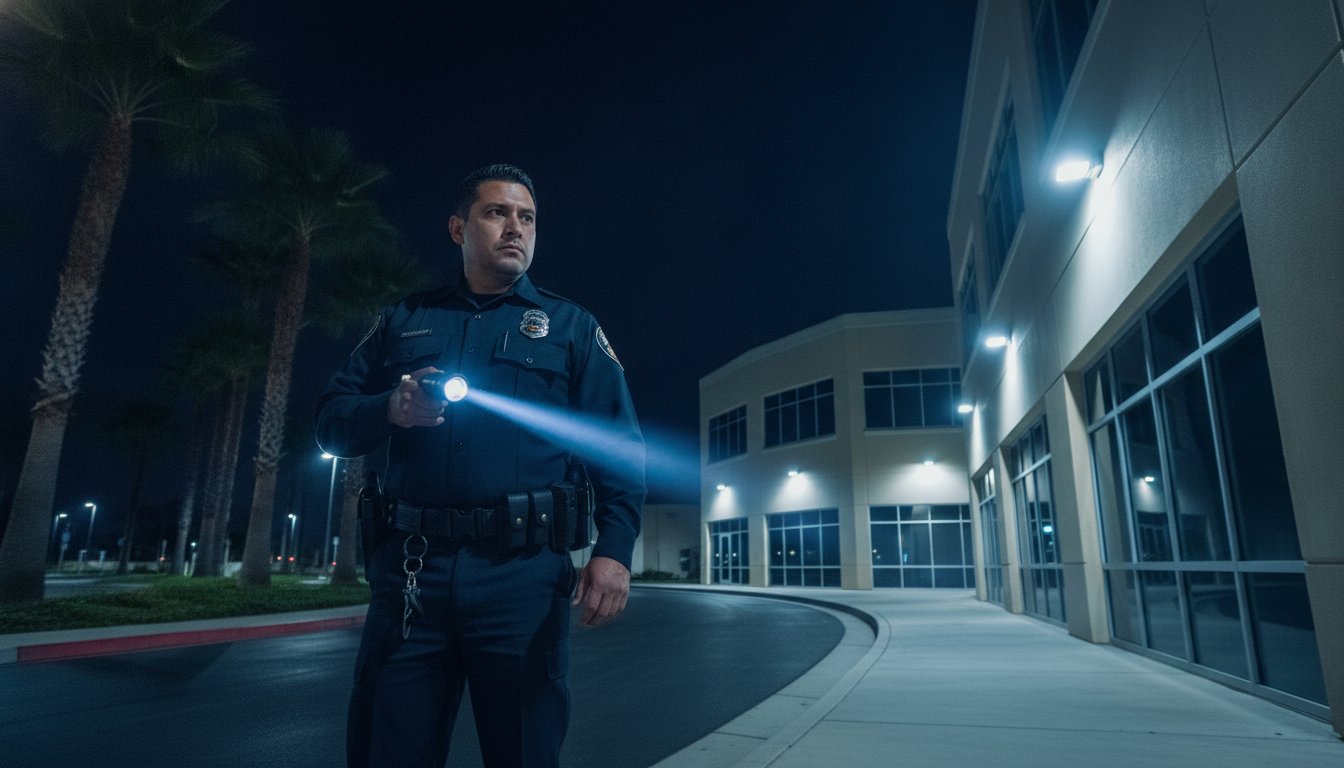
Strategic Deployment of Mobile Patrols and Guards
A static defense is a predictable defense. Criminals often spend days observing a target to identify gaps in security rotations or patrol intervals. To be effective in preventing overnight business break-ins, your deployment strategy must prioritize unpredictability. We utilize a framework of randomized patrol schedules that deny intruders the ability to “time” our movements. This disciplined approach ensures that a professional presence is maintained without establishing a detectable pattern. By moving from a fixed schedule to a fluid, tactical presence, you transform your security from a known variable into an insurmountable obstacle.
The core of this strategy lies in the difference between passive observation and disciplined intervention. While many services provide staff who simply “watch,” a professional force operates under strict Standard Operating Procedures (SOPs) designed for active deterrence. These protocols govern everything from overnight guard rotations to the specific methods used for perimeter checks. Every action is recorded and verified, ensuring that accountability remains the foundation of your protection. This level of rigor ensures that every person on your property is trained to identify and neutralize threats before they escalate into a breach.
Mobile Patrol vs. Dedicated On-Site Guards
Selecting the right model depends on your facility’s specific risk profile and perimeter size. For large commercial complexes or construction sites, mobile patrol services offer a strategic advantage by covering vast areas in a short amount of time. These units utilize GPS tracking and real-time digital reporting to provide transparent oversight of every patrol hit. For high-density facilities where constant gate control or interior monitoring is required, dedicated on-site guards provide a continuous, unyielding shield. Both models focus on rapid response, ensuring that any anomaly is addressed with professional precision.
Armed vs. Unarmed Guard Selection
The decision to deploy armed personnel is based on a rigorous assessment of the local threat environment. In high-stakes areas, utilizing armed security guard services Los Angeles provides a necessary layer of protection against sophisticated or violent intruders. California regulations require strict adherence to training and liability standards, making it essential to partner with a firm that prioritizes military-like discipline. Whether you require armed or unarmed personnel, the goal remains the same: preventing overnight business break-ins through visible, professional authority. A well-trained guard is the most effective tool for maintaining order and protecting your assets under the most demanding conditions.
Establishing a disciplined defense is the only way to ensure your property remains secure during high-risk hours. If you are ready to upgrade your facility’s protection with a professional oversight plan, contact us today to discuss our mobile patrol and guard options.
Implementing Professional Security Management
Professional management serves as the structural foundation for any enduring defensive framework. A disciplined chain of command ensures that every overnight incident is met with a decisive, protocol-driven response. Without clear hierarchy and accountability, even the most sophisticated security hardware becomes a liability rather than an asset. Effective protection relies on the seamless integration of human oversight and operational rigor. By centralizing your security management, you reduce long-term overhead and eliminate the fragmentation that often leads to a breach. This unified approach is the final, essential step in preventing overnight business break-ins.
Annual reviews are no longer sufficient in the current 2026 landscape. Threats evolve with a speed that requires continuous adaptation and methodical oversight. Regular vulnerability audits allow you to identify and neutralize emerging risks before they can be exploited by sophisticated intruders. This proactive cycle of assessment and adjustment transforms your security from a static checklist into a living, unyielding shield that grows stronger with every audit. It’s a commitment to a standard of quality that prioritizes your facility’s integrity over simple convenience.
Vulnerability Audits and Crisis Management
The complexity of modern commercial threats demands site-specific protocols that address both unauthorized entry and environmental hazards. A crisis management plan must be more than a document; it must be a practiced standard of performance. Integrating fire watch services California into your overnight security strategy ensures comprehensive facility integrity. This unified approach protects your assets from both predatory intruders and the devastating impact of undetected fire. When a single professional force manages both security and fire safety, the result is a higher standard of reliability and legal compliance. This synergy ensures that your property remains under the care of a vigilant and unyielding force.
The Broadway Security Standard
Our commitment to your safety is rooted in military-like discipline and an unwavering focus on results. We don’t just provide a service; we provide a vigilant presence that prioritizes your peace of mind above all else. Professional risk assessment fees are an investment in identifying the hidden gaps that passive systems overlook. By analyzing your facility’s specific layout and zoning, we establish a customized defensive posture that reflects our high-stakes reliability. This methodical approach is the most effective way of preventing overnight business break-ins and securing your commercial future.
Your assets deserve the care of a disciplined protector who values rules, protocols, and visible results. Contact our Canoga Park headquarters today for a strategic consultation to harden your property against after-hours threats. We stand ready to serve as your unyielding shield.
Securing Your Commercial Future Through Disciplined Oversight
The 2026 threat landscape has rendered passive security systems obsolete. Relying on recorded footage after a breach occurs is an unacceptable risk to your operational integrity. Protecting your assets requires an unyielding force that combines tactical environmental design with the presence of highly trained personnel. By shifting your strategy toward active deterrence and unpredictable patrol schedules, you establish a standard of protection that denies entry rather than merely documenting it. Our specialized Southern California expertise ensures that your facility is hardened against the specific regional vulnerabilities that predatory intruders exploit.
A disciplined approach to preventing overnight business break-ins is the only way to ensure long-term peace of mind and stable insurance premiums. We provide a comprehensive risk assessment and crisis management framework that identifies hidden gaps in your current protocols. Trust your property to a team that values rules, hierarchy, and visible results above all else. Secure your property with a professional risk assessment from Broadway Security Services today. You’ve worked hard to build your business; we’re here to serve as the disciplined shield that keeps it safe.
Frequently Asked Questions
What is the most effective way to prevent overnight break-ins?
The most effective method for preventing overnight business break-ins is a multi-layered strategy centered on active human deterrence. While locks and alarms provide physical barriers, a disciplined guard presence addresses the psychological aspect of crime. Intruders avoid properties where the risk of immediate capture is high. By combining perimeter hardening with randomized patrol schedules, you create an unyielding shield that denies opportunity before a breach is attempted.
Are security cameras enough to stop a business burglary?
Security cameras alone are insufficient because they are reactive devices that record events rather than preventing them. Sophisticated criminals in 2026 often use masks or disable equipment to avoid identification. A camera provides evidence for an investigation, but it doesn’t physically stop an intruder from entering your facility. True protection requires a vigilant force capable of immediate intervention to neutralize threats in real-time.
How much does it cost to hire overnight security guards?
The investment for professional oversight depends on your facility’s specific risk profile, the required level of training, and the duration of the deployment. High-stakes environments or large perimeters may require different resource allocations than smaller retail locations. While we don’t provide flat-rate pricing without a consultation, establishing a disciplined shield is always more cost-effective than the total recovery expenses following a successful breach or property theft.
What should I do if my business is targeted by vandals overnight?
If your property is targeted, your first priority is to ensure the site is secure and to document the damage for insurance purposes. You should immediately contact local law enforcement to file a formal report. Once the immediate threat is addressed, conduct a professional vulnerability audit to identify the gaps that allowed the incident to occur. Implementing a more rigorous standard of protection is essential to prevent repeat occurrences.
Is mobile patrol better than a stationary guard for my property?
Mobile patrol services are ideal for large perimeters or multi-building facilities where rapid coverage of vast areas is required. These units provide an unpredictable presence that discourages intruders from trying to time your security. Stationary guards are better suited for high-risk entry points or facilities requiring constant interior monitoring. A strategic consultation will determine which model provides the most effective shield for your specific operational needs and property layout.
How do I know if my business needs armed or unarmed security?
The choice between armed and unarmed personnel is dictated by a thorough risk assessment of your location and assets. Armed security is typically reserved for high-threat zones or facilities housing high-value inventory where the risk of violent confrontation is elevated. Unarmed guards provide excellent high-visibility deterrence for retail and residential settings. Professional oversight ensures that the level of force deployed is always commensurate with the actual threat level.
Can professional security help reduce my business insurance premiums?
Most insurance providers recognize that a disciplined security framework significantly reduces the likelihood of a successful claim. By implementing professional oversight and active deterrence, you demonstrate a commitment to risk mitigation that often leads to lower premiums. Preventing overnight business break-ins through verified security protocols signals to insurers that your assets are under the care of a vigilant force, potentially saving your company significant annual overhead costs.