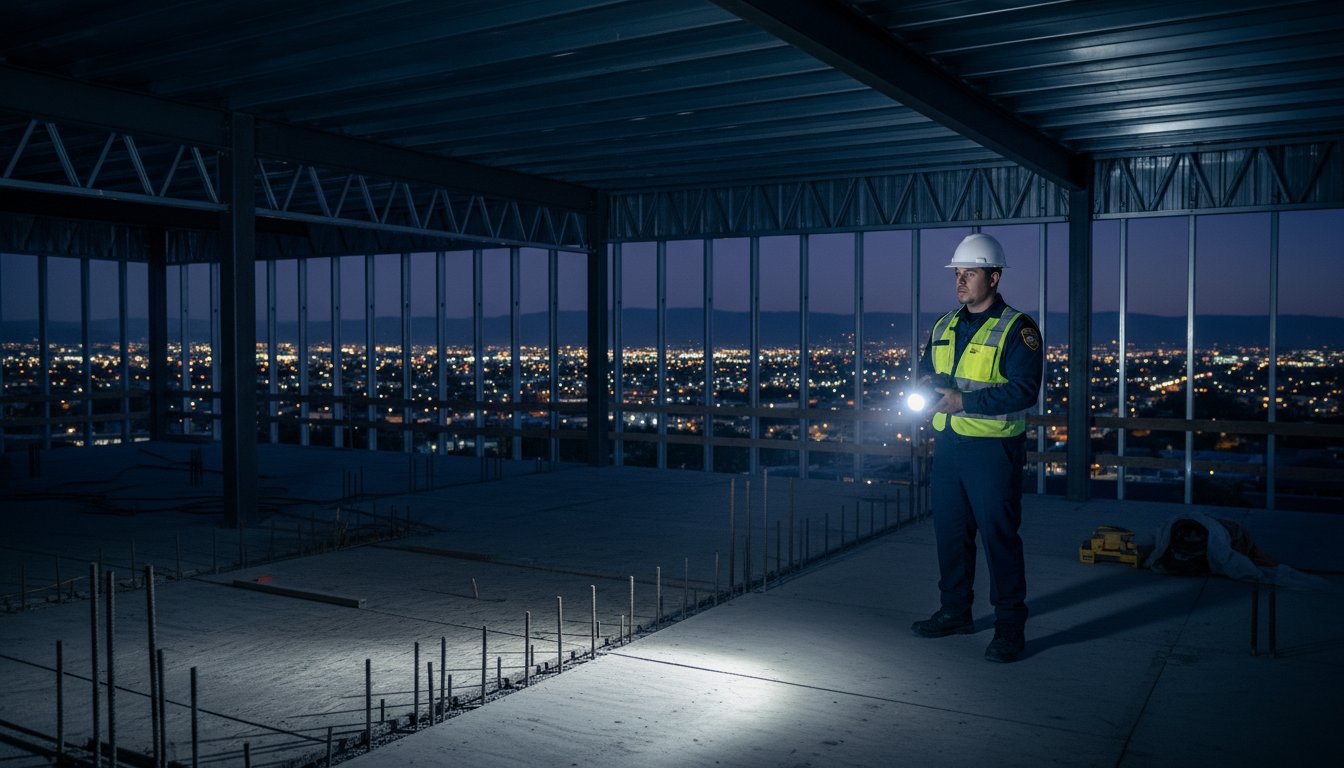
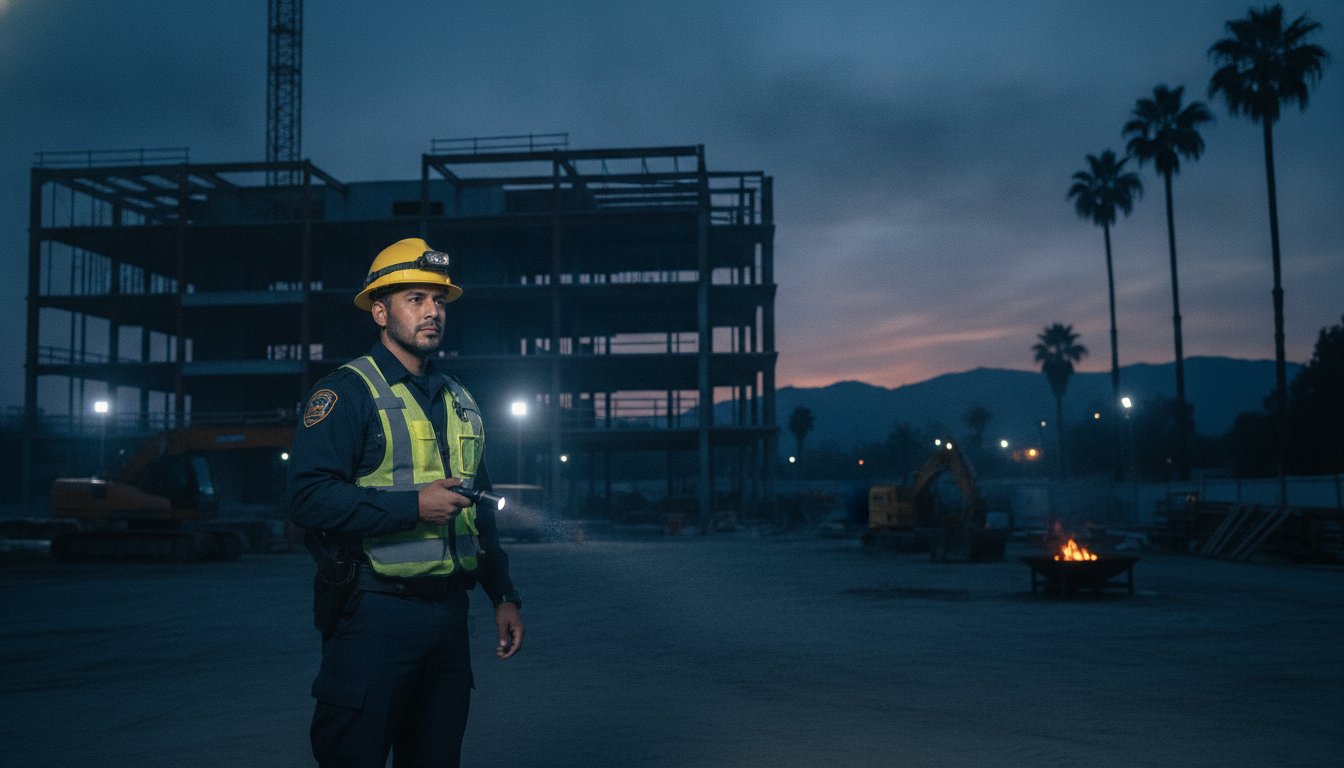
A single uncontrolled spark on a Southern California job site isn’t just a safety hazard; it’s a direct assault on your project’s legal standing and financial viability. In a landscape where the 2026 California Fire Code mandates more rigorous oversight than ever, passive safety measures have become a significant liability. You likely feel the pressure of potential OSHA fines and the constant anxiety of fire damage to uninsured assets. Maintaining a site that’s both productive and compliant requires more than just luck. It demands professional construction fire monitoring executed with disciplined precision.
We recognize that the complexity of NFPA 241 standards and the standalone Wildland-Urban Interface Code can feel overwhelming for even the most experienced project managers. This strategic guide provides the professional framework necessary to master these rigorous standards, shielding your assets from catastrophic loss while ensuring full regulatory compliance. We’ll analyze the 2026 mandates for site safety plans, the deployment of trained fire watch personnel, and the seamless integration of security protocols to ensure zero fire incidents throughout your project’s lifecycle.
Key Takeaways
- Master the legal requirements of NFPA 241 and the essential duties of a designated Fire Prevention Program Manager to ensure total regulatory compliance.
- Recognize the critical vulnerabilities of hot work zones and why manual intervention is mandatory when permanent fire suppression systems are offline.
- Evaluate the tactical advantages of disciplined human oversight over automated systems for effective construction fire monitoring in complex, high-dust environments.
- Utilize a professional checklist to execute a comprehensive site risk assessment and deploy a methodical fire watch program that satisfies Southern California fire marshals.
- Understand how the integration of elite fire watch services with site security management forms a disciplined shield against catastrophic property loss.
The High Stakes of Construction Fire Risks: Why Vigilance is Mandatory
Construction sites are inherently unstable environments. While a finished building benefits from integrated sprinklers and fire-rated walls, a structure under development remains dangerously exposed. This vulnerability creates a high-stakes scenario where traditional safety nets don’t exist. Professional construction fire monitoring serves as the vital link between a vulnerable asset and total operational security. When permanent fire suppression systems are offline, the burden of protection shifts entirely to human oversight. A professional monitor doesn’t just watch; they enforce order through methodical presence.
The period of construction is statistically the most dangerous phase for any building. Construction and renovation fire risks are amplified because the passive and active protection systems designed to save lives are either uninstalled or disconnected. Without these automated sentries, a small ignition point can rapidly escalate into a total loss. A professional monitor acts as a disciplined shield, providing the constant vigilance required to identify threats before they become uncontrollable. It’s a role that demands absolute accountability and an unwavering commitment to duty.
The Anatomy of a Construction Fire
Fires during construction follow a predictable but lethal pattern. In 2026, the primary catalysts remain hot work operations, electrical malfunctions, and the improper storage of combustible materials. Consider these critical factors:
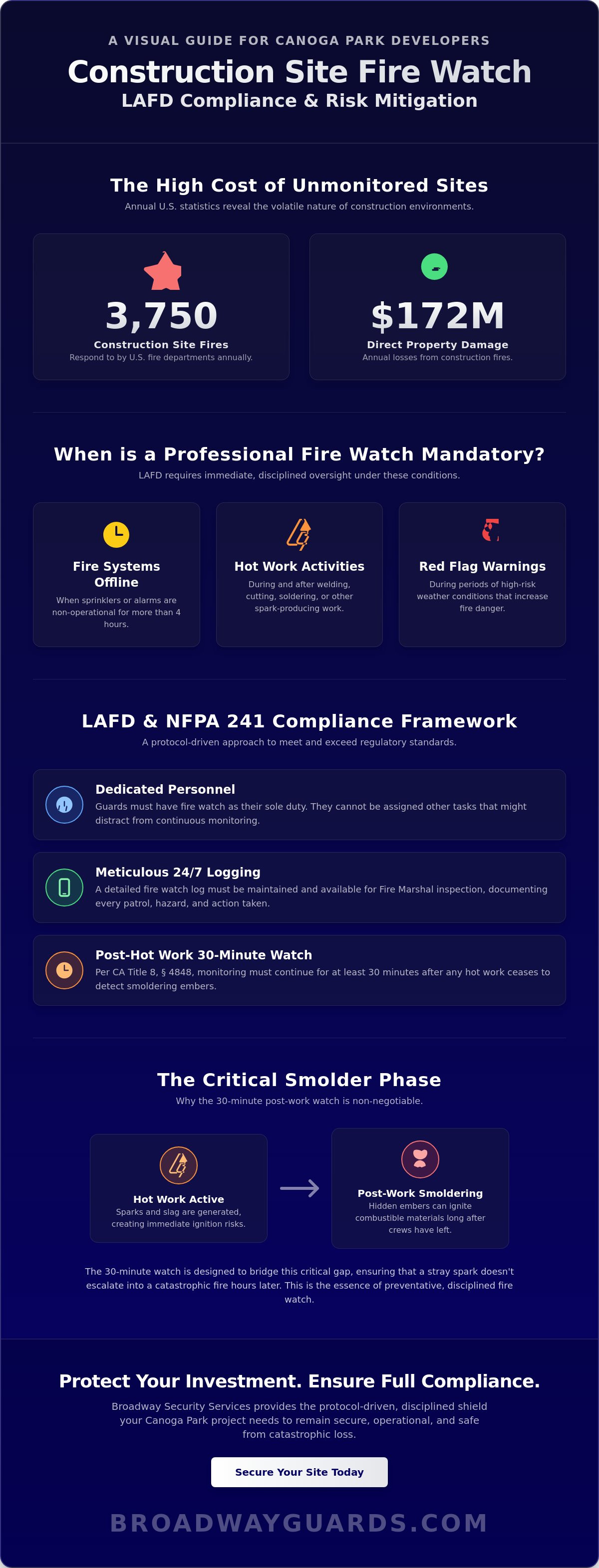
- Hot Work Hazards: Activities like welding, cutting, and grinding account for over 30% of industrial fires. These tasks produce high-heat slag that can travel significant distances.
- The Smolder Period: A spark can remain dormant in sawdust or insulation for hours. NFPA 241 mandates a fire watch for at least 30 minutes after work stops to mitigate this risk, though torch-applied roofing requires even more extended oversight.
- Fuel Load: Exposed timber framing and foam insulation accelerate flame spread, often outpacing the response time of local fire departments.
Financial and Legal Consequences of Neglect
Financial neglect carries a heavy price tag. A single fire incident can trigger an immediate site shutdown, shattering project timelines and eroding investor confidence. In Southern California, local fire marshals exercise zero tolerance for safety lapses. Failing to maintain a documented fire watch can result in severe citations or the complete voiding of insurance policies. Professional construction fire monitoring ensures that your project remains compliant with the 2026 California Fire Code. Without a disciplined protector on-site, you’re essentially operating without a safety net, risking millions in uninsured assets and potential legal liability. It’s not just about safety; it’s about the survival of the project itself.
California Regulatory Standards: NFPA 241 and Local Compliance
Navigating the legal landscape of California construction requires a disciplined understanding of specific fire safety mandates. The 2026 California Fire Code, specifically Chapter 33, establishes the operational requirements for site safety and hazard mitigation. Central to these regulations is the NFPA 241 Standard, which serves as the definitive protocol for safeguarding construction, alteration, and demolition operations. Compliance with the 2022 edition of the NFPA 241 Standard is the baseline for legal site operation.
A critical 2026 requirement is the designation of a Fire Prevention Program Manager (FPPM). This individual holds ultimate accountability for the Fire Prevention Program (FPP), ensuring that every safety protocol is executed with precision. It’s essential to distinguish between general security and specialized fire watch. While security guards protect against unauthorized access, a fire watch professional focuses exclusively on fire hazards. The California Fire Code mandates a fire watch for new construction exceeding 40 feet in height or with an aggregate area over 50,000 square feet per story. Documentation is the cornerstone of regulatory rigor. For 2026, fire watch logs must provide a detailed account of patrols, hazard identifications, and remedial actions. These logs aren’t just paperwork; they’re legal evidence of your commitment to construction fire monitoring.
NFPA 241: The Tactical Standard
NFPA 241 outlines specific duties that go beyond simple observation. Monitors must identify ignition sources, ensure clear fire department access, and verify the presence of functional extinguishers. Effective construction fire monitoring relies on these tactical standards to prevent site shutdowns. If a permanent fire suppression system is impaired or offline, 24/7 monitoring becomes mandatory. This level of oversight ensures that your site remains a disciplined environment, even under high-risk conditions.
Local Fire Marshal Expectations in Los Angeles
In Los Angeles and areas like Canoga Park, fire marshal inspections are rigorous. These officials demand to see credentials that verify personnel are trained specifically in fire prevention and emergency response. Broadway Security provides the disciplined oversight needed to satisfy these local authorities. Utilizing professional Fire Watch Services ensures your project meets the highest standards of operational safety. For those seeking to deepen their understanding of these requirements, Professional Fire Watch Services California: The Definitive Compliance Guide for 2026 offers more detailed insights into maintaining legal site operation.
Strategic Monitoring: Professional Guards vs. Technological Systems
Building automation and AI surveillance are often marketed as total solutions for site safety. However, the chaotic environment of an active job site presents unique challenges that fixed sensors cannot overcome. Dust, debris, and shifting architectural footprints often blind automated systems. In these high-stakes environments, effective construction fire monitoring requires a more agile and disciplined approach. A sensor can alert a remote office to smoke, but it cannot physically maneuver through a cluttered structure to suppress a smoldering ember. The physical presence of a trained professional remains the most reliable method for neutralizing threats before they escalate.
Professional monitors provide the physical intervention necessary to bridge the gap between detection and mitigation. Fixed sensors are designed for static environments. Construction sites change daily. As perimeters shift and new levels are added, fixed sensors often lose their line of sight or become obstructed by materials. Human guards adapt instinctively to these changes. They maintain a constant, unyielding shield over the project’s assets by patrolling areas where technology fails. Technology should serve as a secondary support to human tactical oversight, acting as a force multiplier rather than a replacement for professional vigilance.
The Human Advantage in Crisis Management
The decision-making process during an active smolder incident is critical to site survival. When a guard identifies a hazard, they initiate a precise, pre-established protocol. This includes immediate containment efforts and direct communication with local emergency services. Unlike automated systems that often suffer from high false-alarm rates, human verification ensures that emergency resources are deployed only when a real threat exists. This level of oversight is a core component of a compliant OSHA Fire Protection Program. Professional monitors possess the situational awareness to distinguish between harmless construction dust and the early stages of a lethal electrical fire.
Integrated Protection Models
Maximum safety is achieved through the synergy of multiple security disciplines. Combining mobile patrols with fixed fire watch stations creates a comprehensive security grid. This integrated approach ensures that no corner of the site remains unobserved. There is also a natural link between fire prevention and asset protection. By utilizing specialized Construction Site Security Guards: Protecting Your Southern California Assets, developers can address both theft prevention and construction fire monitoring simultaneously. This methodical oversight transforms the site into a secure, orderly environment where risks are identified and neutralized before they can disrupt the project lifecycle.
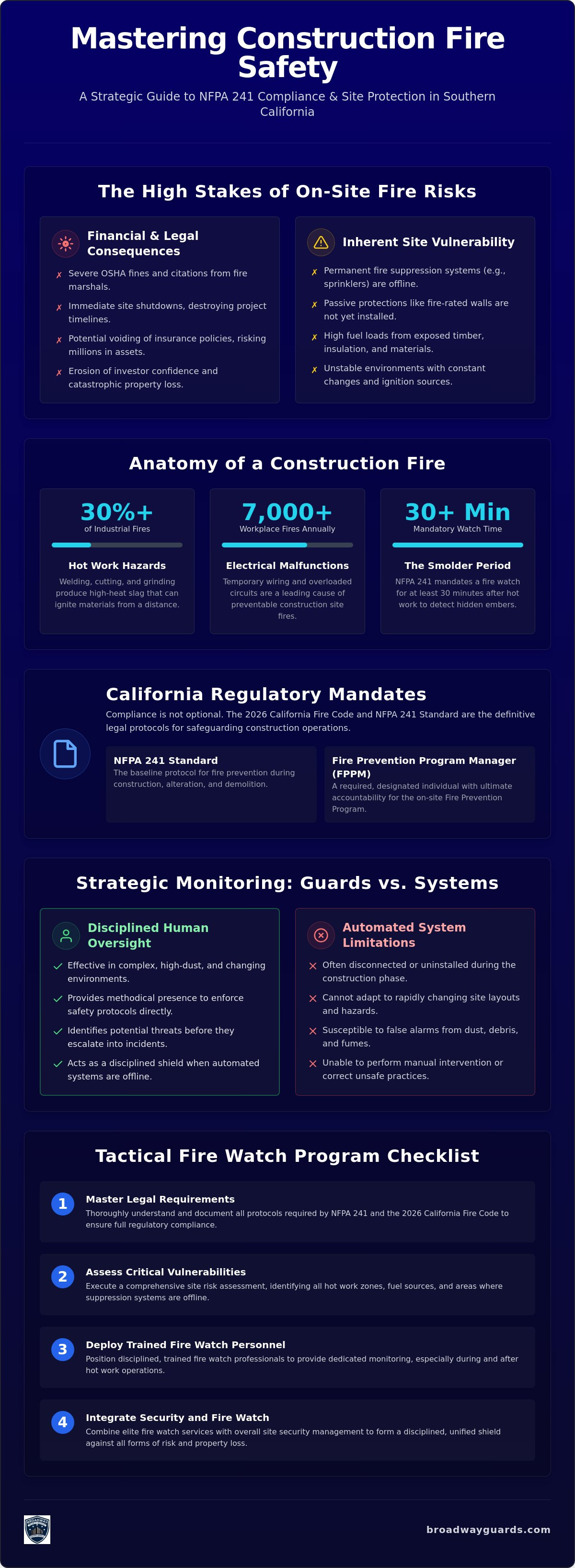
Implementing a Fire Watch Program: A Tactical Checklist
Precision in planning prevents failure in execution. Establishing a professional construction fire monitoring program requires more than a casual walkthrough; it demands a structured command approach. Before the first guard arrives on-site, a project manager must define the operational parameters that will govern the safety of the asset. This methodical framework ensures that every vulnerability is identified and every response is rehearsed. A disciplined program acts as an unyielding shield, protecting the project from both physical fire damage and the legal fallout of non-compliance.
Legal defensibility relies on a consistent reporting cadence. Every patrol must be documented with military-like precision, noting the time of inspection, specific areas cleared, and any hazards neutralized. In the event of an inspection by a Southern California fire marshal, these logs serve as the primary evidence of your site’s safety integrity. Maintaining this level of oversight is not optional; it’s a fundamental requirement for projects operating under the 2026 California Fire Code.
Phase 1: Vulnerability Assessment
Initiating construction fire monitoring begins with a clinical analysis of the site’s topography. You must identify high-risk zones, including fuel storage areas, temporary electrical mains, and designated hot work stations. Each zone requires a specific mitigation strategy. To ensure no threat is overlooked, project leaders should consult a How to Conduct a Professional Security Risk Assessment in California: A Definitive Guide. This assessment dictates the number of personnel required. A large-scale project exceeding 50,000 square feet per story, as defined by California standards, will require multiple monitors to maintain a continuous, overlapping presence.
Phase 2: Operational Execution
Operational success depends on the rigid enforcement of patrol schedules. Guards must follow a route that covers every floor and eliminates “blind spots” created by stored materials or unfinished partitions. A key component of this phase is the Hot Work Permit system. No subcontractor should engage in welding or cutting without a formal permit that triggers an immediate 30-minute post-work fire watch. Every monitor must be equipped with the necessary tools for immediate intervention, including a portable fire extinguisher, a dedicated communication device, and a digital or physical Fire Watch Log. These logs must remain accessible for 24/7 inspection by site supervisors or regulatory authorities. For projects requiring an elite level of protection, deploying specialized Fire Watch Services ensures that these protocols are executed without deviation. This disciplined approach transforms a high-risk construction site into a controlled, professional environment.
Broadway Security: Disciplined Fire Watch for Southern California
Broadway Security Services stands as the unyielding force for developers across Southern California. We recognize that construction fire monitoring is not a secondary administrative task; it’s a vital tactical operation that protects your capital, your timeline, and your professional reputation. Our brand functions as a disciplined shield, ensuring that the rigorous standards of the 2026 California Fire Code are met with unwavering compliance. We serve as the decisive bridge between the complex mandates of the fire marshal and the concrete reality of a secure, productive job site.
Our commitment to the San Fernando Valley and the greater Los Angeles metropolitan area is rooted in a culture of high-stakes reliability. We don’t just provide personnel; we deploy trained specialists who understand the specific hazards of high-density urban construction. This methodical oversight transforms a vulnerable site into a controlled environment where risks are neutralized before they can escalate. By choosing a partner that prioritizes order and precision, you ensure that your project remains a zero-incident operation from groundbreaking to completion.
Our Commitment to Professionalism
Broadway’s operational standards are defined by military-like precision and total accountability. Every member of our fire watch team undergoes rigorous training in fire prevention, hazard identification, and emergency communication protocols. We maintain a constant, vigilant presence that goes beyond simple observation. Our reporting and oversight systems provide the documentation required for full legal defensibility, ensuring your project satisfies every regulatory audit.
We recognize that construction schedules are fluid and often demand immediate adjustments. We offer 24/7 availability for emergency fire watch staffing, providing the rapid response necessary to keep your site operational when permanent systems fail. This commitment to readiness ensures that your assets are never left unprotected. Our integration with local regulatory bodies allows us to anticipate shifting expectations, helping you maintain a project free from costly citations or fire marshal shutdowns.
Secure Your Site Today
Don’t leave the survival of your project to chance or inadequate automated systems. The 2026 regulatory environment demands a level of discipline that only a professional protector can provide. Secure your assets with the methodical oversight and unyielding vigilance of Broadway Security Services. We are prepared to conduct a comprehensive analysis of your site’s specific vulnerabilities and deploy the personnel required to maintain a secure perimeter.
Take the first step toward total operational peace of mind. Contact our team to request a project-specific risk assessment tailored to the unique demands of your Southern California development. Our experts will help you master the standards of construction fire monitoring and ensure your site remains a benchmark for safety and compliance. Request a Tactical Fire Watch Consultation to establish your disciplined shield today.
Securing the Future of Southern California Construction
Maintaining a compliant job site in 2026 requires an unwavering commitment to operational rigor. The transition from active construction to a finished, protected asset is a period of maximum vulnerability that demands a disciplined protector. You’ve learned that meeting NFPA 241 standards and implementing a tactical fire watch program are essential steps to avoid catastrophic property loss and legal liabilities. Professional construction fire monitoring serves as the definitive shield between your investment and the unpredictable nature of site hazards.
Broadway Security provides the order and precision necessary to navigate these high-stakes environments. As certified NFPA 241 compliance experts, our disciplined, highly trained security personnel ensure your project satisfies every fire marshal inspection. We offer 24/7 emergency deployment across Southern California to maintain site safety whenever permanent systems are offline. Our personnel are trained to uphold the highest standards of oversight, ensuring that your project remains a zero-incident operation. Secure Your Construction Site with Broadway Fire Watch. Protect your assets with a force that values duty and results above all else. Your project’s safety is our primary mission.
Frequently Asked Questions
When is fire watch legally required for a construction site in California?
Fire watch is mandatory under the California Fire Code when a building exceeds 40 feet in height or has an aggregate area of over 50,000 square feet per story. Additionally, any site with an impaired or disconnected fire suppression system must maintain a constant watch until the system is restored to full operational status. These requirements ensure a disciplined shield remains over the asset during its most vulnerable phases.
What are the specific duties of a fire watch guard under NFPA 241?
Monitors must patrol all areas of the site to identify potential ignition sources and ensure that fire department access remains unobstructed. They are responsible for verifying that fire extinguishers are in place and functional while maintaining a constant vigil during and after hot work operations. Their primary objective is to identify and neutralize hazards before they escalate into catastrophic incidents.
Can my existing security guards perform fire monitoring duties?
General security personnel may only perform construction fire monitoring if they are specifically trained and assigned solely to fire watch duties during their shift. The California Fire Code prohibits monitors from having other responsibilities that would distract them from their primary mission of fire prevention. Using dedicated personnel ensures that oversight remains methodical and focused on safety protocols.
How long must a fire watch continue after hot work has been completed?
A fire watch must remain in place for at least 30 minutes after hot work operations have ceased to mitigate the risk of smoldering fires. For specific high-risk tasks, such as torch-applied roofing, the monitoring period must be extended to ensure that dormant sparks don’t ignite combustible materials. This post-work observation period is a critical component of professional site oversight.
What equipment is required for a professional construction fire monitor?
Every monitor must be equipped with a portable fire extinguisher, a reliable communication device for emergency alerts, and a methodical Fire Watch Log. They should also carry a high-powered flashlight and wear appropriate personal protective equipment to ensure they can navigate all areas of the site safely. This gear allows the guard to function as an effective first line of defense.
What happens if a construction site is caught without a required fire watch?
Failure to provide a required fire watch can lead to immediate site shutdowns by the local fire marshal and substantial fines from regulatory bodies. Beyond these penalties, a lack of documented construction fire monitoring can void your insurance policy. This leaves millions of dollars in project assets completely unprotected and creates significant legal liability for the property owner.
How does Broadway Security ensure the reliability of its fire watch personnel?
Broadway Security maintains a disciplined shield through rigorous personnel training and a structured hierarchy of oversight. Our guards are held to military-like standards of reporting and performance to ensure that every patrol is executed with precision. We prioritize accountability and professional training to provide Southern California developers with total operational peace of mind.
Are fire watch logs required to be digital or physical for 2026 inspections?
Both digital and physical logs are legally acceptable, provided they are readily available for inspection by regulatory authorities at any time. Digital logs are increasingly preferred for 2026 inspections because they provide real-time verification of patrol routes and immediate reporting of hazards. This digital framework creates a more robust and defensible safety record for the project.