
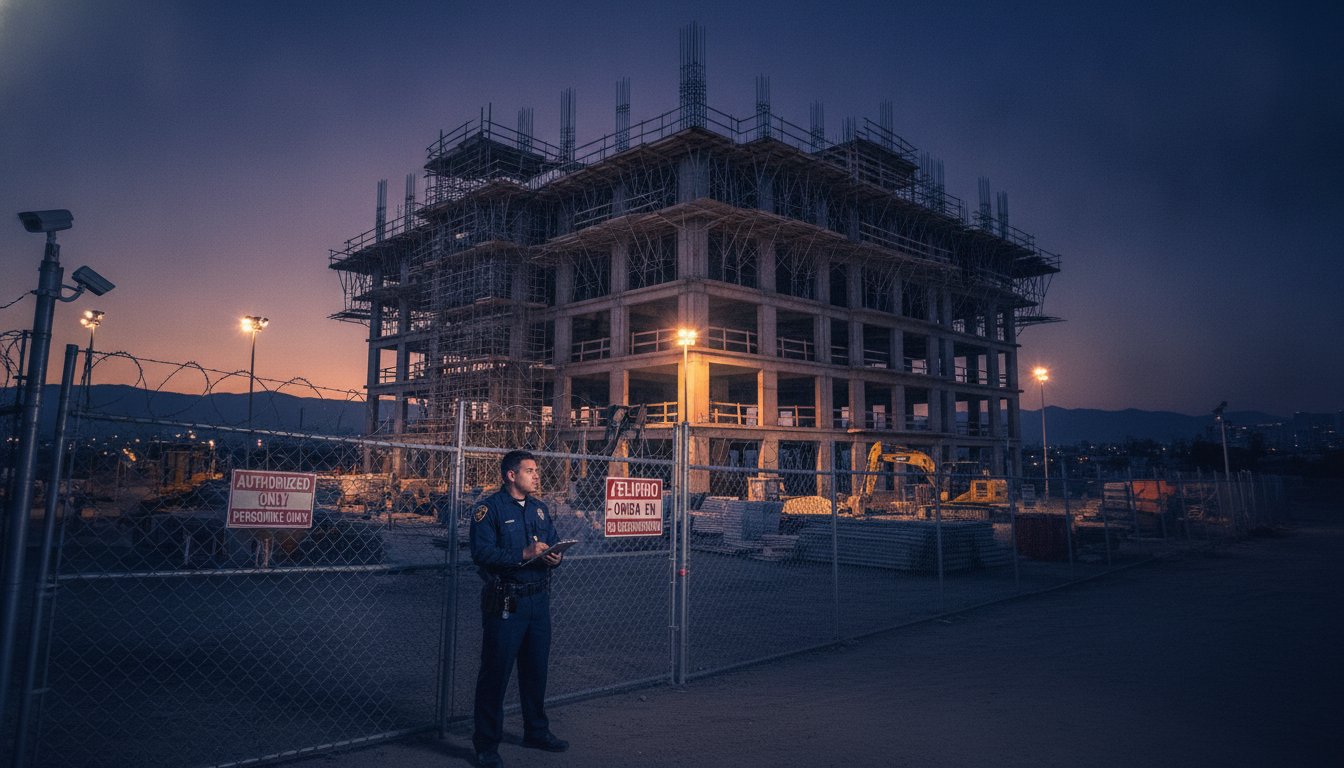
Construction Site Security Risk Assessment: The Professional 2026 Guide

A perimeter fence is merely a suggestion to a determined intruder without a disciplined strategy behind it. In the San Fernando Valley, project managers are facing a surge in high-value equipment theft that standard oversight simply cannot stop. You understand that keeping a job site secure while managing complex Cal/OSHA and fire safety regulations is a high-stakes balancing act that leaves no room for error. This guide provides the master framework for a professional construction site security risk assessment designed to transform your project into a multi-layered fortress of order and accountability.

By following this rigorous protocol, you’ll learn how to identify hidden vulnerabilities, integrate specialized fire watch services, and maintain the precise standards required for total regulatory compliance. We’ll examine the specific methodologies that ensure your assets remain under the care of a vigilant and unyielding force. From Canoga Park to Woodland Hills, these professional standards provide the peace of mind that comes from methodical, project-based risk mitigation and elite oversight. This is the roadmap to establishing a secure perimeter that satisfies insurance requirements and protects your bottom line.

Key Takeaways

  • Transition from reactive guarding to a proactive, disciplined framework that prioritizes methodical risk management over simple presence.
  • Identify critical vulnerabilities by evaluating perimeter integrity and establishing high-value asset zones for machinery protection.
  • Master the professional construction site security risk assessment process to determine the precise level of tactical oversight required for your project.
  • Integrate specialized fire watch services into your broader security strategy to ensure strict adherence to Cal/OSHA and local regulatory mandates.
  • Develop a dynamic Site Security Plan that translates assessment findings into actionable protocols that evolve with your project’s lifecycle.

The Architecture of a Professional Construction Site Security Risk Assessment

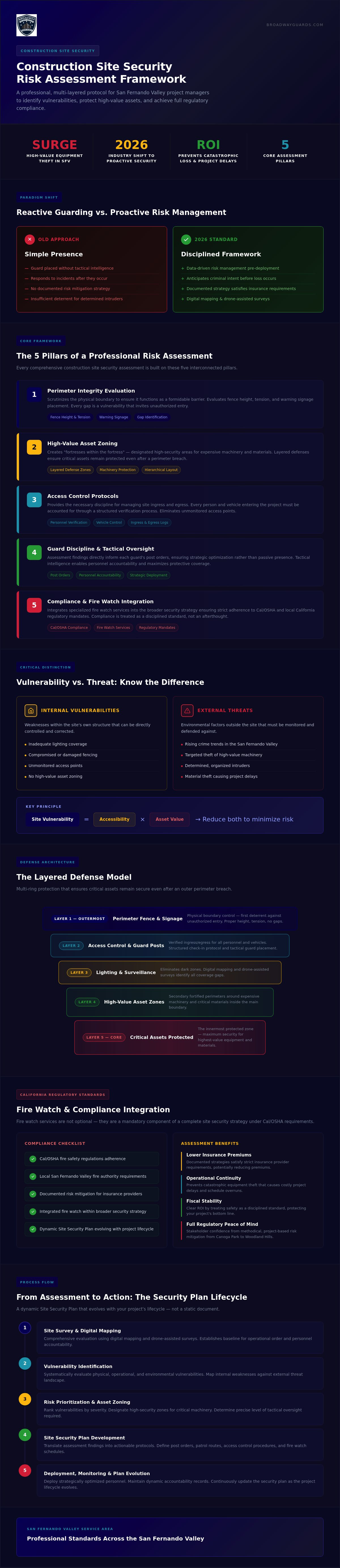
A professional construction site security risk assessment is a systematic evaluation of a site’s physical, operational, and environmental vulnerabilities. In 2026, the industry has undergone a significant shift, moving away from reactive guarding toward proactive, data-driven risk management. This evolution is driven by the necessity for order in an increasingly complex threat environment. Simple presence is no longer a sufficient deterrent; protection now requires a disciplined framework that anticipates criminal intent before it manifests as a loss.

This assessment serves as the mandatory prerequisite for the deployment of construction site security guards. Without a comprehensive evaluation, personnel lack the tactical intelligence required to maintain a secure perimeter. The assessment provides the blueprint for every guard’s post orders, ensuring that their presence is not just visible but strategically optimized for maximum protection. It establishes a foundation of high-stakes reliability that stakeholders expect from professional security providers.

The financial imperative behind this process is undeniable. A rigorous assessment offers a clear ROI by preventing the catastrophic costs of equipment theft and project delays. Furthermore, documented risk mitigation strategies often satisfy the strict requirements of insurance providers, potentially leading to lower premiums. When safety is treated as a disciplined standard rather than an afterthought, the project benefits from both operational continuity and fiscal stability.

Vulnerability vs. Threat: Knowing the Difference

Effective protection requires a clear distinction between internal vulnerabilities and external threats. Internal vulnerabilities are weaknesses within the site’s structure, such as inadequate lighting, compromised fencing, or unmonitored access points. External threats are the environmental factors, including rising crime trends in the San Fernando Valley that target high-value machinery. Broadway Security Services bridges the gap between identification and neutralization by applying a rigorous tactical framework to every site survey. We don’t just identify weaknesses; we establish the protocols to eliminate them, ensuring your assets remain under the care of a vigilant and unyielding force.

The 2026 Standard for Site Evaluations

The modern standard for site evaluations has moved beyond the traditional clipboard. Professional assessments now utilize digital mapping and drone-assisted surveys to provide a comprehensive view of the landscape. These tools establish a baseline for operational order and personnel accountability, allowing for a precise deployment of resources. This methodical approach ensures that every square foot of the job site is accounted for in the security plan. Site Vulnerability is the intersection of accessibility and asset value. By reducing accessibility through methodical barriers and increasing the difficulty of target acquisition, we create a secure environment that prioritizes safety and peace of mind.

Identifying Critical Vulnerabilities: Perimeter and Asset Protection

Perimeter integrity represents the first line of defense in any disciplined security strategy. A professional construction site security risk assessment must scrutinize the physical boundary to ensure it functions as a formidable barrier rather than a mere boundary. This involves evaluating fence height, tension, and the placement of warning signage. Every gap is a vulnerability that invites unauthorized entry, making a rigorous inspection of the perimeter line essential for maintaining a secure environment.

Effective protection requires the implementation of high-value asset zoning. This strategy involves creating “fortresses within the fortress” by designating specific, high-security areas for expensive machinery and materials. By layering defenses, you ensure that even if a perimeter breach occurs, your most critical assets remain protected behind additional barriers. This hierarchical approach to site layout is a hallmark of professional oversight and order.

Access control protocols provide the necessary discipline for managing site ingress and egress. Every person and vehicle entering the project must be accounted for through a structured verification process. Without strict access management, the site becomes a chaotic environment where theft can occur unnoticed. Complementing these protocols with strategic lighting eliminates the shadow zones that attract vandalism and criminal activity after hours. Visibility is a powerful deterrent that reinforces the presence of a vigilant force.

Securing the Perimeter in Urban California

Project sites in Canoga Park and Los Angeles face unique urban challenges, including high foot traffic and proximity to public spaces. The assessment must address these local factors by identifying blind spots that are not visible from the street. Integrating mobile patrol services into the security plan ensures that the perimeter is consistently monitored, providing a dynamic layer of protection that static barriers cannot achieve alone.

Asset Management and Tool Storage

Copper theft and the loss of specialized tools remain primary concerns for Southern California contractors. A professional evaluation includes a full asset register and the establishment of secure inventory controls. By securing materials in reinforced containers and utilizing technology-linked barriers, you maintain 24/7 oversight of your inventory. This methodical approach to asset management ensures that every piece of equipment is accounted for, providing the peace of mind that comes from a truly theft-proof site.

The Human Element: Guard Discipline and Tactical Oversight

Technology serves as a valuable tool, but it’s an insufficient shield when used in isolation. Cameras and sensors can record a breach, but they lack the capacity for active intervention. A professional construction site security risk assessment must prioritize the human element to transform passive monitoring into a proactive defense. In high-stakes environments, the presence of a disciplined protector is the decisive factor that prevents a vulnerability from becoming a loss. This tactical oversight ensures that your project is not just observed, but actively defended.

The efficacy of a security team depends entirely on the standards of their training and the rigor of their oversight. Personnel must be more than just observers; they’re the physical manifestation of your site’s security protocols. Their professional appearance and methodical conduct serve as a constant reminder that the perimeter is under unyielding care. This creates an atmosphere of order that deters criminal intent before it can manifest on your job site.

Armed vs. Unarmed Personnel: A Strategic Choice

Determining the appropriate force posture is a critical component of your risk mitigation strategy. High-risk projects or sites containing extremely valuable machinery may necessitate armed security guard services Los Angeles to provide a credible deterrent against sophisticated threats. This choice isn’t about aggression; it’s about matching the level of professional protection to the specific threat profile of the San Fernando Valley. Every individual deployed must meet rigorous California training and licensing standards to ensure they operate within the strict boundaries of legal and operational excellence.

Discipline as a Deterrent

The psychological impact of a uniformed, disciplined security presence cannot be overstated. When an intruder observes a guard moving with military-like precision and maintaining a vigilant posture, the perceived risk of detection increases significantly. Broadway Security’s commitment to hierarchy and structure ensures that every guard functions as a reliable component of your broader safety framework. Visible discipline discourages internal and external theft by projecting an image of unwavering vigilance and total site control. It signals to all parties that the site is managed with a gravity that leaves no room for opportunistic crime.

Accountability is maintained through rigorous reporting standards, specifically the Daily Activity Report (DAR). This document provides a granular, chronological record of all site activity and patrol findings. By reviewing these reports, project managers gain peace of mind through professional oversight, knowing that every vulnerability is being methodically monitored and addressed. This level of transparency ensures that the findings of your initial construction site security risk assessment are being acted upon with consistent, daily precision.
Construction Site Security Risk Assessment: The Professional 2026 Guide

Compliance and Fire Watch: California Regulatory Standards

A professional construction site security risk assessment is incomplete without a rigorous evaluation of fire-related hazards. In California, security and fire safety are intrinsically linked through strict regulatory frameworks. Failing to integrate fire watch services California into your broader security strategy creates a dangerous gap in your site’s defense. This integration ensures that your project remains compliant with both Cal/OSHA standards and local Los Angeles Fire Department mandates, providing a unified shield against multiple forms of loss.

Hot work zones represent one of the most significant physical risks on a modern job site. Activities such as welding, cutting, or brazing require constant vigilance to prevent catastrophic fire incidents. Cal/OSHA regulations typically mandate a fire watch for at least 30 minutes after hot work is completed, though high-risk environments often require extended monitoring to ensure total safety. Ignoring these durations or failing to provide dedicated personnel results in more than just safety risks; it invites heavy fines, project shutdowns, and significant legal liability that can jeopardize the entire project’s timeline.

The Fire Watch Protocol

Maintaining a safe site requires a methodical, three-step protocol that mirrors the discipline of professional security patrols. This structured approach ensures no detail is overlooked during high-risk operations, maintaining a state of constant readiness.

  • Step 1: Identify all fire hazards and combustible material storage areas during the initial site survey to establish a baseline of risk.
  • Step 2: Assign dedicated, trained personnel for continuous monitoring during and after hot work sessions to provide immediate response capability.
  • Step 3: Document all patrols, equipment checks, and incidents in real-time to maintain a precise audit trail for regulatory inspectors and insurance providers.

Liability Mitigation and Legal Safeguards

A comprehensive security risk assessment CA serves as a critical legal shield for project stakeholders. By identifying risks and documenting the specific mitigation steps taken, you establish a record of due diligence. This documentation is essential if an incident occurs, as it proves your commitment to professional standards and regulatory compliance. Staying ahead of evolving California legislation requires a partner who treats safety as a disciplined mandate. For professional oversight that satisfies both legal and operational requirements, you can request a consultation with Broadway Security Services to evaluate your site’s current compliance posture and protective measures.

Executing the Security Strategy: From Assessment to Action

A construction site security risk assessment only provides value when its findings are translated into a disciplined Site Security Plan (SSP). This document acts as the definitive operational framework for your project, establishing a clear hierarchy and specific protocols for every identified vulnerability. Execution requires more than just following a list; it demands a command structure that can manage incident response and crisis management with absolute precision. By formalizing these procedures, you ensure that every member of the security team understands their role within the protective shield.

Order is maintained through the recognition that a construction site is a dynamic environment. As the physical landscape of the project changes, so do the risks. The assessment must be treated as a living document, subject to regular review and adjustment. This methodical approach ensures that security measures remain relevant and effective throughout the entire project lifecycle. Continuous improvement is the standard for those who prioritize high-stakes reliability and the safety of their assets.

Phased Security Deployment

A strategic deployment follows the natural progression of the build, adjusting the force posture to match evolving threats. This categorical approach ensures that resources are never wasted while maintaining a constant state of readiness.

  • Phase 1 (Site Prep): The primary focus remains on establishing the perimeter and rigorous access control. This phase sets the tone for the project, creating a visible barrier against unauthorized entry and establishing site order.
  • Phase 2 (Vertical Build): As the structure rises, internal patrols and asset monitoring become the priority. This phase addresses the increased complexity of the site and the presence of high-value machinery.
  • Phase 3 (Finishing): The final stage focuses on mitigating the theft of high-value appliances and fixtures. Security protocols shift to protect the interior environment as the project nears completion.

The Broadway Security Partnership

Broadway Security Services provides the professional consultation required to maintain long-term site integrity across the San Fernando Valley. Our expertise in Woodland Hills and Canoga Park allows us to customize security contracts that meet the unique demands of local developers. We don’t just provide a service; we act as a disciplined protector for your investment. By linking rigorous operational standards with legal compliance, we offer a level of oversight that ensures your peace of mind. Secure your site today with a professional risk assessment from Broadway Security Services to establish the unyielding defense your project requires.

Securing the Future of Your Southern California Project

Maintaining site order requires a transition from passive observation to a proactive, disciplined framework. A professional construction site security risk assessment is the essential foundation for this transformation, ensuring that every vulnerability is identified and neutralized before it impacts your bottom line. By integrating tactical guard oversight with rigorous fire watch protocols, you create a multi-layered defense that satisfies both insurance requirements and complex California regulatory standards. This methodical approach ensures your project remains a secure environment where safety is a constant, unyielding standard.

Broadway Security Services brings military-grade oversight and specialized San Fernando Valley expertise to every engagement. Our California-licensed professionals operate with the precision and accountability necessary to protect high-value assets in the most demanding environments. Don’t leave your project’s safety to chance or undisciplined personnel. Establish a secure perimeter and achieve total peace of mind through methodical, professional oversight. Request a Professional Construction Site Risk Assessment today to safeguard your investment and ensure your project remains a secure, theft-proof fortress. We’re prepared to stand as your disciplined shield.

Frequently Asked Questions

What is included in a construction site security risk assessment?

A professional evaluation includes a comprehensive review of physical boundaries, access control points, and high-value asset storage zones. It also incorporates an analysis of local crime data and environmental risks specific to the project’s location. This disciplined review forms the definitive basis for all post orders and personnel deployment strategies, ensuring every vulnerability is addressed through a structured framework of protection.

How often should a construction site security assessment be updated?

Assessments must be updated at every major phase of the construction lifecycle, such as the transition from site preparation to vertical build. Regular reviews are also mandatory when significant new equipment arrives or if local crime trends shift. Treating the assessment as a living document ensures that your security posture remains effective as the site’s physical landscape and associated risks evolve.

Why is a fire watch assessment required for California construction sites?

California Fire Code and Cal/OSHA mandates require a fire watch assessment to mitigate risks associated with hot work like welding or cutting. This evaluation identifies combustible storage areas and establishes a continuous monitoring protocol to prevent catastrophic loss. It is a critical component of a professional construction site security risk assessment that ensures total regulatory compliance and site safety.

Can a risk assessment help reduce my construction insurance premiums?

Insurers often view a documented, professional risk assessment as a sign of due diligence and lower operational risk. By demonstrating a disciplined framework for theft prevention and fire safety, project managers can negotiate more favorable terms. This proactive approach to risk management provides a clear financial return through reduced liability and the potential for significant insurance premium discounts.

What are the most common security vulnerabilities on Los Angeles job sites?

Common vulnerabilities include poorly lit perimeter gaps, unmonitored copper storage, and inadequate access control during shift changes. In the San Fernando Valley, the proximity of job sites to high-traffic urban areas increases the risk of opportunistic theft. Addressing these shadow zones through methodical oversight and high-visibility patrols is essential for maintaining a secure and theft-proof job site.

How does Broadway Security Services handle high-risk site evaluations?

Broadway Security Services utilizes a project-based risk assessment framework that combines digital mapping with on-site tactical surveys. We analyze the specific threat profile of locations like Canoga Park to inform the deployment of armed or unarmed guards. This approach ensures that every site is under the care of a vigilant force trained specifically for high-stakes construction environments.

Is an armed guard always necessary for a construction site?

Armed guards are not always mandatory but are recommended for sites with high-value machinery or those located in high-crime areas. The decision is based on the threat level identified during the construction site security risk assessment. We evaluate the total asset value and local crime data to determine the appropriate force posture required to maintain order and protect your investment.

What is the difference between a threat assessment and a vulnerability assessment?

A threat assessment focuses on external actors and environmental risks, such as local crime trends or fire hazards. A vulnerability assessment evaluates internal weaknesses, like compromised fencing or unmonitored gates, that an actor could exploit. Understanding this distinction allows for a more precise security strategy that addresses both the external source of the risk and the site’s inherent physical weaknesses.
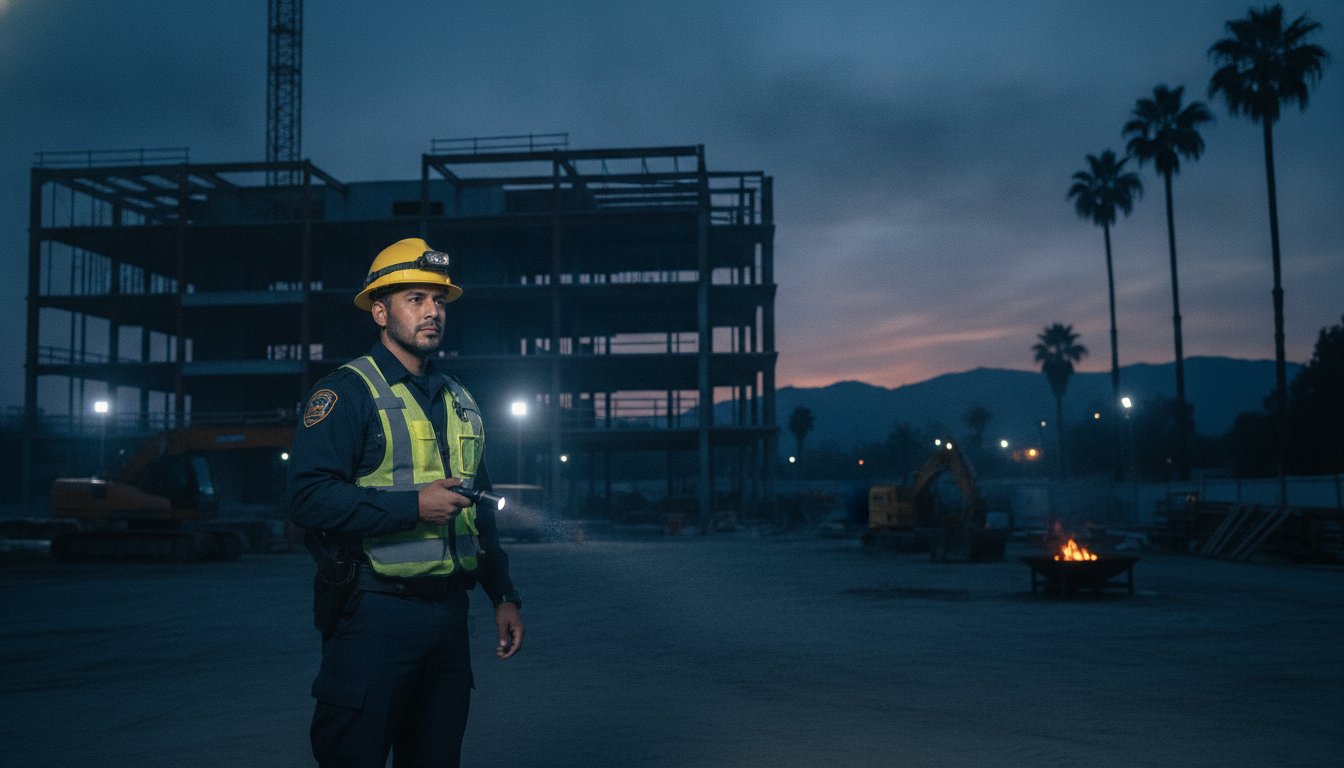
Construction Fire Monitoring: The 2026 Strategic Guide to Site Safety and Compliance

A single uncontrolled spark on a Southern California job site isn’t just a safety hazard; it’s a direct assault on your project’s legal standing and financial viability. In a landscape where the 2026 California Fire Code mandates more rigorous oversight than ever, passive safety measures have become a significant liability. You likely feel the pressure of potential OSHA fines and the constant anxiety of fire damage to uninsured assets. Maintaining a site that’s both productive and compliant requires more than just luck. It demands professional construction fire monitoring executed with disciplined precision.

We recognize that the complexity of NFPA 241 standards and the standalone Wildland-Urban Interface Code can feel overwhelming for even the most experienced project managers. This strategic guide provides the professional framework necessary to master these rigorous standards, shielding your assets from catastrophic loss while ensuring full regulatory compliance. We’ll analyze the 2026 mandates for site safety plans, the deployment of trained fire watch personnel, and the seamless integration of security protocols to ensure zero fire incidents throughout your project’s lifecycle.

Key Takeaways

  • Master the legal requirements of NFPA 241 and the essential duties of a designated Fire Prevention Program Manager to ensure total regulatory compliance.
  • Recognize the critical vulnerabilities of hot work zones and why manual intervention is mandatory when permanent fire suppression systems are offline.
  • Evaluate the tactical advantages of disciplined human oversight over automated systems for effective construction fire monitoring in complex, high-dust environments.
  • Utilize a professional checklist to execute a comprehensive site risk assessment and deploy a methodical fire watch program that satisfies Southern California fire marshals.
  • Understand how the integration of elite fire watch services with site security management forms a disciplined shield against catastrophic property loss.

The High Stakes of Construction Fire Risks: Why Vigilance is Mandatory

Construction sites are inherently unstable environments. While a finished building benefits from integrated sprinklers and fire-rated walls, a structure under development remains dangerously exposed. This vulnerability creates a high-stakes scenario where traditional safety nets don’t exist. Professional construction fire monitoring serves as the vital link between a vulnerable asset and total operational security. When permanent fire suppression systems are offline, the burden of protection shifts entirely to human oversight. A professional monitor doesn’t just watch; they enforce order through methodical presence.

The period of construction is statistically the most dangerous phase for any building. Construction and renovation fire risks are amplified because the passive and active protection systems designed to save lives are either uninstalled or disconnected. Without these automated sentries, a small ignition point can rapidly escalate into a total loss. A professional monitor acts as a disciplined shield, providing the constant vigilance required to identify threats before they become uncontrollable. It’s a role that demands absolute accountability and an unwavering commitment to duty.

The Anatomy of a Construction Fire

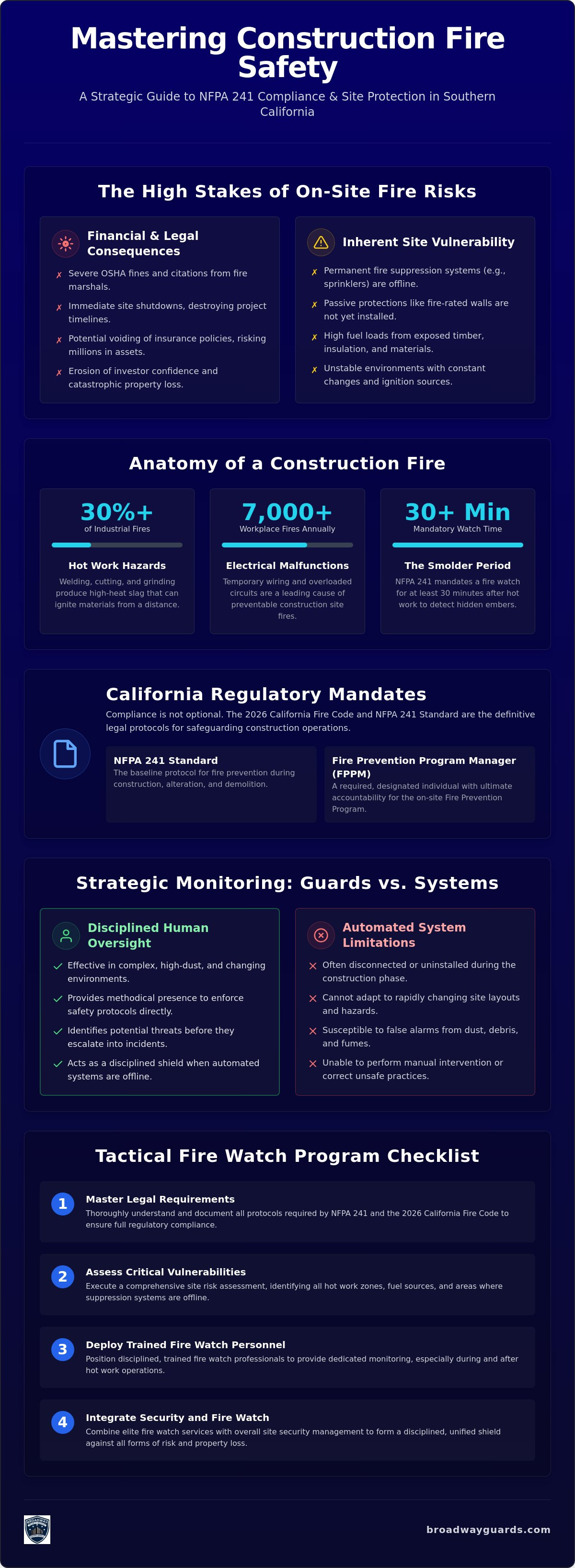
Fires during construction follow a predictable but lethal pattern. In 2026, the primary catalysts remain hot work operations, electrical malfunctions, and the improper storage of combustible materials. Consider these critical factors:

  • Hot Work Hazards: Activities like welding, cutting, and grinding account for over 30% of industrial fires. These tasks produce high-heat slag that can travel significant distances.
  • The Smolder Period: A spark can remain dormant in sawdust or insulation for hours. NFPA 241 mandates a fire watch for at least 30 minutes after work stops to mitigate this risk, though torch-applied roofing requires even more extended oversight.
  • Fuel Load: Exposed timber framing and foam insulation accelerate flame spread, often outpacing the response time of local fire departments.

Financial and Legal Consequences of Neglect

Financial neglect carries a heavy price tag. A single fire incident can trigger an immediate site shutdown, shattering project timelines and eroding investor confidence. In Southern California, local fire marshals exercise zero tolerance for safety lapses. Failing to maintain a documented fire watch can result in severe citations or the complete voiding of insurance policies. Professional construction fire monitoring ensures that your project remains compliant with the 2026 California Fire Code. Without a disciplined protector on-site, you’re essentially operating without a safety net, risking millions in uninsured assets and potential legal liability. It’s not just about safety; it’s about the survival of the project itself.

California Regulatory Standards: NFPA 241 and Local Compliance

Navigating the legal landscape of California construction requires a disciplined understanding of specific fire safety mandates. The 2026 California Fire Code, specifically Chapter 33, establishes the operational requirements for site safety and hazard mitigation. Central to these regulations is the NFPA 241 Standard, which serves as the definitive protocol for safeguarding construction, alteration, and demolition operations. Compliance with the 2022 edition of the NFPA 241 Standard is the baseline for legal site operation.

A critical 2026 requirement is the designation of a Fire Prevention Program Manager (FPPM). This individual holds ultimate accountability for the Fire Prevention Program (FPP), ensuring that every safety protocol is executed with precision. It’s essential to distinguish between general security and specialized fire watch. While security guards protect against unauthorized access, a fire watch professional focuses exclusively on fire hazards. The California Fire Code mandates a fire watch for new construction exceeding 40 feet in height or with an aggregate area over 50,000 square feet per story. Documentation is the cornerstone of regulatory rigor. For 2026, fire watch logs must provide a detailed account of patrols, hazard identifications, and remedial actions. These logs aren’t just paperwork; they’re legal evidence of your commitment to construction fire monitoring.

NFPA 241: The Tactical Standard

NFPA 241 outlines specific duties that go beyond simple observation. Monitors must identify ignition sources, ensure clear fire department access, and verify the presence of functional extinguishers. Effective construction fire monitoring relies on these tactical standards to prevent site shutdowns. If a permanent fire suppression system is impaired or offline, 24/7 monitoring becomes mandatory. This level of oversight ensures that your site remains a disciplined environment, even under high-risk conditions.

Local Fire Marshal Expectations in Los Angeles

In Los Angeles and areas like Canoga Park, fire marshal inspections are rigorous. These officials demand to see credentials that verify personnel are trained specifically in fire prevention and emergency response. Broadway Security provides the disciplined oversight needed to satisfy these local authorities. Utilizing professional Fire Watch Services ensures your project meets the highest standards of operational safety. For those seeking to deepen their understanding of these requirements, Professional Fire Watch Services California: The Definitive Compliance Guide for 2026 offers more detailed insights into maintaining legal site operation.

Strategic Monitoring: Professional Guards vs. Technological Systems

Building automation and AI surveillance are often marketed as total solutions for site safety. However, the chaotic environment of an active job site presents unique challenges that fixed sensors cannot overcome. Dust, debris, and shifting architectural footprints often blind automated systems. In these high-stakes environments, effective construction fire monitoring requires a more agile and disciplined approach. A sensor can alert a remote office to smoke, but it cannot physically maneuver through a cluttered structure to suppress a smoldering ember. The physical presence of a trained professional remains the most reliable method for neutralizing threats before they escalate.

Professional monitors provide the physical intervention necessary to bridge the gap between detection and mitigation. Fixed sensors are designed for static environments. Construction sites change daily. As perimeters shift and new levels are added, fixed sensors often lose their line of sight or become obstructed by materials. Human guards adapt instinctively to these changes. They maintain a constant, unyielding shield over the project’s assets by patrolling areas where technology fails. Technology should serve as a secondary support to human tactical oversight, acting as a force multiplier rather than a replacement for professional vigilance.

The Human Advantage in Crisis Management

The decision-making process during an active smolder incident is critical to site survival. When a guard identifies a hazard, they initiate a precise, pre-established protocol. This includes immediate containment efforts and direct communication with local emergency services. Unlike automated systems that often suffer from high false-alarm rates, human verification ensures that emergency resources are deployed only when a real threat exists. This level of oversight is a core component of a compliant OSHA Fire Protection Program. Professional monitors possess the situational awareness to distinguish between harmless construction dust and the early stages of a lethal electrical fire.

Integrated Protection Models

Maximum safety is achieved through the synergy of multiple security disciplines. Combining mobile patrols with fixed fire watch stations creates a comprehensive security grid. This integrated approach ensures that no corner of the site remains unobserved. There is also a natural link between fire prevention and asset protection. By utilizing specialized Construction Site Security Guards: Protecting Your Southern California Assets, developers can address both theft prevention and construction fire monitoring simultaneously. This methodical oversight transforms the site into a secure, orderly environment where risks are identified and neutralized before they can disrupt the project lifecycle.

Construction Fire Monitoring: The 2026 Strategic Guide to Site Safety and Compliance

Implementing a Fire Watch Program: A Tactical Checklist

Precision in planning prevents failure in execution. Establishing a professional construction fire monitoring program requires more than a casual walkthrough; it demands a structured command approach. Before the first guard arrives on-site, a project manager must define the operational parameters that will govern the safety of the asset. This methodical framework ensures that every vulnerability is identified and every response is rehearsed. A disciplined program acts as an unyielding shield, protecting the project from both physical fire damage and the legal fallout of non-compliance.

Legal defensibility relies on a consistent reporting cadence. Every patrol must be documented with military-like precision, noting the time of inspection, specific areas cleared, and any hazards neutralized. In the event of an inspection by a Southern California fire marshal, these logs serve as the primary evidence of your site’s safety integrity. Maintaining this level of oversight is not optional; it’s a fundamental requirement for projects operating under the 2026 California Fire Code.

Phase 1: Vulnerability Assessment

Initiating construction fire monitoring begins with a clinical analysis of the site’s topography. You must identify high-risk zones, including fuel storage areas, temporary electrical mains, and designated hot work stations. Each zone requires a specific mitigation strategy. To ensure no threat is overlooked, project leaders should consult a How to Conduct a Professional Security Risk Assessment in California: A Definitive Guide. This assessment dictates the number of personnel required. A large-scale project exceeding 50,000 square feet per story, as defined by California standards, will require multiple monitors to maintain a continuous, overlapping presence.

Phase 2: Operational Execution

Operational success depends on the rigid enforcement of patrol schedules. Guards must follow a route that covers every floor and eliminates “blind spots” created by stored materials or unfinished partitions. A key component of this phase is the Hot Work Permit system. No subcontractor should engage in welding or cutting without a formal permit that triggers an immediate 30-minute post-work fire watch. Every monitor must be equipped with the necessary tools for immediate intervention, including a portable fire extinguisher, a dedicated communication device, and a digital or physical Fire Watch Log. These logs must remain accessible for 24/7 inspection by site supervisors or regulatory authorities. For projects requiring an elite level of protection, deploying specialized Fire Watch Services ensures that these protocols are executed without deviation. This disciplined approach transforms a high-risk construction site into a controlled, professional environment.

Broadway Security: Disciplined Fire Watch for Southern California

Broadway Security Services stands as the unyielding force for developers across Southern California. We recognize that construction fire monitoring is not a secondary administrative task; it’s a vital tactical operation that protects your capital, your timeline, and your professional reputation. Our brand functions as a disciplined shield, ensuring that the rigorous standards of the 2026 California Fire Code are met with unwavering compliance. We serve as the decisive bridge between the complex mandates of the fire marshal and the concrete reality of a secure, productive job site.

Our commitment to the San Fernando Valley and the greater Los Angeles metropolitan area is rooted in a culture of high-stakes reliability. We don’t just provide personnel; we deploy trained specialists who understand the specific hazards of high-density urban construction. This methodical oversight transforms a vulnerable site into a controlled environment where risks are neutralized before they can escalate. By choosing a partner that prioritizes order and precision, you ensure that your project remains a zero-incident operation from groundbreaking to completion.

Our Commitment to Professionalism

Broadway’s operational standards are defined by military-like precision and total accountability. Every member of our fire watch team undergoes rigorous training in fire prevention, hazard identification, and emergency communication protocols. We maintain a constant, vigilant presence that goes beyond simple observation. Our reporting and oversight systems provide the documentation required for full legal defensibility, ensuring your project satisfies every regulatory audit.

We recognize that construction schedules are fluid and often demand immediate adjustments. We offer 24/7 availability for emergency fire watch staffing, providing the rapid response necessary to keep your site operational when permanent systems fail. This commitment to readiness ensures that your assets are never left unprotected. Our integration with local regulatory bodies allows us to anticipate shifting expectations, helping you maintain a project free from costly citations or fire marshal shutdowns.

Secure Your Site Today

Don’t leave the survival of your project to chance or inadequate automated systems. The 2026 regulatory environment demands a level of discipline that only a professional protector can provide. Secure your assets with the methodical oversight and unyielding vigilance of Broadway Security Services. We are prepared to conduct a comprehensive analysis of your site’s specific vulnerabilities and deploy the personnel required to maintain a secure perimeter.

Take the first step toward total operational peace of mind. Contact our team to request a project-specific risk assessment tailored to the unique demands of your Southern California development. Our experts will help you master the standards of construction fire monitoring and ensure your site remains a benchmark for safety and compliance. Request a Tactical Fire Watch Consultation to establish your disciplined shield today.

Securing the Future of Southern California Construction

Maintaining a compliant job site in 2026 requires an unwavering commitment to operational rigor. The transition from active construction to a finished, protected asset is a period of maximum vulnerability that demands a disciplined protector. You’ve learned that meeting NFPA 241 standards and implementing a tactical fire watch program are essential steps to avoid catastrophic property loss and legal liabilities. Professional construction fire monitoring serves as the definitive shield between your investment and the unpredictable nature of site hazards.

Broadway Security provides the order and precision necessary to navigate these high-stakes environments. As certified NFPA 241 compliance experts, our disciplined, highly trained security personnel ensure your project satisfies every fire marshal inspection. We offer 24/7 emergency deployment across Southern California to maintain site safety whenever permanent systems are offline. Our personnel are trained to uphold the highest standards of oversight, ensuring that your project remains a zero-incident operation. Secure Your Construction Site with Broadway Fire Watch. Protect your assets with a force that values duty and results above all else. Your project’s safety is our primary mission.

Frequently Asked Questions

When is fire watch legally required for a construction site in California?

Fire watch is mandatory under the California Fire Code when a building exceeds 40 feet in height or has an aggregate area of over 50,000 square feet per story. Additionally, any site with an impaired or disconnected fire suppression system must maintain a constant watch until the system is restored to full operational status. These requirements ensure a disciplined shield remains over the asset during its most vulnerable phases.

What are the specific duties of a fire watch guard under NFPA 241?

Monitors must patrol all areas of the site to identify potential ignition sources and ensure that fire department access remains unobstructed. They are responsible for verifying that fire extinguishers are in place and functional while maintaining a constant vigil during and after hot work operations. Their primary objective is to identify and neutralize hazards before they escalate into catastrophic incidents.

Can my existing security guards perform fire monitoring duties?

General security personnel may only perform construction fire monitoring if they are specifically trained and assigned solely to fire watch duties during their shift. The California Fire Code prohibits monitors from having other responsibilities that would distract them from their primary mission of fire prevention. Using dedicated personnel ensures that oversight remains methodical and focused on safety protocols.

How long must a fire watch continue after hot work has been completed?

A fire watch must remain in place for at least 30 minutes after hot work operations have ceased to mitigate the risk of smoldering fires. For specific high-risk tasks, such as torch-applied roofing, the monitoring period must be extended to ensure that dormant sparks don’t ignite combustible materials. This post-work observation period is a critical component of professional site oversight.

What equipment is required for a professional construction fire monitor?

Every monitor must be equipped with a portable fire extinguisher, a reliable communication device for emergency alerts, and a methodical Fire Watch Log. They should also carry a high-powered flashlight and wear appropriate personal protective equipment to ensure they can navigate all areas of the site safely. This gear allows the guard to function as an effective first line of defense.

What happens if a construction site is caught without a required fire watch?

Failure to provide a required fire watch can lead to immediate site shutdowns by the local fire marshal and substantial fines from regulatory bodies. Beyond these penalties, a lack of documented construction fire monitoring can void your insurance policy. This leaves millions of dollars in project assets completely unprotected and creates significant legal liability for the property owner.

How does Broadway Security ensure the reliability of its fire watch personnel?

Broadway Security maintains a disciplined shield through rigorous personnel training and a structured hierarchy of oversight. Our guards are held to military-like standards of reporting and performance to ensure that every patrol is executed with precision. We prioritize accountability and professional training to provide Southern California developers with total operational peace of mind.

Are fire watch logs required to be digital or physical for 2026 inspections?

Both digital and physical logs are legally acceptable, provided they are readily available for inspection by regulatory authorities at any time. Digital logs are increasingly preferred for 2026 inspections because they provide real-time verification of patrol routes and immediate reporting of hazards. This digital framework creates a more robust and defensible safety record for the project.