
Strategic Hospital Security Protocols: A Comprehensive 2026 Guide

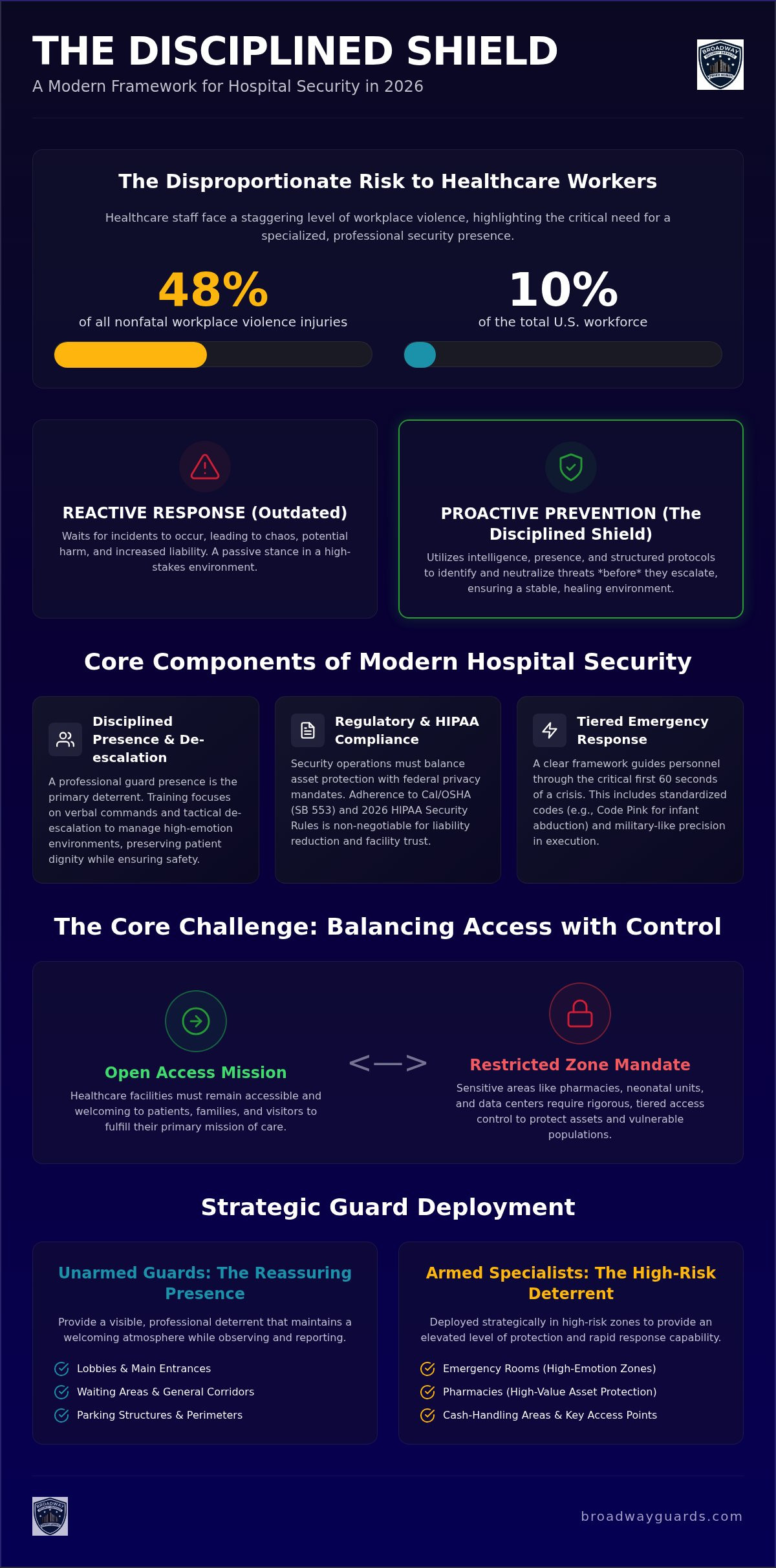
Healthcare workers experience 48% of all nonfatal workplace violence injuries in the United States, despite representing only 10% of the total workforce. This staggering statistic underscores a volatile reality that healthcare administrators can no longer ignore. Maintaining a healing environment requires more than just locks and cameras; it demands a sophisticated and disciplined approach to hospital security guard duties. A professional presence must serve as an unyielding shield, protecting staff and assets without compromising the patient-first compassion essential to clinical care.

You likely feel the persistent tension of keeping facilities accessible while securing restricted zones against rising threats. It’s a high-stakes environment where a single breach leads to significant liability or physical harm. This guide provides the strategic framework necessary to master the 2026 security landscape. We will examine the latest IAHSS weapons detection guidelines, the mandatory 2026 HIPAA Security Rule updates, and the tactical protocols required to reduce incidents. You’ll gain a clear roadmap for establishing an authoritative, professional security presence that ensures order and absolute peace of mind across your facility.

Key Takeaways

  • Understand how modern hospital security guard duties have evolved into a proactive, intelligence-led discipline that prioritizes prevention over reaction.
  • Learn to implement the “Disciplined Shield” approach, utilizing professional presence and tactical de-escalation to manage high-emotion environments safely.
  • Master the balance between rigorous asset protection and federal privacy mandates, ensuring all security operations remain fully HIPAA compliant.
  • Establish a tiered emergency response framework that guides personnel through the critical first 60 seconds of an active threat or crisis.
  • Discover how military-like precision and professional risk assessment create a reliable security foundation for Southern California healthcare facilities.

Hospital Security Protocols in 2026: The Strategic Landscape

Modern hospital security operates as a disciplined framework where human presence and technological oversight converge to form a “disciplined shield.” In 2026, the industry has shifted decisively from reactive responses to proactive, intelligence-led protocols. Hospital security is the integration of patient safety, staff protection, and asset management. Effectively executing hospital security guard duties now requires a balance between the facility’s open-access nature and the necessity for rigorous, tiered access control. This proactive stance ensures that vulnerabilities are identified before they escalate into active threats. A disciplined presence doesn’t just respond to chaos; it prevents it through methodical observation and structured intervention.

The complexity of a hospital’s “open door” policy creates a significant strategic challenge. While healthcare missions require accessibility for patients and families, security mandates require restricted zones to protect sensitive areas like pharmacies and neonatal units. Managing this friction requires a sophisticated understanding of flow control and behavioral detection. Security is no longer a passive role. It’s an active, vigilant force that maintains the perimeter while facilitating the clinical mission of the institution.

The Evolving Threat Profile for Healthcare Facilities

Healthcare facilities in the San Fernando Valley face unique pressures due to high urban density and regional socio-economic shifts. Perimeter security and parking structure oversight are critical, as these areas often serve as the first point of contact for potential intruders or escalating conflicts. Beyond physical violence, security forces must address specialized risks such as high-value pharmaceutical theft and high-stakes infant protection protocols. Standardized Hospital Emergency Codes, such as “Code Pink,” provide the operational language needed for rapid response, but the effectiveness of these codes relies entirely on the discipline of the personnel on the ground. Vigilance in these high-stakes zones is non-negotiable for maintaining facility order and protecting the most vulnerable populations.

California Regulatory Standards for Hospital Safety

Compliance is a cornerstone of professional reliability and facility trust. In California, the legal landscape for healthcare safety is governed by strict Cal/OSHA standards, specifically SB 553 and its 2026 updates regarding workplace violence prevention. These regulations mandate that all security personnel undergo rigorous training and certification tailored specifically to the healthcare environment. Accountability is enforced through mandatory reporting systems that track every incident with military-like precision. These reports aren’t just administrative tasks; they’re essential for maintaining facility accreditation and reducing long-term liability. By adhering to these legal frameworks, hospital security guard duties are grounded in regulatory reality, ensuring that every action taken by a guard is both lawful and tactically sound.

The Human Element: Disciplined Presence and De-escalation

While high-tech sensors provide valuable data, they lack the capacity to intervene in a human crisis. A professional security presence serves as a primary deterrent, projecting an atmosphere of order that technology alone cannot replicate. This is the foundation of hospital security guard duties. A disciplined guard doesn’t just watch; they observe, assess, and act as a “disciplined shield” for patients and staff alike. By integrating into the hospital’s culture of care, security personnel maintain safety while preserving the trust essential to a healing environment.

Tactical de-escalation is a critical requirement in clinical settings. Training focuses on managing high-emotion environments, such as Emergency Rooms, where stress levels are at their peak. Guards are taught to neutralize aggression through verbal command and presence before physical intervention becomes necessary. This professional restraint ensures that safety doesn’t come at the cost of patient dignity. It creates an environment where patients feel protected rather than policed.

The choice between armed and unarmed personnel depends on the specific risk profile of the zone. Unarmed guards provide a reassuring presence in general areas, while armed specialists secure high-risk points. This strategic deployment ensures that the level of force is always appropriate for the clinical setting, maintaining a balance between rigorous asset protection and a welcoming atmosphere for care.

Specialized Training for Healthcare Security Personnel

Crisis Intervention Training (CIT) is mandatory for personnel stationed in high-risk areas like psychiatric wards. These specialists understand how to uphold the HIPAA Security Rule by protecting physical access to sensitive areas without infringing on patient rights. For facilities requiring a more robust deterrent, armed security guard services Los Angeles provide the necessary tactical oversight for high-risk zones. This specialized training ensures that guards remain unyielding at the perimeter while remaining respectful within the clinical space.

The Role of Mobile Patrols in Perimeter Defense

Perimeter defense extends beyond the lobby. Parking structures and remote entrances in the San Fernando Valley are often targets for vandalism or vehicle theft. Mobile patrols provide consistent, disciplined visibility across these expansive areas. Effective hospital security guard duties include coordinating with local law enforcement for rapid escalation when an incident exceeds on-site capacity. This structured approach to perimeter safety ensures that the entire facility remains a secure zone. For those seeking to harden their facility’s defenses, a professional risk assessment is the first step toward a comprehensive security plan.

HIPAA Compliance and Privacy in Security Operations

Security in a clinical environment requires a dual mandate: protecting physical assets and safeguarding patient privacy. Under the HIPAA Security Rule, every aspect of hospital security guard duties must align with federal confidentiality standards. This isn’t a suggestion; it’s a legal requirement that demands absolute discipline. A professional protector understands that their presence should never compromise a patient’s right to privacy. By adhering to the “Need to Know” principle, guards ensure they only access information essential to their immediate safety mission, maintaining a stoic and professional boundary at all times.

The management of surveillance technology requires specific operational rigor. Body-worn cameras and fixed CCTV systems must be positioned and utilized to avoid capturing sensitive clinical interactions or patient records. Footage is treated as protected data, requiring strict chain-of-custody protocols to prevent unauthorized disclosure. Whether deploying armed personnel or unarmed security guards, every member of the force must be trained to recognize the boundary between vigilance and intrusion. This creates an atmosphere of high-stakes reliability where patients feel secure without feeling exposed.

Physical Security vs. Data Privacy

Strategic facility layout is the first line of defense in maintaining privacy. Security checkpoints should be established at a distance from sensitive consultation areas to prevent the accidental overhearing of Protected Health Information (PHI). Following the IAHSS Security Design Guidelines ensures that physical barriers and access control systems enhance safety without creating privacy bottlenecks. Visitor logs and digital access records are managed under strict HIPAA guidelines, ensuring that entry data is archived securely and accessed only for authorized investigations. During patient transfers, security protocols focus on clearing paths and securing perimeters without exposing the patient to unnecessary public view.

Incident Reporting and Legal Documentation

A disciplined shield is built on a foundation of precise documentation. Authoritative incident reports must be drafted with objective, fact-based language that can withstand legal scrutiny. In the context of hospital security guard duties, a report is a legal record, not a narrative of opinion. Every entry in the security log must be methodical, detailing the “who, what, where, and when” with military-like precision. This level of oversight is vital when coordinating with hospital legal teams during post-incident investigations. Reliable reporting reduces liability and ensures that the facility remains in full compliance with both state and federal regulations.
Strategic Hospital Security Protocols: A Comprehensive 2026 Guide

Emergency Response Frameworks: A Step-by-Step Guide

A disciplined response is never accidental; it’s the result of a rigorous, tiered framework. Effective hospital security guard duties require personnel to navigate a spectrum of intervention, moving from verbal commands to physical restraint with absolute precision. This tiered approach ensures that force is only used when necessary, protecting the facility’s liability while maintaining safety. The initial phase focuses on detection and communication, ensuring that the entire security force is alerted instantly through coordinated mass notification systems. This synergy between technology and human presence forms an unyielding barrier against chaos.

The Critical 60 Seconds define the outcome of any active threat. During this window, security personnel must execute immediate actions: securing perimeters, initiating lockdowns, and establishing a clear line of communication with local law enforcement. There is no room for hesitation. Achieving this level of readiness starts with a comprehensive security risk assessment CA to identify and close response gaps before an actual emergency occurs.

Standardized Hospital Emergency Codes

Standardization is the language of order. When a Code Silver is called, indicating an active shooter, guards transition to tactical movement and lockdown procedures, acting as a liaison for arriving police units. In a Code Blue medical emergency, the guard’s role is to clear hallways and secure the immediate area so clinical teams can work without interference. Code Gray protocols manage combative individuals, where hospital security guard duties shift toward professional restraint and de-escalation. These codes ensure every staff member knows exactly what to expect from the security force during high-stakes events.

The Audit Process: Testing Your Protocols

Protocols are only as effective as the personnel who execute them. Regular tabletop exercises and live-action drills are mandatory for maintaining operational readiness. These simulations allow administrators to analyze response times and identify communication breakdowns under pressure. As we move through 2026, these audits must incorporate the latest security trends, including advanced weapons detection systems and updated Cal/OSHA standards. Constant refinement ensures that your facility’s shield remains unyielding. To implement these rigorous standards at your facility, consult with the experts at Broadway Security Services for a professional evaluation.

Implementing a Disciplined Shield with Broadway Security

Broadway Security Services stands as the disciplined shield for healthcare institutions across Canoga Park and the San Fernando Valley. Hospitals in Southern California face rising threats that demand more than just a presence; they require a partner committed to military-like precision. By choosing Broadway Security Services, administrators ensure that hospital security guard duties are executed with unyielding reliability. We don’t just provide personnel; we provide a structured defensive layer that integrates seamlessly with your clinical mission. This transition from vulnerability to vigilance begins with a commitment to order and methodical oversight.

Every security contract we design is customized to the specific needs of your healthcare facility or clinic. Vigilance replaces vulnerability when protocols are rooted in professional discipline and constant oversight. Our approach ensures that every guard understands the hierarchy of response and the gravity of their role in protecting lives and assets. We prioritize safety, trust, and peace of mind by maintaining a stoic, professional image that deters threats through presence alone. It’s a high-stakes environment where reliability isn’t optional; it’s the standard.

Our Professional Consultation and Risk Assessment

Identifying hidden vulnerabilities requires a methodical and observant eye. Our professional consultation process scrutinizes your facility’s current posture to find gaps in access control, perimeter defense, and data privacy. We develop site-specific protocols that align with your medical mission and community values. This roadmap for security enhancement provides a strategic plan for personnel deployment, ensuring that your assets are under the care of a vigilant force. We analyze every entry point and sensitive zone to ensure your “Disciplined Shield” is comprehensive and without compromise. This organized approach ensures that your facility is prepared for any contingency.

The Standard of Excellence in Guard Staffing

We maintain a standard of excellence through continuous training and rigorous accountability. Every guard deployed is subject to consistent oversight to ensure they remain a professional, reassuring presence for patients and staff. We emphasize the “Disciplined Shield” philosophy, where every action is result-oriented and every report is fact-based. This commitment to duty is what makes us a trusted partner in Southern California. Our field performance reporting ensures that hospital security guard duties are tracked and verified with military-like precision. Contact Broadway Security Services for a professional hospital risk assessment to begin hardening your facility’s defenses today.

Securing the Future of Healthcare with Vigilant Oversight

Mastering the complex landscape of healthcare safety requires a commitment to order and methodical oversight. By integrating disciplined human presence with rigorous emergency frameworks, facilities can effectively balance patient care with asset protection. Executing hospital security guard duties with military-like precision ensures that every threat is met with an unyielding response; this approach maintains the trust essential to a healing environment.

Broadway Security Services provides the regional expertise and professional discipline necessary to harden your facility against rising threats in Canoga Park and throughout Southern California. Our approach is rooted in comprehensive risk assessment and expert crisis management. Don’t leave your facility’s safety to chance. It’s time to move from vulnerability to a state of constant vigilance. Your staff and patients deserve the peace of mind that comes from a reliable, unyielding protector.

Secure Your Facility with Broadway’s Disciplined Shield

Frequently Asked Questions

What are the most critical security protocols for California hospitals in 2026?

Compliance with Cal/OSHA SB 553 and the updated 2026 HIPAA Security Rule represents the highest priority. Protocols must include mandatory weapons detection systems at high-traffic entrances and universal encryption for all mobile data. A disciplined approach to risk assessment is required to identify perimeter vulnerabilities. These standards ensure that security forces act as a proactive shield rather than a reactive service in high-stakes environments.

How does a hospital balance security with HIPAA privacy requirements?

Balancing these needs requires a strict “Need to Know” policy for all personnel. Guards are trained to secure physical areas without accessing patient health information. Surveillance cameras and security checkpoints are strategically placed to avoid capturing sensitive clinical discussions. This methodical separation ensures that hospital security guard duties are performed without compromising federal confidentiality mandates or the trust essential to a healing environment.

Should hospital security guards be armed or unarmed?

The decision depends on a facility’s specific risk profile and the zone being protected. Unarmed guards are ideal for general patient areas to maintain a reassuring presence. Armed guards are deployed in high-risk zones, such as emergency departments or pharmacies, where the threat of violence or theft is elevated. A professional risk assessment determines the appropriate level of force required for each post.

What is the role of security during a Code Silver emergency?

During a Code Silver, security personnel initiate immediate lockdown procedures and secure all perimeters to contain the threat. They act as the primary tactical liaison for law enforcement, providing real-time intelligence and facility access. Guards must execute these actions with military-like precision within the critical first 60 seconds. This disciplined response is vital for minimizing harm and restoring order during an active shooter event.

How often should hospital security protocols be audited and updated?

Protocols should undergo a comprehensive audit at least annually, with tabletop exercises conducted quarterly. These reviews ensure compliance with evolving Cal/OSHA standards and the latest 2026 security technologies. Regular testing identifies communication gaps and response delays before a real crisis occurs. Continuous refinement is the only way to maintain an unyielding shield in a volatile healthcare environment where risks shift rapidly.

Can security guards assist in de-escalating psychiatric patients?

Yes, provided they’ve received specialized Crisis Intervention Training (CIT). Guards assist clinical staff by providing a calm, authoritative presence that deters aggression without escalating the situation. Their role is to maintain a safe perimeter while clinical teams provide care. Professional restraint ensures that patient rights are respected even when physical intervention becomes a tactical necessity for the safety of everyone in the ward.

What training is required for security personnel working in healthcare environments?

Personnel must complete specialized training that covers hospital security guard duties, including HIPAA compliance, de-escalation, and California regulatory standards. Training for 2026 includes mastery of advanced weapons detection systems and infant protection protocols. This rigorous education builds a foundation of trust and expertise. It ensures that every guard is prepared for the unique challenges of a clinical setting with absolute reliability.

How does Broadway Security ensure guard accountability in hospital settings?

Accountability is maintained through a structured hierarchy and methodical field performance reporting. We utilize digital tracking and real-time oversight to ensure every guard adheres to site-specific protocols with military precision. Regular field inspections and performance audits reinforce our commitment to duty. This disciplined approach provides clients with absolute peace of mind, knowing their assets are under the care of a vigilant and unyielding force.
Healthcare Facility Security Services Los Angeles: A Disciplined Shield for 2026

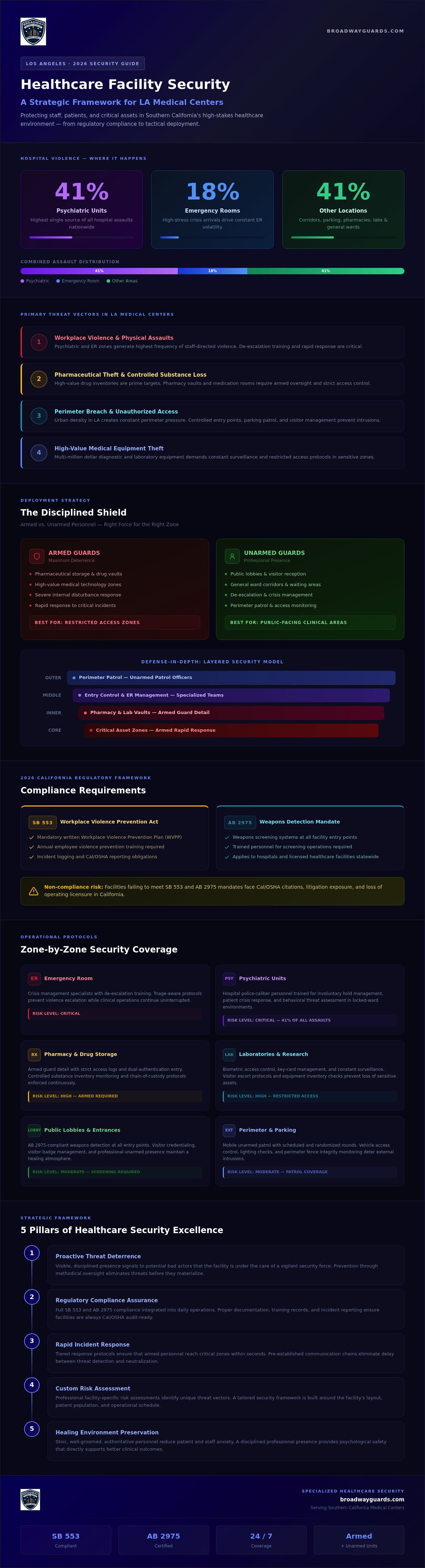
Did you know that 41% of all hospital assaults take place within psychiatric units, while another 18% occur in emergency rooms? In the high-stakes environment of Southern California medicine, maintaining order is a matter of professional survival. Securing a medical center requires more than just a presence; it demands the specialized healthcare facility security services Los Angeles administrators trust to act as a disciplined shield. You face the constant pressure of rising workplace violence and the theft of high-value pharmaceuticals, all while trying to maintain a healing environment.

It’s clear that your priority is the safety of your staff and the integrity of your clinical operations. We’ll show you how to implement an unyielding security framework that ensures full compliance with SB 553 and the latest AB 2975 weapons detection mandates. This article explores the intersection of rigorous operational standards and regulatory excellence. We’ll provide a roadmap for rapid response and proactive threat deterrence in 2026, ensuring your facility remains a secure perimeter for patients and professionals alike.

Key Takeaways

  • Understand the critical requirements of the 2026 California Workplace Violence Prevention Act (SB 553) to ensure your facility meets all state safety mandates.
  • Determine the tactical balance between armed and unarmed guards to provide maximum protection while maintaining a professional clinical environment.
  • Secure sensitive areas such as pharmacies and laboratories with specialized protocols designed to prevent the loss of controlled substances and equipment.
  • Learn why selecting specialized healthcare facility security services Los Angeles administrators prefer leads to better risk mitigation and rapid incident response.
  • Utilize professional risk assessments to create a custom security framework that acts as a vigilant and unyielding force for your medical center.

The High-Stakes Security Landscape of Los Angeles Healthcare

The healthcare environment in 2026 requires a level of oversight that goes beyond traditional patrolling. Los Angeles medical centers operate at the intersection of extreme urban density and critical public health needs. This combination creates a unique threat profile where physical security must be as precise as a surgical procedure. Standard security models often fail in this sector because they lack the specialized training required to manage the volatility of a modern medical facility. High-stakes reliability is the only acceptable standard when protecting patients, staff, and multi-million dollar medical assets. Reliability is non-negotiable.

Effective healthcare facility security services Los Angeles providers understand that visible deterrence is the first line of defense. A disciplined presence signals that the facility is under the care of an unyielding force. This presence doesn’t just prevent unauthorized access; it establishes an atmosphere of order. In an environment where every second counts, a structured security framework ensures that clinical staff can focus on saving lives without the distraction of external or internal threats. Order is the foundation of safety.

Urban Challenges: From ER Volatility to Perimeter Integrity

Los Angeles’ urban landscape presents constant challenges to perimeter integrity. Emergency departments often serve as the primary point of contact for individuals in high-stress or crisis situations. Research indicates that 18% of all hospital assaults occur in the emergency room, while a staggering 41% take place in psychiatric units. Managing these areas requires more than muscle. It requires guards who function with the precision of Hospital Police, trained specifically in de-escalation and crisis management. Specialized healthcare facility security services Los Angeles teams are prepared for these specific pressures, ensuring that ER volatility doesn’t compromise the safety of the entire building. We focus on prevention through methodical oversight.

The Emotional Weight of Healthcare Security

The Disciplined Shield: Armed vs. Unarmed Deployment

Deploying a security force in a Los Angeles medical facility isn’t a one-size-fits-all operation. It requires a nuanced understanding of risk levels throughout the property. A disciplined shield relies on a defense-in-depth strategy, where different tiers of security work in concert to maintain order. Integrating the healthcare facility security services Los Angeles administrators trust involves a precise mix of armed and unarmed personnel. Each role is defined by specific protocols and strict accountability. This creates a layered perimeter that is both observant and prepared.

The strategic deployment of these forces ensures that every area of the hospital receives the appropriate level of oversight. High-traffic public areas require a different approach than restricted laboratories or pharmaceutical vaults. By balancing these resources, a facility can maintain a professional clinical atmosphere without sacrificing the unyielding protection necessary in an urban environment. This methodical oversight is the hallmark of a high-stakes reliability model.

Armed Personnel for Critical Asset Protection

High-risk zones require a higher level of visible deterrence. Armed security guards are essential for protecting pharmaceutical storage areas where controlled substances are housed. These professionals provide an unyielding presence that deters theft and prevents unauthorized access to high-value medical technology. In the event of severe internal disturbances, armed personnel offer a rapid response capability that unarmed staff cannot provide. Their presence is a psychological anchor, signaling that the facility is under the care of a vigilant force. This level of protection is a tactical necessity in urban environments where external threats are a constant variable.

Unarmed Guards as the Face of Facility Safety

Unarmed security guards serve as the first point of contact for patients and visitors. Their role is primarily focused on access control, visitor screening, and maintaining the flow of the facility. While they lack a sidearm, their training in de-escalation techniques is a powerful tool for managing low-level conflicts. They represent the professional image of the medical center, ensuring that the clinical atmosphere remains welcoming while still being strictly monitored. These guards work seamlessly with medical staff to enforce California hospital security mandates regarding visitor management and internal safety protocols.

Professional oversight ensures that every guard, whether armed or unarmed, exceeds the basic BSIS Guard Card requirements for 2026. Training includes crisis management and facility-specific risk mitigation. If you’re evaluating your current defensive posture, a professional risk assessment from a disciplined provider can identify vulnerabilities before they are exploited. This methodical approach ensures that your assets remain secure under a comprehensive and organized protective framework.

Regulatory Compliance and Risk Mitigation in California

Compliance isn’t a suggestion; it’s a legal fortress. California’s regulatory environment is the most stringent in the nation, and 2026 has introduced even more rigorous oversight. Healthcare administrators must navigate a complex web of mandates that dictate how physical security is managed. Failure to adhere to these standards results in more than just fines; it creates massive legal liability and erodes trust. Professional healthcare facility security services Los Angeles providers bridge the gap between operational safety and legal necessity. We ensure that every protocol is grounded in regulatory reality.

The stakes are undeniably high for medical staff. Data from the U.S. Bureau of Labor Statistics shows that healthcare workers are five times more likely to suffer a workplace violence injury than employees in other sectors. This statistic underscores why California has moved toward aggressive legislative oversight. Beyond physical violence, facilities must also maintain HIPAA physical security standards to protect patient data and adhere to HCAI (formerly OSHPD) requirements for facility safety. A disciplined shield provides the methodical oversight required to meet these overlapping demands.

SB 553 Compliance: A Mandate for Healthcare

The California Workplace Violence Prevention Act (SB 553) requires every medical facility to maintain a comprehensive, written prevention plan. This isn’t a static document. It involves active incident reporting, detailed violent incident logs, and annual training for all personnel. SB 553 compliance for Los Angeles hospitals means integrating a disciplined security presence that can document, report, and deter threats in real-time. Our personnel are trained to handle the specific reporting requirements that keep your facility in good standing with state regulators. We prioritize accountability in every report.

Risk Assessment: The Foundation of Strategic Safety

You can’t protect what you haven’t analyzed. A professional security risk assessment CA is the first step in building a disciplined shield. Many Los Angeles facilities operate in older buildings with architectural vulnerabilities that were never designed for 2026 threat levels. We identify these weak points, from blind spots in parking structures to unmonitored exit points in pharmacy wings. Identifying these risks allows for the deployment of healthcare facility security services Los Angeles teams exactly where they are most effective. This methodical approach ensures that your security budget is spent on high-impact deterrence rather than general presence. We value rules, protocols, and visible results above all else.

Healthcare Facility Security Services Los Angeles: A Disciplined Shield for 2026

Operational Protocols: From ER Triage to Perimeter Patrol

Operational success in a medical environment depends on zonal control and methodical oversight. A hospital isn’t a single block; it’s a collection of high-sensitivity micro-environments that each require distinct protocols. Generic security often treats a facility as a flat space, but a disciplined shield recognizes the difference between a public waiting area and a restricted laboratory. Effective healthcare facility security services Los Angeles administrators implement must be adaptable yet rigid in their execution. We prioritize a structured approach that ensures every square foot of your campus is under the care of a vigilant force.

Maintaining internal order requires a constant, observant presence in the corridors and restricted wings. This isn’t just about checking doors. It involves monitoring for unauthorized personnel in sensitive areas and ensuring that high-value medical technology remains undisturbed. Our personnel follow strict reporting hierarchies, providing a clear chain of command during any disturbance. This level of professional discipline ensures that the clinical environment remains focused on patient care rather than security lapses.

Emergency Room and Triage Management

The Emergency Department is often the most volatile zone in any urban medical center. Rapid response protocols are essential for managing aggressive behavior before it escalates into a physical assault. Security personnel in these areas must work in close collaboration with clinical staff, especially during high-stress psychiatric holds. We manage high-volume visitor traffic by enforcing strict access control at triage entry points. This prevents overcrowding and reduces the potential for conflict among patient families. Our guards are trained to remain stoic and prepared, providing a reassuring anchor in an otherwise chaotic environment.

Perimeter and Parking Security

Safety shouldn’t end at the hospital doors. Large campuses require robust mobile patrol services to maintain perimeter integrity and deter vandalism in parking structures. These areas are frequent targets for theft, particularly during late-night shifts. We provide evening escort services for healthcare providers, ensuring that nurses and doctors can reach their vehicles without concern for their personal safety. A visible, patrolling presence in these lots acts as a powerful deterrent against criminal activity.

Securing a complex medical facility requires a partner who understands the intersection of clinical compassion and operational rigor. If your current security posture lacks this level of detail, it’s time to contact Broadway Security for a professional consultation. We provide the disciplined oversight necessary to protect your staff, your patients, and your assets from every angle.

Pharmacy and Lab Security

Protecting controlled substances and proprietary research is a matter of both safety and regulatory compliance. Pharmacies and laboratories are the most vulnerable points for internal and external theft. Our protocols for these zones involve restricted access management and constant surveillance. By maintaining an unyielding presence near these critical assets, we mitigate the risk of pharmaceutical diversion and equipment loss. This methodical oversight is essential for facilities that must adhere to strict state and federal safety mandates regarding the storage of hazardous or controlled materials.

Broadway Security: Your Strategic Partner in Healthcare Protection

Choosing a security provider is a decision that impacts the fundamental safety of your clinical environment. Broadway Security Services operates as a disciplined shield, bringing military-like precision to the complex world of medical guarding. Based in Canoga Park, we serve the San Fernando Valley and the greater Southern California region with a focus on high-stakes reliability. Our healthcare facility security services Los Angeles are built on a foundation of professional discipline and strict adherence to California’s evolving regulatory standards. We don’t offer generic guarding; we provide a structured defensive framework tailored to your specific vulnerabilities.

Reliability is the anchor of our operations. Every facility has a unique architectural and operational profile that requires a customized approach. We develop security contracts that address the specific risks of your site, ensuring that assets are under the care of an unyielding force. Professionalism is non-negotiable in a medical setting where the psychological impact of security is just as important as the physical protection provided. Our personnel are trained to be observant, prepared, and strictly professional at all times. Order is the standard we maintain.

A Disciplined Approach to Staffing

The strength of a security force lies in its personnel. We utilize a rigorous vetting process and specialized training modules designed for the high-pressure medical sector. Accountability is maintained through consistent field performance reporting and methodical oversight from our Canoga Park headquarters. This ensures that every guard understands the hierarchy and protocols required for effective protection. We provide unarmed security guards with a focus on presence and professional de-escalation, ensuring your facility remains a place of healing while being strictly monitored.

Securing Your Facility Today

Transitioning to a high-standard security model in 2026 requires a partner who understands the intersection of legal compliance and operational rigor. The process begins with a professional risk assessment to identify gaps in your current defensive posture. We evaluate everything from entry point vulnerabilities to pharmaceutical storage protocols. Once identified, these risks are mitigated through a custom-tailored deployment strategy that emphasizes presence and prevention. We value rules, protocols, and visible results above all else.

Order and safety are the results of a methodical approach to oversight. Secure your facility with Broadway Security Services and ensure your medical center is protected by a vigilant and unyielding force. We are ready to serve as your strategic partner in healthcare protection.

Establishing a Standard of Unyielding Reliability

The security landscape for 2026 demands a shift from reactive guarding to a proactive, disciplined shield. Securing a medical center requires more than a simple presence; it necessitates a deep integration of regulatory compliance and tactical precision. By balancing armed asset protection with professional visitor management, you create an environment where clinical excellence can thrive without the threat of internal or external disruption. Utilizing the healthcare facility security services Los Angeles trusts ensures that your facility remains a secure perimeter against rising urban volatility.

Operational safety is achieved through methodical oversight and a commitment to rigorous standards. Our California-certified security professionals bring specialized healthcare crisis management expertise to every post, backed by responsive local management based in Canoga Park. The safety of your patients, staff, and assets is a responsibility that requires absolute gravity and professional focus. You don’t have to navigate these complex safety mandates alone.

Request a Professional Healthcare Security Consultation to begin your transition to a high-standard security model. Protecting the future of healthcare starts with a commitment to order and vigilance today.

Frequently Asked Questions

What are the main security risks for healthcare facilities in Los Angeles?

The primary risks include rising workplace violence, unauthorized access to restricted wings, and the targeted theft of high-value pharmaceuticals or medical equipment. Los Angeles facilities face unique pressures due to urban density and the 24/7 nature of medical operations. These challenges require specialized healthcare facility security services Los Angeles administrators use to maintain a secure perimeter. A vigilant force is necessary to deter external threats while managing internal disturbances.

How does California SB 553 affect hospital security protocols?

California SB 553 mandates that healthcare facilities implement a formal, written workplace violence prevention plan. This includes maintaining a detailed violent incident log and providing annual safety training to all employees. Security protocols must now be strictly aligned with these reporting requirements to ensure full legal compliance. Our personnel are trained to facilitate this documentation, ensuring every incident is recorded with military-like precision and accountability.

Should my medical clinic hire armed or unarmed security guards?

The decision depends on a tactical assessment of your facility’s specific risk zones. Armed guards are typically deployed in high-risk areas like pharmacies or emergency departments to provide an unyielding deterrent. Unarmed guards are better suited for main entrances and visitor management where a professional, reassuring presence is the priority. A multi-layered defense strategy often utilizes a combination of both to ensure comprehensive protection across the entire campus.

What training do security guards receive for healthcare environments?

Guards in medical settings receive specialized instruction that exceeds standard state requirements. This includes training in crisis management, HIPAA physical security protocols, and specific de-escalation techniques for high-stress environments. We prioritize professional discipline and oversight to ensure our personnel can integrate seamlessly with clinical teams. This specialized training ensures that guards are prepared for the unique psychological and physical demands of a healthcare setting.

How can security services help with HIPAA compliance?

Security services support HIPAA compliance by enforcing strict access control to areas where patient data is stored or processed. This includes monitoring data centers, medical records rooms, and laboratory wings to prevent unauthorized entry. By maintaining a disciplined shield around these sensitive zones, security personnel ensure that physical access remains limited to authorized staff only. This physical oversight is a critical component of a comprehensive data protection strategy.

Can security guards assist in de-escalating aggressive patients?

Professional security guards are trained in verbal de-escalation to manage aggressive behavior without immediate physical intervention. This skill is vital during psychiatric holds or emergency room disturbances where patient and staff safety is at risk. A stoic, authoritative presence can often stabilize a situation before it escalates. Our personnel work under strict protocols to support clinical staff, ensuring that disturbances are handled with minimal disruption to medical care.

What is the role of mobile patrols in a hospital setting?

Mobile patrols provide a visible deterrent across large hospital campuses and parking structures. These units maintain perimeter integrity by conducting regular, methodical rounds of the property to detect and prevent vandalism or theft. They also provide essential safety escorts for healthcare providers during late-night shift changes. This mobile presence ensures that the disciplined shield extends beyond the building’s interior to protect the entire facility footprint.

How do I request a security risk assessment for my LA facility?

You can initiate a professional security risk assessment by contacting Broadway Security Services directly for a consultation. This process involves a methodical evaluation of your facility’s current vulnerabilities, architectural blind spots, and entry point protocols. We provide a detailed analysis that serves as the foundation for a custom security framework. This assessment ensures that your healthcare facility security services Los Angeles deployment is strategic, efficient, and fully aligned with 2026 California safety mandates.

Hospital Security Services Northridge: Specialized Protection for Medical Facilities

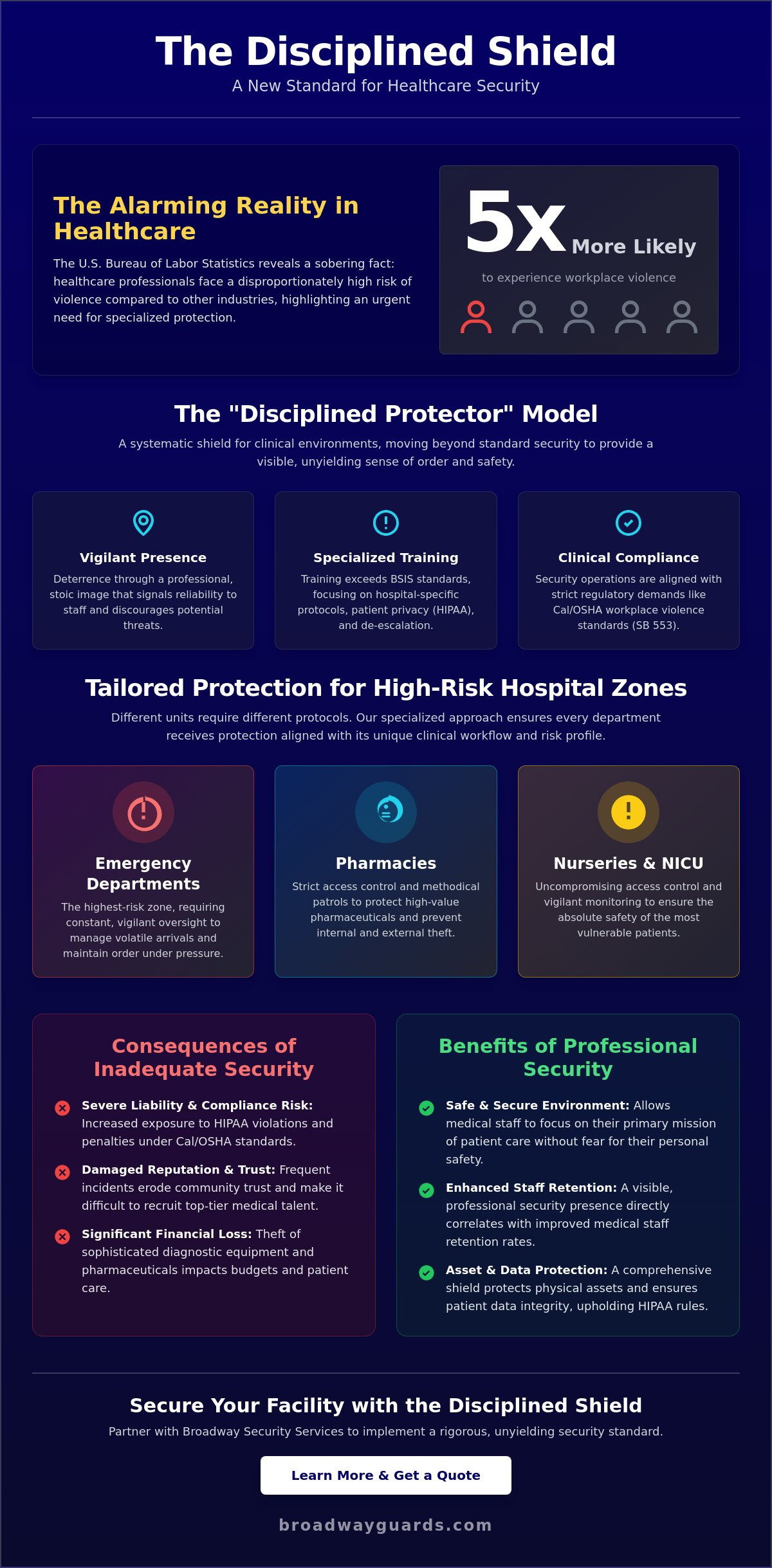
Healthcare workers are five times more likely to experience workplace violence than professionals in other industries. This sobering statistic from the U.S. Bureau of Labor Statistics highlights the urgent need for a disciplined shield within our medical community. When you secure hospital security services Northridge, you aren’t just hiring guards; you’re implementing a rigorous operational standard designed to neutralize threats before they reach the triage desk. High-stakes environments like emergency departments require a vigilant, unyielding force that prioritizes the safety of those who save lives.

Broadway Security Services recognizes that your primary mission is patient care, yet the rising tide of ER violence and medical equipment theft makes it difficult for staff to focus on healing. You need a security partner that understands the gravity of California’s latest safety mandates and the necessity of strict clinical compliance. This guide explores how specialized healthcare security provides the unyielding oversight required to maintain a safe, compliant facility. We will preview how a structured approach to protection creates a secure environment where medical professionals can work without fear while assets remain fully protected under a professional shield.

Key Takeaways

  • Identify the specific security risks unique to the San Fernando Valley healthcare corridor and why clinical environments require more than standard commercial guard services.
  • Explore the “Disciplined Protector” model for hospital security services Northridge, which utilizes rigorous training to ensure a vigilant and unyielding presence.
  • Examine specialized protocols for high-risk hospital zones, ensuring that departments like pharmacies and nurseries receive tailored protection that aligns with clinical workflows.
  • Gain insights into maintaining strict regulatory compliance by aligning your physical security operations with HIPAA privacy rules and Cal/OSHA workplace violence standards.
  • Understand how the integration of physical oversight and site-specific technology creates a comprehensive shield that prioritizes the safety of patients, staff, and medical assets.

The Critical Need for Specialized Hospital Security Services in Northridge

The San Fernando Valley healthcare corridor represents a critical infrastructure hub where the stakes for safety are exceptionally high. In Northridge, medical facilities face a unique convergence of high patient volume and urban accessibility. Standard commercial security models, often designed for retail or office environments, consistently fail in these 24/7 clinical settings. Hospital security requires a specialized understanding of patient flow, emergency room volatility, and the delicate balance between open access and rigorous containment. A disciplined presence isn’t just a preference; it’s a requirement for operational stability.

A visible, professional presence directly correlates with medical staff retention. When nurses and physicians operate under the protection of a vigilant shield, they can focus on life-saving procedures without the constant threat of workplace violence. National statistics indicate that healthcare workers are five times more likely to experience violence than other professionals. Professional hospital security services Northridge provide the necessary deterrence to reverse these trends. By establishing a culture of order, facilities signal to their employees that their physical safety is a non-negotiable priority.

Protecting the Northridge Medical Community

Security protocols must adapt to the specific geography of each medical unit. The Emergency Room remains the highest-risk zone, requiring constant oversight to manage volatile arrivals. Conversely, pharmacies and neonatal units demand strict access control to protect high-value assets and vulnerable patients. In many jurisdictions, these roles are so specialized they are handled by Hospital Police or dedicated healthcare security units trained in clinical de-escalation. Northridge facilities face additional challenges due to their proximity to major transit arteries, which increases the likelihood of unauthorized traffic entering restricted zones.

The Consequences of Inadequate Healthcare Security

The failure to implement professional hospital security services Northridge results in severe liability. Unauthorized access to restricted areas can lead to HIPAA violations if patient records are compromised. Beyond legal risks, workplace violence incidents must now be recorded in a violent incident log under California SB 553. Frequent incidents damage a hospital’s reputation, making it difficult to recruit top-tier medical talent. When a facility’s safety record falters, the community’s trust in that institution as a place of healing quickly erodes.

Financial losses also accumulate through the theft of sophisticated diagnostic equipment and pharmaceuticals. A disciplined security force prevents these losses by maintaining a consistent, methodical patrol rhythm. This proactive stance ensures that every entry point and sensitive asset remains under unyielding oversight. Protecting these resources preserves the facility’s budget and its primary mission to provide uninterrupted patient care.

The Disciplined Shield: Defining Professional Healthcare Protection

The Broadway Security Services model for medical facilities is built upon the concept of the Disciplined Protector. This persona represents more than a physical presence; it’s a systematic shield designed to operate within the complex hierarchy of a hospital. In high-stakes clinical environments, the goal is to provide a sense of order that is both visible and unyielding. When implementing hospital security services Northridge, we prioritize a professional image that signals reliability to staff and deterrence to potential bad actors. This disciplined approach ensures that every post is manned by a vigilant individual who understands their role as a protector of life and property.

Accountability is maintained through a structured framework of field performance reporting and constant oversight. Every incident, patrol, and observation is documented with military-like precision. This data-driven approach ensures that security operations remain transparent and effective. Facility administrators receive detailed reports that demonstrate a consistent adherence to safety standards. To learn more about our rigorous operational standards, you can explore our full range of professional security solutions tailored for the San Fernando Valley.

Armed vs. Unarmed Guards in Hospital Settings

Strategic deployment requires a hybrid security matrix. Armed personnel are typically stationed at perimeters and high-risk entry points, such as the Emergency Department, to provide a definitive deterrent against external threats. Unarmed guards are effectively utilized in patient-facing areas and concierge roles, where a reassuring presence is required. This balanced deployment ensures that the level of force available matches the specific risk profile of each hospital zone, maintaining safety without creating an overly aggressive atmosphere.

Crisis Intervention and De-escalation Mastery

Order is maintained through mastery of non-violent crisis intervention. Our protectors are trained to recognize the early signs of agitation in patients or visitors and intervene using proven de-escalation techniques. Adhering to OSHA guidelines on healthcare violence ensures that every intervention is legally compliant and prioritizes the safety of all parties involved. This vigilant and unyielding approach to conflict resolution is particularly critical during high-stress Emergency Room admissions, where emotions often run high and the potential for disruption is greatest.

Specialized Security Units for Northridge Medical Facilities

Effective hospital protection requires a decentralized approach where each department operates under a specific tactical mandate. In Northridge, large medical campuses present complex logistical challenges that a generic security post cannot address. Professional hospital security services Northridge must integrate physical presence with advanced surveillance to maintain a comprehensive site shield. This methodical oversight ensures that security resources are allocated where they are most needed, from high-traffic public lobbies to restricted clinical corridors. Every unit operates with the military-like precision required to keep a 24/7 medical environment stable and secure.

Adherence to California hospital security plan requirements necessitates these specialized structures. A facility-wide assessment dictates the placement of stationary posts and the frequency of mobile patrols. By managing the flow of visitors, vendors, and patients through strict access control, we eliminate the anonymity that bad actors rely on. This disciplined management of entry points is the first line of defense in a multi-layered security strategy designed for the Northridge medical community.

Emergency Room and Access Control Management

The Emergency Department is a facility’s most volatile entry point. Our protectors implement rigorous visitor screening and authorization protocols to ensure only authorized individuals enter the treatment area. Aggressive behavior at intake is neutralized through immediate, professional intervention to protect triage staff. We also secure all secondary entry and exit points to prevent unauthorized patient elopement, ensuring that those in your care remain within the safety of the clinical environment.

Behavioral Health and Mental Health Unit Security

Specialized protocols are essential for high-risk behavioral health wards where patient safety and perimeter integrity are paramount. Our units are trained to support clinical staff during patient restraints and emergency codes with a calm, unyielding presence. We maintain a secure perimeter for sensitive psychiatric care areas, ensuring that the environment remains therapeutic and free from external disruption. This specialized oversight allows medical professionals to focus on treatment while we handle the complexities of ward safety.

Perimeter Safety and Parking Lot Patrols

Security responsibilities extend beyond the hospital walls to include parking structures and campus grounds. Mobile patrol strategies utilize randomized routes to deter vehicle theft and loitering in Northridge hospital lots. We provide dedicated medical escort services for staff during late-shift changes, ensuring they reach their vehicles safely. This visible mobile presence acts as a powerful deterrent against external threats and reinforces the brand’s commitment to a vigilant, all-encompassing shield for the entire medical campus.

Hospital Security Services Northridge: Specialized Protection for Medical Facilities

Regulatory Compliance and Healthcare Risk Mitigation

Operational success in a medical environment is inseparable from legal compliance. For administrators, maintaining hospital security services Northridge requires a deep understanding of the intersection between physical safety and regulatory rigor. Professional hospital security services Northridge serve as the frontline for risk mitigation, ensuring every action aligns with federal and state mandates. Our approach treats compliance not as a checklist, but as a core component of our disciplined shield. This ensures your facility remains prepared for scrutiny from The Joint Commission (TJC) and other accrediting bodies that prioritize patient safety and environment of care standards.

California’s regulatory environment is becoming increasingly complex. Senate Bill 553, which became effective on July 1, 2024, mandates that hospitals implement a comprehensive Workplace Violence Prevention Plan and record every incident in a violent incident log. Additionally, Assembly Bill 2975 requires weapons detection systems at main entrances, with finalized standards expected by March 1, 2027. We provide the unyielding oversight necessary to implement these mandates. By conducting professional risk assessments, we identify facility vulnerabilities before they become legal liabilities. This methodical approach ensures that your facility meets the highest standards of accountability.

HIPAA and Patient Privacy Protocols

A disciplined protector understands that patient privacy is as critical as physical safety. Security personnel are frequently present during sensitive medical incidents where protected health information (PHI) is visible or discussed. We train our guards to respect patient confidentiality with the same gravity they apply to perimeter defense. Managing security footage and access logs also requires strict adherence to federal privacy laws. Our reporting standards ensure that all data is handled with military-like precision, protecting both the patient’s rights and the hospital’s reputation. We also stay current with laws like SB 81, which effective February 14, 2026, requires hospitals to designate patient care areas as nonpublic.

Risk Assessment and Crisis Management Strategies

Maintaining a secure environment requires constant adaptation. We develop site-specific security improvement plans tailored to the unique challenges of Northridge medical campuses. This process includes regular security audits to ensure that every post maintains an unyielding standard of protection. We also coordinate with local Northridge law enforcement to establish clear emergency response protocols. This proactive collaboration ensures that your facility is prepared for any high-stakes crisis. To ensure your facility meets every regulatory standard, you should contact our team for a comprehensive security assessment.

Partnering with Broadway Security Services in Northridge

Choosing a security partner for a medical facility requires a focus on hierarchy, structure, and an unwavering commitment to duty. Broadway Security Services is the preferred choice for San Fernando Valley healthcare because we operate as a disciplined shield rather than a simple service provider. Our team brings military-like precision to every post, ensuring that your medical assets and personnel are under the care of a vigilant and unyielding force. We recognize that hospital security services Northridge must be consistent and methodical to be effective. Our brand positions itself as a disciplined protector, valuing rules, protocols, and visible results above all else.
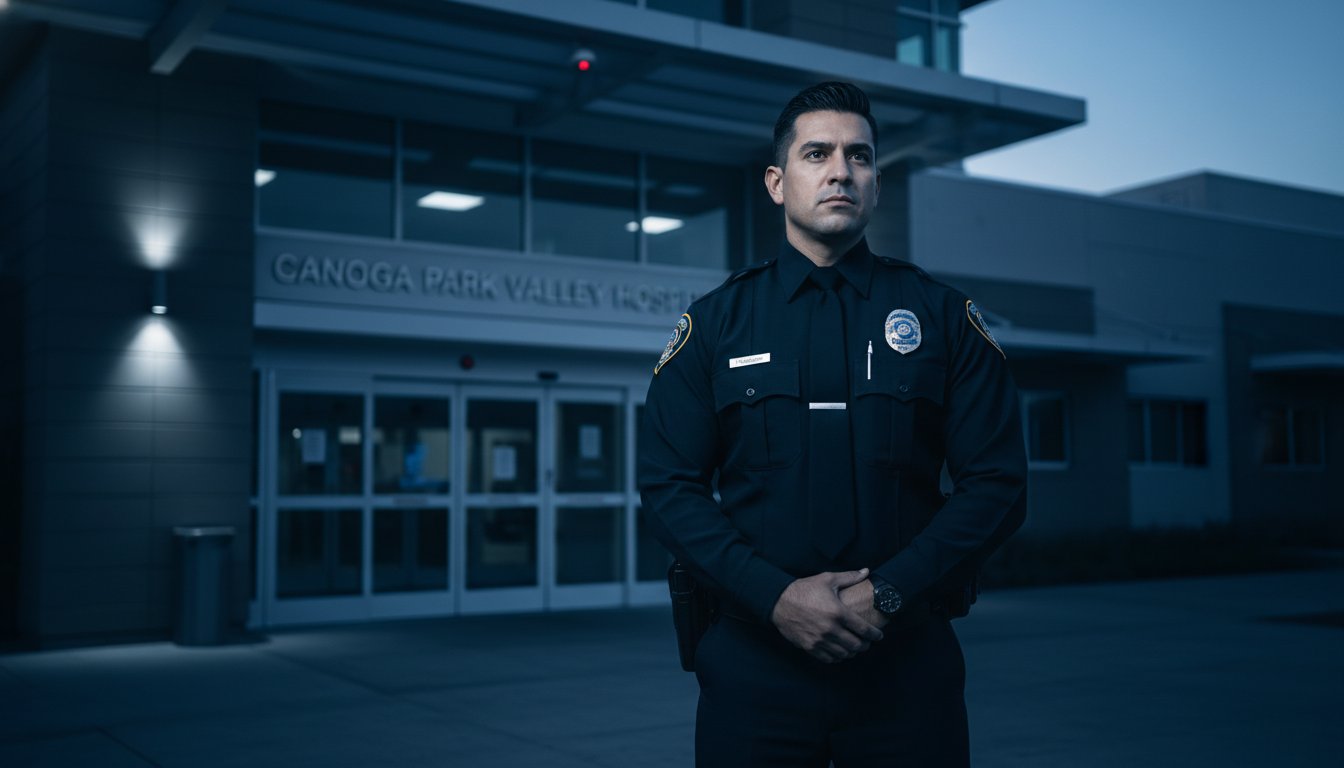
Our regional presence in Northridge and Canoga Park allows for rapid response times and localized oversight that national providers often lack. Broadway Security Services has a long history of serving the Southern California business community, building a foundation of trust through rigorous operational standards. This local expertise means we understand the specific urban challenges and traffic patterns that affect hospital access control in the Valley. Hospital security services Northridge require a level of discipline that standard commercial guards simply cannot provide. We maintain a serious and observant posture at all times, ensuring that your facility remains a place of order and healing.

The Broadway Security Services signature is defined by accountability and high-stakes reliability. We use industry-specific terminology and professional jargon to demonstrate our expertise in field performance and reporting. Our oversight is not a suggestion; it’s a mandatory standard that provides facility administrators with a clear, documented record of our vigilance. This rhythmic reinforcement of safety sets us apart from competitors who offer surface-level solutions. We prioritize the intersection of legal compliance and operational rigor, ensuring that every guard on your site understands the gravity of their responsibilities.

Local Expertise in Northridge and Canoga Park

Securing Your Facility Today

The transition to a disciplined shield involves a methodical implementation of the protocols discussed throughout this guide. We initiate the process with a project-based risk assessment to ensure your medical site is fully protected from day one. This structured approach guarantees that your specific departmental needs are met with precision. Secure your Northridge medical facility with Broadway Security Services to establish the unyielding protection your patients and staff deserve.

Securing the Future of Northridge Healthcare

Maintaining a secure medical facility requires more than just physical presence; it requires a systematic commitment to order and safety. You’ve seen how specialized hospital security services Northridge provide a critical defense against rising workplace violence and equipment theft. By integrating rigorous field performance oversight with specialized healthcare security training, you establish an environment where clinical teams can perform their duties without compromise. As a licensed California security firm, we understand that your facility’s reputation depends on the intersection of regulatory compliance and operational rigor.

Protecting your assets means staying ahead of evolving legal mandates while maintaining a stoic, professional atmosphere. A vigilant shield is the only way to ensure peace of mind for patients and staff alike. We’re prepared to help you implement these unyielding standards of protection today. Taking this step ensures that your facility remains a pillar of reliability within the San Fernando Valley medical corridor. Our methodical approach to oversight guarantees that every post is manned by a protector who takes their duty with the utmost gravity.

Request a Professional Security Consultation for Your Northridge Facility

Your commitment to safety starts with choosing a partner that treats your security responsibilities with the absolute seriousness they deserve.

Frequently Asked Questions

What specific training do your guards receive for hospital environments?

Guards receive specialized instruction in clinical de-escalation and patient privacy protocols. This training exceeds standard state requirements to ensure every protector is prepared for the high-stakes environment of a medical facility. We focus on non-violent intervention techniques that allow for the safe management of volatile situations without disrupting essential patient care.

How does Broadway Security ensure HIPAA compliance during security operations?

We ensure HIPAA compliance through rigorous personnel training on protected health information. Every guard understands their duty to respect patient confidentiality during sensitive incidents and medical codes. Security footage and access logs are managed with military-like precision to align with federal privacy standards and protect your facility from liability.

Can you provide both armed and unarmed guards for a single Northridge hospital?

Strategic deployment of both armed and unarmed personnel is a standard component of our hospital security services Northridge. Armed guards typically secure perimeters and high-risk zones like the Emergency Department to provide a definitive deterrent. Unarmed guards are stationed in patient-facing areas to provide a reassuring yet vigilant presence for visitors and staff.

How do your security officers handle aggressive patients in the Emergency Room?

Aggressive behavior is neutralized through proven de-escalation mastery and professional intervention. Our officers support clinical staff during emergency codes by maintaining order and ensuring a secure environment for medical treatment. Every action is taken with the unyielding goal of protecting medical personnel while respecting the clinical mission of the hospital.

What is the process for conducting a security risk assessment for a medical facility?

The assessment process involves a methodical audit of every entry point, sensitive ward, and perimeter zone. We identify vulnerabilities and compliance gaps related to California mandates like AB 2975 and SB 553. This data-driven approach results in a site-specific security improvement plan tailored to your facility’s unique operational needs.

Do you provide 24/7 mobile patrol for hospital parking structures in Northridge?

Our hospital security services Northridge include randomized mobile patrols of parking structures to deter vehicle theft and loitering. These units also provide dedicated medical escorts for staff during late-shift changes to ensure their safety. Maintaining a visible, mobile shield ensures the entire medical campus remains secure around the clock.

How does your company coordinate with Northridge local law enforcement?

We coordinate with Northridge local law enforcement through established emergency response protocols. This proactive collaboration ensures that our team and local authorities operate with a unified command structure during high-stakes crises. Clear communication channels are maintained to facilitate rapid response and ensure comprehensive site safety across the medical campus.

What measures are in place to ensure guard accountability and reporting?

Accountability is maintained through a structured framework of field performance reporting and constant oversight. Every post is monitored to ensure strict adherence to operational standards and facility-specific protocols. Detailed reports are provided to hospital administrators, demonstrating a consistent and methodical approach to protection and incident management.