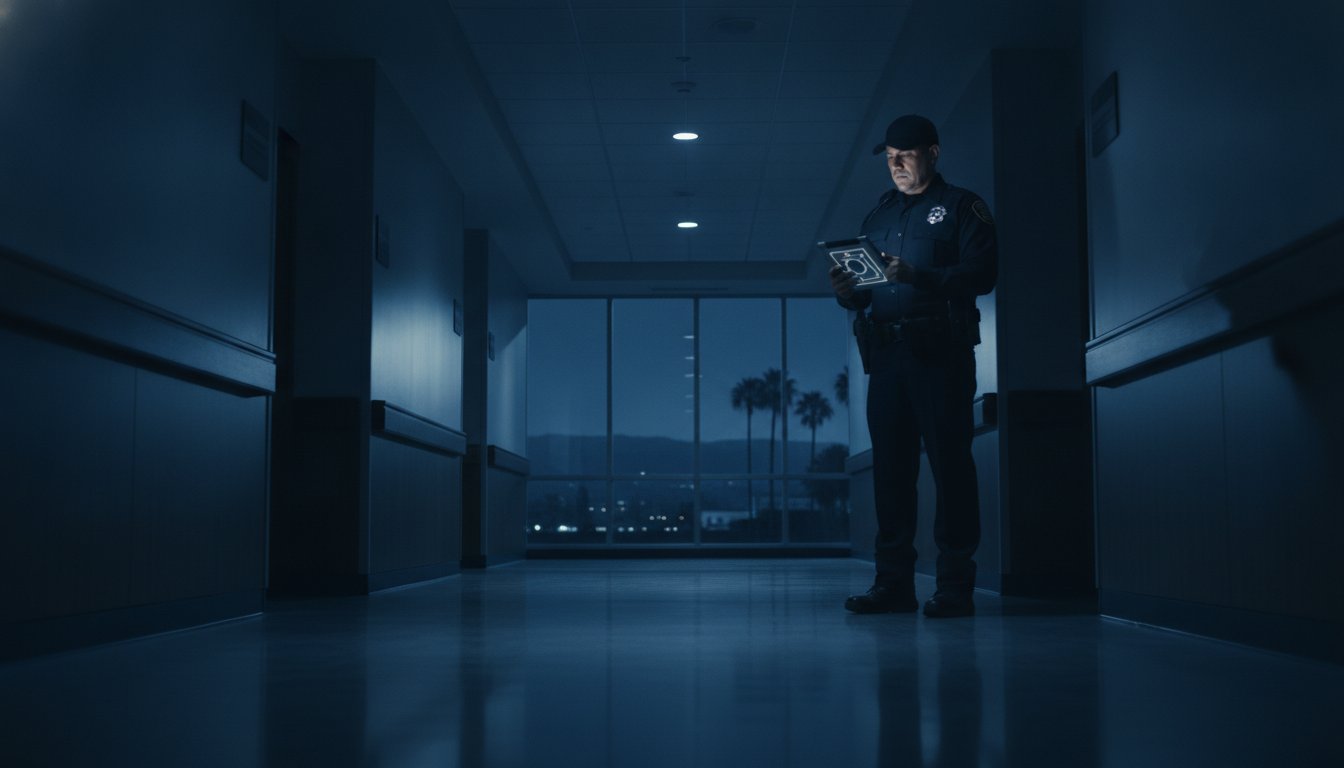
Hospital Security Guard Duties in Los Angeles: A Strategic Safety Guide for 2026

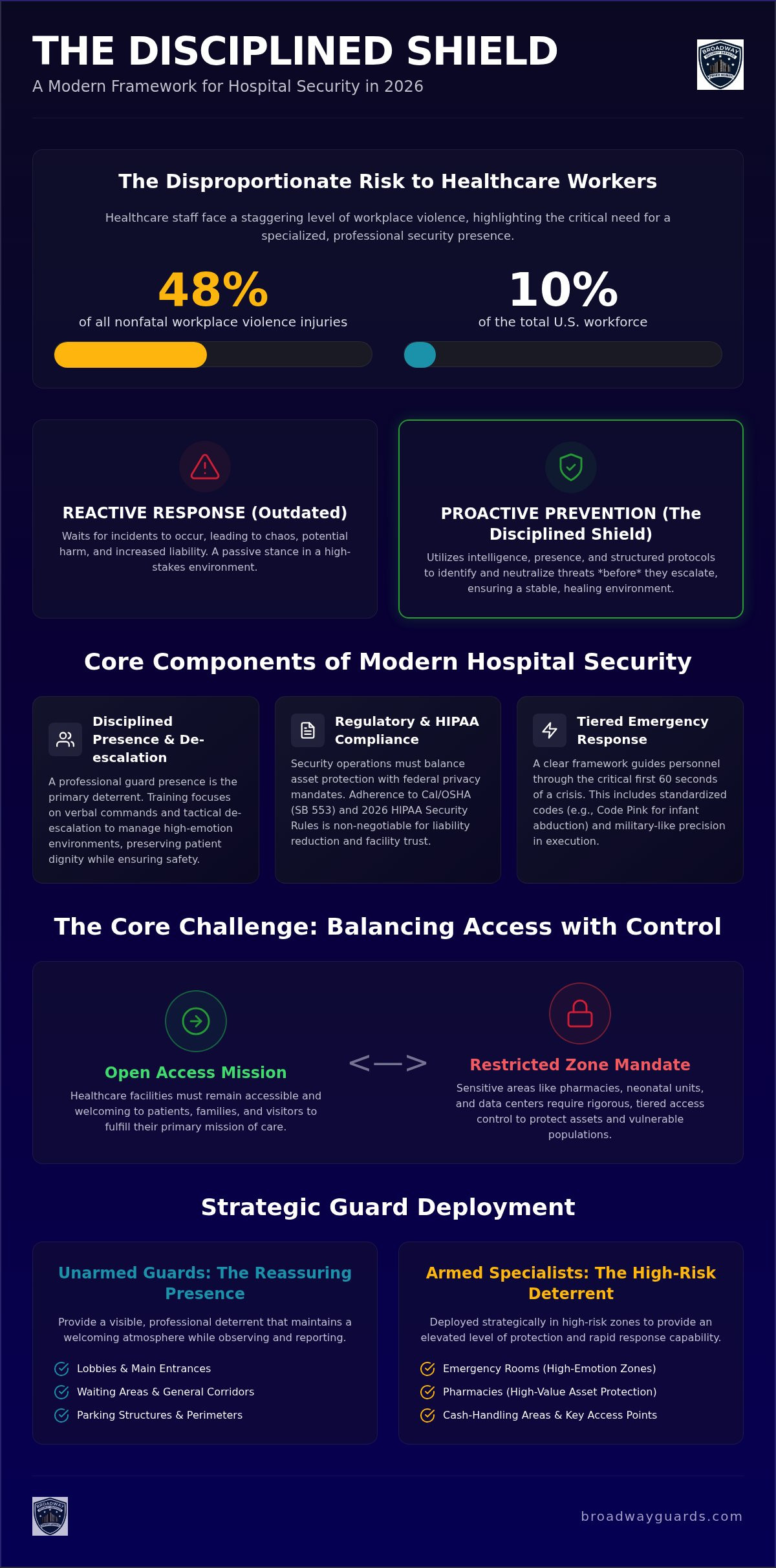
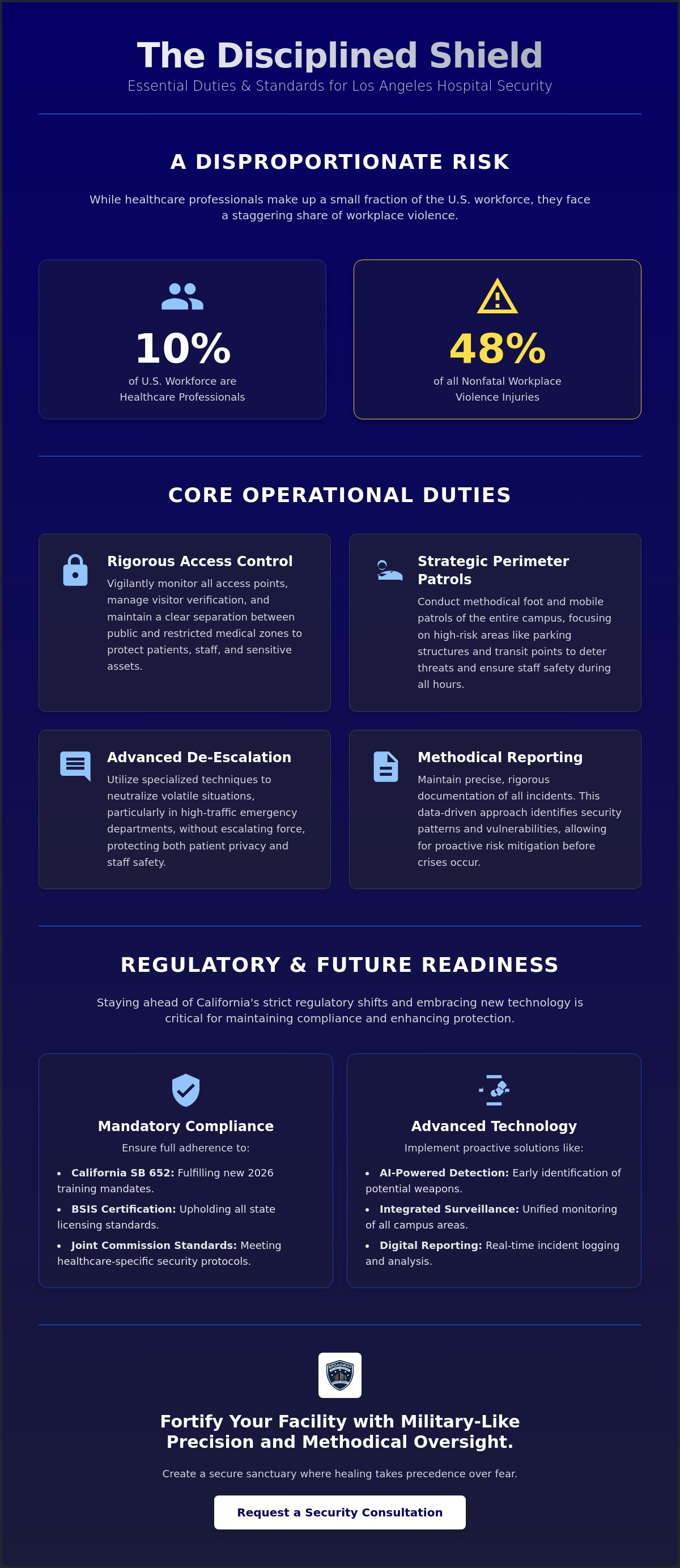
Healthcare professionals represent just 10% of the U.S. workforce, yet they endure a staggering 48% of all nonfatal workplace violence injuries. This data highlights a sobering reality for medical administrators: the safety of your staff is under constant pressure. You likely understand that maintaining a secure environment in Southern California requires more than just a visible presence. It demands a disciplined shield capable of managing high-stakes volatility. The complexity of hospital security guard duties Los Angeles providers must execute has never been higher, especially as violence in emergency departments continues to rise alongside strict liability concerns.

This strategic guide provides the clarity you need to master these essential responsibilities. You will discover the rigorous standards and essential protocols required to maintain a secure healthcare environment while staying ahead of California regulatory shifts. We will review the 2026 training mandates under SB 652, the implementation of AI-powered weapons detection, and the precise de-escalation techniques that protect both patient privacy and institutional reputation. Our analysis ensures your facility remains a place of healing, fortified by methodical oversight and unwavering professional discipline.

Key Takeaways

  • Apply the disciplined shield concept to balance high-stakes deterrence with the sensitive requirements of patient-centric care.
  • Master the essential hospital security guard duties Los Angeles medical centers must implement for rigorous access control and perimeter defense.
  • Utilize advanced de-escalation strategies designed to neutralize volatility in high-traffic emergency departments without escalating force.
  • Ensure compliance with the latest 2026 BSIS certification standards and mandatory California training requirements.
  • Build an environment of high-stakes reliability by prioritizing military-like precision and methodical oversight in every security interaction.

The Critical Role of Hospital Security in the Los Angeles Healthcare Landscape

Los Angeles medical centers operate at the intersection of high-density urban pressure and the delicate requirements of patient care. In this environment, security is not a secondary service. It’s a foundational pillar of operational stability. The unique landscape of Southern California necessitates a specialized approach where the duties of a security guard extend far beyond simple observation. A disciplined shield must be established to protect assets, staff, and patients with military-like precision. This specialized branch of security management requires a deep understanding of medical protocols and legal compliance.

High-Stakes Security in Urban Medical Environments

Facilities in the San Fernando Valley and across the Los Angeles basin face specific risks that require methodical oversight. High-density urban areas often see increased rates of localized theft and vandalism. These incidents can disrupt life-saving medical operations and compromise expensive equipment. Managing the interface between public access points and restricted medical zones requires a vigilant, 24/7 presence. In a city that never sleeps, the security perimeter must remain unyielding. There’s no room for lapse in a high-stakes environment.

Defining the Professional Standard for LA Guard Duties

The modern execution of hospital security guard duties Los Angeles administrators expect has evolved into active risk mitigation. It’s no longer enough to employ a passive watchman. A professional guard must maintain a stoic, authoritative presence that serves as a visible deterrent while remaining sensitive to the healthcare setting. This balance is critical. It creates an atmosphere of order without compromising the empathy required in a hospital. We don’t just provide a service; we provide a disciplined response to potential threats.

Rigorous reporting protocols and a hierarchy of accountability ensure that every incident is documented with precision. This data-driven approach allows for the identification of patterns before they escalate into crises. By prioritizing professional discipline, hospitals build a culture of trust. Patients and their families need to know that the environment is under the care of a vigilant force. This reassurance is vital for maintaining the high standards of care that Los Angeles residents deserve. It’s about creating a secure sanctuary where healing takes precedence over fear.

Core Operational Duties: Maintaining Order and Access Control

Effective security in a healthcare setting begins at the edge of the property. For 2026, the execution of hospital security guard duties Los Angeles facilities require has shifted toward a high-stakes model of methodical oversight. A disciplined shield isn’t static; it’s a dynamic presence that integrates physical patrols with advanced surveillance monitoring. This approach ensures that every square foot of the campus is under constant, vigilant care. We prioritize a proactive stance where technology and human observation work in a unified cadence to identify risks before they manifest into physical breaches.

Strategic Perimeter and Grounds Patrol

Methodical foot and mobile patrols are the backbone of this strategy. These aren’t casual walks; they’re structured sweeps designed to eliminate security blind spots and identify vulnerabilities. Parking structures and transit points receive specific attention to protect staff during late-night shift changes. By maintaining a stoic, visible presence, guards deter unauthorized entry and loitering before they become active threats. This level of rigor aligns with Joint Commission standards, which emphasize the necessity of a safe environment for both patients and healthcare providers.

Advanced Access Management Protocols

Access control is the first line of defense against internal volatility. Systematic screening protocols use a hybrid of hospitality-focused interaction and rigorous security screening to maintain a professional atmosphere. Guards manage credentials for restricted zones like pharmacies and high-risk laboratories with unwavering attention to detail. This prevents the unauthorized removal of controlled substances or sensitive patient data. Enforcing hospital-specific ‘No Trespassing’ and ‘Warning’ regulations effectively prevents unauthorized individuals from compromising sensitive medical areas. If your facility requires this level of precision, consider how professional hospital security can fortify your existing protocols.

Security personnel also act as the facility’s eyes for proactive hazard identification. Reporting maintenance issues or safety risks immediately prevents accidents and liability. Every action is recorded in detailed digital logs. These logs provide the operational transparency needed for legal compliance and administrative oversight. They ensure that every incident, no matter how minor, is documented with the accuracy required for high-stakes reliability. By maintaining these rigorous standards, we ensure that the hospital remains a controlled, orderly environment dedicated to patient recovery.

Specialized Healthcare Duties: Crisis Management and ER Security

The Emergency Department (ED) functions as the high-pressure frontline of urban medical volatility. In Los Angeles, where 91% of emergency physicians report being victims of or witnesses to violence, the execution of hospital security guard duties Los Angeles medical centers demand must be flawless. A disciplined protector doesn’t merely stand guard; they integrate into the clinical workflow to provide a layer of high-stakes reliability. This involves managing patient outbursts and behavioral health emergencies with a focus on methodical oversight. Every second counts when a crisis unfolds, making a structured response essential for hospital safety.

Tactical Response in Emergency Departments

Maintaining a high-visibility presence in waiting areas is the primary deterrent against disturbances. Security personnel collaborate closely with nursing staff to identify and manage aggressive or intoxicated individuals before a situation escalates. This partnership is vital. When a code is called, the transition from observation to intervention happens with military-like precision. Rapid-response protocols for lockdowns or active threats are executed according to a strict hierarchy. This ensures that the medical team can continue their life-saving work without interruption. Our presence creates an atmosphere of order that discourages volatility.

Medical Sensitivity and De-escalation Training

Professional de-escalation is a tactical tool, not just a soft skill. In 2026, training emphasizes trauma-informed care and understanding the psychological state of patients in crisis. This ensures that physical intervention is a last resort. Statistics from 2026 indicate that 84.8% of nurses reported experiencing workplace violence in the past year. By applying professional de-escalation techniques, security guards minimize these risks while adhering to patient privacy and safety regulations. We prioritize results-oriented phrasing that emphasizes accountability in every patient interaction.

Order must be balanced with the sensitive nature of healthcare delivery. Security guards also perform specialized medical escort services for high-value assets or sensitive personnel. This includes protecting high-risk pharmaceutical deliveries or providing safe passage for staff during high-risk transfers between departments. Every interaction is governed by a commitment to duty and professional discipline. This methodical approach transforms the security team into a vital asset for hospital operations. It ensures that both staff and patients remain under the care of a vigilant and unyielding force. Reliability is the linguistic anchor of our field performance. By implementing these rigorous operational standards and fulfilling the complex hospital security guard duties Los Angeles administrators expect, we reduce the $18.27 billion annual cost that violence imposes on U.S. hospitals.

Hospital Security Guard Duties in Los Angeles: A Strategic Safety Guide for 2026

Regulatory Compliance: California Standards and BSIS Requirements

Maintaining a secure medical environment in Southern California requires more than tactical skill; it demands strict adherence to state and federal mandates. The execution of hospital security guard duties Los Angeles facilities require is governed by the Bureau of Security and Investigative Services (BSIS). This regulatory body ensures that every protector operating within your facility meets high standards of legitimacy. Failure to comply with these regulations doesn’t just invite liability. It compromises the fundamental order of the institution. We prioritize a methodical approach to compliance to ensure your facility remains a sanctuary for healing.

The BSIS Certification Framework

California law mandates a specific training hierarchy for all security personnel to ensure field performance meets professional standards. As of January 1, 2026, Senate Bill 652 requires the initial 8-hour “Powers to Arrest and Appropriate Use of Force” training to be completed through a single BSIS-approved provider. This is only the beginning of a total 40-hour training requirement. Guards must complete 8 hours before application, 16 hours within the first 30 days of employment, and the final 16 hours within the first six months. We ensure every deployed guard meets or exceeds these state-mandated hours through rigorous oversight and verification of Live Scan background checks. This hierarchy of accountability is what builds a foundation of trust between the security force and hospital administration.

Privacy and Legal Accountability in Healthcare

Security in a hospital setting requires navigating complex patient privacy laws with absolute precision. HIPAA compliance is mandatory for guards who may encounter sensitive medical information or patient records during their patrols. Our personnel are trained to maintain the disciplined shield while respecting the confidentiality that healthcare delivery requires. This includes adhering to the Emergency Medical Treatment and Labor Act (EMTALA) guidelines. These regulations ensure that security protocols never interfere with a patient’s right to receive emergency medical care. Order must never come at the expense of legal and ethical obligations.

Precise documentation is the cornerstone of legal accountability. Every incident must be recorded with military-like precision to protect the facility from liability and ensure operational transparency. Integrating a security risk assessment CA into your compliance audits allows for the identification of regulatory gaps before they become legal vulnerabilities. For facilities seeking to fortify their compliance standing and overall safety, secure your facility with a professional security plan today. Methodical oversight is the only way to guarantee that your security team remains a vigilant and unyielding force within the legal framework of 2026.

Securing Your Facility with Broadway Security Services’ Disciplined Approach

Broadway Security Services delivers a specialized response to the escalating safety requirements of the Southern California healthcare sector. We understand that the hospital security guard duties Los Angeles medical centers require are not merely tasks. They’re high-stakes responsibilities that demand an unyielding commitment to duty. Our approach positions us as a disciplined shield for your facility. We move beyond basic protection to offer a framework of methodical oversight that prioritizes the safety of your assets. By choosing a partner that values rules and protocols above all else, you ensure your institution remains a controlled environment.

Our commitment to military-like precision ensures that every aspect of your security plan is executed with absolute reliability. We don’t believe in a one-size-fits-all strategy. Instead, we customize our security protocols to the specific layout and risk profile of your medical center. This includes identifying high-risk zones that require heightened vigilance. By maintaining a hierarchy of structure and clear reporting lines, we reduce institutional liability. Broadway Security Services provides the professional discipline necessary to manage the complexities of a 24-hour urban medical facility with total accountability.

The Broadway Standard of Professionalism

The core of our service lies in the caliber of our personnel. We deploy unarmed security guards who act as a vigilant force. They’re trained to maintain a stoic and professional presence in high-stress environments. Our guards utilize industry-specific terminology and high-value adjectives in their reporting to ensure absolute clarity for hospital administrators. This focus on presence, prevention, and professional accountability creates an atmosphere of order. We prioritize field performance through rigorous oversight, ensuring every guard understands the gravity of their role as a disciplined protector.

Next Steps for Comprehensive Protection

Securing a high-density medical facility requires a proactive and methodical plan. We help you transition from a reactive stance to one of organized prevention through a structured engagement process:

  • Professional Risk Assessment: Identifying site-specific vulnerabilities and security blind spots across your campus.
  • Strategic Protocol Development: Integrating a physical security presence with your facility’s existing safety technology and medical workflows.
  • Long-Term Security Management: Establishing a consistent oversight model that ensures ongoing adherence to all California regulatory standards.

The safety of your staff and patients shouldn’t be left to chance. Contact Broadway Security Services for a disciplined approach to healthcare safety that prioritizes order and trust. Let us provide the unyielding force your facility needs to thrive in 2026.

Fortifying Your Medical Facility for the Future

The security landscape of 2026 demands a shift from passive observation to methodical, active protection. Mastering the diverse hospital security guard duties Los Angeles administrators require means integrating tactical discipline with clinical sensitivity at every level of the organization. By prioritizing BSIS-certified personnel and specialized healthcare de-escalation training, you’re not just hiring guards; you’re establishing a disciplined shield that protects staff and patients alike. Order and reliability are the cornerstones of a safe healing environment. Every protocol must be executed with the military-like precision that high-stakes healthcare demands.

Broadway Security Services provides the unyielding force necessary to maintain this standard of excellence. Our strategic risk assessment expertise allows us to identify vulnerabilities before they escalate into crises. It is time to elevate your operational standards and ensure your assets are under the care of a vigilant and unyielding force. Secure your Los Angeles medical facility with our disciplined security personnel today. We’re ready to help you build a sanctuary of safety and professional reliability that supports your mission of healing.

Frequently Asked Questions

What are the primary responsibilities of a hospital security guard in Los Angeles?

The primary hospital security guard duties Los Angeles personnel perform include systematic access control, perimeter defense, and rapid crisis intervention. Guards maintain a vigilant presence to deter unauthorized entry while facilitating a safe environment for medical staff. Their role also encompasses proactive hazard identification and the maintenance of detailed digital logs to ensure operational transparency across the facility’s grounds and restricted zones.

Do hospital security guards in California need special certification?

All security personnel in California must possess a valid BSIS Guard Card and complete a state-mandated 40-hour training curriculum. New regulations for 2026 dictate that initial training must be completed through a single approved provider to ensure standardized professional discipline. This framework ensures a high level of legal knowledge and field performance before a protector begins their assignment in a high-stakes medical environment.

How does hospital security handle aggressive patients while remaining HIPAA compliant?

Security personnel utilize professional de-escalation techniques to neutralize patient aggression without compromising medical confidentiality. Guards focus on physical behavioral management rather than accessing clinical data. By adhering to strict reporting protocols that omit unnecessary medical details, they maintain the disciplined shield while ensuring the facility remains fully compliant with federal privacy regulations and patient rights.

What is the difference between armed and unarmed security in a hospital setting?

Armed guards provide a high-visibility deterrent for high-risk zones, such as pharmacies or cash handling areas, while unarmed guards focus on general patrol and patient-centric de-escalation. The choice depends on the specific risk profile identified during a strategic risk assessment. Both roles prioritize professional accountability and methodical oversight, though armed personnel undergo additional BSIS certification for firearm proficiency.

How do security guards assist in emergency room (ER) management?

In the Emergency Department, guards provide a stabilizing force by managing waiting room crowds and supporting clinical staff during patient outbursts. They execute rapid lockdown protocols when threats are detected to prevent the escalation of volatility. This methodical presence allows medical professionals to focus on care while the security team maintains total control over the physical environment and public access points.

Can security guards perform medical escorts within the facility?

Security guards frequently perform medical escorts for sensitive pharmaceutical deliveries, high-value equipment, and personnel moving through high-risk areas. These escorts are conducted with military-like precision to ensure that assets reach their destination without interference. This service is a critical component of the broader hospital security guard duties Los Angeles facilities require to maintain internal order and protect institutional integrity.

What training do Broadway Security Services guards receive for medical environments?

Broadway Security Services personnel undergo specialized training modules that prioritize order and patient-centric de-escalation. This curriculum is designed to meet the rigorous standards of modern healthcare environments while ensuring field performance remains unyielding. Every guard is prepared for the unique pressures of a hospital setting through a hierarchy of structure that emphasizes presence and prevention.

How does professional security reduce a hospital’s legal liability?

Professional security reduces liability by ensuring every incident is documented with military-like precision. By maintaining a hierarchy of structure and strict reporting lines, the facility gains a transparent record of all safety interventions. This methodical oversight provides the documented proof required to defend against claims of negligence while reinforcing the facility’s commitment to rigorous operational standards.

Hospital Security Services Northridge: Specialized Protection for Medical Facilities

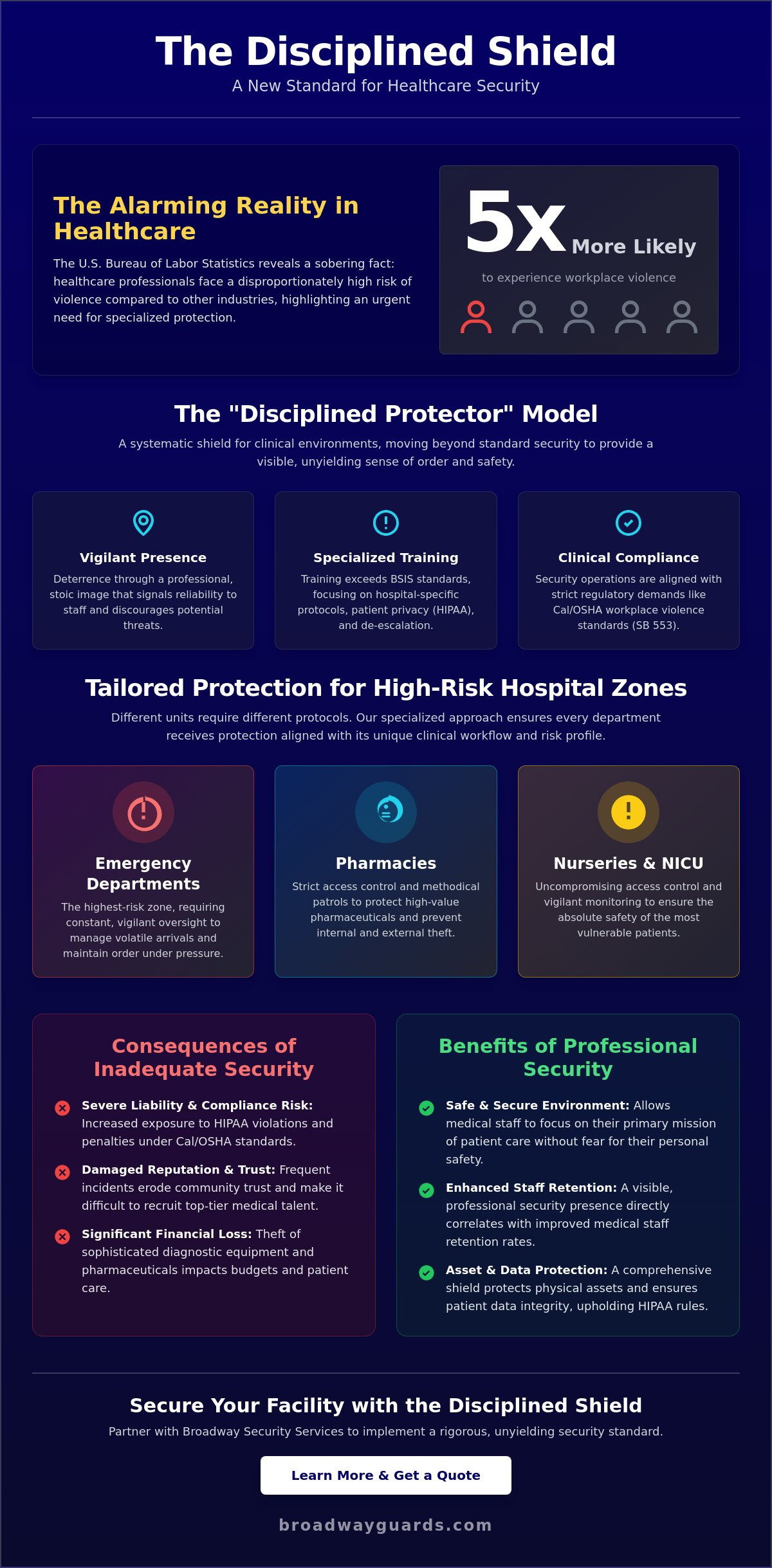
Healthcare workers are five times more likely to experience workplace violence than professionals in other industries. This sobering statistic from the U.S. Bureau of Labor Statistics highlights the urgent need for a disciplined shield within our medical community. When you secure hospital security services Northridge, you aren’t just hiring guards; you’re implementing a rigorous operational standard designed to neutralize threats before they reach the triage desk. High-stakes environments like emergency departments require a vigilant, unyielding force that prioritizes the safety of those who save lives.

Broadway Security Services recognizes that your primary mission is patient care, yet the rising tide of ER violence and medical equipment theft makes it difficult for staff to focus on healing. You need a security partner that understands the gravity of California’s latest safety mandates and the necessity of strict clinical compliance. This guide explores how specialized healthcare security provides the unyielding oversight required to maintain a safe, compliant facility. We will preview how a structured approach to protection creates a secure environment where medical professionals can work without fear while assets remain fully protected under a professional shield.

Key Takeaways

  • Identify the specific security risks unique to the San Fernando Valley healthcare corridor and why clinical environments require more than standard commercial guard services.
  • Explore the “Disciplined Protector” model for hospital security services Northridge, which utilizes rigorous training to ensure a vigilant and unyielding presence.
  • Examine specialized protocols for high-risk hospital zones, ensuring that departments like pharmacies and nurseries receive tailored protection that aligns with clinical workflows.
  • Gain insights into maintaining strict regulatory compliance by aligning your physical security operations with HIPAA privacy rules and Cal/OSHA workplace violence standards.
  • Understand how the integration of physical oversight and site-specific technology creates a comprehensive shield that prioritizes the safety of patients, staff, and medical assets.

The Critical Need for Specialized Hospital Security Services in Northridge

The San Fernando Valley healthcare corridor represents a critical infrastructure hub where the stakes for safety are exceptionally high. In Northridge, medical facilities face a unique convergence of high patient volume and urban accessibility. Standard commercial security models, often designed for retail or office environments, consistently fail in these 24/7 clinical settings. Hospital security requires a specialized understanding of patient flow, emergency room volatility, and the delicate balance between open access and rigorous containment. A disciplined presence isn’t just a preference; it’s a requirement for operational stability.

A visible, professional presence directly correlates with medical staff retention. When nurses and physicians operate under the protection of a vigilant shield, they can focus on life-saving procedures without the constant threat of workplace violence. National statistics indicate that healthcare workers are five times more likely to experience violence than other professionals. Professional hospital security services Northridge provide the necessary deterrence to reverse these trends. By establishing a culture of order, facilities signal to their employees that their physical safety is a non-negotiable priority.

Protecting the Northridge Medical Community

Security protocols must adapt to the specific geography of each medical unit. The Emergency Room remains the highest-risk zone, requiring constant oversight to manage volatile arrivals. Conversely, pharmacies and neonatal units demand strict access control to protect high-value assets and vulnerable patients. In many jurisdictions, these roles are so specialized they are handled by Hospital Police or dedicated healthcare security units trained in clinical de-escalation. Northridge facilities face additional challenges due to their proximity to major transit arteries, which increases the likelihood of unauthorized traffic entering restricted zones.

The Consequences of Inadequate Healthcare Security

The failure to implement professional hospital security services Northridge results in severe liability. Unauthorized access to restricted areas can lead to HIPAA violations if patient records are compromised. Beyond legal risks, workplace violence incidents must now be recorded in a violent incident log under California SB 553. Frequent incidents damage a hospital’s reputation, making it difficult to recruit top-tier medical talent. When a facility’s safety record falters, the community’s trust in that institution as a place of healing quickly erodes.

Financial losses also accumulate through the theft of sophisticated diagnostic equipment and pharmaceuticals. A disciplined security force prevents these losses by maintaining a consistent, methodical patrol rhythm. This proactive stance ensures that every entry point and sensitive asset remains under unyielding oversight. Protecting these resources preserves the facility’s budget and its primary mission to provide uninterrupted patient care.

The Disciplined Shield: Defining Professional Healthcare Protection

The Broadway Security Services model for medical facilities is built upon the concept of the Disciplined Protector. This persona represents more than a physical presence; it’s a systematic shield designed to operate within the complex hierarchy of a hospital. In high-stakes clinical environments, the goal is to provide a sense of order that is both visible and unyielding. When implementing hospital security services Northridge, we prioritize a professional image that signals reliability to staff and deterrence to potential bad actors. This disciplined approach ensures that every post is manned by a vigilant individual who understands their role as a protector of life and property.

Accountability is maintained through a structured framework of field performance reporting and constant oversight. Every incident, patrol, and observation is documented with military-like precision. This data-driven approach ensures that security operations remain transparent and effective. Facility administrators receive detailed reports that demonstrate a consistent adherence to safety standards. To learn more about our rigorous operational standards, you can explore our full range of professional security solutions tailored for the San Fernando Valley.

Armed vs. Unarmed Guards in Hospital Settings

Strategic deployment requires a hybrid security matrix. Armed personnel are typically stationed at perimeters and high-risk entry points, such as the Emergency Department, to provide a definitive deterrent against external threats. Unarmed guards are effectively utilized in patient-facing areas and concierge roles, where a reassuring presence is required. This balanced deployment ensures that the level of force available matches the specific risk profile of each hospital zone, maintaining safety without creating an overly aggressive atmosphere.

Crisis Intervention and De-escalation Mastery

Order is maintained through mastery of non-violent crisis intervention. Our protectors are trained to recognize the early signs of agitation in patients or visitors and intervene using proven de-escalation techniques. Adhering to OSHA guidelines on healthcare violence ensures that every intervention is legally compliant and prioritizes the safety of all parties involved. This vigilant and unyielding approach to conflict resolution is particularly critical during high-stress Emergency Room admissions, where emotions often run high and the potential for disruption is greatest.

Specialized Security Units for Northridge Medical Facilities

Effective hospital protection requires a decentralized approach where each department operates under a specific tactical mandate. In Northridge, large medical campuses present complex logistical challenges that a generic security post cannot address. Professional hospital security services Northridge must integrate physical presence with advanced surveillance to maintain a comprehensive site shield. This methodical oversight ensures that security resources are allocated where they are most needed, from high-traffic public lobbies to restricted clinical corridors. Every unit operates with the military-like precision required to keep a 24/7 medical environment stable and secure.

Adherence to California hospital security plan requirements necessitates these specialized structures. A facility-wide assessment dictates the placement of stationary posts and the frequency of mobile patrols. By managing the flow of visitors, vendors, and patients through strict access control, we eliminate the anonymity that bad actors rely on. This disciplined management of entry points is the first line of defense in a multi-layered security strategy designed for the Northridge medical community.

Emergency Room and Access Control Management

The Emergency Department is a facility’s most volatile entry point. Our protectors implement rigorous visitor screening and authorization protocols to ensure only authorized individuals enter the treatment area. Aggressive behavior at intake is neutralized through immediate, professional intervention to protect triage staff. We also secure all secondary entry and exit points to prevent unauthorized patient elopement, ensuring that those in your care remain within the safety of the clinical environment.

Behavioral Health and Mental Health Unit Security

Specialized protocols are essential for high-risk behavioral health wards where patient safety and perimeter integrity are paramount. Our units are trained to support clinical staff during patient restraints and emergency codes with a calm, unyielding presence. We maintain a secure perimeter for sensitive psychiatric care areas, ensuring that the environment remains therapeutic and free from external disruption. This specialized oversight allows medical professionals to focus on treatment while we handle the complexities of ward safety.

Perimeter Safety and Parking Lot Patrols

Security responsibilities extend beyond the hospital walls to include parking structures and campus grounds. Mobile patrol strategies utilize randomized routes to deter vehicle theft and loitering in Northridge hospital lots. We provide dedicated medical escort services for staff during late-shift changes, ensuring they reach their vehicles safely. This visible mobile presence acts as a powerful deterrent against external threats and reinforces the brand’s commitment to a vigilant, all-encompassing shield for the entire medical campus.

Hospital Security Services Northridge: Specialized Protection for Medical Facilities

Regulatory Compliance and Healthcare Risk Mitigation

Operational success in a medical environment is inseparable from legal compliance. For administrators, maintaining hospital security services Northridge requires a deep understanding of the intersection between physical safety and regulatory rigor. Professional hospital security services Northridge serve as the frontline for risk mitigation, ensuring every action aligns with federal and state mandates. Our approach treats compliance not as a checklist, but as a core component of our disciplined shield. This ensures your facility remains prepared for scrutiny from The Joint Commission (TJC) and other accrediting bodies that prioritize patient safety and environment of care standards.

California’s regulatory environment is becoming increasingly complex. Senate Bill 553, which became effective on July 1, 2024, mandates that hospitals implement a comprehensive Workplace Violence Prevention Plan and record every incident in a violent incident log. Additionally, Assembly Bill 2975 requires weapons detection systems at main entrances, with finalized standards expected by March 1, 2027. We provide the unyielding oversight necessary to implement these mandates. By conducting professional risk assessments, we identify facility vulnerabilities before they become legal liabilities. This methodical approach ensures that your facility meets the highest standards of accountability.

HIPAA and Patient Privacy Protocols

A disciplined protector understands that patient privacy is as critical as physical safety. Security personnel are frequently present during sensitive medical incidents where protected health information (PHI) is visible or discussed. We train our guards to respect patient confidentiality with the same gravity they apply to perimeter defense. Managing security footage and access logs also requires strict adherence to federal privacy laws. Our reporting standards ensure that all data is handled with military-like precision, protecting both the patient’s rights and the hospital’s reputation. We also stay current with laws like SB 81, which effective February 14, 2026, requires hospitals to designate patient care areas as nonpublic.

Risk Assessment and Crisis Management Strategies

Maintaining a secure environment requires constant adaptation. We develop site-specific security improvement plans tailored to the unique challenges of Northridge medical campuses. This process includes regular security audits to ensure that every post maintains an unyielding standard of protection. We also coordinate with local Northridge law enforcement to establish clear emergency response protocols. This proactive collaboration ensures that your facility is prepared for any high-stakes crisis. To ensure your facility meets every regulatory standard, you should contact our team for a comprehensive security assessment.

Partnering with Broadway Security Services in Northridge

Choosing a security partner for a medical facility requires a focus on hierarchy, structure, and an unwavering commitment to duty. Broadway Security Services is the preferred choice for San Fernando Valley healthcare because we operate as a disciplined shield rather than a simple service provider. Our team brings military-like precision to every post, ensuring that your medical assets and personnel are under the care of a vigilant and unyielding force. We recognize that hospital security services Northridge must be consistent and methodical to be effective. Our brand positions itself as a disciplined protector, valuing rules, protocols, and visible results above all else.

Our regional presence in Northridge and Canoga Park allows for rapid response times and localized oversight that national providers often lack. Broadway Security Services has a long history of serving the Southern California business community, building a foundation of trust through rigorous operational standards. This local expertise means we understand the specific urban challenges and traffic patterns that affect hospital access control in the Valley. Hospital security services Northridge require a level of discipline that standard commercial guards simply cannot provide. We maintain a serious and observant posture at all times, ensuring that your facility remains a place of order and healing.

The Broadway Security Services signature is defined by accountability and high-stakes reliability. We use industry-specific terminology and professional jargon to demonstrate our expertise in field performance and reporting. Our oversight is not a suggestion; it’s a mandatory standard that provides facility administrators with a clear, documented record of our vigilance. This rhythmic reinforcement of safety sets us apart from competitors who offer surface-level solutions. We prioritize the intersection of legal compliance and operational rigor, ensuring that every guard on your site understands the gravity of their responsibilities.

Local Expertise in Northridge and Canoga Park

Securing Your Facility Today

The transition to a disciplined shield involves a methodical implementation of the protocols discussed throughout this guide. We initiate the process with a project-based risk assessment to ensure your medical site is fully protected from day one. This structured approach guarantees that your specific departmental needs are met with precision. Secure your Northridge medical facility with Broadway Security Services to establish the unyielding protection your patients and staff deserve.

Securing the Future of Northridge Healthcare

Maintaining a secure medical facility requires more than just physical presence; it requires a systematic commitment to order and safety. You’ve seen how specialized hospital security services Northridge provide a critical defense against rising workplace violence and equipment theft. By integrating rigorous field performance oversight with specialized healthcare security training, you establish an environment where clinical teams can perform their duties without compromise. As a licensed California security firm, we understand that your facility’s reputation depends on the intersection of regulatory compliance and operational rigor.

Protecting your assets means staying ahead of evolving legal mandates while maintaining a stoic, professional atmosphere. A vigilant shield is the only way to ensure peace of mind for patients and staff alike. We’re prepared to help you implement these unyielding standards of protection today. Taking this step ensures that your facility remains a pillar of reliability within the San Fernando Valley medical corridor. Our methodical approach to oversight guarantees that every post is manned by a protector who takes their duty with the utmost gravity.

Request a Professional Security Consultation for Your Northridge Facility

Your commitment to safety starts with choosing a partner that treats your security responsibilities with the absolute seriousness they deserve.

Frequently Asked Questions

What specific training do your guards receive for hospital environments?

Guards receive specialized instruction in clinical de-escalation and patient privacy protocols. This training exceeds standard state requirements to ensure every protector is prepared for the high-stakes environment of a medical facility. We focus on non-violent intervention techniques that allow for the safe management of volatile situations without disrupting essential patient care.

How does Broadway Security ensure HIPAA compliance during security operations?

We ensure HIPAA compliance through rigorous personnel training on protected health information. Every guard understands their duty to respect patient confidentiality during sensitive incidents and medical codes. Security footage and access logs are managed with military-like precision to align with federal privacy standards and protect your facility from liability.

Can you provide both armed and unarmed guards for a single Northridge hospital?

Strategic deployment of both armed and unarmed personnel is a standard component of our hospital security services Northridge. Armed guards typically secure perimeters and high-risk zones like the Emergency Department to provide a definitive deterrent. Unarmed guards are stationed in patient-facing areas to provide a reassuring yet vigilant presence for visitors and staff.

How do your security officers handle aggressive patients in the Emergency Room?

Aggressive behavior is neutralized through proven de-escalation mastery and professional intervention. Our officers support clinical staff during emergency codes by maintaining order and ensuring a secure environment for medical treatment. Every action is taken with the unyielding goal of protecting medical personnel while respecting the clinical mission of the hospital.

What is the process for conducting a security risk assessment for a medical facility?

The assessment process involves a methodical audit of every entry point, sensitive ward, and perimeter zone. We identify vulnerabilities and compliance gaps related to California mandates like AB 2975 and SB 553. This data-driven approach results in a site-specific security improvement plan tailored to your facility’s unique operational needs.

Do you provide 24/7 mobile patrol for hospital parking structures in Northridge?

Our hospital security services Northridge include randomized mobile patrols of parking structures to deter vehicle theft and loitering. These units also provide dedicated medical escorts for staff during late-shift changes to ensure their safety. Maintaining a visible, mobile shield ensures the entire medical campus remains secure around the clock.

How does your company coordinate with Northridge local law enforcement?

We coordinate with Northridge local law enforcement through established emergency response protocols. This proactive collaboration ensures that our team and local authorities operate with a unified command structure during high-stakes crises. Clear communication channels are maintained to facilitate rapid response and ensure comprehensive site safety across the medical campus.

What measures are in place to ensure guard accountability and reporting?

Accountability is maintained through a structured framework of field performance reporting and constant oversight. Every post is monitored to ensure strict adherence to operational standards and facility-specific protocols. Detailed reports are provided to hospital administrators, demonstrating a consistent and methodical approach to protection and incident management.

Comprehensive Hospital Security Protocols: A Guide for 2026

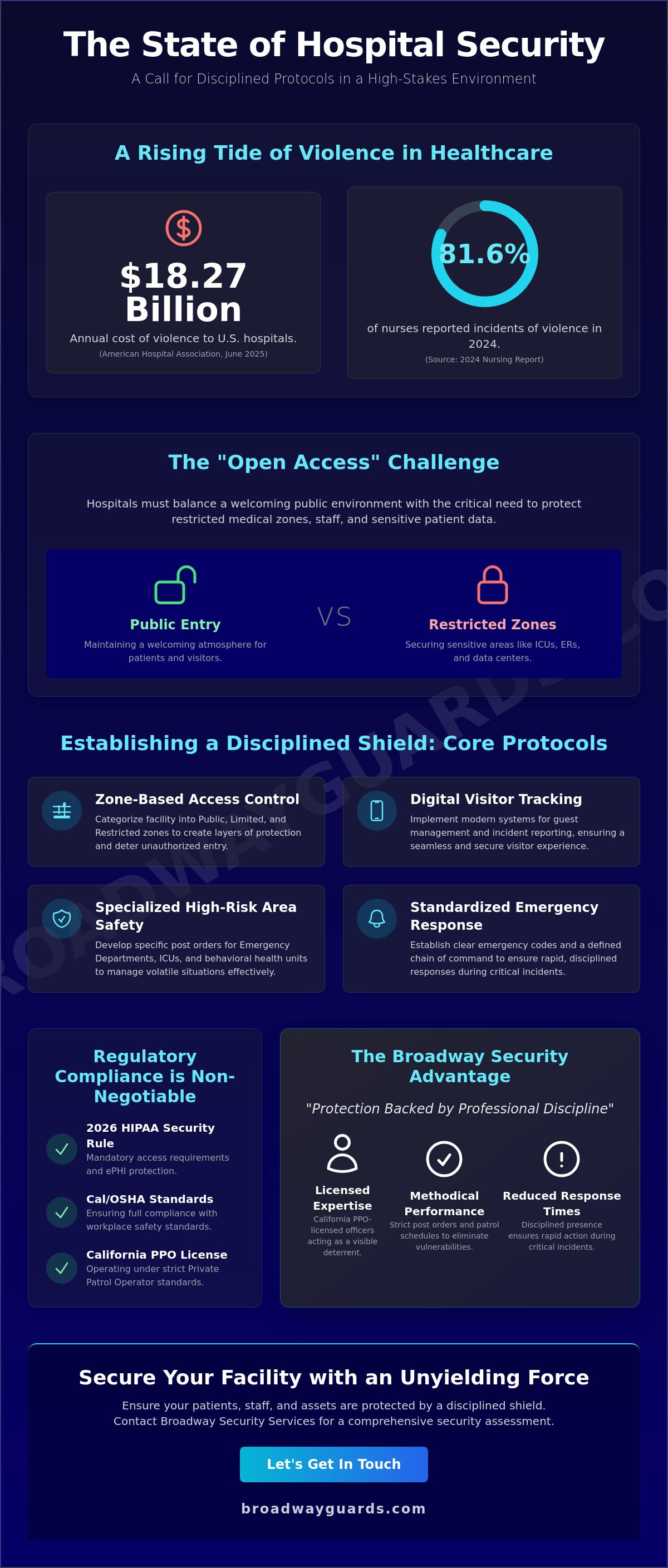
Did you know that workplace violence now costs U.S. hospitals $18.27 billion annually according to the June 2025 American Hospital Association report? With 81.6% of nurses reporting incidents of violence in 2024, the implementation of rigorous hospital security protocols is no longer optional. You understand the strain of balancing patient privacy with the rising rates of ER violence. It’s a complex challenge that requires a disciplined approach to ensure every professional remains safe behind a vigilant shield.

Broadway Security Services provides protection backed by professional discipline. You’ll learn to master the essential security protocols required to protect patients, staff, and assets in this high-stakes landscape. We’ll detail the November 2026 HIPAA Security Rule updates, mandatory multi-factor authentication requirements, and the Cal/OSHA standards necessary for full compliance. Our focus is on reducing incident response times through licensed expertise and methodical field performance. Let’s Touch With Us to secure your facility under our California Private Patrol Operator standards and ensure your assets are under the care of an unyielding force.

Key Takeaways

  • Identify the core challenges of the “Open Access” model and how to maintain order within restricted medical zones.
  • Learn how to implement robust hospital security protocols through zone-based access control and digital visitor tracking to protect sensitive data.
  • Develop specialized safety standards for high-traffic Emergency Departments and behavioral health units to effectively mitigate workplace violence.
  • Standardize hospital emergency codes and establish a clear chain of command to ensure a rapid, disciplined response during critical incidents.
  • Discover how California PPO-licensed security guards provide a disciplined shield that ensures full regulatory compliance and operational rigor.

The Foundation of Healthcare Security: Why Protocols Matter

The current environment in Southern California healthcare facilities demands an unyielding commitment to safety. According to the June 2025 American Hospital Association report, the annual cost of violence to U.S. hospitals reached $18.27 billion. This staggering financial burden reflects a deeper crisis of order. Hospitals face the “Open Access Challenge,” where the requirement for public entry must be balanced against the need for restricted medical zones. Effective hospital security protocols serve as the framework for this balance. They establish clear boundaries that prevent unauthorized access while maintaining the facility’s clinical mission. Without these structures, a hospital becomes vulnerable to liability and chaos.

A professionally trained hospital security officer acts as a visible deterrent to potential agitators. This presence isn’t merely about response; it’s about prevention through discipline. When security personnel maintain a vigilant stance, they create an atmosphere of high-stakes reliability. This environment is essential for staff retention. A 2025 report from the Crisis Prevention Institute found that 37% of healthcare workers considered leaving the field due to the strain of workplace violence. Implementing rigorous hospital security protocols is a direct investment in your workforce’s stability and peace of mind.

Understanding the Landscape of Workplace Violence

Healthcare workers face workplace violence at a rate five times higher than other industries. High-risk zones such as Emergency Departments, Intensive Care Units, and psychiatric wards require specific post orders to manage volatile situations. Threats often split between patient-on-staff interactions and external intruder risks. A “Disciplined Guardian” on-site provides a psychological anchor for clinical staff. This presence ensures that doctors and nurses can focus on patient care, knowing a disciplined shield protects their perimeter. Our personnel operate with the accountability required to handle these high-pressure environments.

The Balance: Safety vs. Patient Experience

Maintaining a welcoming atmosphere while enforcing strict access requires professional finesse. Broadway Security Services prioritizes a serious emotional style that emphasizes safety without disrupting the healing process. Our guards utilize professional attire and a stoic demeanor to signal authority and readiness. We integrate security into the clinical workflow, ensuring that guest management and incident reporting happen seamlessly. This approach transforms security from a separate entity into a supportive part of the hospital’s operational rigor. Protection Backed by Professional Discipline ensures that your facility remains a place of recovery, not a site of conflict. Let’s Touch With Us to review your current standards under our California Private Patrol Operator license.

Core Hospital Security Protocols: Access and Perimeter Control

Establishing a disciplined shield starts at the hospital’s edge. While digital surveillance provides data, it cannot replace the physical presence of a disciplined guardian at every checkpoint. Effective hospital security protocols require a tiered, zone-based access system. This ensures that only authorized personnel enter sensitive areas containing electronic protected health information (ePHI). These measures align with the mandatory access requirements of the 2026 HIPAA Security Rule. By categorizing the facility into public, limited, and restricted zones, you create layers of protection that deter unauthorized entry before it reaches a critical point.

Every entry and exit point must be governed by strict post orders that leave no room for ambiguity. These orders define the exact duties of a licensed guard, ensuring that accountability is maintained at all times. Protection Backed by Professional Discipline means that security personnel don’t just observe; they actively manage the environment to prevent breaches. This level of operational rigor is why many facilities choose to implement professional hospital security to maintain a secure perimeter.

Perimeter Control and Entry Point Management

Parking structures and loading docks often harbor blind spots that invite risk. We eliminate these vulnerabilities through methodical perimeter patrol schedules and mobile patrol services, which are particularly vital for large medical campuses in the San Fernando Valley. Regular vulnerability assessments of these external areas ensure that the physical perimeter remains unyielding. Following OSHA violence prevention guidelines, these patrols serve as a visible deterrence. They signal to any potential agitator that the facility is under vigilant, professional care.

Visitor Identification and Tracking Systems

Managing the flow of people in a 24-hour healing environment requires precision. Standardizing visitor management involves digital tracking and physical badges for every individual on-site. This protocol extends to late-night visitor screenings and escort services. It ensures that clinical staff don’t have to manage security risks while providing care. Vendor access must be strictly logged without disrupting hospital logistics. By using advanced incident reporting software, our team tracks unauthorized access attempts in real-time. This creates a data-driven foundation for safety. Every interaction at a checkpoint is an opportunity for a licensed guard to verify credentials and maintain the order necessary for a safe workplace. Our hospital security protocols prioritize this intersection of legal compliance and operational rigor. Effective security service management ensures that these tracking systems and personnel oversight protocols are maintained with the transparency and accountability your facility requires.

Specialized Protocols for High-Risk Healthcare Areas

High-risk environments within a medical facility demand more than general oversight. They require specialized hospital security protocols that account for the volatile nature of acute care and psychiatric treatment. In a February 2026 Medscape survey, nearly 70% of hospital physicians reported that physical security at work is a more pressing issue than it was just three years ago. This heightened concern is most visible in the Emergency Department (ED) and infant care units, where the stakes of a security breach are absolute. Our approach treats these zones as critical assets requiring a disciplined shield and specific post orders.

Emergency Department (ED) De-escalation Strategies

The ED often serves as the primary point of entry for agitated, intoxicated, or combative individuals. During peak hours, guards must employ tactical communication, often referred to as “Verbal Judo,” to de-escalate patients before physical intervention becomes necessary. This isn’t a soft approach; it’s a professional discipline designed to maintain order without escalating existing tension. Guards are positioned to provide an immediate response while remaining observant of triggers in the waiting area. Effective protocols for the ED include:

  • Constant monitoring of high-traffic waiting zones to identify early signs of aggression.
  • Maintaining a stoic, professional presence that signals authority to potential agitators.
  • Executing rapid intervention protocols for combative individuals that prioritize the safety of clinical staff.

Safeguarding Pharmacies and Infant Units

Securing the pharmacy and nurseries requires redundant alarm systems and strict dual-authentication access. Pharmaceutical storage is a high-value target that demands visible deterrence and methodical logging of every entry. In infant units, managing “Code Pink” (infant abduction) protocols requires military-like precision. There’s no room for error when a child’s safety is at stake. Every panic button and integrated alarm must undergo regular testing to ensure 100% dependability. Protection Backed by Professional Discipline means that our personnel are trained to lock down perimeters instantly upon a code activation, following the specific hierarchy established in your facility’s safety plan.

Our guards also receive training in HIPAA-compliant communication during crisis intervention. With the May 2026 HIPAA Security Rule updates making many controls mandatory, security personnel must handle information with extreme care. They ensure that incident reporting remains professional and discrete, protecting patient privacy even during high-stakes physical interventions. This intersection of legal compliance and operational rigor is the hallmark of our California PPO-licensed protection. Let’s Touch With Us to implement these specialized standards in your most vulnerable wards.

Comprehensive Hospital Security Protocols: A Guide for 2026

Emergency Preparedness: Standardizing Response Codes

Order is the only effective response to a crisis. In a high-pressure healthcare environment, ambiguity leads to delays that cost lives. Standardized hospital security protocols provide the necessary structure to manage emergencies with military-like precision. These protocols define specific responses to codes such as Code Blue for medical emergencies or Code Pink for infant abductions. Every second counts. A clear chain of command ensures that decisions are made with authority and executed without hesitation.

Reliability depends on consistency. We mandate quarterly multi-departmental drills to ensure that every professional on-site is familiar with their post orders. These exercises, conducted every 90 days, identify weaknesses in the disciplined shield before a real-world incident occurs. Additionally, integrating professional fire watch services into the facility safety plan ensures that fire hazards are monitored with the same vigilance as physical threats. This comprehensive approach creates an atmosphere of high-stakes reliability.

The Active Shooter Protocol (Code Silver)

A Code Silver event requires an unyielding and immediate response. Our framework follows a three-step tactical execution:

  • Step 1: Security personnel initiate an immediate lockdown of high-risk sectors to contain the threat.
  • Step 2: Our command center coordinates directly with local Canoga Park and LAPD responders to provide real-time intelligence.
  • Step 3: Guards facilitate the execution of “Run, Hide, Fight” guidance for all non-security staff to minimize casualties.

Incident Reporting and Post-Event Debriefing

The work doesn’t end when the code is cleared. Detailed, objective incident reporting is mandatory for legal compliance and liability protection. These reports serve as a functional signature of our accountability. We conduct After-Action Reviews to identify any gaps in the security shield and refine our field performance. Protecting those who protect others is equally vital. We provide mental health support for security personnel after high-stress events to ensure their continued dependability. Protection Backed by Professional Discipline means maintaining the human element of security with the same gravity as the physical perimeter. Secure your facility’s future by implementing licensed hospital security that adheres to California Private Patrol Operator standards.

The Broadway Security Advantage: Protection Backed by Professional Discipline

Choosing a security partner is a decision of the highest gravity. Broadway Security Services operates as a disciplined shield, providing hospital security protocols that exceed standard industry expectations. Our foundation rests on our California Private Patrol Operator (PPO) license. This certification isn’t just a legal requirement; it’s a functional signature of our operational rigor. We serve Southern California hospitals with a commitment to visible deterrence and unyielding order. Every guard we deploy acts as a Disciplined Guardian, trained to maintain the hierarchy and structure necessary for a safe clinical environment.

Order is not accidental. It’s the result of professional discipline. A superior security presence requires absolute accountability through rigorous field performance monitoring. We utilize advanced digital systems to track patrol routes and incident reporting in real-time. This ensures that every post order is followed with military-like precision. Protection Backed by Professional Discipline means our clients never have to guess if their assets are protected. They see the results through our methodical approach to safety and our unwavering commitment to duty.

Training Standards for California Healthcare Security

Our training modules are designed for the high-stakes reality of 2026 healthcare. Guards receive specialized instruction in HIPAA-compliant communication and advanced de-escalation techniques. This ensures they handle crisis intervention without compromising patient privacy or facility safety. We prioritize instruction that aligns with the latest state-level regulations, ensuring our personnel are prepared for the specific challenges of the Southern California medical landscape. By focusing on these specialized areas, we provide a level of site protection that generic security firms cannot match. Our guards are not just observers; they’re trained professionals ready to respond with composure.

Let’s Touch With Us: Securing Your Facility

Securing your facility begins with a comprehensive risk assessment. We analyze your current vulnerabilities and develop site-specific post orders that address every blind spot in your perimeter. This organized approach ensures your hospital security protocols are both legally compliant and operationally sound. We don’t believe in one-size-fits-all solutions. Instead, we craft custom security contracts tailored to the unique needs of your medical campus. Our process is transparent, methodical, and focused on providing you with peace of mind. Secure your facility with Broadway Security today and place your assets under the care of a vigilant and unyielding force.

Secure Your Clinical Environment with Operational Rigor

The healthcare landscape of 2026 allows no room for security gaps. You’ve seen how the November 2026 HIPAA compliance deadline and rising workplace violence rates demand a shift from reactive measures to a disciplined shield. Implementing robust hospital security protocols is the only way to ensure your staff remains focused on patient care rather than personal safety. By standardizing emergency codes and securing high-risk perimeters, you protect the $18.27 billion in assets currently at risk across the industry according to the American Hospital Association.

Broadway Security Services provides the expertise in Southern California healthcare security necessary to maintain this order. Our status as a California Private Patrol Operator (PPO) licensed provider ensures that your facility meets every regulatory standard with precision. We deliver Protection Backed by Professional Discipline to every medical campus we serve. Let’s Touch With Us to begin your transition toward a more dependable security framework. Consult with our Disciplined Guardians for a Hospital Risk Assessment today. You can build a safer, more resilient environment where healing and security exist in perfect alignment.

Frequently Asked Questions

What are the most common security codes used in California hospitals?

Standardized codes include Code Blue for medical emergencies, Code Red for fire, Code Pink for infant abduction, and Code Silver for a person with a weapon. These signals ensure every professional understands the immediate threat without causing public panic. Utilizing these codes allows for a disciplined response across the entire facility.

How does HIPAA compliance affect hospital security protocols?

HIPAA compliance mandates that hospital security protocols include physical safeguards for all areas containing electronic protected health information (ePHI). The May 2026 update specifically requires mandatory encryption for data at rest and multi-factor authentication for remote access. Security personnel must ensure that only authorized individuals enter server rooms or records departments to maintain these legal standards.

Is it better to have armed or unarmed security guards in a hospital setting?

The choice between armed and unarmed guards depends on the specific risk profile of each hospital zone. High-traffic areas like the Emergency Department often require armed guards to provide a visible deterrent against rising workplace violence. General information desks may only need unarmed guards. A balanced approach ensures that the most vulnerable sectors are protected by an unyielding force.

What is the role of a security guard during a hospital lockdown?

During a lockdown, a guard’s primary role is to execute immediate perimeter control and isolate high-risk sectors. They follow established post orders to seal all entry points and prevent unauthorized movement. This methodical approach ensures that threats are contained while guards provide real-time intelligence to law enforcement responders.

How often should hospital security risk assessments be performed?

Risk assessments must be performed annually or immediately following any significant security breach. The 2026 HIPAA Security Rule update also emphasizes annual penetration testing and regular vulnerability scanning. Consistent evaluations allow a facility to identify gaps in its disciplined shield and update its defensive posture before an incident occurs.

Can security guards assist in restraining combative patients?

Licensed guards can assist in restraining combative patients when requested by clinical personnel and guided by hospital policy. This intervention must prioritize the safety of both the patient and the staff. Guards use specialized de-escalation and restraint techniques to restore order without escalating the situation unnecessarily.

What qualifications should I look for in a hospital security provider in Canoga Park?

You must verify that the provider holds a valid California Private Patrol Operator (PPO) license and employs IAHSS-certified personnel. Look for a firm with specific expertise in Southern California healthcare environments. A reputable provider in Canoga Park will offer protection backed by professional discipline and a clear record of regulatory accountability.

How does visible security presence impact patient satisfaction scores?

A visible security presence significantly improves patient and staff perceptions of safety. When patients feel secure, it positively influences their overall experience and satisfaction scores. A February 2026 Medscape survey highlighted that 70% of physicians now view physical security as a top priority, reflecting the demand for a vigilant guardian presence in healing spaces.