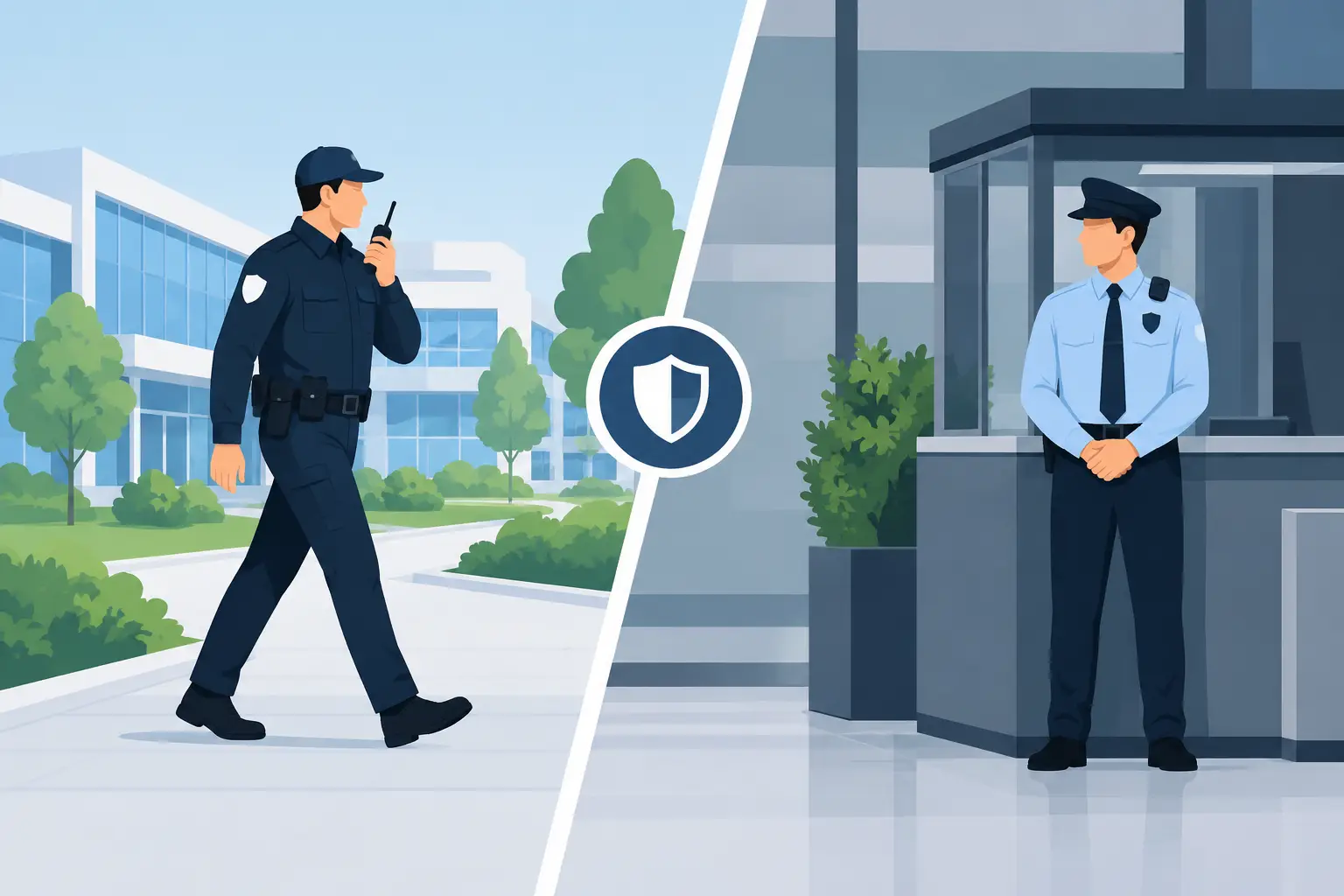

Industrial Facility Security Guide for Managers

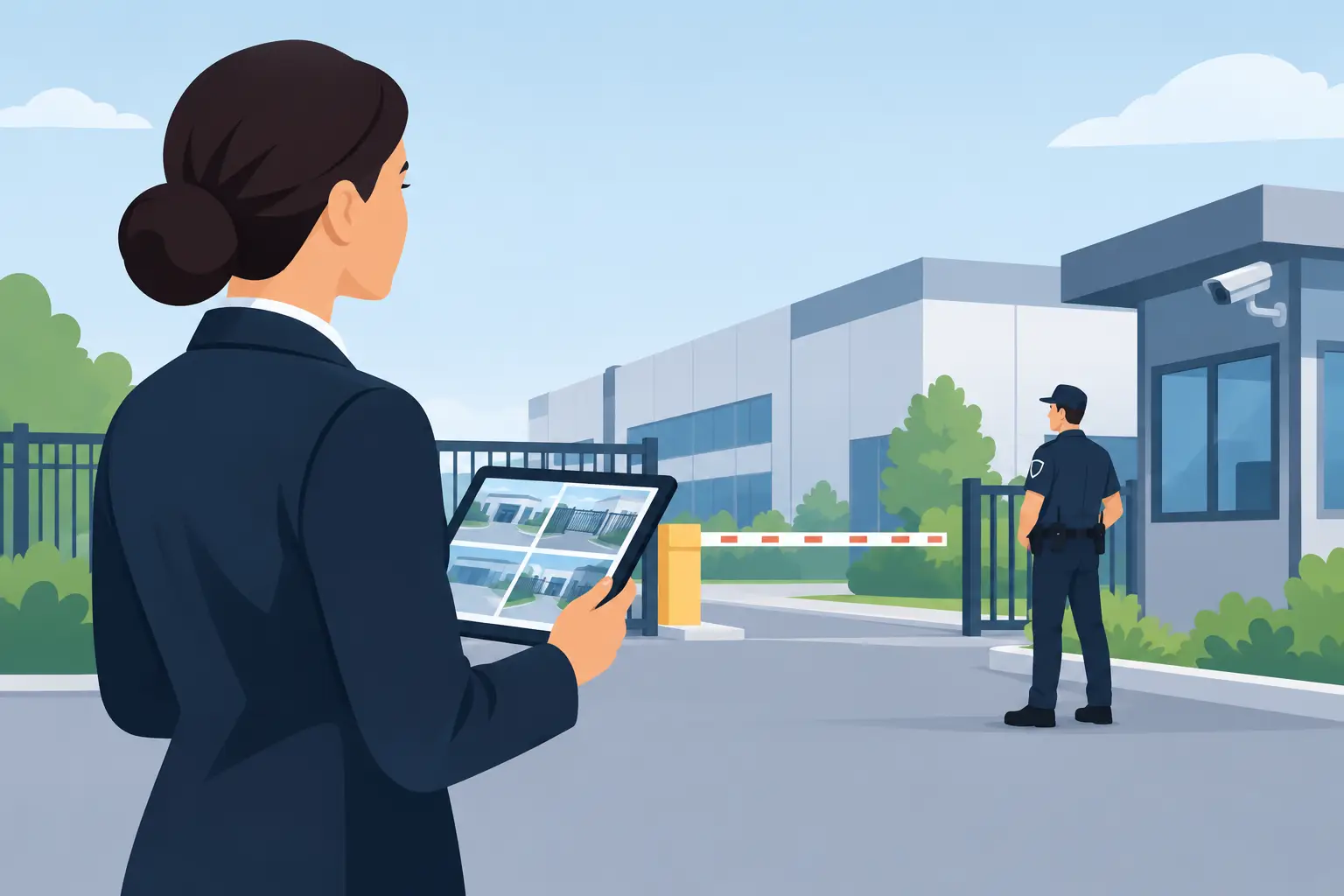
A loading gate left open during a shift change, an unverified driver at the dock, or a contractor moving through an unmarked access point can create an expensive security failure in minutes. This industrial facility security guide is built for facility managers who need more than occasional patrols. They need controlled access, visible deterrence, disciplined officers, and documentation that supports operations when an incident occurs.

Industrial properties face a different exposure profile than standard commercial buildings. They may operate overnight, receive frequent deliveries, store high-value materials, run heavy equipment, and depend on contractors who are unfamiliar with the site. Effective security must protect people, inventory, equipment, and business continuity without slowing legitimate work.

Start the Industrial Facility Security Guide With Risk Mapping

A security plan should begin with the actual way the facility operates, not a generic guard schedule. Walk the property during active hours and after hours. Identify where people, vehicles, materials, and information enter, move, wait, and leave.

For many industrial sites, the highest-risk areas are not the front office. They are employee entrances, truck gates, loading docks, equipment yards, fuel storage areas, perimeter fencing, roof access points, and blind corners behind buildings. A camera may cover part of these locations, but cameras do not challenge an unauthorized person, confirm a delivery appointment, or direct emergency responders to the right gate.

Risk mapping should account for normal operations and exceptions. A warehouse that is secure at 2:00 p.m. may be exposed at 5:30 a.m. when shift crews arrive before supervisors are present. A construction-related industrial site may need stronger perimeter checks on weekends, while a distribution center may require tighter truck verification during peak delivery windows.

Document the findings in site-specific post orders. Officers need clear direction on which doors must remain secured, where patrols must be conducted, who can authorize access, and when to escalate a problem. Vague instructions such as “watch the property” produce inconsistent coverage. Defined responsibilities create accountability.

Control Access Without Blocking Operations

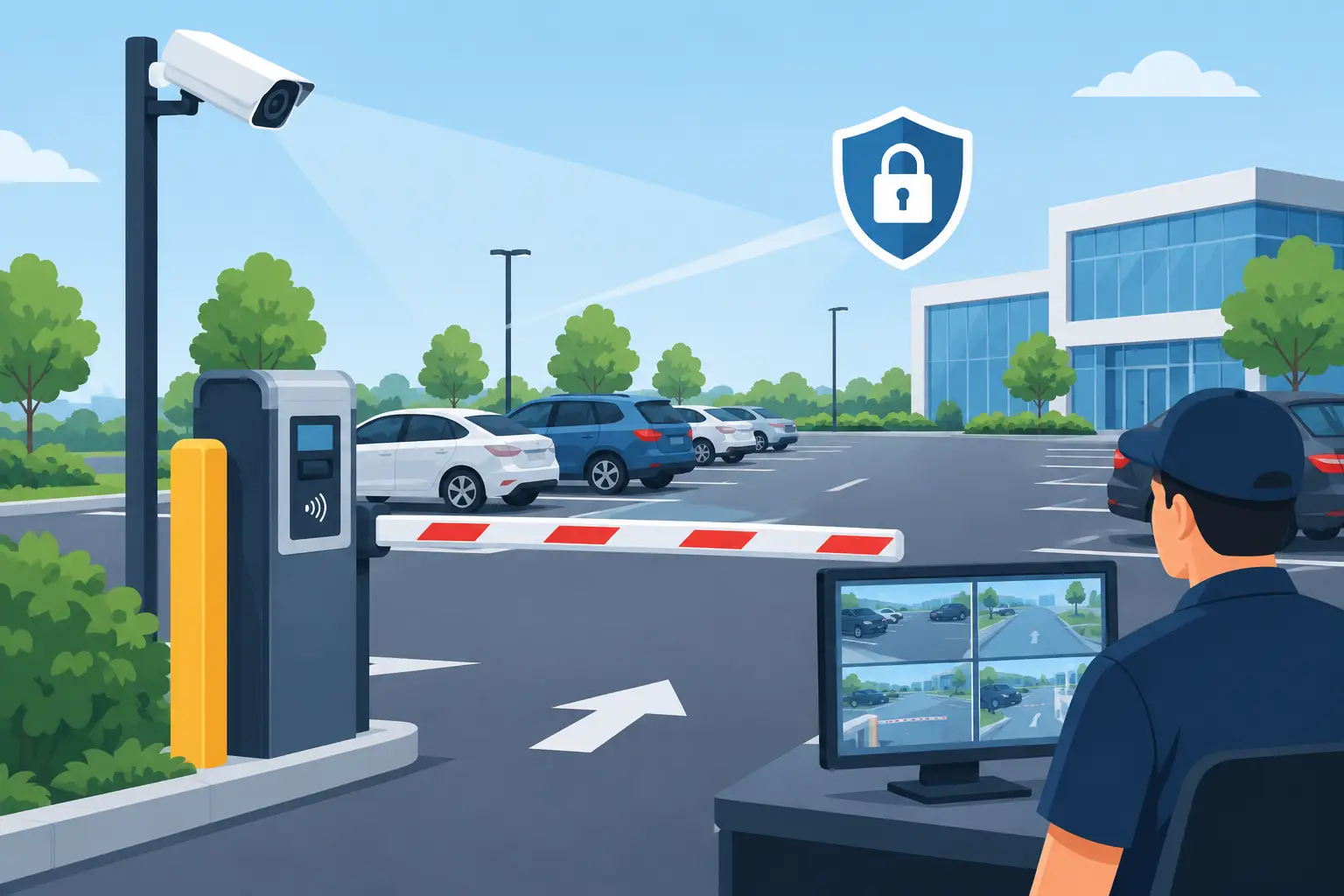
Controlled access monitoring is one of the most effective ways to reduce theft, trespassing, and unauthorized entry. It also supports safety by keeping unapproved visitors away from vehicle lanes, machinery, and restricted work zones.

The goal is not to create unnecessary delays. It is to establish a consistent process for employees, visitors, vendors, contractors, and drivers. A trained security officer can verify identification, confirm appointments, issue visitor credentials, record vehicle information, and direct approved personnel to the correct area.

A practical access-control procedure should define four decisions: who may enter, what they may access, when they may enter, and who approves an exception. Exceptions are where control often breaks down. A driver who claims to have an urgent pickup, a former employee requesting entry, or a contractor arriving without a work order should not be admitted based on pressure or familiarity alone.

At facilities with frequent truck traffic, gate officers should be given a current contact list and clear delivery verification steps. They should know whether to inspect seals, record trailer numbers, check bills of lading, or hold a vehicle in a designated staging area. The exact procedure depends on the client’s operations, but the procedure must be consistent across all shifts.

Build Visible Patrols Around Real Vulnerabilities

A stationary guard post can provide strong gate control, but industrial properties often need active patrol coverage as well. Visible foot or vehicle patrols deter trespassing, identify unsecured doors, detect fence damage, and discourage unauthorized loading or removal of property.

Patrol routes should not become predictable. An officer who checks the same areas at the same time every night can be easily avoided. Supervisors should establish required patrol points while allowing reasonable variation in timing and route order.

A productive patrol checks more than locks. Officers should observe conditions that could affect safety or operations, including leaking fluids, damaged fencing, blocked fire lanes, unsecured trailers, suspicious parked vehicles, unauthorized occupants, and signs of forced entry. When an issue is found, the officer should document it, notify the proper contact, and preserve the scene when necessary.

Marked vehicle patrols can be particularly valuable for large yards, multi-building properties, and sites with after-hours exposure. They create a visible security presence over a wider area and support faster response to alarms, perimeter concerns, or employee escorts. For interior-sensitive areas and close inspection of doors or equipment, foot patrols remain necessary.

Match Staffing to the Threat Level

Not every facility requires the same type of guard coverage. An unarmed officer may be the right fit for access control, visitor management, parking enforcement, and routine patrols at a lower-risk property. An armed assignment may be appropriate where the facility handles high-value cargo, faces a documented threat, operates in an isolated area, or requires a higher level of deterrence.

The decision should be based on risk, legal requirements, client policy, and the officer’s role. Armed coverage is not a substitute for poor access procedures or inadequate supervision. It carries additional responsibility and must be managed by a qualified provider with trained, properly licensed personnel.

Coverage hours matter as much as staffing type. A site may be well protected during business hours but exposed during shift changes, overnight production, holidays, or weekends. Review incident history, delivery schedules, alarm activity, and employee arrival patterns before setting the schedule. Security resources should follow exposure, not convenience.

Make Reporting Part of the Security Operation

If an incident is not accurately documented, management cannot properly investigate it, identify trends, or demonstrate that corrective action was taken. Reliable incident reporting turns security activity into usable operational information.

Officers should record patrols, visitor entries, vehicle activity, access denials, property damage, safety hazards, alarms, disturbances, and interactions with law enforcement or emergency services. Reports should state what happened, when and where it occurred, who was involved, what actions were taken, and who was notified.

Good reporting is factual and specific. It avoids assumptions, emotional language, and unsupported conclusions. “Officer observed the north pedestrian gate unsecured at 10:42 p.m. and notified the facility contact” is useful. “Gate was probably left open by staff” is speculation unless confirmed.

Management should review reports regularly, not only after a major incident. Repeated open-door findings, the same unauthorized vehicle, recurring fence damage, or frequent after-hours access requests may reveal a process failure that needs correction. A professional security provider should support this review with responsive supervision and consistent communication.

Prepare Officers for Incidents and Emergencies

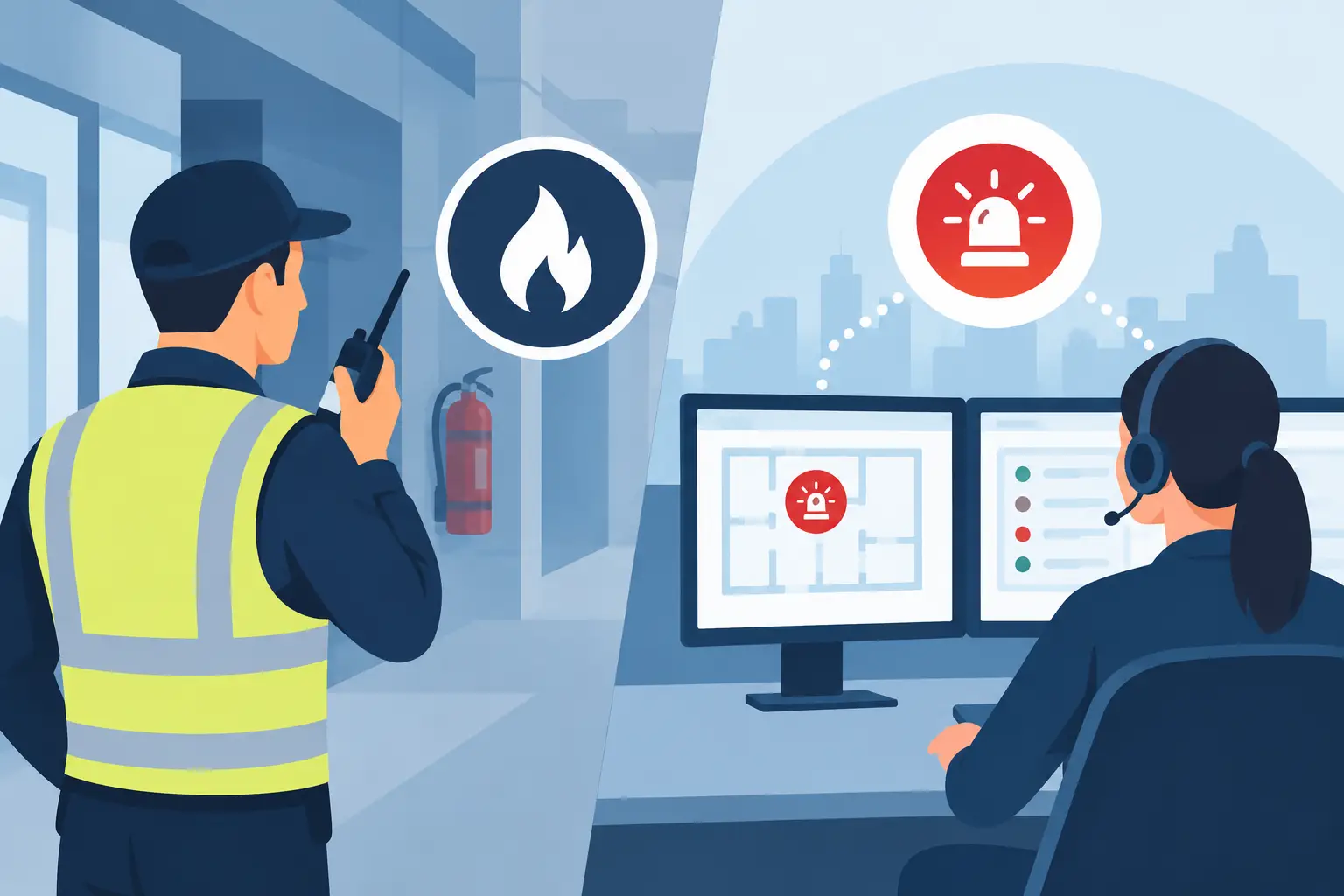
Industrial security personnel must know what to do before a critical event occurs. Post orders should cover fire alarms, medical emergencies, hazardous conditions, workplace violence concerns, evacuation procedures, suspicious packages, utility failures, and law enforcement response.

The officer’s role is often to secure access, protect the scene, notify key contacts, direct responders, and maintain order. Officers should not exceed their training or interfere with emergency operations. Their value comes from calm control, accurate communication, and disciplined adherence to site procedures.

Fire watch coverage deserves particular attention when a fire alarm or sprinkler system is impaired. A fire watch officer must conduct required checks, watch for signs of fire or smoke, maintain clear records, and report hazards immediately. This is not a casual patrol assignment. It is a life-safety responsibility that requires defined procedures and dependable reporting.

Evaluate the Guard Provider, Not Just the Hourly Rate

The lowest quoted rate can become the highest operational cost if guards arrive late, post orders are ignored, reports are incomplete, or no supervisor answers when conditions change. Industrial clients should evaluate the provider’s field management structure as carefully as the assigned officer.

Ask how officers are selected for industrial assignments, how they are briefed on site-specific procedures, how often supervisors inspect the post, and how the company handles call-offs or urgent coverage changes. Confirm that reporting expectations are clear and that the provider can scale coverage for a theft incident, labor disruption, shutdown, or special delivery.

Broadway Security Services approaches industrial coverage around the property’s access points, operating activity, traffic patterns, and documented risks. That approach supports a guard plan that protects the facility without losing sight of production schedules and daily business demands.

Review the Plan as the Facility Changes

Security plans should change when operations change. New tenants, expanded yards, different inventory, revised delivery routes, construction activity, staffing reductions, and recurring incidents can all create gaps in an otherwise sound plan.

Schedule regular reviews with facility leadership and security supervision. Compare incident reports against current post orders, inspect the perimeter, test communication procedures, and confirm that approved access lists are current. Small corrections made early are far less disruptive than responding after a theft, injury, or major access failure.

A disciplined security program gives industrial managers control where it matters most: at the gate, on the perimeter, around critical assets, and during the unpredictable moments when normal operations are interrupted. The right coverage does not simply place an officer on site. It establishes a visible, accountable presence that helps the facility keep moving safely.


Security Provider Credentials That Matter

A security proposal can look polished and still leave critical questions unanswered. Security provider credentials are the evidence behind the promise: proof that a company is authorized to operate, properly insured, staffed by qualified personnel, and prepared to account for activity at your site. For property managers, facility directors, construction supervisors, and event organizers, verifying those credentials before deployment is a basic control against preventable exposure.

The right provider does more than place a uniformed person at a post. It builds an accountable protection plan around access points, operating hours, public traffic, known hazards, and the reporting standards your organization needs. Credentials help you distinguish that level of service from minimally supervised staffing.

Start With the Provider’s California License

For contract security work in California, the company itself should hold an active Private Patrol Operator, or PPO, license through the Bureau of Security and Investigative Services. This is the first credential to verify because it confirms the provider is authorized to furnish private security services in the state.

Ask for the company name as it appears on the license, the license number, and its expiration date. The name on the proposal, agreement, insurance certificate, and billing documents should align. A mismatch is not automatically disqualifying, but it should be explained before work begins. Some businesses operate under a DBA, while others may use a parent company or affiliated entity. Clear documentation prevents uncertainty over which legal entity is responsible for the assignment.

A current PPO license does not, by itself, tell you how well a company supervises officers or manages incidents. It is the starting point, not the full evaluation. The next step is confirming that the personnel assigned to your property have the qualifications required for their roles.

Verify Security Provider Credentials for Each Assignment

Security needs differ by site. An unarmed lobby officer, a vehicle patrol officer, a fire watch guard, and an armed executive protection detail should not be evaluated by the same narrow checklist. The provider should be able to explain which credentials apply to the specific assignment and why.

Guard registration and required training

Security officers performing guard duties in California generally need an active guard registration, commonly called a guard card. A qualified provider should verify officer eligibility before scheduling and maintain records showing that required training has been completed.

For the client, the practical question is not simply whether guards hold cards. Ask how the company confirms credential status, tracks expirations, and prevents unapproved substitutions. A reliable operation has a documented process for assignment approval, relief coverage, and supervisory review. This matters when a site needs consistent post knowledge, controlled access monitoring, visitor screening, or accurate incident documentation.

Training should also match the work. A guard assigned to a residential community may need strong de-escalation, access-control, and customer-service discipline. A construction site may require after-hours patrol awareness, perimeter checks, equipment protection, and hazard escalation. For a special event, crowd movement, emergency communication, and entry procedures may be the priority.

Armed guard qualifications

If armed coverage is being considered, request confirmation that assigned officers hold the required California firearms qualifications and are authorized for armed security work. The provider should also be able to explain its firearms policies, requalification procedures, reporting requirements, and supervisor response protocols.

Armed service is not automatically the best answer to a security concern. It can be appropriate for high-value assets, elevated threats, executive protection, certain logistics assignments, or sites with a documented risk profile. It also requires tighter selection, clearer post orders, closer management, and a disciplined use-of-force framework. A provider that recommends armed guards without discussing the operational reason, alternatives, and site controls is not conducting a serious assessment.

Specialized operational readiness

Some services are defined less by a separate license and more by procedure. Fire watch personnel, for example, must follow site-specific patrol intervals, hazard observation requirements, communication procedures, and documentation expectations. Parking enforcement requires clear authority, property rules, and consistent records. Cargo escort coverage requires route planning, communication discipline, and escalation procedures.

Ask how the provider translates its credentials into actual post orders. A guard may be qualified on paper but still need clear instructions on restricted areas, tenant access, delivery procedures, alarm response, emergency contacts, and when to notify management or law enforcement.

Insurance Should Match the Risk

Insurance is one of the most overlooked security provider credentials, particularly when coverage is selected quickly after an incident or staffing gap. Request a current certificate of insurance and review it against your contract requirements. Depending on the assignment, relevant coverage may include general liability, workers’ compensation, commercial auto coverage for patrol vehicles, and professional or errors-and-omissions coverage where applicable.

The limits that make sense depend on the property and assignment. A single unarmed officer at a low-traffic office may present a different exposure than vehicle patrols at multiple properties, armed coverage at a high-profile event, or security at an active construction site. Your broker, legal counsel, or risk manager can help establish appropriate requirements for the contract.

Do not treat the certificate as the complete answer. Confirm that the insured entity is the same company holding the PPO license and signing the agreement. If your organization requires additional insured status, waiver language, or notice provisions, address those requirements before deployment rather than after an incident.

Supervision Is a Credential You Can See in Practice

Licensing and insurance are essential, but they do not guarantee reliable field performance. The strongest indicator of accountability is often the provider’s operating system: how officers are briefed, how missed shifts are handled, how supervisors inspect posts, and how incidents are documented.

A provider should be prepared to describe who supervises the account, how often the site is reviewed, and what happens if an officer is late, absent, or unable to perform the assignment. For higher-exposure locations, responsive supervision may include site visits, patrol verification, management check-ins, and immediate escalation for serious incidents.

Documentation is equally important. Daily activity reports, incident reports, visitor logs, patrol records, and shift handoff notes create a record of what occurred and what action was taken. That record supports property management decisions, insurance claims, tenant communication, compliance reviews, and law enforcement follow-up when needed.

Broadway Security Services approaches credentials as part of field accountability, not a folder of paperwork. Licensed and trained guards need clear post orders, active management oversight, and reporting standards that give clients a usable picture of site conditions.

Questions to Ask Before You Sign

A qualified provider should answer direct questions without hesitation. Before finalizing an agreement, ask for the following:

  • Current PPO license information and the legal business name attached to it.
  • Confirmation that assigned officers have active registrations and assignment-appropriate training.
  • Armed officer qualification details when armed service is proposed.
  • Current insurance documentation that matches the scope of service.
  • A description of supervision, replacement coverage, and escalation procedures.
  • Sample reporting formats, including daily activity and incident reports.

These questions are not administrative formalities. They reveal whether the provider has control over its workforce and can support your operation when routine conditions change. A company that cannot explain its reporting process may struggle to produce reliable documentation after a trespass incident, employee dispute, vehicle collision, medical emergency, or property damage claim.

Look Beyond the Credential File

The best security provider credentials establish legal authority and baseline readiness. They do not replace an assessment of judgment, communication, appearance, response discipline, or site-specific planning. Those factors determine whether guards can enforce rules professionally while allowing employees, residents, visitors, vendors, and customers to move through the property without unnecessary disruption.

Before selecting a provider, compare the credentials with the proposed deployment plan. Does the staffing level match the hours of risk? Are entry points, patrol routes, and emergency contacts clearly defined? Is there a process for changes in tenant activity, construction phases, event attendance, or recurring incidents? A complete answer should connect the company’s qualifications to the conditions at your location.

Choose a security partner that can document its authority to operate, verify the readiness of every assigned officer, and show how supervision will protect the quality of service after the first shift. That is where credentials become meaningful: not as a sales claim, but as proof that protection at your property is being managed with discipline and accountability.

Choosing Unarmed Versus Armed Guard Deployment

A guard’s equipment should never be the starting point for a security plan. The right unarmed versus armed guard deployment decision begins with what is happening at the site: who enters, what assets are exposed, when the property is most vulnerable, and how quickly a routine incident could become a serious threat.

For a property manager or operations leader, the goal is not to select the most forceful-looking option. It is to place licensed, trained personnel in positions where they can deter misconduct, control access, document activity, and respond within the limits of the assignment. A guard program that is properly matched to the risk protects people, operations, and the client’s reputation.

Unarmed Versus Armed Guard Deployment Starts With Risk

Armed and unarmed officers serve different operational purposes. Neither is automatically better. An unarmed guard may be the stronger choice for a residential community, office lobby, retail center, school-adjacent facility, or customer-facing environment where daily interaction, policy enforcement, and visible presence are the primary needs.

An armed guard may be appropriate where there is a documented history of violent crime, a credible threat, high-value assets, sensitive materials, isolated operating hours, or a significant risk of armed confrontation. Examples can include certain industrial yards, cash-handling locations, executive assignments, cargo operations, and properties in areas with repeated violent incidents.

The decision should be based on a written risk assessment, not assumption. A location may have theft problems without having a threat profile that justifies armed staffing. Another site may appear quiet during business hours but become exposed after closing because it has limited lighting, open perimeter access, and valuable equipment left outside.

Security planning requires a clear view of the full operating cycle. Foot traffic, delivery schedules, tenant behavior, neighborhood conditions, access points, alarm activity, prior incidents, and emergency response times all matter.

What Unarmed Guards Do Best

Unarmed security is often the foundation of an effective site protection program. A professional unarmed officer provides visible deterrence while preserving a controlled, approachable atmosphere for employees, residents, customers, visitors, and vendors.

At commercial properties, an unarmed guard can monitor entrances, verify visitors, enforce badge requirements, manage contractor sign-in, conduct patrols, report hazards, and address unauthorized activity before it escalates. At multifamily communities, the same officer may monitor common areas, enforce parking rules, document disturbances, respond to resident concerns, and identify access-control failures that create repeat problems.

The effectiveness of unarmed coverage is not determined by whether an officer carries a weapon. It depends on training, posture, communication, patrol discipline, site knowledge, and supervisory support. An alert officer with clear post orders can prevent many incidents by being seen, asking the right questions, recognizing irregular activity, and contacting law enforcement promptly when circumstances require it.

Unarmed guards are also well suited to locations where de-escalation and customer service must operate together. A guard stationed at an office building or special event must enforce rules without creating unnecessary friction. Professional presence, calm communication, and accurate reporting are often more valuable than an aggressive approach.

When Armed Coverage May Be Necessary

Armed deployment requires a higher threshold because the consequences of the assignment are greater. The guard must be properly licensed and trained for armed duties, and the client must understand that an armed officer is not a substitute for law enforcement or a response plan.

An armed guard is generally considered when the site faces a credible risk of violent crime or when the nature of the assets creates a foreseeable threat. A construction project with repeated equipment theft may need stronger access control, vehicle patrols, lighting improvements, and unarmed overnight coverage before armed staffing becomes necessary. By contrast, a cargo transfer point handling high-value loads during late-night hours may present a risk profile where armed protection is justified.

Armed officers must work from precise post orders. Those instructions should establish patrol boundaries, permitted access points, escalation procedures, communications requirements, emergency contacts, reporting standards, and coordination with law enforcement. The assignment must also define what the officer is expected to protect and what falls outside the guard’s authority.

A firearm alone does not create control. Disciplined decision-making, regular supervision, reliable communications, and documented procedures do. Without those elements, armed deployment can introduce uncertainty rather than reduce it.

Assess the Site Before Setting the Post

A practical security assessment asks direct questions. Is the main problem trespassing, theft, workplace conflict, vandalism, unauthorized access, or a credible threat of violence? Are incidents concentrated at a particular gate, parking area, loading dock, stairwell, or shift change? Does the property need a stationary officer, mobile patrol coverage, or a combination of both?

It also helps to distinguish between a nuisance pattern and a high-consequence risk. Repeated loitering near a retail center may require consistent foot patrols and firm access enforcement. A series of threats against personnel, attempted forced entries, or targeted cargo theft requires a more formal review of staffing level, officer qualifications, response procedures, and potentially armed coverage.

Site layout matters as much as incident history. A guard can only observe what the deployment allows them to observe. Poor sightlines, unsecured side entrances, broken gates, inadequate lighting, and uncontrolled vehicle access can undermine even the best officer. Correcting those conditions may reduce the need for higher-cost staffing or allow existing coverage to perform more effectively.

For Los Angeles-area properties, security conditions can also change block by block. A plan that works for a controlled office campus may not fit a downtown loading facility, an Encino residential property, or an active construction site in Sherman Oaks. The post should follow the conditions on the ground, not a generic staffing model.

Build a Layered Security Plan

The most effective deployments rarely rely on a guard alone. Security improves when personnel are supported by controlled access procedures, functioning cameras, lighting, locks, gates, visitor rules, alarm protocols, and management follow-through.

For example, an unarmed officer at a distribution facility can be highly effective when drivers use a defined check-in process, trailers are tracked, restricted areas are secured, and supervisors receive incident reports before small issues become losses. If high-value cargo moves through the site, the plan may add escort procedures, vehicle patrols, or armed coverage during specific transfer windows rather than placing an armed officer at the property around the clock.

This approach keeps the deployment proportional. It also makes budget decisions more defensible because each security measure has a defined purpose. Clients can see whether they are paying for access control, overnight deterrence, employee safety, asset protection, or high-risk response capability.

Supervision and Reporting Determine Results

Whether officers are armed or unarmed, accountability separates a professional security program from simple guard placement. The officer needs clear post orders that identify duties, patrol intervals, contact procedures, restricted areas, reporting expectations, and escalation requirements.

Management oversight is equally important. Supervisors should confirm that officers understand the post, inspect performance, address coverage issues, and adjust procedures when incident patterns change. A guard who repeatedly documents an unsecured door, recurring trespass activity, or a dangerous blind spot is providing operational intelligence. That information should lead to action.

Detailed reports protect the client in several ways. They create a record of incidents, show that procedures were followed, support communication with property management or law enforcement, and identify trends that may justify changes in deployment. Reporting should be factual, timely, and specific enough to support decisions.

Broadway Security Services approaches deployment as a managed operation: trained officers, site-specific post orders, responsive supervision, visible patrol procedures, and reliable incident reporting. That structure is as essential for an unarmed lobby post as it is for an armed high-risk assignment.

Make the Decision Proportional and Review It Often

Security needs are not permanent. A retail site may require additional unarmed coverage during holiday traffic. A construction project may need stronger overnight protection as equipment arrives and perimeter conditions change. A facility facing a temporary threat may require armed coverage for a defined period while management, law enforcement, and security leadership reassess the risk.

Review deployment after major incidents, operational changes, tenant turnover, new construction phases, seasonal demand, or changes in neighborhood activity. The right question is not whether armed or unarmed security looks stronger. The question is whether the assigned officers, procedures, and support systems can reliably control the risks the site actually faces.

A disciplined security plan gives decision-makers a clear path forward: place the right level of protection at the right post, give officers the authority and instructions to perform their duties, and adjust coverage before a known vulnerability becomes a costly event.

Fire Watch Versus Alarm Monitoring Explained

A fire alarm panel can report a signal from an impaired building system. It cannot walk a dark stairwell, check a temporary heating unit, keep an exit route clear, or identify smoke before a detector activates. That is the operational difference in fire watch versus alarm monitoring. Property managers and facility leaders need to understand where each service begins, where it stops, and when a trained on-site presence is required.

For a commercial property, construction site, apartment community, warehouse, or institutional facility, the right decision protects people, supports business continuity, and creates a defensible record of the actions taken during an impairment. The wrong assumption can leave a site exposed during the hours when a fire protection system is unavailable or conditions change quickly.

Fire Watch Versus Alarm Monitoring: Different Functions

Alarm monitoring is a communications function. When a connected fire alarm system detects an alarm, trouble, or supervisory condition, it transmits a signal to a monitoring center. Depending on the account instructions and signal type, the monitoring center may contact designated representatives, notify emergency responders, or both.

This service has real value. It provides off-site awareness when a property is closed, staff are not near the fire alarm control panel, or a signal requires immediate escalation. It is part of an organized fire protection program, particularly for occupied buildings that rely on automatic detection and notification systems.

But alarm monitoring does not provide continuous human observation of the property. The operator receiving the signal is not inspecting fire extinguishers, checking whether doors are blocked, watching for hot work hazards, or confirming that occupants have safely cleared an affected area. Monitoring responds to information transmitted by the system. It does not replace physical patrol activity.

Fire watch is an on-site risk-control measure. Trained security officers make recurring patrols of designated areas, look for signs of fire or unsafe conditions, maintain awareness of access and occupancy activity, and follow site-specific instructions for reporting and emergency response. Their visible presence is designed to identify and escalate hazards while the property has reduced fire protection capability or elevated fire exposure.

When Alarm Monitoring Is the Right Fit

Alarm monitoring is generally appropriate when the fire alarm system is fully operational and the property needs reliable off-site signal handling. A monitored system may be the right baseline for a business that closes overnight, a multifamily property with limited on-site staff, or a facility where immediate notification procedures need to be clearly defined.

Its effectiveness depends on more than the equipment itself. The account must have current emergency contacts, accurate site information, and documented call procedures. Facility managers should know who receives alarm, trouble, and supervisory notifications, who has authority to make decisions after hours, and how responders gain access to the property.

Monitoring can also support a temporary issue that does not disable required detection or notification functions. For example, a low-priority condition may generate a trouble signal while the essential system remains functional. The fire alarm contractor, property representative, and authority having jurisdiction should determine whether the condition requires a fire watch or another compensating measure.

A monitoring center should never be treated as proof that the building is adequately protected during a full or partial system impairment. It can notify people that a problem exists. It cannot manage the conditions on the ground.

When an On-Site Fire Watch Is Needed

Fire watch is commonly used when a fire alarm, sprinkler, standpipe, or other fire protection component is impaired, when repair work is underway, or when temporary site conditions create a higher risk of ignition or delayed detection. Construction and renovation projects often need closer observation because walls, access routes, occupancy patterns, and utilities can change from one shift to the next.

The decision is not always automatic. Requirements can vary based on the system affected, the duration of the impairment, building use, occupancy, fire load, and direction from the local fire authority. In Los Angeles and surrounding jurisdictions, facility leaders should coordinate with their fire alarm contractor, fire protection provider, insurer when applicable, and the authority having jurisdiction. Do not wait until after normal business hours to determine who is responsible for coverage.

A professional fire watch assignment starts with clear post orders. Officers need to know which systems are impaired, which floors or zones require patrols, the required patrol frequency, the location of extinguishers and standpipes, emergency exits, assembly areas, utility shutoffs when applicable, and the escalation chain. A generic guard standing at a lobby desk is not a fire watch plan.

During patrols, officers should remain alert for smoke, unusual odors, overheating equipment, open flames, unsafe storage, blocked exits, disabled extinguishers, unauthorized work, and signs that a temporary condition has become more serious. If a hazard is identified, the officer follows established emergency procedures, notifies the appropriate contacts, and helps support orderly response within the scope of assigned duties.

What Documentation Should Include

Documentation is one of the clearest distinctions between informal coverage and accountable fire watch service. A property may need to demonstrate when the impairment began, what temporary protections were placed in service, and what actions were taken until repairs were completed. Detailed reporting also gives management a reliable record if conditions change between shifts.

A proper fire watch log should identify the property, date, patrol times, officer name, areas inspected, conditions observed, and any corrective or escalation actions. It should also record when a system was restored and when the fire watch was released by the appropriate party. If an officer observes a blocked egress path or an unsafe work practice, the report should state the location, condition, notification made, and outcome.

Reporting does not eliminate risk by itself. Its value comes from disciplined patrols, prompt escalation, and supervisory review. Broadway Security Services builds fire watch coverage around site-specific post orders and reliable incident reporting so clients have a visible record of the protection in place.

Cost Is Not the Only Comparison

When comparing fire watch and alarm monitoring, cost matters, but it should not be the only factor. Monitoring is typically a standing service with lower routine cost because it relies on remote signal handling. Fire watch requires licensed personnel on site, often around the clock, and its cost reflects staffing, supervision, patrol requirements, reporting, and the duration of the assignment.

The practical question is whether remote notification can manage the risk at the site. If the system is working properly and the need is signal response, monitoring may be sufficient. If detection, notification, or suppression capabilities are impaired, or the property faces elevated hazards that require eyes on the ground, on-site fire watch may be the more appropriate measure.

There are also hybrid situations. A facility may maintain alarm monitoring while deploying fire watch personnel during a temporary impairment. This approach preserves the available signal path while adding physical patrols and immediate hazard observation. It is often a sensible option when only part of a system is affected, but the exact arrangement should follow the direction of qualified fire protection professionals and the local authority.

How to Set Up Effective Fire Watch Coverage

Start by defining the impairment and the area it affects. A single disabled device, a sprinkler outage in one zone, and a full fire alarm panel failure create different exposure levels. Confirm the start time, anticipated repair window, current occupancy, active operations, and any high-risk work taking place during the impairment.

Next, establish post orders that are specific enough for officers to execute consistently. The plan should identify patrol routes, inspection intervals, restricted areas, emergency contacts, access procedures, reporting requirements, and the instructions for a fire or smoke condition. Shift changes need formal handoff procedures so no gap develops between officers.

Finally, maintain management oversight. Supervisors should be able to verify officer arrival, review logs, address changing conditions, and confirm that coverage continues until the system is restored or the responsible authority releases the requirement. Fire watch is temporary, but the standard of accountability should remain high throughout the assignment.

The best protection decision is the one that matches the actual condition of the property. If the system can send a signal, monitoring gives your team timely notification. If the site needs active observation, disciplined patrols, and documented on-site response, place trained fire watch officers where the risk is – at the property itself.

Armed Versus Unarmed Coverage: Which Fits?

A warehouse with repeated after-hours trespassing, a busy apartment community with access-control gaps, and a corporate lobby managing daily visitors do not need the same security posture. Armed versus unarmed coverage is not a question of which option looks stronger. It is a deployment decision based on documented risk, guard responsibilities, public interaction, site layout, and the response expected when an incident occurs.

The right choice protects people, property, and business continuity without creating unnecessary operational or liability exposure. For Los Angeles-area property and facility leaders, the decision should begin with a clear assessment of what is happening at the site, not an assumption that a firearm is always the answer.

Armed Versus Unarmed Coverage Starts With the Assignment

Security coverage should match the assignment. A guard posted to verify employee badges, log deliveries, conduct visible patrols, and report maintenance hazards has a very different role from an officer assigned to a high-value cargo yard with credible threats of armed theft.

Unarmed officers are often the correct choice for locations where the primary need is deterrence, controlled access, rule enforcement, observation, and accurate reporting. Their visible presence can prevent unauthorized entry, discourage loitering, reduce vandalism, and give management a trained point of contact for incidents. For many commercial properties, residential communities, construction sites, schools, offices, and events, those functions address the actual risk more effectively than an armed posture.

Armed coverage may be appropriate when the site faces a higher and clearly defined threat level. This can include credible threats of violence, sensitive or high-value assets, cash or controlled-property exposure, isolated overnight operations, or locations where officers may be required to operate in conditions with elevated criminal risk. The key word is credible. A decision should be supported by incident history, operating conditions, local crime patterns, asset value, and the nature of the assignment.

An armed officer is not a substitute for a security plan. If gates are left open, cameras are poorly placed, visitor procedures are inconsistent, and management has no escalation process, adding an armed post will not correct those failures. Strong coverage starts with clear post orders, controlled access procedures, communication protocols, supervision, and reporting.

What Unarmed Guards Are Built to Do

A professional unarmed officer does more than stand at a desk or walk a perimeter. When properly deployed, the officer establishes a visible, accountable presence that helps the site operate under control. The assignment can include access monitoring, visitor screening, patrols of vulnerable areas, parking enforcement, fire-watch observation, alarm response, suspicious-activity documentation, and coordination with management or law enforcement.

This coverage is especially effective where security success depends on early intervention. A trained guard can identify an unsecured door, an unauthorized vendor, a developing disturbance, a safety hazard, or an individual testing property boundaries before the issue becomes more serious. The officer’s value comes from attention, communication, professional judgment, and consistent documentation.

Unarmed coverage also fits sites with frequent public interaction. Apartment lobbies, medical offices, retail environments, schools, houses of worship, and special events often need officers who can enforce rules with a calm, professional presence while preserving a welcoming environment. The guard should be able to communicate expectations, de-escalate conflict where appropriate, request assistance, and document events accurately.

That does not mean unarmed guards are passive. They must remain alert, follow post orders, maintain a safe position, recognize when conditions are beyond the scope of the assignment, and contact emergency services when needed. Their role is disciplined prevention and observation, not unnecessary confrontation.

When Armed Coverage Is Appropriate

Armed security should be considered carefully, not selected as a default response to general concern. The presence of an armed officer can provide a heightened deterrent at sites with elevated exposure, but it also requires tighter operational controls. There must be a defined reason for the assignment, a clear understanding of officer duties, and management procedures that support the role.

A high-risk logistics facility is one example. If the location handles valuable cargo, operates during late-night hours, has limited natural surveillance, and has experienced organized theft attempts, an armed post may be justified as part of a wider plan that includes gate control, vehicle verification, perimeter patrols, lighting, and incident reporting. Similarly, an executive protection assignment or a site with verified threats may require armed personnel with the appropriate training and advance planning.

In California, armed assignments should only be staffed by officers who hold the required security registration and firearm authorization. The provider must also establish firearm policies, use-of-force expectations, communications procedures, incident-reporting requirements, and supervision appropriate to the assignment. Clients should expect to discuss these controls before coverage begins.

An armed officer does not replace law enforcement and should not be assigned vague duties such as “handle any problem.” Post orders must define authority, access responsibilities, reporting lines, emergency actions, and when officers are expected to disengage, seek cover, contact supervisors, or call 911. Clarity protects the officer, the client, employees, visitors, and the public.

The Trade-Offs Behind an Armed Post

Armed coverage carries a different level of responsibility for both the provider and the client. It may be necessary at some sites, but it can be counterproductive where the threat does not warrant it. A visibly armed officer can change how tenants, customers, guests, and employees perceive the property. In some environments, that added deterrence is reassuring. In others, it may create concern or conflict with the organization’s culture and daily operations.

Cost is also part of the decision, though it should never be the only factor. Armed assignments typically require more specialized staffing, screening, training, insurance considerations, and operational oversight. Selecting armed coverage solely because assets are valuable, without reviewing actual exposure and guard responsibilities, can create expense without improving the weakest points in the security program.

The better question is not, “How much is at stake?” It is, “What can reasonably happen here, where are we vulnerable, and what duties must the officer perform to reduce that risk?” A site storing expensive equipment behind controlled access, monitored gates, and regular patrols may need unarmed enforcement and stronger procedures. A site with repeated targeted intrusions and credible violent threats may require a more elevated posture.

Build Coverage Around Real Conditions

Before choosing a service level, decision-makers should review incident reports, access points, traffic patterns, hours of operation, neighboring activity, asset exposure, employee concerns, and existing security measures. This review should identify not only threats but also the routine conditions that allow incidents to develop, such as poor key control, unmonitored delivery doors, inadequate visitor logs, or inconsistent after-hours procedures.

Then define the officer’s mission in practical terms. Will the guard check credentials at one entrance, patrol a large property, monitor a construction gate, escort employees, manage vehicle access, observe a fire watch, or respond to alarms? A guard cannot effectively cover multiple distant responsibilities without a plan for patrol frequency, relief, communication, and supervisory support.

Post orders should make the assignment measurable. They should state where the officer is posted, what areas require inspection, what must be documented, which conditions require immediate escalation, and who receives reports. Daily activity reports and incident reports give management a record of conditions at the site and allow the security provider to adjust coverage when patterns emerge.

Broadway Security Services develops coverage around these operational details, including access points, site activity, patrol needs, and documented risks. That approach prevents a generic guard assignment from becoming a weak link in a property’s protection plan.

Reassess When Conditions Change

Security requirements are not permanent. A construction project may need stronger overnight coverage while equipment is exposed, then transition to a different post once the site is enclosed. A residential property may need temporary coverage after repeated vehicle break-ins, followed by revised parking controls and patrol schedules. An event venue may require additional officers during entry and exit periods but not throughout the entire day.

Review incidents, guard reports, tenant feedback, and operational changes on a regular schedule. If the current assignment is only reacting to problems, the post orders or staffing model may need to change. If a site has stabilized because access controls and visible patrols are working, an armed post may no longer be necessary.

The right security decision is the one that gives the officer a clear mission, gives management reliable accountability, and addresses the risk actually present at the property. Start with facts from the site, establish disciplined procedures, and select the coverage level that can be supported responsibly.

How to Secure Parking Lots Without Disrupting Operations

A parking lot can become a property’s most exposed area after business hours, during shift changes, or whenever access is loosely controlled. Knowing how to secure parking lots means treating the area as an active part of the facility, not an unmonitored space between the street and the building. The right plan protects people, vehicles, equipment, and operations while keeping legitimate traffic moving.

Start With a Site-Specific Parking Lot Risk Assessment

Effective parking lot security begins with an on-site assessment. A downtown office garage, a retail center, a construction site, and a logistics yard may all have parking areas, but they do not face the same threats. Property managers should identify when the lot is busiest, who is authorized to use it, where unauthorized entry occurs, and which areas lack visibility.

Walk the property during daytime and after dark. Review vehicle entrances, pedestrian gates, stairwells, elevators, loading zones, rear access doors, perimeter fencing, and places where someone could hide or enter unnoticed. Pay attention to traffic patterns at opening, closing, shift changes, and special events. These periods often create congestion and reduce staff attention to suspicious activity.

Incident history should shape the plan. Vehicle break-ins, vandalism, catalytic converter theft, loitering, illegal dumping, trespassing, employee harassment, and unauthorized parking each require a different response. A security provider should convert these findings into clear post orders, patrol routes, escalation procedures, and reporting requirements.

Control Access Before Problems Reach the Property

Open access creates uncertainty. A lot intended for tenants, employees, customers, or approved vendors should clearly communicate who may enter and what rules apply. Signs alone are not enough, but visible rules support enforcement and reduce disputes when staff or guards address violations.

Depending on the property, access control may include gates, key cards, access codes, visitor registration, permit decals, reserved-area markings, and monitored pedestrian entrances. The objective is not to make every property difficult to enter. It is to separate authorized use from unrestricted public access.

For higher-exposure locations, trained security officers can verify credentials, direct visitors, monitor delivery activity, and challenge unauthorized persons professionally. This is particularly useful at industrial sites, residential communities, medical facilities, private campuses, and properties with recurring after-hours activity.

Access procedures must fit operations. A gate that slows employee arrival can create frustration and backups onto public streets. A visitor policy that is too loose can leave the site exposed. The strongest approach applies tighter controls during vulnerable hours while maintaining practical entry procedures for authorized users.

Improve Visibility With Lighting, Layout, and Maintenance

Poor visibility gives offenders time and concealment. Lighting should cover driving lanes, pedestrian walkways, payment stations, entrances, exits, stairwells, elevators, dumpster enclosures, and the perimeter. Replace failed fixtures promptly and inspect lighting after dark, when gaps are easiest to identify.

Good lighting does not mean placing bright fixtures everywhere without a plan. Glare can interfere with drivers, cameras, and nearby tenants. Lighting should be positioned to provide consistent coverage, reduce deep shadows, and support clear identification of people and vehicles.

Landscaping and maintenance also affect security. Overgrown shrubs can block camera views or create concealment near walkways. Faded striping causes traffic confusion. Broken gates, damaged fencing, abandoned vehicles, and overflowing trash areas signal that the property is not actively managed. Prompt correction supports deterrence and helps guards enforce expectations from a position of authority.

Use Visible Patrols to Create Real Deterrence

Cameras and gates are valuable tools, but they do not replace a visible, trained security presence. A marked vehicle patrol or uniformed officer can observe conditions, intervene early, provide direction, and respond to problems while they are developing. That visible presence is often what causes trespassers, thieves, and disruptive individuals to move on.

Patrols should not follow a predictable pattern every night. Fixed patrol times allow repeat offenders to identify gaps. Instead, officers should vary routes and timing while still covering priority areas such as isolated rows, perimeter lines, employee entrances, loading areas, and vehicles storing equipment or inventory.

A disciplined patrol program includes more than driving through the lot. Officers should inspect gates and doors, check for suspicious vehicles, identify safety hazards, watch for damaged property, confirm lighting conditions, and document enforcement activity. Where appropriate, officers can provide employee escorts, assist with traffic flow, and maintain a visible presence near closing times.

Choose Armed or Unarmed Coverage Based on Risk

The appropriate level of guard coverage depends on the site, operating hours, incident history, valuables on site, and potential threat level. Many parking facilities benefit from professional unarmed officers who can manage access, enforce rules, observe activity, and contact law enforcement when necessary.

Armed coverage may be appropriate for higher-risk environments, valuable cargo operations, sensitive facilities, or locations with a documented threat profile. This decision should follow a professional assessment and a clear understanding of the guard’s responsibilities. More force is not automatically better security. The goal is appropriate protection delivered by licensed, trained personnel under active supervision.

Make Cameras Part of an Active Security Plan

Video surveillance is most effective when cameras are placed for a specific purpose. Cover vehicle entrances and exits, pedestrian access points, payment areas, loading zones, high-theft areas, and locations where people may be isolated. Images should be usable, not merely recorded. Camera placement, angle, lighting, and retention procedures all affect whether footage can support an investigation.

Cameras should complement patrols rather than create false confidence. A camera may document a vehicle break-in, but a nearby officer may deter it, report it immediately, preserve the scene, and assist the victim. For properties with monitoring capabilities, establish who watches alerts, how they verify activity, and when they dispatch a guard or call law enforcement.

Regular testing matters. Check that cameras record properly, timestamps are accurate, views are not blocked, and management can retrieve footage when an incident occurs. Equipment that has not been maintained may fail at the exact moment it is needed.

Establish Clear Rules for Parking Enforcement

Unauthorized parking can become a security issue when it blocks fire lanes, loading areas, accessible spaces, emergency access, tenant spaces, or traffic lanes. It also signals that rules can be ignored. Clear enforcement protects the property’s operations and reduces conflict between legitimate users.

Post parking terms visibly and apply them consistently. Security officers should know when to issue a warning, request a vehicle be moved, document a violation, contact management, or coordinate with an authorized towing provider. Officers should avoid confrontational enforcement. Professional communication, accurate documentation, and adherence to property policy protect both the client and the public.

For mixed-use properties, define separate procedures for customers, employees, residents, vendors, and contractors. A vendor truck parked briefly in a loading area may be expected. An unapproved vehicle remaining there overnight is a different situation. Specific rules allow officers to act with confidence instead of making inconsistent judgment calls.

Prepare Officers and Staff for Incidents

The best parking lot security plan answers practical questions before an incident occurs. Who responds to a suspicious person? What happens if a vehicle gate is damaged? Who contacts law enforcement? How are employees notified if a threat develops? Where should an officer position themselves during a medical emergency or evacuation?

Written post orders give officers a defined scope of responsibility. They should include patrol duties, access procedures, emergency contacts, reporting standards, site maps, restricted areas, parking enforcement procedures, and instructions for handling incidents. Supervisory review helps ensure those instructions are followed consistently.

Staff also need a simple reporting process. Employees and tenants should know how to report suspicious behavior, damaged vehicles, lighting failures, and safety concerns without assuming someone else will handle it. Prompt reports give security teams an opportunity to correct vulnerabilities before they become losses.

Require Detailed Reporting and Management Oversight

Security coverage should produce accountability, not just a person standing at an entrance. Daily activity reports, incident reports, patrol records, photographs when appropriate, and documented maintenance concerns provide management with a clear record of what occurred on the property.

Reporting also reveals trends. Repeated loitering near one entrance, recurring gate failures, frequent unauthorized parking, or a pattern of vehicle damage may indicate a larger issue requiring operational changes. Responsive supervision turns those observations into action through adjusted patrol schedules, improved lighting, revised access controls, or additional coverage during high-risk periods.

For Los Angeles-area properties, where parking congestion, public access, and after-hours activity can vary significantly by neighborhood, a site-specific deployment plan is especially valuable. Broadway Security Services approaches parking lot coverage with licensed guards, defined post orders, visible patrol procedures, and reliable incident reporting designed around the conditions of the property.

A secure parking lot is not created by one camera, one gate, or one occasional patrol. It is maintained through visible control, consistent enforcement, trained personnel, and a willingness to correct small vulnerabilities before they create a serious incident.

Fire Watch Requirements for California Properties

A fire alarm panel in trouble, an out-of-service sprinkler riser, or a disabled fire pump changes the risk profile of a property immediately. Fire watch requirements exist to close that gap with active, documented human observation until the protection system is restored or the Authority Having Jurisdiction approves another solution. For property managers and facility leaders, the question is not simply whether to place a guard on site. It is whether the coverage is organized, continuous, and defensible if an incident occurs.

Fire watch is a life-safety assignment. It requires trained personnel, clear post orders, reliable communication, patrol discipline, and documentation that shows the property was monitored responsibly during a system impairment.

What Triggers a Fire Watch?

A fire watch is commonly required when a building’s automatic fire-protection systems are impaired, unavailable, or unable to provide their intended level of protection. The specific trigger, duration, and patrol frequency depend on the building, the affected system, the scope of the impairment, occupancy conditions, and direction from the local fire authority.

Common situations include a disabled fire alarm system, sprinkler system impairment, fire pump outage, standpipe issue, damaged fire hydrant connection, or a planned shutdown for repair work. Construction activity can also create fire watch obligations, particularly when temporary fire-protection measures are incomplete or when hot work introduces ignition risk.

Not every trouble signal requires the same response. A brief, isolated issue may be handled differently than a complete loss of alarm or sprinkler coverage in an occupied high-rise, warehouse, healthcare setting, or multifamily property. The responsible decision-maker should assess the condition promptly and follow the applicable fire code, lease obligations, insurer requirements, and instructions from the Authority Having Jurisdiction.

Fire Watch Requirements Start With Notification

When a fire-protection system is impaired, the first priority is determining who must be notified. Depending on the property and local direction, this can include the fire department or fire prevention bureau, alarm monitoring company, sprinkler contractor, building owner, tenants, insurer, and onsite management team.

Notification should not become an informal chain of phone calls with no record. The impairment should be documented with the affected system, location, time discovered, reason for the outage, expected repair timeline, responsible vendors, and the interim protective measures put in place. If the fire authority gives direction, record that direction clearly in the site file and communicate it to every person assigned to the post.

For large or multi-tenant properties, management should also consider how occupants will be informed. If evacuation notification is impaired, tenants may need temporary instructions on reporting smoke or fire, using exits, and avoiding hazardous work areas. The appropriate message depends on the site condition. Broad announcements without a clear operational purpose can create confusion, but failing to communicate a meaningful impairment can leave occupants unprepared.

What a Qualified Fire Watch Officer Does

A fire watch officer is not there to replace a working alarm panel by standing near a lobby desk. The assignment requires active hazard monitoring. Officers patrol designated areas, look for signs of fire or smoke, identify blocked exits or unsafe conditions, maintain access to fire lanes, and initiate emergency procedures if a fire is discovered.

A properly assigned officer should understand the property’s emergency procedures, alarm and suppression system status, evacuation routes, stairwells, extinguisher locations, utility shutoffs when relevant, and how to contact emergency services. The officer must also know the limits of the assignment. Fire watch personnel observe, report, warn occupants, and begin the emergency notification process. They do not attempt to fight a fire beyond their training or place themselves in an unsafe environment.

Post orders should define patrol routes, inspection intervals, restricted areas, reporting expectations, emergency contacts, and the chain of command. At a construction site, post orders may address combustible storage, temporary electrical hazards, welding locations, and after-hours access. At an occupied commercial building, the emphasis may be on tenant floors, electrical rooms, mechanical areas, stairwells, loading docks, and clear egress.

Patrol Frequency and Continuous Coverage

Many fire watch assignments require repeated patrols at prescribed intervals, while others may require continuous monitoring of certain areas. The correct schedule is not something to guess. It should be based on the direction of the Authority Having Jurisdiction, the impairment plan, and the conditions at the property.

A single officer may be sufficient for a small, uncomplicated site with a limited impairment. That same staffing level may be inadequate for a large building with multiple floors, exterior storage, separate structures, active operations, or areas that cannot be effectively monitored within the required interval. Coverage must match the actual patrol route and response needs, not a budget assumption.

Visible presence matters. A uniformed officer conducting disciplined patrols can identify hazards before they escalate while also deterring unauthorized entry, vandalism, and unsafe activity during a vulnerable period. However, visibility alone is not compliance. The patrol must be performed, timed, and documented.

Fire Watch Logs Must Be Specific

Accurate reporting is one of the most important fire watch requirements. If a fire system remains impaired for several hours, overnight, or across multiple shifts, the log becomes the record showing how the property was protected during that period.

Each entry should identify the date, time, officer, patrol area, observed conditions, and any corrective action or notification made. Reports should document items such as smoke or burning odors, open electrical panels, obstructed exits, combustible materials near ignition sources, unauthorized hot work, or damaged fire doors. If no hazards are found, that patrol should still be recorded.

Reports must be legible, complete, and consistent. Vague entries such as “all clear” provide little operational value and may not demonstrate that required areas were checked. A stronger report identifies the route or zones inspected and notes material conditions, including that exits were clear, fire lanes remained accessible, and no visible signs of smoke or fire were observed.

For extended impairments, supervisors should review reporting for missed patrols, incomplete routes, changing site conditions, and unresolved hazards. Responsive supervision is particularly valuable when an assignment runs through shift changes or involves a complex property with several patrol zones.

Reduce the Risk While the System Is Down

Fire watch is one layer of protection, not the only action a property should take. Management should reduce exposure while repairs are underway. The measures that make sense depend on the impairment, but the goal is consistent: remove avoidable ignition sources, preserve exit access, and make the site easier to monitor.

This may require postponing hot work, limiting work in affected areas, securing flammable materials, checking that fire doors close properly, keeping emergency access routes clear, and confirming that portable extinguishers are available and accessible. In some situations, the fire authority may require additional measures or limit occupancy until protection is restored.

Do not allow routine operations to override the impairment plan. A loading dock cannot be blocked because deliveries are busy, and a construction crew cannot continue uncontrolled cutting or welding because a project schedule is tight. When automatic protection is unavailable, basic fire prevention discipline becomes more critical.

Ending the Fire Watch Assignment

A fire watch should remain in effect until the impaired system is repaired, tested as necessary, returned to service, and any required notifications are completed. The person who started the assignment should not assume it can end because a contractor says the repair is complete. Confirm the system’s status through the appropriate responsible party and follow any release procedure required by the fire authority or property management.

The final report should record when the system was restored, who confirmed restoration, the time fire watch coverage ended, and any remaining follow-up items. This closeout step prevents a common failure: an officer leaving site while the system is still in test mode, partially restored, or awaiting final confirmation.

For Los Angeles-area properties, conditions can change quickly after business hours, during construction, or when a repair extends beyond the original estimate. Broadway Security Services approaches fire watch as a controlled life-safety operation, with licensed and trained guards, site-specific post orders, responsive supervision, and reliable incident reporting.

A fire watch is most effective when it is activated early, staffed correctly, and managed with the same discipline as any other critical facility response. When protection systems are down, accountability cannot be delayed until the repair crew arrives.

How to Prevent Workplace Theft at Your Site

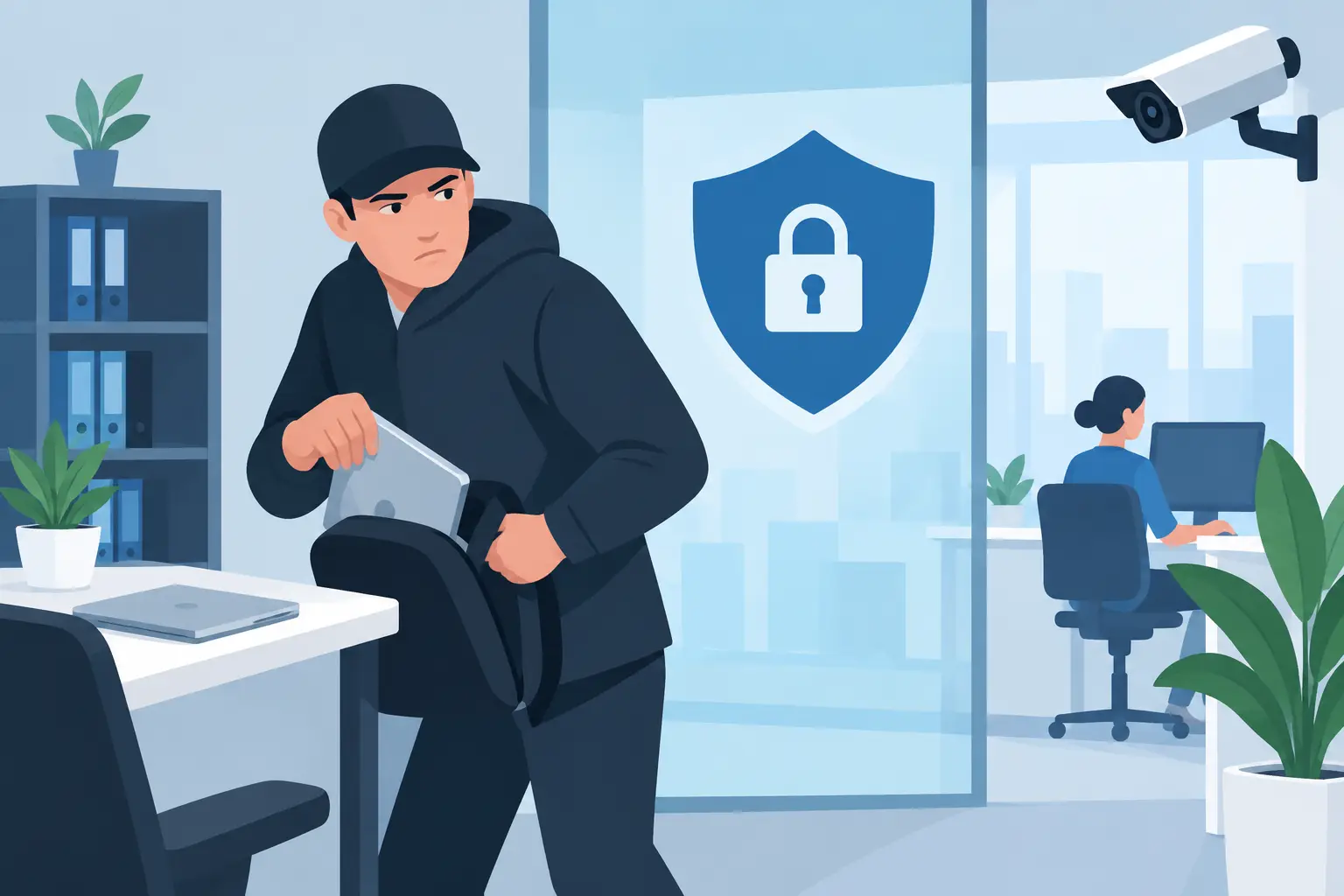
A missing tool, an unaccounted-for shipment, or a stockroom door left unsecured can become far more than a small loss. For property managers and operational leaders, knowing how to prevent workplace theft means protecting inventory, equipment, employee confidence, and the continuity of daily business.

Workplace theft is not limited to one type of property or one category of person. It can involve unauthorized removal of materials, employee theft, vendor access, cargo diversion, stolen tools, time theft, or opportunistic loss caused by weak access control. The most effective response is not suspicion alone. It is a disciplined site-security plan that makes theft difficult to commit, easy to detect, and consistently documented.

How to Prevent Workplace Theft With Layered Security

Theft thrives where routines are unclear and accountability is inconsistent. A person who knows there is no access record, no active patrol, and no review of delivery activity may see opportunity. A well-run site removes that opportunity through visible controls and predictable enforcement.

Start with a site assessment. Identify what is being taken, where losses are occurring, when they happen, and who has legitimate access. A distribution yard has different exposure than an office building, construction site, retail center, or apartment community. The assessment should account for loading docks, rear entrances, storage cages, parking areas, roof access, employee entrances, delivery schedules, shift changes, and after-hours activity.

The goal is to establish layers. No single camera, lock, or guard post will prevent every incident. Controlled access, trained personnel, inventory procedures, lighting, patrols, and reporting should support one another. If one control fails, another should create a record, deter the act, or trigger a response.

Control Access Before Loss Occurs

Access control is the foundation of theft prevention. People should enter only the areas required for their role, during authorized hours, through designated points. This sounds straightforward, but many sites lose control through unsecured side doors, shared badges, propped exits, informal visitor practices, and unmonitored loading areas.

Use credentialed access where practical, and remove access immediately when an employee, contractor, or vendor no longer needs it. Keys should be issued, logged, and periodically reconciled. For high-value equipment rooms, inventory cages, server rooms, and restricted storage, use separate authorization rather than assuming a general building credential is sufficient.

Visitor and vendor procedures deserve the same level of discipline. Require sign-in, verify the reason for entry, issue visible identification when appropriate, and direct visitors to their destination. Delivery personnel should not be permitted to move freely through operational areas simply because they arrived with a shipment. At high-exposure facilities, controlled access monitoring by a trained security officer adds a visible standard of accountability without disrupting legitimate traffic.

Make Inventory and Equipment Accountable

Many theft incidents are discovered too late because no one can establish when an item was last seen, who used it, or whether it was transferred legitimately. Accurate asset control narrows that gap.

High-value tools, electronics, keys, materials, and mobile equipment should have a clear chain of custody. Record who checks out an item, when it is due back, and who confirms its return. Construction supervisors may need tool-room logs and end-of-shift equipment checks. Logistics operators may need seal verification, trailer numbers, cargo counts, and documented handoffs. Office environments may require controls for laptops, company devices, checks, or confidential records.

Do not rely on one person to receive, count, approve, and release valuable inventory. Separating those responsibilities reduces both error and opportunity. Cycle counts also matter. Frequent, targeted checks of high-risk inventory often identify discrepancies sooner than an annual count, when details have already been lost.

Use Visible Security Presence and Patrols

A visible, professional security presence changes behavior. It communicates that access rules are active, restricted areas are monitored, and suspicious activity will be addressed. This deterrent effect is especially valuable during shift changes, after business hours, deliveries, events, and periods when management is not on site.

Security coverage should be based on actual site conditions, not a generic post assignment. At a commercial property, that may mean an officer monitoring a lobby and conducting exterior patrols. At an industrial yard, it may require gate control, vehicle verification, perimeter checks, and inspection of vulnerable storage areas. A construction site may benefit from overnight patrols that focus on equipment, fuel, temporary fencing, and access points.

Post orders should clearly define what officers are expected to inspect, document, and escalate. Vague instructions such as “watch the property” do not create reliable protection. Specific procedures do: verify locked doors, inspect gates, record delivery activity, challenge unauthorized access, note damaged fencing, check alarm conditions, and notify supervisors of discrepancies.

Marked vehicle patrols can also be effective for large properties, multi-building campuses, parking facilities, and sites with recurring after-hours concerns. The right approach depends on the property layout and whether consistent fixed-post coverage or mobile visibility provides the stronger deterrent.

Improve Lighting, Surveillance, and Site Design

Physical conditions influence criminal opportunity. Poor lighting, blocked camera views, overgrown landscaping, damaged fencing, and cluttered storage areas create concealment and reduce oversight. Correcting these issues is often one of the fastest ways to reduce exposure.

Review camera placement based on the path an item would take from storage to exit. Cameras should cover entrances, exits, loading docks, cash-handling areas, inventory rooms, equipment yards, and parking areas where property might be transferred into a vehicle. Video is most useful when it is clear enough to support an investigation and when someone has responsibility for reviewing incidents promptly.

Surveillance should support, not replace, human response. Cameras may document theft, but trained officers and responsible site personnel can intervene when they observe unauthorized access, unsecured property, or suspicious behavior. Alarm systems have the same limitation: an alarm only provides value if someone responds according to a defined procedure.

Establish Clear Reporting and Investigation Procedures

Employees are more likely to report concerns when they know what to report and believe management will respond professionally. Establish a straightforward process for reporting missing property, suspicious conduct, damaged access points, policy violations, and inventory discrepancies. Reports should be factual, timely, and free from assumptions.

When a loss occurs, preserve the scene and records. Review access logs, visitor records, delivery documentation, inventory logs, patrol reports, and available video. Document who discovered the issue, the time frame, the item or material involved, and the actions taken. Prompt reporting helps management identify patterns before minor losses become organized theft.

Security incident reports should be detailed enough to support follow-up, insurance claims, internal review, or law enforcement coordination when needed. Consistent documentation is also useful when evaluating whether a post order, access procedure, or staffing plan needs adjustment.

Train Staff Without Creating a Culture of Suspicion

Theft prevention should not turn every workplace into an atmosphere of accusation. Effective programs set clear rules and apply them consistently. Employees should understand access expectations, checkout procedures, visitor policies, prohibited conduct, and how to report concerns. Supervisors should be trained to address violations promptly and respectfully.

Avoid selective enforcement. If one department is allowed to prop open doors or bypass equipment logs while another is disciplined for it, the security program will lose credibility. The same standard should apply to employees, contractors, vendors, and visitors, with reasonable adjustments for operational needs.

It also helps to explain the business impact. Theft can delay projects, interrupt deliveries, increase insurance costs, create safety hazards, and place coworkers under unfair scrutiny. When personnel understand that security procedures protect jobs and operations, compliance is more likely to become routine.

Review the Plan After Operational Changes

A theft prevention plan cannot remain static. New tenants, staffing changes, construction phases, expanded inventory, revised delivery schedules, and seasonal business activity can create new weaknesses. Review security procedures after any meaningful operational change or following a reported incident.

For Los Angeles-area properties with public traffic, complex vendor activity, or after-hours exposure, a site-specific security assessment can identify whether licensed guard coverage, vehicle patrols, controlled access monitoring, or revised post orders are warranted. Broadway Security Services designs coverage around the conditions that create risk at each property, with accountable officers, responsive supervision, and reliable incident reporting.

The strongest theft prevention program is the one employees can follow, supervisors can enforce, and security personnel can verify. Make expectations visible, document activity consistently, and address small control failures before they become costly losses.

Guard Supervision Standards That Protect Sites

A guard standing at a post is not proof that a property is protected. The real test is what happens when access procedures are ignored, a gate is left unsecured, a tenant reports a concern, or an officer needs immediate direction. Guard supervision standards define how a security team performs under those conditions. For property managers and operations leaders, they separate basic staffing from accountable protection.

At a commercial building, construction site, logistics yard, residential community, or special event, supervision keeps post orders active rather than theoretical. It verifies that officers are present, alert, properly equipped, and following the site-specific procedures designed to reduce risk. It also gives clients a clear chain of accountability when conditions change.

What Guard Supervision Standards Should Cover

Effective supervision is not limited to a manager checking in by phone. It is an operating system for field performance. The standard should establish who supervises officers, how often supervisors inspect sites, what gets documented, and how deficiencies are corrected.

The right level of supervision depends on the assignment. A high-traffic event entrance, an active construction project, or a facility with repeated trespassing issues may need frequent in-person oversight. A stable office property with controlled access and an experienced dedicated officer may require a different schedule. In both cases, the client should know what supervisory coverage is included and what triggers additional support.

Strong guard supervision standards generally address four operational areas: officer readiness, post-order compliance, incident escalation, and reporting quality. If one of these is weak, the security program can appear staffed while still leaving critical exposure unaddressed.

Officer readiness and appearance

Supervisors should verify that officers arrive on time, in the correct uniform, with required identification, communication equipment, and the tools needed for the post. A professional appearance matters because visible security is part of deterrence. More importantly, readiness affects response. An officer without a working radio, flashlight, access credentials, or current site instructions cannot perform at the expected level.

Readiness also includes understanding the assignment. A guard assigned to a vehicle gate needs to know approved visitor procedures, delivery hours, emergency vehicle access, and what to do when a driver refuses instructions. An officer at a residential property needs a different working knowledge of guest access, patrol zones, resident privacy, and nuisance activity procedures. Supervision confirms that these details are understood before an issue becomes an incident.

Compliance with post orders

Post orders are the working instructions for a specific property. They should identify patrol routes, access-control procedures, restricted areas, required logs, emergency contacts, reporting expectations, and client-specific rules. They are not a one-time handout.

A supervisor should review post orders with new officers, reinforce them when site conditions change, and inspect whether they are being followed. This matters because routine creates shortcuts. A gate may be propped open for convenience. A patrol route may be shortened. A visitor log may be completed after the fact instead of at the point of entry. These small failures can create major liability after theft, trespassing, vandalism, or an injury.

Inspections should be purposeful. Rather than simply confirming that an officer is on-site, a supervisor should observe access control, review activity logs, test knowledge of escalation procedures, and check known vulnerability points. At a warehouse, that may mean examining perimeter gates and trailer areas. At an event, it may mean observing bag-check procedures, queue management, and coordination with event staff.

Incident escalation and command support

An officer should never have to improvise alone when a situation exceeds routine post duties. Supervision standards need a clear escalation path for suspicious activity, medical emergencies, fire watch findings, access disputes, threats, property damage, and incidents requiring law enforcement or fire department response.

The goal is not for a supervisor to take over every decision. Officers must be capable of handling ordinary duties independently. The goal is to ensure that urgent, unusual, or high-risk situations receive timely direction and that the client receives accurate information without delay.

For example, an officer who finds a forced door at an after-hours facility should know how to secure the area, preserve the scene, notify the appropriate contacts, request additional support when needed, and document the event. A field supervisor can help evaluate whether the response met post orders, whether patrol coverage must be adjusted, and whether the property has an ongoing vulnerability that needs correction.

Why Field Supervision Protects Business Continuity

Security failures rarely stay confined to the security team. An unattended entrance can disrupt operations. A poorly handled confrontation can affect employees and customers. Missing documentation can complicate an insurance claim or investigation. Consistent supervision reduces these risks by catching performance gaps early and maintaining control when an incident occurs.

For clients, the practical value is accountability. A reliable provider can explain who inspected the site, what was observed, what corrective action was taken, and whether the issue was resolved. That information allows a facility director or property manager to make decisions based on facts rather than assumptions.

This is particularly important for locations with changing risk conditions. Construction phases, tenant turnover, seasonal crowds, late-night deliveries, public events, and vacant units can all change a property’s exposure. A static security plan may not keep pace. Supervisory visits create an opportunity to identify those changes and adjust patrol priorities, staffing positions, or access procedures before a predictable problem occurs.

Reporting Is a Supervisory Requirement

Reliable reporting is often treated as an administrative task. It is actually one of the clearest measures of supervision. Daily activity reports, patrol logs, incident reports, visitor records, and supervisor inspection reports create a record of what occurred on-site and how the security team responded.

Reports should be timely, specific, and useful. A vague note stating “all clear” does not help a client understand whether officers checked the loading dock, responded to an alarm, addressed a parking issue, or identified a damaged fence line. Clear documentation records time, location, observed conditions, actions taken, notifications made, and any recommended follow-up.

Supervisors should review reports for completeness and accuracy instead of allowing weak documentation to become routine. They should also look for patterns. Multiple reports of unsecured doors, recurring loitering, blocked fire lanes, or unauthorized parking may indicate that the issue requires a change in the security plan, not another isolated response.

Questions to Ask a Guard Provider

When evaluating contract security, clients should ask direct questions about supervision rather than assuming it is included at a meaningful level. Ask how often field supervisors visit, whether visits occur across all shifts, how post-order compliance is checked, and how service deficiencies are corrected.

It is also reasonable to ask who is available after hours, how supervisors respond to an officer absence, and what documentation the client receives after an inspection or significant incident. A provider should be able to describe its process clearly. General promises of oversight are not the same as a defined supervisory structure.

The answers should match the risk level of the property. A low-activity administrative office may not need the same supervisory intensity as a distribution facility with overnight operations. However, every assignment needs a responsible point of contact, usable post orders, documented checks, and a process for escalation.

Setting the Standard at Your Property

Guard supervision works best when the client and provider establish expectations before coverage begins. The security plan should reflect the property’s operating hours, access points, traffic patterns, tenant or employee needs, known hazards, and emergency procedures. Supervisors can then measure field performance against conditions that actually exist at the site.

Broadway Security Services approaches supervision as part of the protection assignment, not an optional add-on after guards are placed. Licensed and trained officers need clear direction, responsive management support, and disciplined reporting to maintain a professional presence at the locations they protect.

A security program should give you more than a name on a schedule. It should give you confidence that someone is verifying the work, correcting problems, and maintaining control when your property is most vulnerable.

Security Patrol Versus Static Guards Compared

A delivery truck arrives after business hours. A gate is left open during a shift change. A tenant reports someone testing vehicle doors in a parking structure. In each case, the right response depends on where a trained officer is positioned and how quickly that officer can act. The decision between security patrol versus static guards is not simply a staffing choice. It determines how effectively a property controls access, discourages criminal activity, documents incidents, and protects daily operations.

For property managers, facility directors, and business owners, the best model begins with the site itself. A single-entry office building has different exposure than a construction site, retail center, distribution yard, or large residential community. Security coverage should match the property’s layout, operating hours, traffic patterns, high-value assets, and history of incidents.

Security Patrol Versus Static Guards: The Core Difference

A static guard is assigned to a fixed post. That post may be a lobby desk, front gate, loading dock, employee entrance, leasing office, construction access point, or other designated location. The officer remains responsible for that area, performing duties such as visitor screening, access control, credential verification, package logging, alarm monitoring, and enforcement of site rules.

A security patrol officer moves through a defined area on scheduled and randomized routes. Patrols can be conducted on foot, by marked vehicle, or through a combination of both. The officer checks doors, gates, perimeter fencing, parking areas, dark or isolated spaces, fire hazards, suspicious activity, and other conditions that may create risk.

Neither deployment is automatically better. Static coverage provides continuous control at one critical point. Patrol coverage expands visible presence across a broader area. The operational question is where an incident is most likely to occur, how fast it must be identified, and whether the risk is concentrated or spread across the property.

When Static Guards Provide the Stronger Control

Static guards are most effective when a location has a non-negotiable point of entry or a duty that cannot be left unattended. If every visitor, employee, vendor, contractor, or vehicle must pass through one place, a fixed-post officer creates a reliable layer of control.

Controlled access requires consistent coverage

A guard stationed at a lobby or gate can verify identification, review visitor authorization, manage sign-in procedures, issue passes, direct deliveries, and deny access when necessary. This is particularly valuable at commercial properties, hospitals, schools, corporate offices, residential buildings, and active construction sites where unauthorized entry creates immediate liability.

The key advantage is continuity. A patrol officer may inspect an entrance several times per shift, but a static officer is present when someone arrives between those checks. For locations that need every person and vehicle accounted for, continuous observation is usually the proper standard.

Fixed posts support operations, not only deterrence

A professional static guard also serves as an organized point of contact. The officer can receive after-hours deliveries, monitor cameras or alarms, assist with traffic flow, preserve an accurate visitor record, and respond according to written post orders. At a high-traffic site, that structure can reduce disruptions before they become security incidents.

There is a trade-off. A fixed-post officer has limited visibility beyond the assigned area. An entrance may be tightly controlled while a rear gate, parking lot, or exterior perimeter receives less attention. Static coverage should not be mistaken for total-property coverage unless the officer’s line of sight and assigned duties truly allow it.

When Security Patrol Delivers Better Coverage

Patrols are designed for properties where risk is dispersed. A marked patrol vehicle moving through a shopping center, apartment complex, industrial property, or multi-building campus sends a clear signal that the site is monitored and that suspicious behavior may be noticed quickly.

Patrols extend presence across vulnerable areas

Patrol officers can inspect multiple access points, check rear doors, identify damaged fencing, observe loitering, respond to noise complaints, and locate safety hazards before they escalate. On a construction site, a patrol can verify that equipment storage areas are secure, temporary fencing remains intact, and unauthorized persons have not entered after crews leave.

For larger properties, this movement matters. Criminal activity often shifts toward poorly lit areas, side entrances, loading zones, stairwells, and perimeter edges. A disciplined patrol program makes those areas less predictable and less attractive to opportunistic activity.

Visibility must be backed by documented procedures

A patrol is only valuable if it is structured. Random driving without assigned checkpoints, defined inspection duties, communication procedures, or reporting requirements may create the appearance of coverage without dependable accountability.

Effective patrol operations establish routes, patrol intervals, response expectations, escalation protocols, and documentation standards. Officers should record incidents, hazards, access issues, and unusual conditions with enough detail for management to act. Responsive supervision helps confirm that coverage is being delivered as assigned, not merely scheduled on paper.

Comparing Response, Deterrence, and Cost

Static guards usually offer the fastest response at the exact post they protect. If a dispute begins at a front desk or an unauthorized person attempts to enter through a controlled gate, the officer is already there. That immediate presence can prevent a situation from spreading into the building or onto the property.

Patrol officers generally offer faster discovery across a wider area. They may not be standing at every location, but they can identify issues that a fixed officer cannot see. This makes patrols a practical option when a site has several vulnerable areas but does not require permanent staffing at each one.

Cost should be evaluated against exposure rather than hourly rates alone. A static guard requires continuous labor at a fixed location. For a property that needs around-the-clock access control, that expense is justified because leaving the post uncovered creates a direct security gap. Patrols may provide a more efficient model for large or lower-traffic sites, especially overnight, because one officer can inspect multiple areas during the shift.

However, lower cost should never be the only deciding factor. If a property receives frequent visitors, handles sensitive materials, experiences recurring access violations, or must maintain documented entry controls, patrol-only coverage can leave a critical weakness. Conversely, placing a guard in a quiet lobby all night may not address theft, vandalism, or trespassing occurring around the exterior.

The Hybrid Model Often Solves the Real Problem

Many sites need both fixed-post control and mobile inspection. A residential community may need a static officer at its gate during busy evening hours, followed by vehicle patrols of parking areas and common spaces overnight. An industrial facility may need a gate officer to process trucks while another officer performs perimeter checks and loading-yard inspections.

This hybrid approach assigns each resource to a defined purpose. The static guard controls who enters. The patrol officer verifies that the rest of the property remains secure. Clear post orders prevent overlap, confusion, and unmonitored gaps.

At Broadway Security Services, coverage plans are built around the actual conditions at the site, including access points, operational activity, property layout, and known vulnerabilities. That planning is essential because a guard force is most effective when officers know precisely what they are responsible for protecting and how to report what they find.

Questions to Ask Before Selecting Coverage

Before choosing a patrol program, fixed-post guard, or combined deployment, decision-makers should assess whether every visitor needs to be screened, whether employees or residents are present after hours, and whether the property has multiple unmonitored entrances. They should also consider the value of assets on site, prior incidents, lighting conditions, camera coverage, neighborhood activity, and the time periods when exposure is highest.

Ask a more direct question as well: What happens if an incident occurs five minutes before an officer arrives? If the answer involves unauthorized access, employee safety, sensitive information, or significant financial loss, a static post may be necessary. If the concern is broad-area deterrence, exterior inspection, or recurring activity at changing locations, a scheduled and documented patrol may be the better fit.

Security coverage should be reviewed as site conditions change. New tenants, construction phases, seasonal traffic, operating-hour changes, and incident trends can all alter the right deployment. The strongest security plan is not the one with the most guards. It is the one that places disciplined, licensed personnel where their presence will prevent the most risk and provide accountable response when it matters.