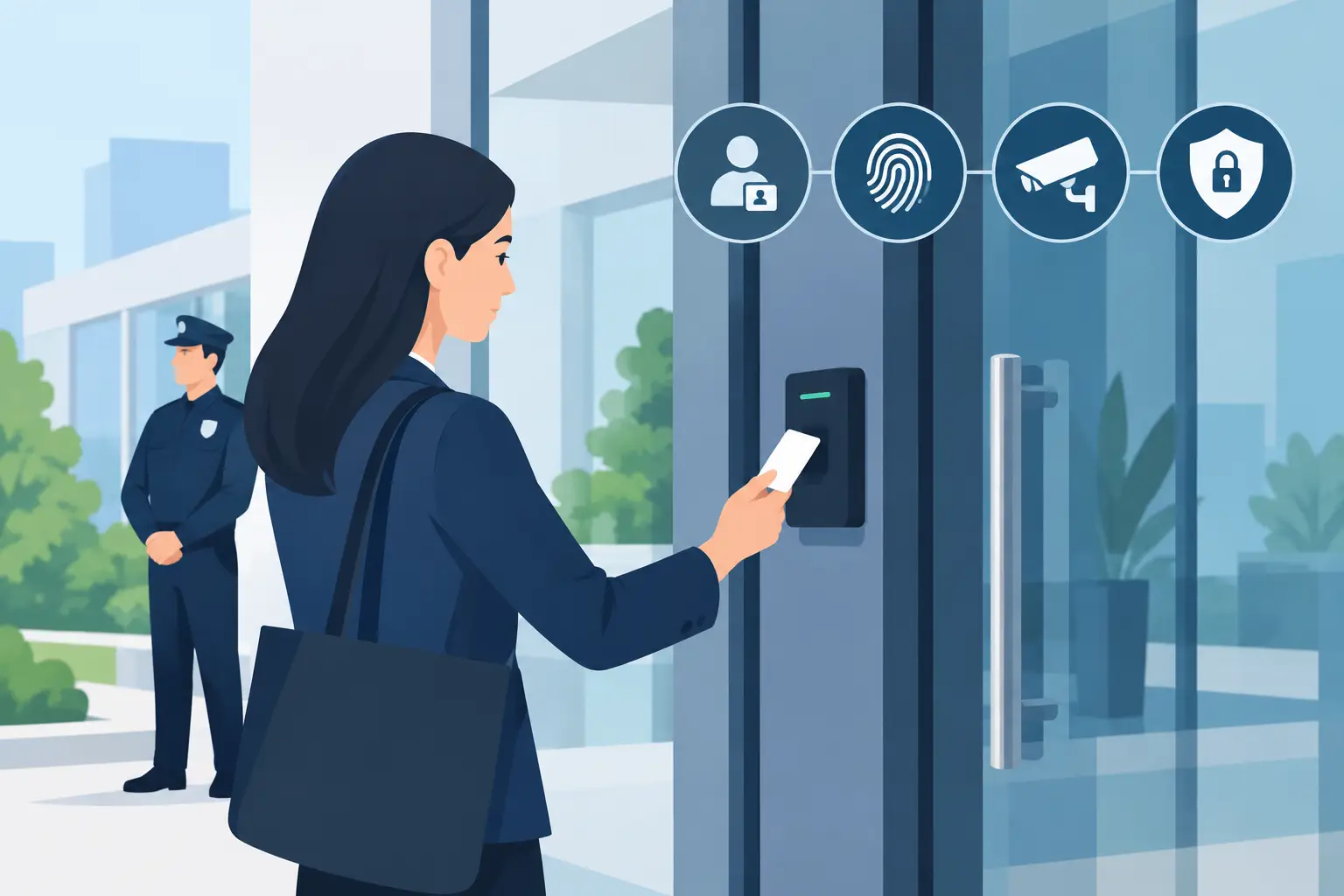
Best Access Control Procedures for Safer Sites

A loading dock door left open during a shift change, an unverified contractor entering through a side gate, or a former employee whose credential still works can create a serious exposure in minutes. The best access control procedures do more than restrict doors. They establish who may enter, where they may go, when access is allowed, and how exceptions are documented and handled.

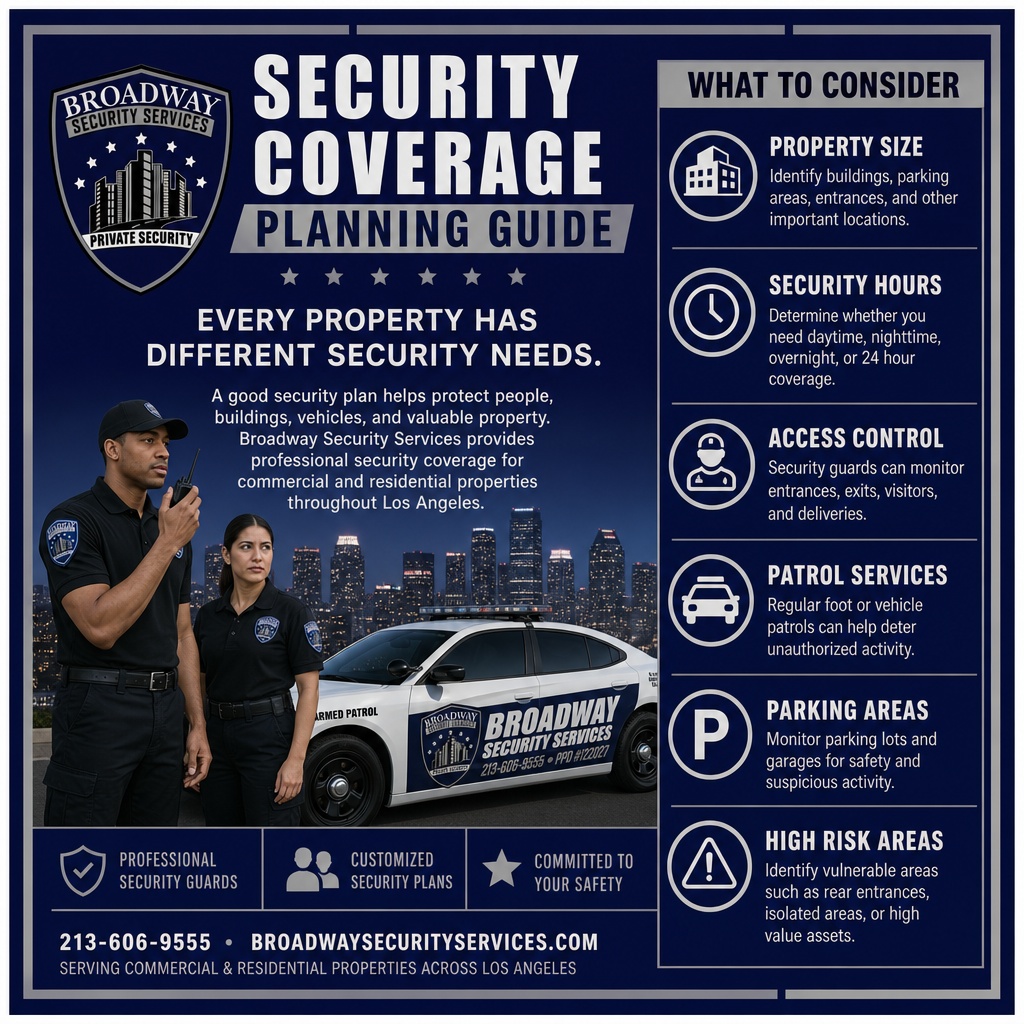
For property managers, facility directors, logistics operators, and event organizers, access control is a daily operating function. It must protect people and assets without creating unnecessary delays for employees, residents, visitors, vendors, and emergency personnel. That requires a disciplined plan, trained officers, clear post orders, and supervision that keeps the plan active after installation.

Start With the Site’s Actual Exposure

Access control should be built around the property, not copied from a generic checklist. A downtown office building, construction site, apartment community, warehouse, school, and special event venue have different traffic patterns, entry points, and risk levels. The first step is identifying every place a person, vehicle, delivery, or asset can enter or leave.

This assessment should include main entrances, secondary doors, loading docks, parking areas, stairwells, gates, emergency exits, roof access, and temporary construction openings. It should also account for the times each point is most vulnerable. A door that is properly monitored during business hours may become an uncontrolled access point after a receptionist leaves or a delivery crew arrives overnight.

Security leadership should separate access points into three categories: public entry, controlled entry, and restricted entry. Public entry points may allow open access during designated hours but still require visible monitoring. Controlled entry points require verification before admission. Restricted areas, such as server rooms, medication storage, cash offices, equipment yards, and tenant-only floors, should be accessible only to authorized individuals with a documented business purpose.

Best Access Control Procedures Begin With Clear Authorization

The strongest hardware cannot correct weak authorization practices. Every site needs a defined process for approving employees, contractors, vendors, visitors, and temporary workers before they are permitted beyond the appropriate access point.

An access list should identify the individual, employer or host, approved areas, permitted hours, credential type, and expiration date. For larger facilities, an access matrix provides a practical way to control permissions:

  • Employees receive access only to the areas needed for their duties.
  • Supervisors approve temporary access for contractors and vendors.
  • Visitors are admitted only through designated entry points and remain under escort when required.
  • Former employees and completed vendors are removed from access lists immediately.

This process is especially important for properties with frequent turnover, multiple tenants, overnight operations, or active construction work. Access permissions should never remain active simply because no one has reviewed them. Regular reviews prevent old badges, codes, keys, and electronic credentials from becoming unnoticed security gaps.

For sensitive sites, approval should come from a designated manager rather than an individual guard making exceptions at the gate. Officers can verify authorization and enforce the established procedure, while management retains control over who receives access privileges.

Verify Identity Before Granting Entry

A professional access control post requires more than asking someone why they are there. Officers should verify identity against an approved list, appointment record, tenant confirmation, credential, or other established authorization method. The required level of verification depends on the location and risk profile.

At a commercial lobby, verification may involve checking a government-issued ID, confirming the visitor’s host, issuing a temporary badge, and recording entry time. At an industrial facility or cargo operation, the procedure may also require confirming vehicle information, delivery documentation, seal numbers, dock assignment, and authorized pickup or drop-off details.

Guards should avoid accepting vague explanations such as “I am here to see someone” or “I come here all the time” as authorization. A courteous but firm verification process protects the officer, the client, and legitimate visitors. When a person cannot be verified, the officer should deny entry or hold the individual at a safe, designated location while contacting the appropriate site representative.

Credentials must be treated as a security control, not a convenience item. Officers should watch for tailgating, badge sharing, propped doors, and people following authorized staff through secured entrances. These behaviors are common because they are easy to overlook during busy periods. Visible guard presence at key access points creates a deterrent and gives staff a clear point of contact when uncertain situations arise.

Control Vehicles, Deliveries, and After-Hours Activity

Vehicle access often receives less attention than pedestrian entry, even though parking structures, loading areas, gates, and service roads can present significant exposure. A controlled vehicle procedure should establish where drivers stop, what information is checked, where vehicles may park, and how departures are recorded when necessary.

Delivery drivers should be directed to approved receiving areas rather than allowed to wander through a site looking for a contact. For high-value shipments, officers may need to confirm the carrier, driver identity, purchase order, delivery appointment, or receiving contact before opening a gate or directing a vehicle to a dock. Cargo escort assignments require even tighter coordination, with documented custody points and immediate reporting of route, schedule, or seal discrepancies.

After-hours access demands additional discipline. The site should define who can authorize entry outside normal operating hours, how that authorization is communicated to security, and what officers must document. A call from an unknown person claiming to be an employee is not enough. The officer needs a verifiable name, approved contact, and documented authorization before allowing entry.

Give Officers Site-Specific Post Orders

Access control is only consistent when officers have written, site-specific instructions. Post orders should state which doors, gates, and areas are controlled; what identification is acceptable; who can approve exceptions; and when law enforcement, fire personnel, management, or emergency contacts must be notified.

They should also explain how to handle common situations: an unlisted visitor, a locked-out employee, a delivery arriving at the wrong time, an alarmed door, a hostile individual, or a person refusing to comply. Clear instructions reduce hesitation and prevent different officers from applying different rules to the same situation.

Broadway Security Services designs post orders around a property’s access points, operating schedule, and known risks. This approach gives licensed and trained guards a clear chain of responsibility while allowing the client’s operational needs to remain in control.

Document Every Meaningful Exception

Access control records support accountability. A visitor log, digital entry record, incident report, key-control log, or vehicle register can help management answer basic but critical questions: Who entered? When did they arrive? Who authorized them? Where were they permitted to go? What happened if access was denied?

Documentation is particularly valuable after theft, vandalism, unauthorized entry, workplace disputes, or safety incidents. It also helps identify recurring weaknesses, such as a tenant repeatedly leaving a door unsecured, a vendor arriving outside approved hours, or a gate malfunctioning during specific shifts.

Reports should be factual, timely, and complete. Officers should record observable details rather than assumptions. If an individual was denied entry, the report should identify the reason, the person contacted for verification, the time of the interaction, and whether the individual departed or remained on site. Accurate reporting allows management to respond before a minor access issue becomes a larger loss event.

Test Procedures, Not Just Equipment

Electronic access systems, cameras, intercoms, gates, and alarms are useful tools, but they require inspection and follow-through. A broken latch, unreadable badge reader, malfunctioning gate arm, or camera blind spot can undermine the entire procedure if nobody identifies and reports it.

Supervisors should conduct routine checks of access points and review whether officers are following post orders. Spot checks may include testing locked doors, verifying visitor logs, reviewing temporary credential expiration, and observing how guards manage peak traffic periods. The goal is not to slow operations. It is to confirm that security controls still work under normal pressure.

Procedures should also be adjusted when the site changes. New tenants, altered construction routes, increased delivery volume, special events, staffing changes, or repeated incidents may require a different deployment plan. Effective access control is not static. It is maintained through observation, reporting, and responsive supervision.

A controlled entrance sends a clear message: this property is monitored, authorization matters, and exceptions will be addressed. When guards, management, and employees follow the same procedure, access control becomes a reliable part of daily operations rather than a weak point waiting to be tested.
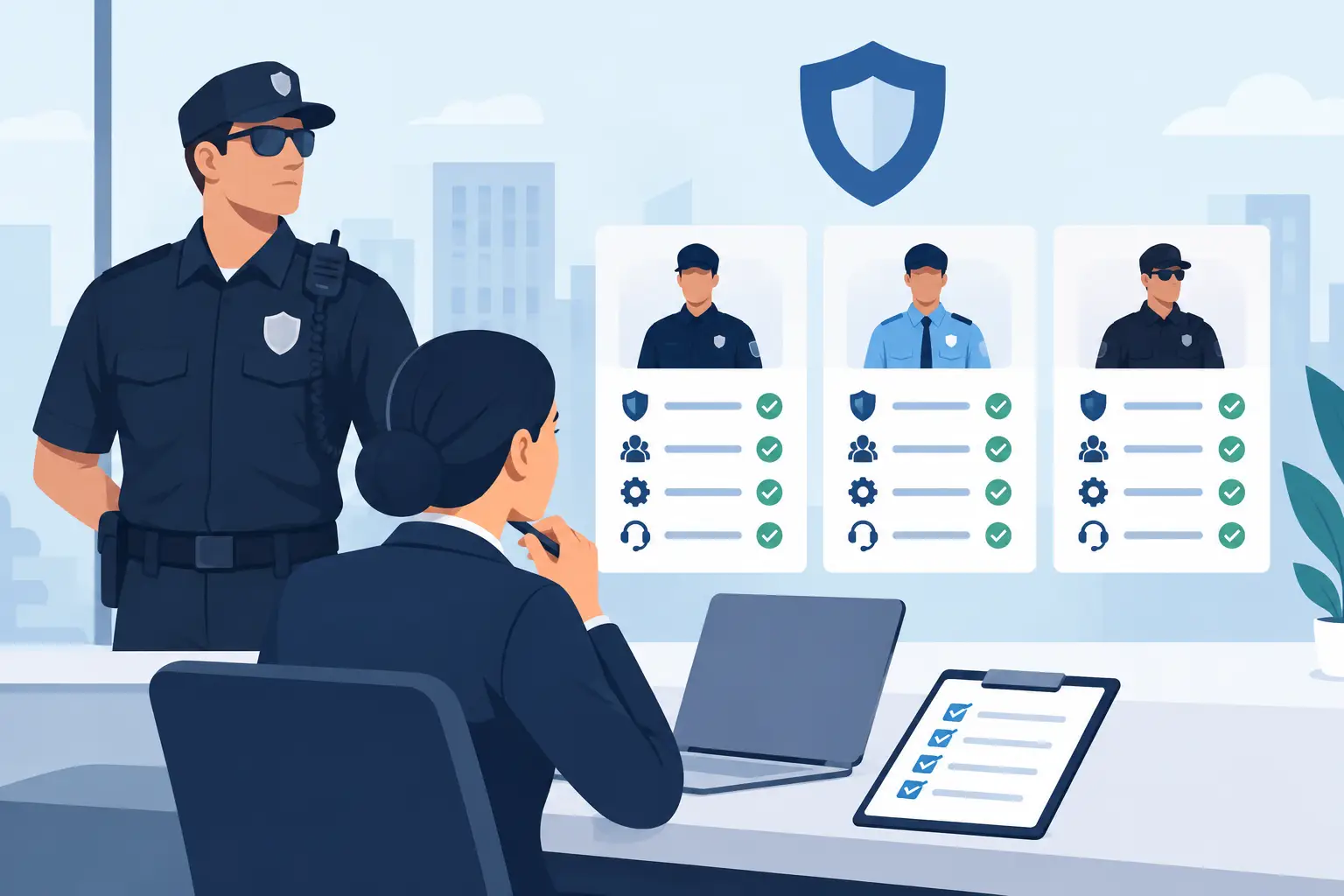
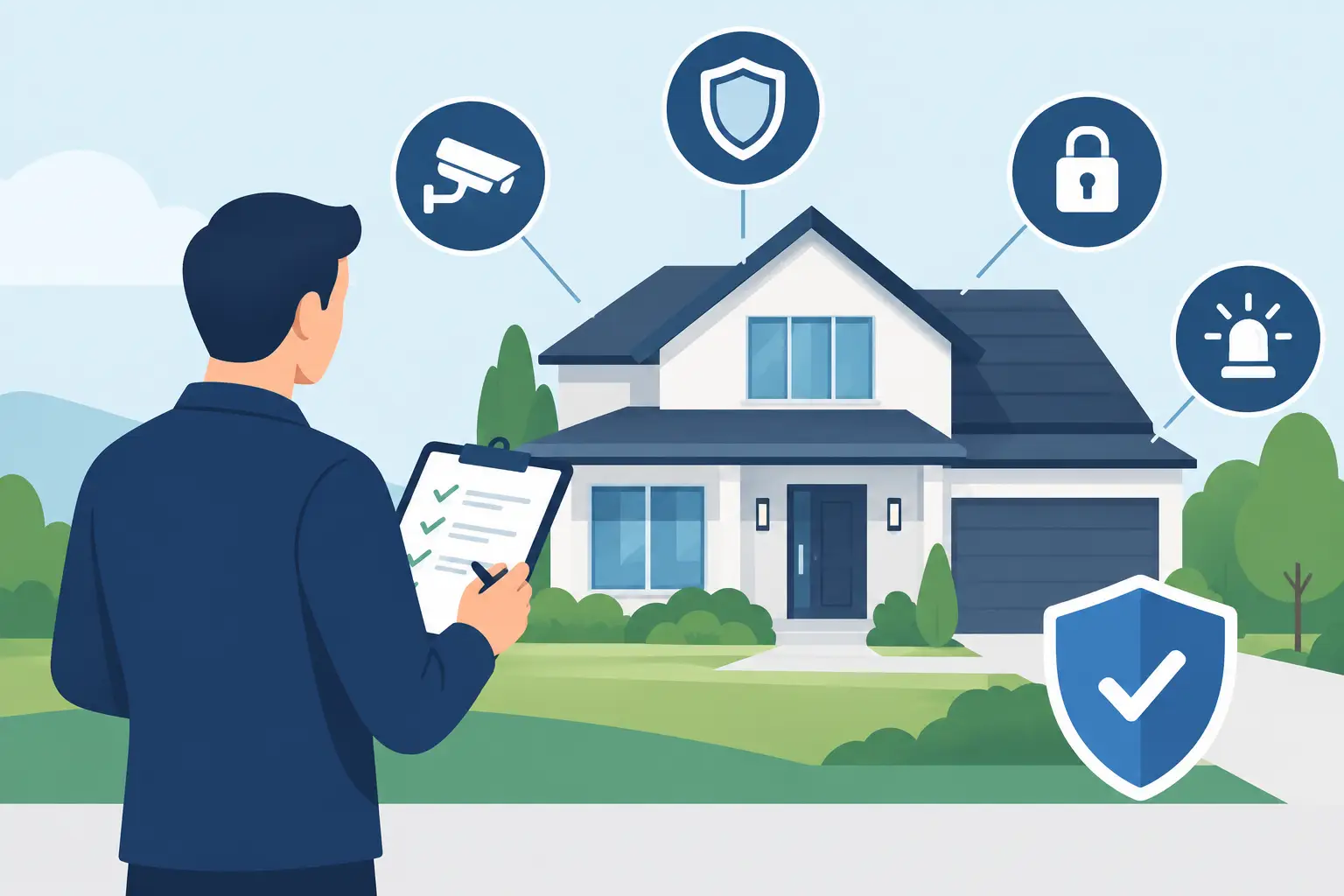
Security Vendor Evaluation for Guard Services

A security vendor evaluation should begin at the property, not with a rate sheet. A low hourly quote means little if officers do not understand the site, supervisors are difficult to reach, or incidents are documented poorly. The right contract security provider protects people, assets, operations, and the continuity of daily business.

For a property manager, facility director, construction supervisor, or event organizer, the decision is practical: Can this company place trained officers at the right posts, enforce site rules professionally, and respond when conditions change? That standard requires more than confirming that a vendor can fill shifts.

Start With Your Actual Exposure

Before comparing providers, define what needs protection and when the risk is greatest. A retail center with frequent public traffic has different requirements than a gated community, an active construction site, a warehouse yard, or a special event venue. One site may need controlled access monitoring and visible foot patrols. Another may need after-hours patrol checks, fire watch documentation, vehicle patrol coverage, or cargo escort support.

Review recent incidents, access points, traffic patterns, tenant concerns, operating hours, blind spots, and areas where employees or visitors may feel unsafe. Be specific about the outcome you expect. “Need a guard” is not a workable scope. “Need a uniformed officer to control contractor entry, patrol perimeter gates every hour, document deliveries, and escalate trespassing incidents” gives a qualified provider something operational to evaluate.

This process also prevents overbuying. Armed coverage may be appropriate for a high-exposure assignment, valuable cargo movement, or a location with a documented threat profile. It is not automatically the right answer for every property. In many environments, professional unarmed officers, consistent patrol procedures, controlled access, and responsive supervision provide the right level of deterrence without creating unnecessary disruption.

Verify Licensing, Insurance, and Employment Practices

A security company should be able to provide clear, current documentation without hesitation. In California, confirm that the company is properly licensed to provide private patrol services and that assigned officers meet applicable registration and training requirements. Ask what procedures the company uses to verify eligibility before an officer is placed at your location.

Insurance deserves the same attention. Confirm general liability coverage, workers’ compensation coverage, and any additional policies that may be relevant to the assignment. A provider should explain its coverage plainly and provide certificates through the appropriate process when requested. Do not treat a vague assurance that the company is “fully insured” as a substitute for verification.

Employment practices also affect performance on site. Ask how officers are screened, whether the company uses employees rather than loosely managed subcontracted labor, and how it handles call-offs, vacancies, and replacement coverage. A vendor that cannot maintain staffing discipline will eventually shift that burden to your management team.

Evaluate the Deployment Plan, Not Just the Proposal

A credible proposal explains how the provider intends to operate at your property. It should identify recommended posts, schedules, patrol responsibilities, access procedures, communication expectations, and escalation paths. If every prospect presents the same generic package, none of them has performed a meaningful assessment.

During the security vendor evaluation, ask the provider to walk through a realistic scenario. For example, what happens if an unauthorized person refuses to leave? Who is contacted after an alarm activation? What does the officer do when a delivery driver arrives after receiving hours? How is a medical emergency handled while preserving access for first responders?

The best answers are direct and site-specific. They should reference post orders, documented reporting, supervisory notification, and defined client contacts. A provider does not need to promise that every incident can be prevented. It should demonstrate that its officers can recognize conditions, follow procedure, protect life safety, and report facts accurately.

Post Orders Show Whether a Plan Can Be Executed

Post orders are the written instructions that turn a security agreement into field operations. They should cover responsibilities by post, patrol routes or checkpoints, opening and closing procedures, visitor rules, key and access-control handling, emergency contacts, prohibited activities, and reporting expectations.

Ask who writes the post orders, how the client approves them, and how changes are communicated to every assigned officer. Static instructions become unreliable when a property adds a tenant, changes access hours, begins construction, or experiences a new threat pattern. The vendor should have a controlled process for keeping instructions current.

Test Supervision and Communication

The officer at the gate or lobby is the visible face of the security program, but performance depends on what happens behind that post. Responsive supervision separates organized contract security from staffing that is merely present.

Ask who supervises officers, how often supervisors visit the site, and what happens when an officer misses a shift, violates a post order, or needs immediate direction. Clarify whether supervisory visits are documented and whether management is available after normal business hours. For locations operating nights, weekends, or holidays, this question is especially important.

Communication standards should be equally clear. Determine who your team calls for routine adjustments, urgent operational issues, and serious incidents. A provider should establish a chain of command rather than leaving clients to track down an individual officer. At Broadway Security Services, this operational discipline is central to reliable on-site coverage: officers need clear direction, and clients need accountable points of contact.

Compare Training Against the Assignment

Training should match the environment officers will enter. General guard training is a baseline, not a complete deployment plan. A residential community may require strong customer-service judgment, parking enforcement procedures, visitor management, and de-escalation skills. An industrial property may require perimeter control, truck-entry procedures, hazard awareness, and detailed patrol documentation.

For event security, ask how the vendor prepares officers for crowd movement, entry screening, restricted areas, emergency exits, and coordination with event staff. For fire watch, verify that officers understand patrol intervals, hazard observation, log requirements, and escalation procedures. For executive protection or cargo escort assignments, examine relevant experience, communication protocols, and the provider’s approach to advance planning.

Do not judge training only by the number of classroom hours listed in a brochure. Ask how officers are briefed on your site before their first shift, how performance is reviewed, and how corrective coaching is handled. A trained officer who arrives without site orientation is still operating with incomplete information.

Make Reporting a Contract Requirement

Incident reporting is not administrative overhead. It is how management sees what happens when no manager is present. Reports can reveal recurring access failures, trespassing patterns, safety hazards, employee concerns, and times when additional controls may be needed.

Request examples of routine activity reports and incident reports with sensitive information removed. Look for reports that state who, what, when, where, and what action was taken. Good documentation is factual, timely, readable, and consistent. It avoids speculation while preserving details that may matter later for management decisions, insurance matters, or law enforcement follow-up.

Also ask how reports are delivered and how quickly serious incidents are escalated. A monthly recap may be useful for trend review, but it is not sufficient when a client needs immediate notice of an injury, break-in, threat, or significant property damage.

Review Price in the Context of Control

Pricing matters, but an unusually low rate often signals a gap somewhere else: limited supervision, weak relief coverage, inadequate training, rushed onboarding, or high officer turnover. Those problems may not appear on the first invoice. They appear when a post is uncovered, a guard is unfamiliar with the property, or an incident receives no timely follow-up.

Compare proposals by scope and controls, not only by the hourly figure. Confirm whether the price includes supervisory visits, reporting tools, uniforms, patrol vehicles when applicable, onboarding, post-order development, and relief coverage. A clear proposal should identify what is included, what is optional, and what would trigger an additional charge.

A short trial period can be useful when practical, particularly for a new site or a complex deployment. Set measurable expectations before coverage begins: attendance, patrol completion, report quality, supervisor responsiveness, client communication, and compliance with post orders. Review those standards early, before small failures become normal operating conditions.

Select a Partner That Can Be Held Accountable

The strongest security provider is not the company that makes the broadest promises. It is the one that can explain its staffing plan, demonstrate its controls, document its work, and accept responsibility for performance. That is what gives property leadership confidence when employees go home, public traffic increases, or an unexpected incident tests the site.

Use the evaluation process to ask direct questions, inspect the operational details, and establish standards that can be measured after the contract begins. Security coverage becomes more dependable when the provider knows exactly what it is responsible for protecting and the client knows exactly how that responsibility will be managed.

How to Assess Property Security Before a Loss

A property can appear secure during a daytime walkthrough and still be exposed after closing, during shift changes, or when a gate is left open for a delivery. Knowing how to assess property security means examining what actually happens on site, not simply counting cameras, locks, or guards. The objective is to identify where people, vehicles, assets, and operations can be put at risk – then establish controlled, accountable coverage.

For property managers and operational leaders, the assessment should lead to clear decisions. Which areas require monitored access? When is a visible officer needed? What incidents must be documented and escalated? A useful review connects physical conditions with the way the property operates each day.

Start With the Property’s Real Risk Profile

Security requirements should follow exposure, not assumptions. A medical office with frequent public traffic has different vulnerabilities than a construction site holding equipment overnight. A distribution facility may be most exposed at loading docks and during trailer movements, while a multifamily property may need stronger visitor control, parking enforcement, and response to resident concerns.

Begin by documenting the property’s purpose, operating hours, occupancy levels, valuable assets, and history of incidents. Review theft, vandalism, trespassing, workplace disputes, unauthorized parking, fire watch needs, and access-control failures. Near misses matter as much as confirmed losses. A rear door that is routinely propped open, for example, is a security failure even if no theft has yet occurred.

Also identify changes that alter the risk level. Construction phases, tenant turnover, special events, holiday closures, layoffs, high-value deliveries, and extended after-hours work can create temporary vulnerabilities that standard coverage does not address. Security planning should be able to adjust when operations change.

How to Assess Property Security at Every Entry Point

Walk the entire perimeter at the times the property is most vulnerable, including after dark when possible. Start at the public edge of the site and follow the same routes a visitor, employee, contractor, delivery driver, or trespasser would use. Pay close attention to pedestrian gates, vehicle entrances, rear doors, roof access, loading docks, stairwells, and connections to adjacent properties.

Ask a direct question at each point: can an unauthorized person enter, remain, or leave without being noticed? A locked door is not enough if the lock is damaged, the door does not latch, or no one notices when someone follows an authorized person inside. Controlled access requires physical barriers, clear procedures, and consistent enforcement.

Vehicle access deserves the same scrutiny. Review gate hours, visitor instructions, delivery staging, parking layouts, and the ability to identify vehicles entering restricted areas. At properties with frequent traffic, an officer or vehicle patrol may be more effective than relying on signs alone. The right approach depends on traffic volume and the consequences of an unauthorized vehicle reaching the site.

Check Visibility, Lighting, and Line of Sight

Poor visibility creates opportunity. During the walkthrough, look for blind corners, overgrown landscaping, unlit walkways, obscured camera views, storage areas behind buildings, and spaces where a person can wait without being seen. Lighting should support safe movement and observation, especially around entrances, parking areas, trash enclosures, and perimeter fencing.

Cameras can support investigations and real-time awareness, but they do not replace an active security presence. Confirm that cameras have useful angles, clear images, reliable recording, and a defined process for reviewing footage after an incident. If no one is responsible for acting on an alert, the system is only recording a problem.

Review How People Move Through the Site

Many security gaps are operational rather than physical. Employees may use convenience entrances, contractors may not sign in, and vendors may be allowed beyond the area necessary for their work. Assess how credentials are issued, how visitors are screened, and whether personnel know who has authority to approve access.

Observe the busiest periods as well as quiet ones. A lobby may be controlled during business hours but unstaffed before opening and after closing. A loading dock may have a written check-in process that breaks down when several deliveries arrive at once. Security procedures must work under normal pressure, not only when conditions are calm.

Define restricted areas clearly and establish a challenge process for unfamiliar persons. This does not require confrontational behavior. It requires trained personnel who can communicate professionally, verify authorization, direct visitors, and escalate concerns when a person refuses to comply. Clear post orders give officers the authority and consistency needed to enforce these expectations.

Test Detection, Response, and Accountability

A property security assessment is incomplete if it focuses only on prevention. Incidents will occur. The decisive issue is whether the site can detect them promptly, respond in an organized manner, protect people, preserve information, and return operations to normal.

Review alarm procedures, emergency contacts, radio or phone communications, key control, and access to current site instructions. Determine who calls law enforcement, who notifies management, and who is authorized to close a gate, stop work, or restrict entry after an incident. If those responsibilities are unclear, response delays are likely.

Reporting is a core control, not administrative paperwork. Quality daily activity reports and incident reports create a record of patrols, observed hazards, visitor issues, maintenance concerns, and enforcement actions. They also show whether recurring problems are being corrected. A report that merely states “all clear” provides little accountability and no useful intelligence for property management.

Test response readiness with practical scenarios. Consider a person attempting to enter after hours, a vehicle blocking emergency access, a damaged perimeter fence, a suspicious package, a fire alarm impairment, or a dispute in the parking lot. The goal is not to create unnecessary disruption. It is to verify that personnel know their role, communications are current, and escalation procedures are understood.

Match Staffing to the Risk, Not the Budget Line Alone

Security staffing is a deployment decision. The least expensive schedule may leave the property uncovered during its most exposed hours, while continuous coverage may be unnecessary at a low-traffic location with strong access control. Assess when visible deterrence has the most value and where an officer can actively control risk rather than remain isolated at a desk.

An unarmed officer may be appropriate for access monitoring, visitor management, patrols, parking enforcement, and routine policy enforcement. Higher-risk assignments may require armed coverage, executive protection, specialized vehicle patrols, or coordinated response planning. The level of service should reflect the property’s threat profile, contractual requirements, and operational realities.

When evaluating a contract security provider, look beyond headcount. Confirm licensing, training, supervision, officer appearance, post-order development, patrol verification, reporting standards, and management availability. A guard who is not properly briefed, supervised, or supported cannot deliver consistent protection. Professional security depends on discipline before an incident occurs, not promises made afterward.

Turn Findings Into a Working Security Plan

Document findings by priority. Separate immediate issues, such as broken locks or unsecured access points, from improvements that require planning, such as camera repositioning, fencing repairs, revised delivery procedures, or changes to staffing hours. Assign an owner and due date to each corrective action. Unassigned findings tend to become recurring risks.

The final plan should state who is responsible for access control, patrol routes, visitor processing, key management, emergency communication, incident reporting, and follow-up. It should also identify when the plan will be reviewed. Properties change, and a security plan that is not revisited will eventually stop matching the site it is meant to protect.

A disciplined assessment gives management more than a checklist of weaknesses. It provides a clear operating standard: who belongs on the property, what officers are expected to observe, and how the site will respond when conditions fall outside normal operations. That clarity is where visible protection becomes accountable protection.

Top Commercial Property Security Risks to Control

A property can look secure during business hours and still be exposed where it matters most: at an unmonitored side door, in a poorly controlled loading area, or after a minor incident goes unreported. The top commercial property security risks are rarely limited to a single threat. They develop when access, visibility, procedures, and response are not managed as one operating system.

For property managers, facility directors, and business owners, the goal is not simply to place a guard at the front entrance. It is to establish visible protection, control who enters the site, identify irregular activity early, and document what happens when an issue arises. The right plan depends on the property’s hours, layout, tenant mix, traffic volume, assets, and history of incidents.

Top Commercial Property Security Risks at Active Sites

Unauthorized access and tailgating

Unauthorized entry remains one of the most common and preventable risks. A locked door is only effective when employees, visitors, vendors, and delivery personnel follow access procedures. Tailgating occurs when an unauthorized person follows an authorized employee through a gate, lobby door, parking entrance, or restricted interior access point.

This risk increases at multi-tenant buildings, medical offices, warehouses, construction sites, and facilities with frequent deliveries. A guard assigned to controlled access monitoring can verify identification, maintain visitor records, direct vendors to approved locations, and challenge entry that does not match site policy. The officer must be professional and consistent. Access rules that are enforced only when convenient will not hold up during a real security concern.

Technology can support the process, but it does not replace it. Cameras, key cards, intercoms, and gates create records and barriers. Trained personnel provide judgment when a badge is borrowed, a visitor becomes confrontational, or a delivery arrives outside the approved schedule.

Theft, burglary, and internal loss

Commercial theft takes several forms. Burglary often targets tools, copper, equipment, electronics, vehicles, inventory, and materials after hours. Internal loss may involve unauthorized removal of products, supplies, customer information, or company property by employees, contractors, or vendors.

The response should not be based on assumptions about who is responsible. Effective loss prevention starts with clear asset control: designated receiving areas, secured storage, documented key handling, restricted high-value zones, and regular patrols at vulnerable times. A visible officer presence can deter opportunistic theft, especially when patrol patterns cover exterior doors, loading docks, parking areas, fences, and storage locations.

For a warehouse or logistics property, the highest-risk window may be shift changes and trailer movement. For a retail center, it may be closing time and employee departure. For a construction site, it may be overnight and weekends. Patrol schedules should reflect those actual exposure periods rather than follow a generic routine.

Parking area crime and vehicle damage

Parking lots and garages can become isolated environments with limited visibility, confusing traffic flow, and inconsistent enforcement. Vehicle break-ins, catalytic converter theft, vandalism, aggressive behavior, unauthorized parking, and pedestrian safety concerns can all affect a property’s reputation and daily operations.

Lighting, cameras, and signage matter, but they are not enough when a suspicious person is actively checking vehicles or when an access gate is damaged. Marked vehicle patrols and foot patrols add visible deterrence while allowing officers to identify hazards such as broken gates, abandoned vehicles, blocked fire lanes, or dark areas that need immediate attention.

Parking enforcement also requires discipline. A property should define who may park, where vendors may stage, how disabled spaces and fire lanes are protected, and how towing procedures are handled. Inconsistent enforcement creates disputes and can quickly weaken tenant confidence.

Workplace violence and disruptive conduct

Security risks are not always external. Disputes involving employees, former employees, customers, patients, tenants, or domestic partners can escalate at the workplace. Warning signs may include threats, repeated unwanted contact, hostile confrontations, stalking behavior, or an individual refusing to leave private property.

A professional security plan gives staff a clear escalation path. Employees should know whom to contact, what information to provide, and when law enforcement involvement is required. Officers need post orders that define their authority, communication procedures, reporting requirements, and safe response expectations.

The objective is not to turn normal customer service issues into security incidents. It is to recognize when behavior crosses a line and respond with control. Calm, trained intervention can protect staff and visitors while reducing unnecessary disruption to the operation.

Fire watch and life-safety failures

When a fire alarm, sprinkler system, or other life-safety component is impaired, a property can face immediate operational and compliance exposure. Fire watch is not a casual walk-through. It requires assigned personnel, documented patrol intervals, hazard observation, communication with site representatives, and timely escalation of conditions that could threaten occupants or property.

This risk is especially significant during construction, renovation, system repairs, and alarm outages. A facility cannot assume that a temporary impairment is harmless because the building is partially occupied or work is occurring after hours. Fire hazards can develop from hot work, blocked exits, combustible materials, electrical issues, or unattended equipment.

Accurate fire watch logs help demonstrate that required patrols occurred and that observed hazards were addressed. Documentation is a core control, not paperwork for its own sake.

Security Risks Grow When Response Is Unclear

Many costly incidents become worse because no one owns the first response. An officer sees a damaged perimeter fence but does not report it. A manager receives a complaint about a suspicious person but has no record of the time, description, or direction of travel. A tenant calls after an incident, but there is no incident report to support follow-up.

Reliable reporting creates accountability. Reports should record the basic facts: date, time, location, parties involved, observations, actions taken, notifications made, and any continuing risk. The information should be factual and usable, not vague or argumentative. Supervisors can then identify patterns, adjust patrol priorities, repair physical vulnerabilities, and provide clients with a clear record of service.

Responsive supervision matters for the same reason. A guard force without site direction can drift into passive observation. Regular oversight confirms that officers understand post orders, remain visible, complete patrols, and escalate incidents according to policy.

How to Prioritize Commercial Property Risks

Not every risk deserves the same level of staffing or expense. A low-traffic office building may need scheduled evening patrols and controlled visitor procedures, while a distribution facility operating around the clock may require dedicated gate coverage, vehicle checks, and active loading dock oversight.

Start by reviewing where people enter, where they can conceal activity, what assets are most attractive, and when the property is least supervised. Then consider the consequences of failure. A propped side door may be a moderate concern at one location and a serious breach at a facility holding regulated materials, sensitive records, or high-value inventory.

A practical assessment should examine these operational questions:

  • Which entrances, gates, docks, stairwells, and exterior areas are vulnerable?
  • When do employees, visitors, vendors, and deliveries create the heaviest traffic?
  • What incidents have occurred, including near misses and recurring complaints?
  • Who is authorized to make security decisions after hours?
  • How will officers communicate, document, and escalate an incident?

The answers should lead to site-specific post orders, not a generic checklist. For example, a guard may need to verify contractor authorization at a construction gate, conduct timed fire watch rounds at a high-rise, or patrol an apartment-adjacent retail property during late-night peak periods.

Building a Disciplined Security Presence

A security program is strongest when physical controls and trained personnel reinforce each other. Doors, lighting, cameras, alarms, fencing, and access credentials establish the environment. Licensed and trained guards provide the visible presence, human judgment, rule enforcement, incident response, and documentation that keep those controls active.

There are trade-offs. Armed coverage may be appropriate for elevated threats, sensitive assets, or specific operational requirements, but it requires a carefully defined scope and properly qualified personnel. Unarmed officers are often the right choice for access control, concierge-style lobby coverage, parking enforcement, patrols, and customer-facing environments. The decision should follow a risk assessment, not a one-size-fits-all preference.

For Los Angeles-area properties with changing occupancy, high public traffic, or recurring after-hours concerns, Broadway Security Services builds assignments around the site’s access points, operating activity, and response requirements. That approach supports a consistent standard: visible protection, clear post orders, responsive supervision, and reliable incident reporting.

A commercial property does not need to wait for a major loss to correct weak access, poor visibility, or unclear response procedures. Address the small failures while they are still manageable. The strongest security posture is the one employees can follow, officers can enforce, and management can verify every day.

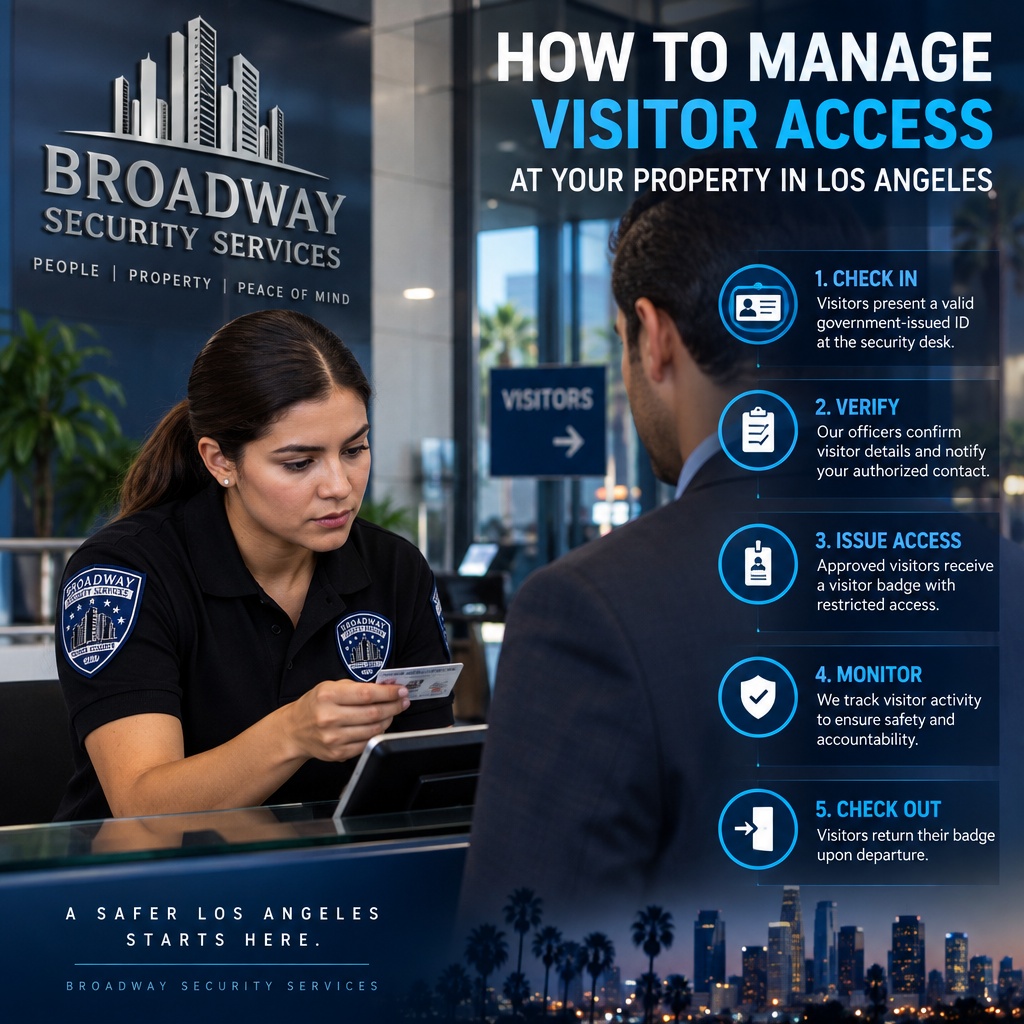
How to Manage Visitor Access at Your Property

A visitor arriving at an unsecured entrance can become a disruption, a safety concern, or an unrecorded liability in minutes. Knowing how to manage visitor access means establishing control before someone reaches a tenant floor, loading dock, jobsite, restricted office, or event area. The objective is not to make every guest feel suspected. It is to verify who is entering, why they are there, where they may go, and when they leave.

For property managers and operational leaders, access control must work during routine traffic and under pressure. A good system supports business activity while giving staff and security officers the authority, tools, and procedures to stop unauthorized entry.

Start With a Site-Specific Visitor Access Plan

Visitor access should not be managed with a generic sign-in sheet and verbal instructions alone. Each property has different exposure points: a lobby may handle vendors and appointments, an industrial site may receive drivers and contractors, and a residential community may need to separate invited guests from delivery traffic.

Begin by identifying every location where a visitor can enter or bypass the intended entry process. This includes vehicle gates, side doors, loading docks, employee entrances, elevators, construction perimeters, and parking areas. Then determine which entry point will serve as the primary check-in location and which points should remain locked, alarmed, monitored, or staffed.

Your written visitor plan should answer practical questions. Who may authorize a guest? What identification or proof of appointment is required? Which areas are open to visitors? When is an escort required? What happens when the host cannot be reached? Clear answers prevent a front-desk employee or guard from having to make inconsistent decisions in real time.

A licensed security officer can enforce these procedures with visible professionalism, but post orders must define the standard. Officers should know the approved access points, restricted areas, key contacts, escalation procedures, and documentation requirements for the site.

How to Manage Visitor Access From Arrival to Departure

The strongest access process follows the visitor’s full movement through the property, not only the first interaction at the door. A controlled process has four connected stages: verification, authorization, monitoring, and checkout.

Verify identity and purpose before entry

At check-in, the officer or authorized staff member should confirm the visitor’s name, destination, host, reason for visit, and expected duration. Depending on the property, verification may include a government-issued photo ID, contractor credentials, a delivery reference number, a work order, or a preapproved guest list.

The level of screening should match the risk. A tenant meeting a client in a commercial lobby may need a simple host confirmation. A visitor seeking access to a data room, school, medical facility, construction zone, warehouse, or executive area may require stronger identification, an escort, and additional screening under site policy.

Do not rely on appearance, confidence, or familiarity. People may claim they are expected, say a supervisor approved them, or attempt to follow an employee through a controlled door. The process must remain consistent: no confirmation, no access. A professional officer can state the rule clearly and respectfully while protecting the property from pressure-based exceptions.

Obtain authorization from the right person

Authorization should come from a designated host, manager, tenant representative, or preapproved visitor system. It should not be based on a casual message passed through an unrelated employee. For higher-risk locations, establish an approved list of personnel who can authorize access to sensitive areas.

If a host does not respond, the visitor should wait in a designated public area or be asked to return. Allowing unsupervised entry because a person appears frustrated creates an avoidable gap in the access plan. This is especially relevant during busy delivery windows, shift changes, and large events, when staff may feel pressure to move people through quickly.

Issue visible credentials and set boundaries

A visitor badge, hangtag, wristband, or temporary credential immediately distinguishes authorized guests from people who do not belong in controlled areas. The credential should be visible, difficult to transfer, and appropriate to the property. A color-coded badge can identify a visitor who must remain escorted, while a contractor pass can show the approved work zone and expiration date.

The credential is only useful when employees, security personnel, and supervisors are expected to challenge or report anyone without one. That expectation should be communicated to tenants and staff before the program begins. Otherwise, an access badge becomes a formality rather than a control.

At entry, visitors should receive concise instructions: where they may go, prohibited areas, parking rules, safety requirements, photography restrictions when applicable, and checkout expectations. Contractors may also need instructions regarding personal protective equipment, tools, hot-work authorization, or delivery staging.

Record arrival, movement, and departure

A complete visitor log provides accountability after an incident, dispute, alarm, or emergency evacuation. Record the visitor’s name, company when applicable, host, arrival time, credential number, destination, and departure time. For contractors and vendors, note the vehicle information, work order, crew size, and areas authorized for work when relevant.

Digital visitor systems can improve searchability and reporting, particularly at multi-tenant or high-volume sites. Paper logs may be appropriate for smaller properties or temporary posts, but they must be legible, secured, and reviewed. The best choice depends on traffic volume, privacy requirements, budget, and the need for audit-ready records.

Avoid collecting more personal information than the site genuinely needs. Visitor records should be protected, retained according to company policy, and accessible only to authorized personnel. A disciplined process respects privacy while preserving the documentation needed for security and operational accountability.

Separate Visitor Types Instead of Using One Rule for Everyone

Not every visitor presents the same risk or requires the same process. Treating a delivery driver, a prospective tenant, a job applicant, and a subcontractor exactly alike can slow operations without improving protection.

For most properties, visitor categories should include guests, vendors, delivery personnel, contractors, and event attendees. Guests may be checked in and directed to a host. Vendors should have an appointment or service request. Delivery personnel may be limited to a dock, receiving area, or designated handoff point. Contractors require verified scope of work, approved access areas, and safety coordination. Event attendees may need ticket verification, bag policy enforcement, queue control, and clearly marked entry and exit routes.

This tiered approach prevents over-screening at low-risk interactions while placing stronger controls around locations, assets, and activities that demand them. The visitor’s access level should always be based on the purpose of the visit, not convenience.

Train Staff and Security Officers to Enforce the Process

Technology supports visitor management, but people enforce it. Reception staff, building engineers, managers, and guards need to understand where their responsibility begins and ends. Employees should know not to prop secured doors open, loan access cards to guests, or wave unfamiliar people through a restricted entrance.

Security officers require site-specific post orders and regular supervisory review. They should be trained to verify credentials, communicate professionally, recognize suspicious behavior, handle denied-entry situations, call emergency contacts, and document incidents accurately. The ability to stay calm and consistent matters as much as the ability to control a doorway.

At a busy Los Angeles property, the officer may also be managing rideshare arrivals, delivery congestion, parking enforcement, and pedestrian traffic. That is why visitor access procedures must be practical enough to follow during peak activity. If the plan causes long lines or forces officers to abandon other critical duties, it needs adjustment.

Prepare for Exceptions and Security Incidents

Every access plan needs a response path for visitors who cannot be verified, become confrontational, attempt to enter restricted areas, or refuse to comply with site rules. Officers should know when to deny entry, when to request management support, when to contact law enforcement, and how to preserve accurate incident details.

Emergency conditions require separate procedures. During a fire alarm, evacuation, medical incident, or other urgent event, visitor logs help account for nonemployees on site. Guards should be prepared to direct visitors to assembly areas and provide responding personnel with relevant access information.

Review visitor activity after incidents and at regular operational intervals. Repeated unauthorized-entry attempts, missing badges, tailgating patterns, delivery bottlenecks, or after-hours visitors may indicate that staffing levels, access points, signage, or post orders need to change. Good visitor management is maintained through observation and correction, not installed once and forgotten.

A controlled entrance sends a clear message: the property is professionally managed, expectations are enforced, and access is granted with purpose. When guards, staff, and management follow the same standard, visitors can be welcomed without leaving the site exposed.

Contract Security Reviews That Protect Operations

A security contract can look complete on paper and still leave a property exposed at 2:00 a.m. The gap usually appears in the operating details: an unstaffed post, unclear access-control authority, no supervisor available after an incident, or reports that do not document what occurred. Contract security reviews are where property leaders identify those gaps before they become service failures, liability concerns, or interruptions to normal operations.

For facilities, construction sites, residential communities, logistics operations, and events, the review should do more than confirm an hourly rate. It should establish who is protecting the site, what they are responsible for, how performance is measured, and what happens when conditions change.

Why Contract Security Reviews Require Operational Detail

A guard provider is not simply supplying labor. The provider is being trusted with controlled access, visitor interactions, emergency notifications, incident documentation, and a visible presence that affects the safety of employees, tenants, customers, and assets. That responsibility must be translated into a clear, enforceable scope of work.

Generic language such as provide security as needed creates room for disagreement. Does the officer check identification at every entry? Is the officer expected to patrol a parking structure every hour? Who calls law enforcement after a serious incident? Can the guard deny access to a contractor without a work order? A sound agreement answers those questions before the first shift begins.

This is especially relevant for high-traffic Los Angeles properties, where changing tenant activity, deliveries, public access, and after-hours operations can quickly change the level of exposure. The right coverage plan depends on the site, not a standard staffing template.

What to Examine During Contract Security Reviews

Start with the actual site risks

The contract should match the conditions officers will face. Review the property layout, operating hours, access points, lighting, parking areas, loading docks, alarm history, prior incidents, and periods of low occupancy. A daytime lobby assignment has different requirements than overnight construction security or vehicle patrol coverage for a multi-building commercial property.

Define each post in practical terms. State where the officer reports, whether the post is standing or mobile, patrol frequency, required checkpoints, visitor procedures, key and credential controls, and restrictions on officer duties. If the officer must monitor cameras, receive deliveries, manage a gate, or perform parking enforcement, those responsibilities should be stated clearly rather than assumed.

Post orders deserve the same level of review. They should provide site-specific direction without creating unsafe or unrealistic expectations. Officers need to know who has authority on site, how to contact management, when to escalate an issue, and which conditions require immediate emergency response.

Verify licensing, training, and assignment standards

California clients should confirm that the provider is properly licensed and insured and that assigned personnel meet applicable state requirements. That is a baseline, not the full review. Ask how the provider verifies guard registration, manages required training, and handles assignments involving weapons, fire watch, executive protection, or sensitive access responsibilities.

The contract should also distinguish between armed and unarmed coverage. Armed assignments require a higher level of screening, training, authorization, and oversight. They should never be treated as a simple upgrade to an unarmed post. If armed coverage is not appropriate for the environment, a disciplined unarmed officer, controlled entry procedures, and supervisor support may provide a better operational fit.

Appearance and conduct standards matter as well. Uniform requirements, identification, professional communication, radio use, and de-escalation expectations affect how officers interact with tenants, visitors, employees, and the public. A visible presence should deter misconduct without disrupting legitimate business activity.

Confirm who supervises the work

A contract that promises coverage without defining supervision is incomplete. Review how often field supervisors inspect posts, how missed shifts are identified, what happens when an officer is late or absent, and whether management is reachable outside normal business hours.

Supervision is where accountability becomes visible. A supervisor should be able to review post orders, inspect officer appearance and performance, verify patrol activity, address client concerns, and respond when site conditions change. For a large property or a high-exposure assignment, scheduled supervisory visits may be appropriate. For lower-risk coverage, remote check-ins and documented management follow-up may be sufficient. The decision depends on the consequences of a service failure.

Also establish a replacement process. Emergencies, illness, and unexpected turnover occur in every staffing environment. The question is whether the provider has a defined procedure to fill the post, notify the client, and maintain continuity without leaving the site unprotected.

Require useful reporting, not paperwork for its own sake

Daily activity reports, incident reports, patrol logs, and shift summaries create a record of the service delivered. They also give management information needed to adjust operations. The contract should identify which reports will be provided, how quickly serious incidents are reported, who receives them, and how records are retained.

A quality incident report should be factual, timely, and complete. It should identify the date, time, location, involved parties, observations, actions taken, notifications made, and any follow-up required. Vague statements such as situation handled do not help a property manager assess risk or demonstrate responsible action later.

Reporting tools should support field performance, not distract from it. Digital reporting can improve time stamps, patrol verification, and delivery speed, but it does not replace trained officers who observe conditions, communicate clearly, and follow established procedures.

Review pricing against the required level of service

The lowest hourly rate can become the highest-cost decision if it produces poor coverage, excessive turnover, weak supervision, or incomplete documentation. Compare proposals based on the actual operating model: officer qualifications, number of posts, patrol expectations, supervisor involvement, reporting requirements, equipment, and response support.

Review bill rates, overtime terms, holiday rates, minimum shift lengths, cancellation provisions, invoicing practices, and any charges for vehicles, radios, reporting platforms, or specialized equipment. These terms should be clear enough for the client to forecast costs and for the provider to staff the assignment properly.

There is also a practical trade-off between flexibility and price certainty. A fixed schedule may support predictable budgeting, while a contract that allows rapid changes in staffing may be more useful for construction phases, seasonal activity, or special events. The agreement should fit the way the site actually operates.

Contract Security Reviews Should Continue After Signing

The initial review sets the standard, but conditions at a property do not remain fixed. New tenants, altered access routes, increased deliveries, construction activity, recurring trespassing, or changes in operating hours can make an original coverage plan outdated.

Schedule regular performance reviews with the security provider. Use incident trends, patrol records, staffing consistency, response times, client complaints, and supervisor observations to determine whether the plan is working. If an issue repeats, revise the post orders, staffing level, patrol route, or access procedure rather than accepting the same failure each week.

Performance standards should be measurable where possible. That may include report submission timelines, notification requirements, scheduled patrol intervals, inspection frequency, and documented corrective action after service deficiencies. Not every security outcome can be reduced to a number, but clear standards make it easier to identify when attention is needed.

Questions Decision-Makers Should Ask Before Approval

Before approving a security agreement, confirm that the provider can explain the coverage plan in site-specific terms. Ask who supervises officers after hours, how relief is handled, when management will be notified of an incident, and what reports will be delivered. Ask whether the provider has experience with the property type and whether the proposed duties align with officer training and authority.

Most importantly, ask what the provider will do when the plan does not work as expected. A dependable security partner does not hide behind contract language. It identifies the problem, communicates promptly, documents the response, and adjusts deployment to protect the client’s operation.

Broadway Security Services approaches each assignment with that standard of discipline: clear post orders, licensed and trained guards, responsive supervision, and reliable incident reporting. A careful review gives those commitments a defined operating structure, so the protection promised on paper is present at the property when it matters.

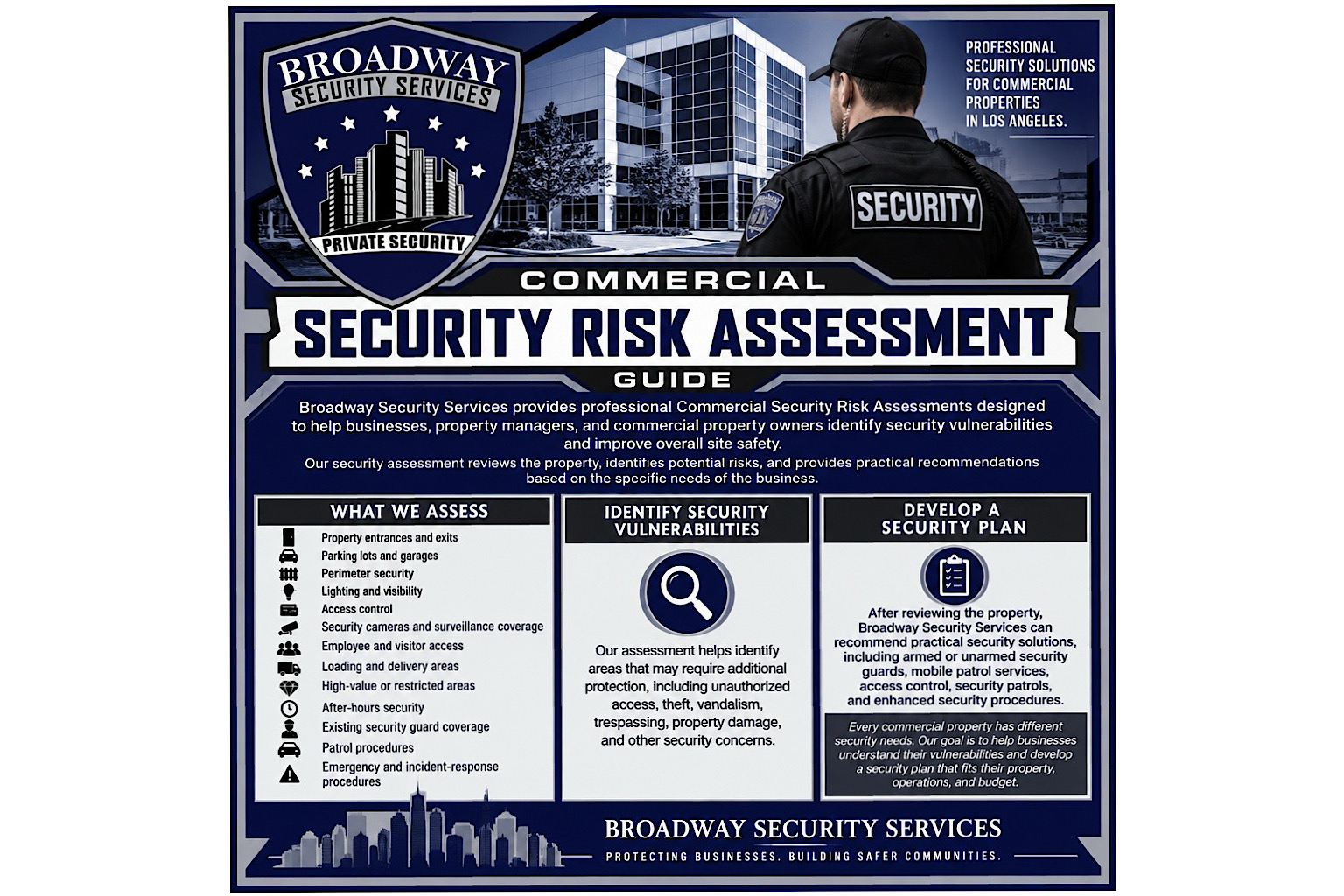
Commercial Security Risk Assessment Guide

A loading dock that is quiet at 2:00 a.m., a lobby with several public entrances, and a construction site with changing crews do not carry the same exposure. A commercial security risk assessment guide helps decision-makers identify where a site can be disrupted, who or what is exposed, and which controls will produce measurable protection rather than the appearance of coverage.

The goal is not to place a guard at every door. It is to build a disciplined security plan around real operating conditions: traffic flow, access points, valuable assets, public contact, after-hours activity, and the consequences of an incident. When the assessment is done correctly, staffing levels, patrol routes, post orders, reporting requirements, and escalation procedures all have a clear purpose.

Commercial Security Risk Assessment Guide: Start With Operations

Security risk begins with how the property actually functions. Before reviewing cameras, gates, or guard schedules, document what happens at the site across a full day and week. A property that appears low-risk during office hours may become highly vulnerable during overnight deliveries, shift changes, tenant move-outs, or weekend closures.

Walk the property with the people responsible for operations. Facility managers, maintenance teams, receiving staff, construction supervisors, and tenant representatives often know where rules are routinely bypassed. Ask where unauthorized people have entered before, when employees feel least safe, which doors are propped open, and what activity is difficult to observe.

A useful assessment separates normal activity from exceptions. For example, a warehouse may have controlled access during scheduled receiving hours but leave drivers waiting outside the gate after a delayed delivery. An apartment property may have a secure garage on paper but experience tailgating when residents return during peak evening traffic. These are not minor details. They define where a visible officer, vehicle patrol, access procedure, or revised post order can reduce exposure.

Identify Assets, People, and Consequences

Every site has assets worth protecting, but loss is not limited to stolen equipment. The assessment should account for people, operations, property, information, reputation, and compliance obligations. A security failure may delay a shipment, shut down a tenant area, create a workplace violence concern, expose a vacant building to trespass, or leave a fire watch requirement undocumented.

Rank assets by both value and operational impact. A low-dollar key card may create greater risk than a piece of office furniture if it provides access to restricted areas. A damaged gate can affect an entire logistics operation. At an event, an uncontrolled entrance may jeopardize guest safety and the organizer’s ability to manage attendance.

Consider four basic questions for each asset or activity:

  • Who can access it, and who should not?
  • When is it least protected or least visible?
  • What would an incident interrupt, damage, or expose?
  • How quickly would management need to know and respond?

This approach prevents a common mistake: assigning security according to the most visible asset instead of the most consequential vulnerability.

Examine Access, Visibility, and Human Behavior

Most commercial security gaps are created by a combination of weak access control and predictable human behavior. Doors are held open for convenience. Contractors arrive without clear authorization. Employees assume someone else checked identification. Visitors follow authorized personnel through a gate. These patterns create opportunities for theft, trespass, vandalism, and unsafe confrontations.

During the site walk, inspect every practical entry and exit point, including pedestrian doors, vehicle gates, loading areas, stairwells, roof access, emergency exits, utility rooms, and adjacent properties. Note whether each location is locked, monitored, illuminated, recorded, and regularly checked.

Visibility matters, but it is not only about lighting or cameras. Determine whether someone can see suspicious activity and act on it. A camera pointed at a rear door is less useful when nobody reviews alerts in real time and there is no officer assigned to investigate. An access log is limited if credentials are shared or visitor badges are not recovered.

This is where professional guard coverage adds operational value. Licensed and trained guards can verify access, enforce visitor procedures, conduct documented patrols, observe changing conditions, and provide a visible deterrent at the times and places where technology alone cannot intervene.

Score Risk by Likelihood and Impact

Not every vulnerability requires the same investment. A practical risk score helps management decide what to address first. Rate each issue based on the likelihood that it will occur and the impact if it does. Use a simple scale, such as low, medium, or high, but define those terms for the property.

Likelihood should reflect local conditions, incident history, ease of access, surrounding activity, and the consistency of existing controls. Impact should reflect potential injury, business interruption, property loss, liability, regulatory exposure, and reputational damage.

A poorly lit side gate may be a high-likelihood trespass point with moderate impact. A main lobby with inconsistent visitor screening may have lower likelihood but high impact because it exposes employees, guests, and sensitive areas. Both deserve attention, but the response may differ. The first may need lighting, a locked gate, and scheduled patrol checks. The second may require a controlled lobby post during business hours, visitor sign-in procedures, and defined escalation instructions.

Avoid treating the score as a substitute for judgment. A single credible threat, recurring assault concern, or fire watch obligation may demand immediate action even if a basic scoring sheet does not capture its urgency.

Match Controls to the Risk

Effective security plans use layers. Physical improvements, policy changes, electronic systems, and on-site personnel should support one another. The right mix depends on the site, budget, operating schedule, and the level of response required.

For a vacant commercial property, marked vehicle patrols may provide a cost-effective visible presence when paired with perimeter checks, incident reporting, and rapid escalation for forced entry or fire hazards. A busy medical office or corporate lobby may need a fixed unarmed officer who can manage visitors, maintain order, and address concerns before they become disruptions. A high-value cargo movement may justify dedicated escort coverage and controlled handoffs.

Armed coverage is not automatically the strongest answer. It may be appropriate where the threat profile, asset value, and operating environment support it, but it also requires carefully defined duties, qualified personnel, management oversight, and clear communication with the client. In many customer-facing settings, a professional unarmed officer provides the more suitable balance of deterrence, service, and de-escalation.

Turn Findings Into Post Orders and Accountability

An assessment has limited value unless it becomes daily instruction. Each identified priority should be reflected in site-specific post orders that tell officers what to observe, where to patrol, who may enter, what records to maintain, and when to notify management or emergency services.

Post orders should be direct enough to guide an officer during a busy shift. “Monitor the property” is too vague. “Check the north loading door every hour, verify delivery credentials before access, document vehicle plate numbers for after-hours arrivals, and immediately report forced-entry indicators” creates accountability.

Reliable incident reporting is equally important. Reports should record time, location, persons involved, actions taken, notifications made, and any follow-up needed. This documentation helps clients identify repeat problems, demonstrate compliance, manage claims, and adjust deployment when conditions change.

Supervision should verify that coverage is being performed as designed. A guard program without field oversight can drift from the assessment that justified it. Regular site reviews, patrol verification, report review, and client communication keep the security plan aligned with current conditions.

Review the Assessment When Conditions Change

Commercial risk is not fixed. New tenants, construction phases, staffing reductions, public events, inventory increases, neighborhood activity, and changes in business hours can alter the threat picture quickly. Review the assessment after any significant incident and at planned intervals, especially for properties with high traffic or changing operations.

For Los Angeles-area sites, this is particularly relevant where mixed-use activity, dense vehicle traffic, large events, and active construction can change access patterns from one shift to the next. A plan that worked during normal operations may need additional access control, patrol coverage, or parking enforcement during a major delivery, tenant transition, or event.

The strongest security assessment is one that gives management clear decisions: what must be protected, where exposure exists, which controls are justified, and how performance will be verified. Start with the conditions your people face every day, then require a security plan that is visible, documented, supervised, and built to protect business continuity.

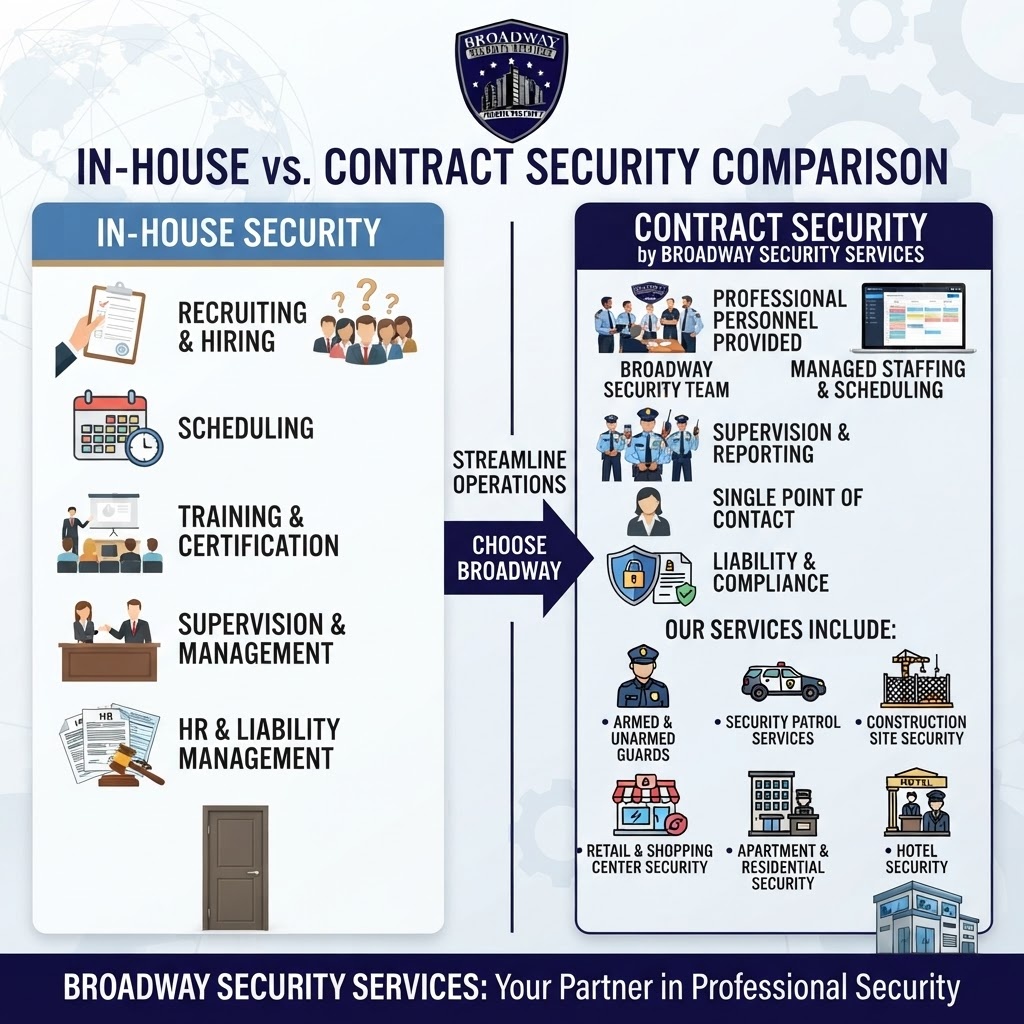
In-House Versus Contract Security Compared

A guard who misses a shift, fails to document an incident, or does not understand a restricted access point creates an operational problem fast. For property managers and business leaders, the question of in house versus contract security is not simply about hourly rates. It is about who owns recruiting, training, supervision, relief coverage, reporting, and the response when conditions change.

The right model depends on the site. A single corporate campus with a mature internal safety department has different needs than a multifamily property, construction site, distribution yard, or special event with changing traffic and access patterns. The goal is not to choose the cheapest arrangement. It is to establish dependable protection that supports daily operations.

What In-House Security Requires

An in-house security team consists of guards employed directly by the organization they protect. The client controls hiring standards, schedules, uniforms, workplace policies, and the day-to-day chain of command. For organizations with stable, long-term security needs, that control can be valuable.

Internal officers may develop a deep understanding of company culture, employee routines, building systems, and recurring issues. At a large facility with established leadership and predictable operations, they can become an integrated part of the workplace. A dedicated internal team may also make sense when security personnel need highly specialized knowledge of proprietary processes or sensitive internal systems.

That level of control comes with full operational responsibility. The organization must recruit qualified candidates, conduct background screening, manage payroll, provide benefits, maintain personnel files, schedule coverage, address call-offs, and handle performance issues. In California, employers must also stay current with applicable labor obligations, licensing requirements, training expectations, and insurance considerations.

The hidden workload is often relief coverage. A security post does not disappear when an employee calls out, takes leave, resigns, or needs additional training. If a facility requires around-the-clock coverage, management needs enough trained personnel to cover every shift, days off, sick time, vacations, and turnover. A lean internal roster can look efficient on paper while leaving the property exposed in practice.

How Contract Security Operates

Contract security places those staffing and support responsibilities with a licensed security provider. The client defines the site requirements, while the provider supplies trained guards, post orders, supervision, scheduling support, and a process for reporting and escalation.

A properly managed contract program is not a generic guard placed at a door. It starts with a site assessment: access points, public traffic, high-value assets, after-hours exposure, parking conditions, emergency procedures, and the level of authority expected at each post. Those details should be translated into written post orders that tell officers what to monitor, whom to contact, how to document activity, and when to escalate an incident.

The provider should also have a plan for routine field supervision and emergency replacement coverage. This is where contract security either proves its value or falls short. A provider that simply fills shifts transfers little risk. A provider with responsive supervision, documented patrol procedures, management oversight, and reliable incident reporting gives the client a controlled operating system rather than a staffing transaction.

For Los Angeles-area properties, contract coverage can be especially useful when demands change quickly. A construction project may need overnight fire watch for a limited period. A commercial property may require marked vehicle patrols after repeated trespassing. An event organizer may need trained access control and crowd-management personnel for one weekend. Building and administering an internal team for each assignment is rarely practical.

In-House Versus Contract Security: The Real Cost Comparison

Comparing a contract guard rate to an employee’s base hourly wage will produce the wrong answer. The employee’s true cost includes payroll taxes, workers’ compensation, benefits, uniforms, equipment, recruiting time, training, management time, overtime, and the cost of vacancies. It also includes the operational consequences when coverage fails.

Contract security generally presents a more visible service cost because many of those obligations are bundled into the provider’s rate. That does not automatically make contracting less expensive. A large organization with its own recruiting capacity, security leadership, training infrastructure, and consistent staffing needs may achieve efficiencies internally. But it must honestly account for administrative overhead and relief staffing.

The more useful question is: who is best prepared to keep a qualified officer at the post every required hour? If your team has to pull a maintenance supervisor, office manager, or operations director into shift coverage, the internal model may be consuming more resources than its wage calculation shows.

Cost should also be measured against exposure. An unlocked gate, undocumented injury, unmanaged confrontation, or missed fire-watch round can affect tenant confidence, operations, insurance claims, and liability. Security is a risk-control function. The lowest apparent price is not the same as the lowest total risk.

Control, Accountability, and Site Knowledge

Some decision-makers assume in-house staffing always means more control. It can, but only if internal leaders have time and security expertise to manage it. Control requires clear policies, audits, performance reviews, documentation standards, and someone with authority to correct poor performance.

A contract model can provide strong control when the client sets clear expectations and the provider follows them. The best arrangements establish a defined chain of command: site leadership directs property priorities, the security provider manages officers and field operations, and both parties receive timely information about incidents, trends, and corrective action.

Accountability should be visible. Ask how patrols are verified, how incident reports are reviewed, who conducts site inspections, and what happens when an officer is late or a post order is not followed. A professional provider should be able to explain its supervision process without vague assurances.

Site knowledge also improves when post orders are specific and regularly updated. Contract officers do not need to be company employees to understand a property. They need a disciplined onboarding process, accurate instructions, accessible supervisors, and feedback from the client when operations change.

When an In-House Team May Fit Best

An internal team may be the stronger choice when security operations are permanent, highly specialized, and central to the organization’s mission. This may apply to major corporate campuses, institutions with established internal public safety departments, or facilities where guards require extensive access to confidential systems and internal processes.

It can also fit organizations that already have experienced security leadership, formal training programs, sufficient staffing depth, and the administrative capacity to manage personnel around the clock. Without those resources, direct employment can create gaps that are difficult to see until an incident or staffing shortage exposes them.

When Contract Security Is the Better Operating Model

Contract security is often the practical choice for properties that need flexibility, rapid deployment, scalable staffing, or specialized assignments. Apartment communities, retail centers, warehouses, construction projects, medical offices, schools, transportation operations, and event venues frequently benefit from a provider that can adjust coverage without requiring the client to build an entire security department.

It is also a strong fit when the client needs visible deterrence backed by management oversight. Armed or unarmed guard coverage, vehicle patrols, access monitoring, fire watch, cargo escort, and parking enforcement each require different post instructions and officer capabilities. A qualified provider can structure those assignments around the property rather than force every risk into one staffing model.

Broadway Security Services approaches contract coverage as a site-specific operation, not a one-size-fits-all guard placement. The standard should be licensed and trained guards, responsive supervision, clear post orders, and documentation that helps management understand what is happening on the property.

Questions to Ask Before You Decide

Before selecting either model, define the assignment in operational terms. Identify which hours require coverage, where the vulnerabilities are, what officers must observe or enforce, and how they will communicate with property leadership. Then determine whether the role requires a static post, patrol activity, controlled access, emergency response coordination, or a combination of duties.

Ask who will recruit and train replacements, who covers absences, who supervises after hours, and who reviews reports for recurring problems. Clarify what authority guards have when confronting unauthorized persons, enforcing parking rules, addressing employee disputes, or responding to a medical or fire-related concern. These decisions should be documented before the first shift begins.

Finally, evaluate providers or internal processes on performance standards, not promises. Require clear reporting, defined escalation contacts, documented site procedures, and regular review of incidents and patrol activity. The security program should give leadership usable information, not just reassurance that someone was scheduled.

The strongest choice is the one that keeps trained, accountable personnel in the right places and gives your team confidence that issues will be noticed, documented, and addressed before they disrupt the property.

Security Coverage Planning Guide for Properties

A security plan fails when it is built around a headcount instead of the conditions on the ground. One guard at a front desk may be sufficient for a quiet professional office, but inadequate for a mixed-use property with open parking, delivery traffic, after-hours contractors, and recurring trespass issues. This security coverage planning guide helps property and operations leaders define where protection is needed, when it is needed, and what officers must be prepared to do.

The objective is not simply to place guards where they can be seen. Effective coverage creates controlled access, visible deterrence, documented activity, and a clear response structure when an incident occurs. It also supports normal operations without creating unnecessary friction for tenants, employees, visitors, vendors, or customers.

Start With the Property’s Actual Exposure

Security coverage should begin with an assessment of the site, not with a standard schedule copied from another property. Review how people, vehicles, deliveries, and assets move through the location during operating hours and after closing. Then identify where normal activity creates opportunities for unauthorized access, theft, conflict, safety hazards, or property damage.

For a commercial building, the highest-risk area may be a side entrance that employees use after hours. At a construction site, it may be an unsecured material yard after crews leave. For a logistics operation, the primary concern may be cargo transfer points, driver check-in, and trailer access. Event venues face a different mix of risks, including crowd flow, credential verification, restricted-area control, and rapid response to disturbances.

A useful assessment separates ongoing conditions from isolated incidents. A single vehicle break-in does not always require around-the-clock vehicle patrols. Repeated break-ins in a poorly lit lot, especially during predictable hours, may justify a more visible and structured patrol assignment. The right response depends on frequency, severity, exposure, and the consequence of a failure.

Map Access Points and Blind Areas

Every entrance is not equally important. List public entrances, employee doors, loading areas, gates, parking access, roof access, stairwells, elevators, and emergency exits. Determine which points should remain open, which require credential checks, and which must be secured except for authorized use.

Physical conditions matter. Camera coverage, lighting, fencing, alarm systems, locks, landscaping, and line of sight all affect the number of officers required and how they should be deployed. Security personnel can compensate for some gaps, but staffing should not be treated as a permanent substitute for basic physical security improvements.

A site walk should also identify blind areas where people can enter, conceal activity, or remain unnoticed. These locations often require scheduled patrol checks, not a stationary officer who never leaves the lobby or gatehouse.

Define Coverage by Time, Task, and Response Need

The next step in security coverage planning is matching personnel to the hours and duties that create the greatest value. Coverage may be required continuously, only overnight, during tenant move-ins, during construction shutdowns, at shift changes, or during high-traffic events. A plan that provides the same staffing level every hour may be appropriate for a high-exposure facility, but it can also waste resources at a site with clear peaks and low-risk periods.

A fixed-post officer is best when a specific point requires consistent observation or control. Examples include visitor screening, gate access, lobby security, loading dock verification, and employee badge checks. Mobile patrol officers are better suited to larger properties, multiple buildings, parking facilities, perimeter checks, and locations where an unpredictable presence strengthens deterrence.

Many properties need both. A fixed officer controls the primary access point while a patrol officer checks remote doors, parking areas, fire exits, vacant suites, and exterior conditions. The arrangement should reflect the time required to perform each task properly. If one officer is expected to monitor a busy entrance, receive deliveries, conduct patrols, handle calls, and write reports, critical areas will be left unattended.

Armed coverage requires separate consideration. It may be appropriate where a documented threat profile, valuable assets, isolated operating conditions, or elevated public risk supports it. It also brings a higher level of responsibility, training expectations, and coordination with the client’s policies. Unarmed licensed guards are often the right fit for access control, patrol, customer-facing assignments, and deterrence where professional presence and observation are the primary requirements.

Build Clear Post Orders Before Coverage Begins

A guard cannot enforce a standard that has not been defined. Site-specific post orders turn a staffing assignment into an operational security program. They should explain the officer’s authority, responsibilities, patrol routes, reporting requirements, escalation process, and communication procedures.

Post orders should address who may enter the property, how visitors and vendors are verified, what officers should do when someone refuses to comply, and when law enforcement or emergency services must be contacted. They should also identify restricted areas, key control procedures, package or delivery protocols, parking rules, and procedures for lost property, suspicious activity, medical incidents, fires, and facility hazards.

The instructions must be realistic. A post order that tells an officer to challenge every person entering a public retail center is not workable. A better instruction identifies the areas and behaviors that require intervention, such as access to closed corridors, employee-only spaces, loading zones, or private parking areas.

Set the Reporting Standard

Reliable reporting is one of the strongest indicators of accountable security coverage. Daily activity reports show that patrols and assigned duties occurred. Incident reports establish a factual record when a rule violation, injury, property damage, disturbance, or security concern takes place.

Reports should be timely, specific, and objective. They should record the time, location, persons involved when known, observed facts, actions taken, notifications made, and disposition of the incident. Officers should avoid assumptions and opinions that cannot be supported by direct observation.

For property managers and facility directors, reporting also reveals patterns. Repeated door alarms, recurring loitering, unauthorized vendor access, and frequent parking violations can all point to a coverage adjustment or a physical security issue that needs correction.

Plan for Supervision, Relief, and Escalation

A schedule is only the starting point. Security coverage must account for officer relief, call-offs, meal periods, shift handoffs, and supervisory checks. An uncovered post during a lunch break can create the same vulnerability as a missed shift, especially at a gate, lobby, or active construction entrance.

Supervision should confirm that officers understand their post orders, maintain professional appearance, complete patrols, and document activity correctly. It should also provide a responsive point of contact when site conditions change. A property experiencing a new trespass pattern or tenant complaint should not have to wait weeks for the coverage plan to be reviewed.

Escalation procedures should be decided before an incident. Officers need to know which issues they handle directly, which require client notification, and which call for emergency services or law enforcement. That clarity protects personnel, limits confusion, and supports a measured response under pressure.

Review Coverage Against Real Results

Security plans should be reviewed after operational changes, significant incidents, new tenant activity, construction phases, seasonal events, or changes in public access. The review should consider more than incident totals. Fewer reported incidents can mean effective deterrence, but it can also mean officers are not documenting activity consistently.

Examine patrol records, access logs, incident reports, client feedback, camera observations, response times, and recurring complaints. If violations continue in the same area, ask whether the post order is clear, patrol timing is predictable, staffing is too thin, or a physical condition is contributing to the problem.

Broadway Security Services approaches coverage as a site-specific assignment supported by licensed and trained guards, responsive supervision, controlled access monitoring, and reliable incident reporting. The goal is disciplined protection that fits the property’s real operating conditions.

The strongest coverage plan gives officers clear authority, gives management useful information, and gives everyone on site a visible reason to follow the rules. That is how security becomes a dependable part of daily operations rather than a last-minute response after a loss.

Security for School Campuses That Holds Up

A school day can involve hundreds or thousands of arrivals, deliveries, visitors, contractors, buses, and after-school participants moving through the same property. Security for school campuses must account for that activity without turning a learning environment into a restrictive facility. The objective is controlled access, early intervention, and a visible professional presence that supports students, staff, families, and administrators.

For campus leaders, the question is not simply whether to place a guard at a gate. It is whether the security plan gives trained personnel the authority, information, coverage, and supervision needed to respond consistently when conditions change.

Start With the Campus Operating Pattern

Every school campus has a different risk profile. An elementary school with a single front office, a large high school with athletic facilities, and a college campus with open public areas require different deployment plans. Effective coverage starts with an on-site assessment of how people enter, move through, and leave the property.

Administrators should identify the access points used during regular hours, before and after school, evening programs, and special events. This includes gates, parking areas, loading zones, portable classrooms, athletic fields, administrative offices, and maintenance areas. A gate that remains secure during classroom hours may become a weak point during dismissal or a weekend tournament.

Traffic patterns matter as much as building layout. Congested parent pickup areas can create disputes, unsafe pedestrian movement, and opportunities for unauthorized persons to enter with the crowd. A trained security officer can help direct traffic, monitor behavior, and maintain a calm, professional perimeter while school personnel focus on students and operations.

Controlled Access Is the Foundation

A controlled-access program should make it clear where visitors enter, how they check in, and where they are permitted to go. This does not mean treating every visitor as a threat. It means establishing a consistent process that staff can enforce without confusion or exceptions becoming routine.

Professional officers assigned to entry points should understand the campus visitor policy, identification requirements, badge procedures, restricted areas, and escalation contacts. Their role may include confirming appointments, managing delivery personnel, observing conduct, and preventing tailgating through secured doors or gates.

Physical security measures are most effective when personnel are assigned to support them. Cameras, intercoms, locks, and visitor-management systems provide valuable information, but they do not replace a trained officer who can assess behavior, communicate clearly, and take action when someone refuses to comply. Technology extends awareness. Disciplined personnel provide the response.

Put Post Orders in Writing

Generic instructions such as “watch the campus” do not create accountable coverage. School security officers need clear, site-specific post orders that define duties by location, time of day, and incident type.

A written assignment should address who has authority to grant access, which doors and gates must remain secured, how officers conduct patrols, where they position themselves during arrival and dismissal, and who receives notification when an issue occurs. It should also establish procedures for student conflicts, trespassing, medical emergencies, fire alarms, suspicious packages, damaged property, and disruptive visitors.

Post orders should distinguish between matters an officer can handle directly and matters that require school administration or law enforcement. This protects students, supports staff, and keeps officers within the scope of their training and assigned responsibilities. The right response depends on the event. A minor access violation may require a firm redirection and documentation, while an immediate threat requires emergency protocols and rapid coordination with first responders.

Use a Visible Presence Without Disrupting School Operations

Visible security is a deterrent when it is professional and predictable. Officers who maintain a clean appearance, remain alert, and patrol key areas at consistent intervals make it harder for trespassers, vandals, and disruptive individuals to test the property.

At the same time, schools are active communities. An officer should be approachable to staff and families while maintaining clear boundaries and authority. The most effective campus security personnel are not passive observers standing in one location for an entire shift. They are trained professionals who know the property, recognize normal activity, and identify deviations early.

Coverage may include a fixed officer at the main entrance, mobile patrols of exterior areas, and directed checks of vulnerable locations such as parking lots, athletic facilities, restrooms, storage areas, or portable classrooms. The proper approach depends on campus size, hours of operation, prior incidents, and the number of public events held on site.

Prepare for the Hours Outside the Bell Schedule

Many campuses experience their greatest exposure before classes begin, after dismissal, and during evenings or weekends. Sports, performances, adult education, community meetings, construction work, and facility rentals can bring unfamiliar visitors onto the property when administrative staffing is limited.

These periods require their own security plan. Officers may need to verify event staff, secure unused buildings, monitor parking and pedestrian flow, enforce facility rules, and conduct closing inspections after attendees leave. For large events, staffing should account for entry screening, crowd movement, emergency access routes, and coordination with organizers.

After-hours patrols also help identify property issues before they become larger problems. An unsecured door, broken gate, damaged fence, water leak, or unauthorized vehicle should be reported promptly with clear details. Reliable incident reporting gives facility leaders a record of what occurred, when it occurred, what action was taken, and whether follow-up is needed.

Reporting Creates Accountability

A security presence without documentation leaves administrators guessing. Detailed daily activity reports and incident reports create a dependable record of patrols, visitor issues, policy violations, safety hazards, and officer actions.

Good reporting is factual, timely, and useful. It should identify the location, time, involved parties when appropriate, observations made, notifications completed, and the final disposition of the incident. Vague entries such as “all clear” do not help a facility director evaluate performance or spot recurring risks.

Reporting also allows school leadership to adjust the security plan. Repeated concerns at one gate may justify different access controls. Frequent parking conflicts may require additional traffic direction during peak times. A pattern of damaged property may indicate the need for focused patrols or improved lighting. Documentation turns isolated events into operational intelligence.

Supervision Matters as Much as Staffing

The quality of school security depends on more than the individual officer assigned to the site. Officers require responsive supervision, clear communication channels, relief coverage, and management review. A provider should be able to confirm that post orders are being followed, address performance concerns promptly, and adjust staffing when school operations change.

This is especially important when a campus needs ongoing coverage across multiple shifts or locations. A reliable security partner should not leave administrators to solve call-offs, changing event schedules, or unexpected coverage gaps on their own. Management oversight is part of the service, not an optional add-on.

Before selecting a contract security provider, decision-makers should confirm licensing, insurance, officer training standards, supervisory structure, reporting practices, and experience with institutional environments. Cost matters, but the lowest hourly rate can become expensive when officers are poorly prepared, unsupported, or absent when coverage is needed.

Build Security Into Daily School Operations

The strongest campus security programs are coordinated with administration, facilities, transportation, and event staff. Officers need current contact lists, site maps, emergency procedures, and advance notice of schedule changes. School leaders need a direct way to communicate concerns and receive reliable updates from the security team.

Broadway Security Services approaches school and institutional assignments through site-specific planning, licensed and trained guards, controlled access monitoring, patrol procedures, responsive supervision, and documented reporting. The purpose is not simply to fill a post. It is to provide organized coverage that holds up during normal operations and unexpected incidents alike.

A campus becomes easier to protect when expectations are clear: visitors know where to enter, staff know who to call, officers know their assigned duties, and leadership has records it can act on. That level of discipline gives schools more room to focus on what matters most – a safe, orderly place for learning.